Power & Grid
Load growth, and who gets to build for it
Interconnection queues, rate cases, turbines and transmission — what data-center demand is doing to utilities and the equipment makers behind them.
2026-08-22
%22%2F%3E%0A%20%20%3Ccircle%20cx%3D%22220%22%20cy%3D%22150%22%20r%3D%22180%22%20fill%3D%22%2322d3ee%22%20fill-opacity%3D%220.12%22%2F%3E%0A%20%20%3Ccircle%20cx%3D%221010%22%20cy%3D%22130%22%20r%3D%22220%22%20fill%3D%22%2338bdf8%22%20fill-opacity%3D%220.08%22%2F%3E%0A%20%20%3Ccircle%20cx%3D%22920%22%20cy%3D%22520%22%20r%3D%22170%22%20fill%3D%22%2322d3ee%22%20fill-opacity%3D%220.06%22%2F%3E%0A%20%20%3Cpath%20d%3D%22M140%20430h920%22%20stroke%3D%22url(%23line)%22%20stroke-width%3D%2212%22%20stroke-linecap%3D%22round%22%2F%3E%0A%20%20%3Cpath%20d%3D%22M220%20360c120-150%20260-220%20380-220s260%2070%20380%20220%22%20fill%3D%22none%22%20stroke%3D%22%2367e8f9%22%20stroke-opacity%3D%220.5%22%20stroke-width%3D%2216%22%20stroke-linecap%3D%22round%22%20stroke-linejoin%3D%22round%22%2F%3E%0A%20%20%3Cpath%20d%3D%22M300%20398h600%22%20stroke%3D%22%2394a3b8%22%20stroke-opacity%3D%220.24%22%20stroke-width%3D%228%22%20stroke-linecap%3D%22round%22%2F%3E%0A%20%20%3Ctext%20x%3D%22220%22%20y%3D%22510%22%20fill%3D%22%23e2e8f0%22%20fill-opacity%3D%220.7%22%20font-family%3D%22Arial%2C%20Helvetica%2C%20sans-serif%22%20font-size%3D%2238%22%20letter-spacing%3D%228%22%3EINSIGHTS%3C%2Ftext%3E%0A%3C%2Fsvg%3E)

Boeing’s cash-flow rebound just met a contract wall: a SPEEA strike vote adds a real probability of MAX delivery slippage
Boeing BA faces a new labor risk after SPEEA engineers and technical workers rejected the company’s contract offer and authorized strike action, with the earliest work stoppage possible in early October 2026. That matters because Boeing’s near-term cash-flow path depends on executing the 737 MAX/737-7/737-10 and 777X delivery ramps—and Boeing itself flags labor work stoppages as a direct driver of production, delivery, and cash-flow disruption.
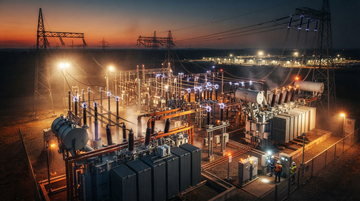
PJM congestion hit $6B in six months—AI load growth is turning transmission limits into a recurring, priced toll
PJM’s transmission congestion costs jumped 43% to $6B in the first half of 2026, driven by binding high-voltage constraints and overload periods. The market implication isn’t just “more congestion”: it’s a shift in who effectively pays for expansion—ratepayers via settlement and capacity economics—while also tightening the demand signal for transformers and high-voltage equipment.

TikTok’s $400M COPPA settlement effectively sets a new “price per platform enforcement” — and it should sharpen the risk math for Meta, Snap, and Alphabet (YouTube)
The U.S. Department of Justice announced a $400M children’s privacy settlement tied to COPPA enforcement against TikTok and ByteDance, including $300M paid immediately and a further $100M contingent on vacating a prior consent decree. Unlike teen-liability cases that live in the “platform immunity” universe, this is a direct compliance-liability datapoint that helps regulators and investors think in enforcement-cost terms for youth-facing product design.
2026-08-21
2026-08-20
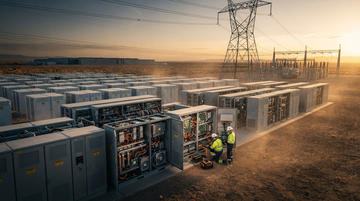
AI’s grid firming bottleneck isn’t batteries—it’s the grid-scale storage “power electronics” that let queues turn into revenue
Grid-scale battery projects are increasingly pulled forward by AI-driven interconnection demand, but economics are still governed by what can actually connect and operate: cells, then PCS/power electronics, then integrator execution. Tesla and Enphase both show how tariff and policy mechanics flow through the storage value chain—strong deployments can coexist with margin pressure when the PCS/inverter leg costs rise faster than pricing.
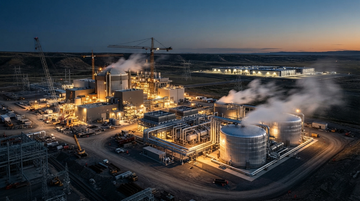
TerraPower’s Natrium turns nuclear into a data-center “load-following battery,” not just baseload
Natrium pairs a 345 MWe sodium fast reactor with a molten-salt energy storage system that can boost output to 500 MWe, giving nuclear dispatchability that hyperscalers need for AI-driven peak demand. TerraPower is already moving Kemmerer Unit 1 through the 10 CFR Part 50 construction-permit milestone and building a HALEU fuel path—suggesting the next bottleneck is less “baseload availability” and more flexible, contractable output.
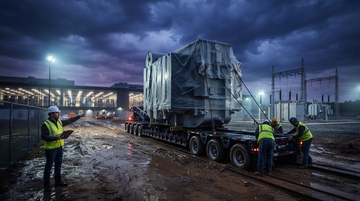
Utility-scale power transformers are the AI grid’s multi‑year choke point—and today’s ~5.2% long-rate turns every delay into a financing problem
High-capacity transformer lead times have stretched to years, shifting “grid connection readiness” from a construction issue to a procurement-and-capital-access issue. With 30-year Treasuries recently around ~5.2%, the present value of AI-driven grid buildouts falls just as transformer delivery schedules slip—rewarding vendors and projects that can win connection queues first.

Regulated utilities at ~5.2% 30-year: why “allowed ROEs” don’t protect equity investors when the cost of capital moves faster
On Aug. 19, 2026, the U.S. Treasury increased the size of long-end liquidity-support buybacks to rein in the 20–30 year funding window, after the 30-year yield pushed higher. Even with that intervention, a ~5.2% 30-year reference rate implies a duration-sensitive equity math problem for regulated utilities: allowed returns (often ~9–10%) sit well below market-implied equity costs that rise when long yields stay elevated, forcing rate-case timing, issuance, or dividend trade-offs.
Wolfspeed’s outlook break shows the SiC trade is splitting: AI power could stay tight, but EV/industrial SiC demand is no longer a one-way bet
Wolfspeed’s Aug. 19 guidance reset (and the stock’s -7.5% pre-market move into Aug. 20) is the first “hard” datapoint that AI datacenter power silicon and EV/industrial SiC are moving out of lockstep. The message for investors: the market may reward the SiC supply chain differently by end-market—tight 48V-to-rack power needs versus a cooling EV/industrial ramp—creating winners in adjacent power silicon and control platforms while pressuring wafer/device oversupply.
2026-08-19

2026-08-18
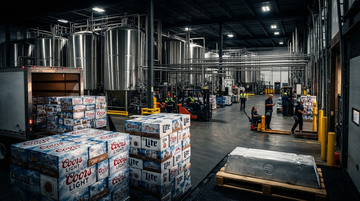
Molson Coors’ Q2 test shows beer’s pricing power is still positive—but cost pressure is now dominating the earnings story
In Molson Coors, Q2 2026 net sales fell 3.3% as volumes slid 5.4%, partially offset by favorable pricing and mix of +1.8%. The key investor takeaway is that cost headwinds are the swing factor: underlying income before taxes dropped 27.8% (constant currency) as COGS pressures included an estimated ~$40M Midwest Premium drag in the quarter and a forecast of >$130M for full-year 2026.
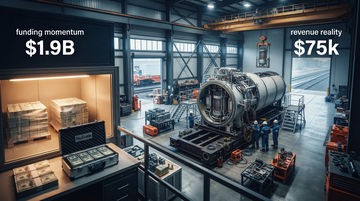
NuScale Power revenue barely exists—while liquidity swells, and the timing matters more than the narrative
In NuScale Power’s Q2 2026 results, revenue totaled just $75k for the quarter while cash, cash equivalents, and investments rose to $1.9B—an extreme mismatch that forces investors to separate “funding momentum” from “revenue reality.” The filing ties the year-over-year revenue plunge to completed Fluor FEED Phase 2 work in late 2025 and the absence of comparable 2026 activity, not a broken business model at every moment; but it still shows that the SMR economics are pacing far behind the AI power-demand storyline.
2026-08-17

The 48V rack bus is the new price bottleneck in AI data centers—SiC/GaN power silicon may capture the “dollars-per-watt” upside that electrical OEMs can’t
As AI racks scale toward hundreds of kilowatts, the in-rack power-delivery chain (PSU → 48V bus → VRMs → SiC/GaN switching) is getting harder to build, cool, and qualify as one stack. Primary disclosures show that the Vera Rubin NVL72 rack design already concentrates power demand into multiple 110kW shelves, while grid-side electrical backlogs (Eaton) and 800V HVDC guidance (onsemi) point to a multi-year build-out. Investors should expect silicon vendors supplying SiC/GaN efficiency and density to monetize the “per-watt” upgrade cycle faster than the grid/electrical OEM layer.
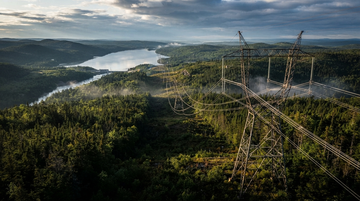
Hydro-Québec and Newfoundland lock in firm hydro for the U.S. Northeast—at a price that forces utilities to model higher “AI firm-power” costs
A new Hydro-Québec–Newfoundland and Labrador Churchill Falls framework would replace the old 1969 economics with a much higher long-term effective purchase price and a defined path to deliver up to 985 MW of firm transmission capacity through Quebec to U.S. markets. For power buyers chasing AI-driven reliability, the deal matters less as headlines about volume and more as a supply-side pricing signal that can tighten what “firm” gets priced like.
2026-08-16
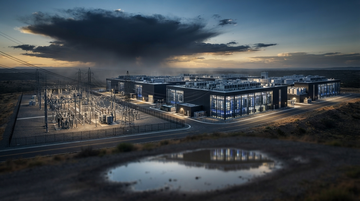
The unpriced line item in AI data-center finance: insurers/reinsurers are underwriting grid-interruption and residual-value “tails” that lenders can’t see
Insuring a $20B+ data-center build is not just a property issue—it’s a business-interruption and residual-value “tail-risk” problem shaped by grid strain and catastrophic concentrations. Swiss Re’s AI data-center risk research ties construction limits and BI severity directly to how insurers ration capacity, which can change project finance math even when property damage itself looks insurable.
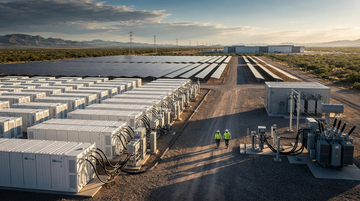
Nvidia’s $3B SB Energy bet highlights the missing “grid-firming” link in AI power
Nvidia’s reported move to invest up to $3B into SB Energy underscores that AI data-center growth is constrained less by chips than by 24/7 power availability. The real supply-chain margin sits in grid-scale storage, power-electronics, and fast interconnection—areas where equipment and energy-storage firms can see order-flow spillover once projects lock fuel (or storage) and transmission timelines.
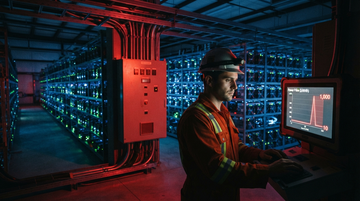
Bitcoin miners just got a brutal new margin line: power that can jump ~100x in an hour
A reported Aug 16, 2026 spike in wholesale power prices—from roughly $10 to about $1,000/MWh in ~60 minutes—turns electricity volatility into the binding variable for crypto miners’ margins. For IREN, CLSK, CIFR, and WULF, the investor takeaway is simple: even with BTC upside, unhedged power exposure can overwhelm operating models on the very time scale miners can’t fully manage.

The Ice-Cream Brand That Hit Chapter 11 After Losing a Trademark Fight Shows How “Freezer Aisle” Power Has Shifted
Rebel Creamery LLC filed for Chapter 11 in the District of Utah on Aug. 14, 2026, after a trademark/trade-dress ruling from Van Leeuwen Ice Cream required it to redesign packaging and pay $23.785 million in disgorged profits (Jul. 16, 2026). For investors, the key takeaway is not the legal loss—it’s how quickly a packaging/label injunction plus margin pressure can break brands that don’t have scale, pricing power, or cost flexibility against private-label and retailer deal cycles.

AI data-center power demand isn’t choking reactor builds—fuel-cycle bottlenecks are tightening uranium-to-fabrication capacity
The hyperscaler PPA wave is being stress-tested by the slowest part of the nuclear supply chain: the front-end fuel cycle. ConverDyn-scale conversion, enrichment capacity, and downstream fuel fabrication are the binding constraints on when new megawatts can actually produce—turning uranium, enrichment, and fuel makers into the margin hinge for AI-linked deployments.
2026-08-15
What to expect
Evidence-first notes with a visible point of view.
This section collects sharp takes on earnings, shareholder meetings, and market structure. Each new piece should make the thesis, the facts, and the implications obvious within the first few screens.
Expect direct analysis, not generic commentary.
Expect the data to be explicit and the argument to be easy to follow.
Plutux is not an investment adviser. Market data and AI-generated analysis are for information and education only, not investment advice. Disclaimer