Macro & Policy
Rates, inflation and the policy that moves them
Central bank decisions, jobs prints and fiscal policy, read the way a portfolio reads them: what reprices, by how much, and what would change the call.
2026-09-07
%22%2F%3E%0A%20%20%3Ccircle%20cx%3D%22220%22%20cy%3D%22150%22%20r%3D%22180%22%20fill%3D%22%2322d3ee%22%20fill-opacity%3D%220.12%22%2F%3E%0A%20%20%3Ccircle%20cx%3D%221010%22%20cy%3D%22130%22%20r%3D%22220%22%20fill%3D%22%2338bdf8%22%20fill-opacity%3D%220.08%22%2F%3E%0A%20%20%3Ccircle%20cx%3D%22920%22%20cy%3D%22520%22%20r%3D%22170%22%20fill%3D%22%2322d3ee%22%20fill-opacity%3D%220.06%22%2F%3E%0A%20%20%3Cpath%20d%3D%22M140%20430h920%22%20stroke%3D%22url(%23line)%22%20stroke-width%3D%2212%22%20stroke-linecap%3D%22round%22%2F%3E%0A%20%20%3Cpath%20d%3D%22M220%20360c120-150%20260-220%20380-220s260%2070%20380%20220%22%20fill%3D%22none%22%20stroke%3D%22%2367e8f9%22%20stroke-opacity%3D%220.5%22%20stroke-width%3D%2216%22%20stroke-linecap%3D%22round%22%20stroke-linejoin%3D%22round%22%2F%3E%0A%20%20%3Cpath%20d%3D%22M300%20398h600%22%20stroke%3D%22%2394a3b8%22%20stroke-opacity%3D%220.24%22%20stroke-width%3D%228%22%20stroke-linecap%3D%22round%22%2F%3E%0A%20%20%3Ctext%20x%3D%22220%22%20y%3D%22510%22%20fill%3D%22%23e2e8f0%22%20fill-opacity%3D%220.7%22%20font-family%3D%22Arial%2C%20Helvetica%2C%20sans-serif%22%20font-size%3D%2238%22%20letter-spacing%3D%228%22%3EINSIGHTS%3C%2Ftext%3E%0A%3C%2Fsvg%3E)

Italy's \"Voluntary\" Bank and Energy Ask Hides a €1.5–2B Extraction — and US ADR Investors Should Care
Italy's deputy prime minister Antonio Tajani asked banks and energy firms on Sept. 4 to \"bring forward\" tax payments for the 2027 budget, framing it as a negotiated, voluntary extension of two prior sector accords. Underneath the label sits a third round of cash from a banking system that has already paid €1.2B more tax in H1 2026 versus H1 2025, an energy sector that funded the August fuel-excise extension on the same model, and a coalition split where Deputy PM Salvini is publicly pushing a harder 5%-of-profits levy. The trade for US-based holders of UniCredit and Intesa Sanpaolo ADRs is not whether Italy hits the sector again — it already has — but whether Rome's template migrates to Spain or France and turns a managed extraction into a peripheral-Europe spread event.
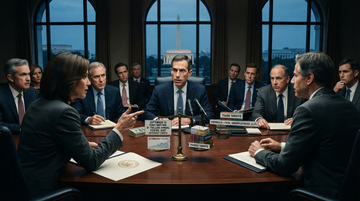
162K Jobs and a Trade Ultimatum: The September Fed Meeting Is Now a $1 Trillion Debt Showdown
The August payrolls surprise pushed Fed pricing toward a September hike at the same moment President Trump demanded cuts and floated halting trade with deficit countries. With $1 trillion in annual federal interest costs, the September 16 FOMC meeting is no longer a monetary-policy decision — it is a test of whether the central bank can remain independent of a White House treating interest rates as debt-service management.

The Reported $20B SK Hynix FX Trade Turns AI Memory Into Korea’s Won Shock Absorber
Reuters reported that South Korea’s foreign-exchange authorities bought about $20 billion of dollars sold by SK Hynix after its July Nasdaq offering, while official government disclosures confirm that the ADR inflow helped move the won from the 1,550 range toward the upper 1,400s. The important distinction is that the public record supports a state absorption trade, not a confirmed legal order forcing repatriation. AI-memory profits made the flow large enough to matter for currency policy, but the intervention also makes SK Hynix’s dollar-conversion choices more policy-sensitive.
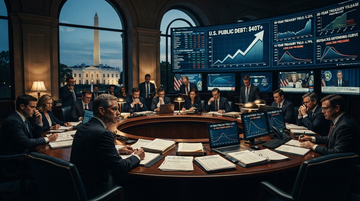
The Bond Market Just Became the Fiscal Disciplinarian — Why 'All-Hands-on-Deck' Is the Treasury's New Baseline
With U.S. debt crossing $40 trillion, the average interest rate on that debt more than doubling since 2021, and Treasury Secretary Bessent doubling long-end buybacks to defend the curve, the bond market is now enforcing fiscal restraint Congress will not. The trajectory — not the next auction — is the story, and it leaves mortgage REITs, long-duration fund managers, and rate-sensitive bank books bearing the bulk of the cost.
2026-09-06

Bessent's $40 oil call breaks the airline–refiner trade in two
Treasury Secretary Scott Bessent's Friday projection of $40–$50 crude once the Iran war ends turns the post-Iran trade into a mirror image: airlines that bled through a $4/gal fuel quarter get a 2027 margin tailwind, while refiners like Marathon Petroleum, Valero Energy and Phillips 66 — whose Q2 2026 refining margins doubled — face the unwind of the record crack spread that drove their 80%+ year-to-date run.

Three Refiners Just Pocketed $12.6B as the Pump Set a Labor Day Record — The Windfall Won't Fade Before November
AAA' national average of $4.14 a gallon on Labor Day weekend — the first holiday above $4 in U.S. history — and diesel at a record $5.85 are not a consumer blip. They reflect a refining margin boom that handed Valero, Marathon Petroleum, and Phillips 66 a combined $12.6B in Q2 2026, with the diesel crack spread breaching $100 a barrel for the first time. With U.S. refineries at 98% utilization, WTI parked near $90 on Iran risk, and an FOMC that just voted 9–3 against holding easy, the political pressure for cheaper gas collides with a structural margin floor that should keep refiners printing cash through the midterms — and squeeze Walmart and the rest of the consumer-discretionary complex in the process.

$200bn of Frozen Russian Assets Just Re-Entered the Debate — Belgium Says 'Door Is Closed', Four EU States Just Pushed It Back Open
Sweden, the Netherlands, Spain and Poland are pressing the European Commission to revive a €210bn 'reparations loan' backed by immobilised Russian central bank reserves held at Euroclear in Belgium, after the €90bn Ukraine-support loan was finalized in April without touching those assets. The mechanics turn ~€195bn of sanctioned Russian securities into collateral behind EU-Bond issuance — a 'debt-backed demand floor' that funds Ukraine while repricing credit risk for the European banks and defense primes that sit in the transmission chain. Rheinmetall, Saab and BAE Systems are already converting the demand into backlog; Lockheed Martin, Northrop Grumman and Hensoldt extend the chain into air-defense interceptors and radars; BNP Paribas and ING carry the counterparty and primary-dealer exposure that decides who earns and who absorbs the legal tail.

5th Circuit Cuts NLRB's Reach in Starbucks Case 3-to-1 — and the Cascade Resets Every Pending Union Complaint
A unanimous 5th Circuit panel enforced just one of four unfair-labor-practice theories against Starbucks, denying the surveillance, hiring-portal and store-hours findings at a Wichita store — the latest in 18 months of federal court rulings pulling NLRB enforcement authority back. For Starbucks, with 706 stores already organized and no national contract, the precedent gives the company more legal room to bargain on its own terms, and the company's Q3 FY2026 turnaround (operating margin up 430 bps) is starting to price that in. Investors should read the ruling as a margin-protection signal for Starbucks and for company-operated restaurant and retail peers with the largest direct labor exposure — Chipotle, Dollar General and Amazon — while heavily franchised operators (McDonald's, Yum Brands, Restaurant Brands International) feel less of a direct hit.
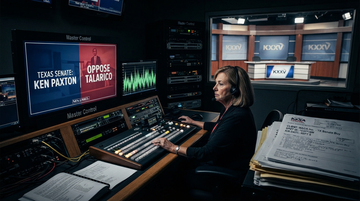
$500M, 60 Days: How Trump's MAGA Inc. Pledge Reshapes the Midterm Trade
Trump's September 4 pledge to deploy $400-500M from his MAGA Inc. super PAC, with the first $10M hitting Texas on September 5, converts the next eight weeks into a sector-level reelection bet. Local broadcasters Nexstar, Gray Television, and Sinclair book the ad revenue immediately; healthcare, energy, and tariff-exposed sectors get repriced against the probability of a Trump-aligned Congress. Investors who treat this as a generic political headline will miss the most concentrated political flow of the cycle.

Trump Wants the World's Lowest Interest Rates. The AI Boom Just Borrowed $167 Billion to Make Sure He Can't Have Them
Four hyperscalers spent $511 billion on capital expenditure in the year to June 30, 2026 — 75% more than a year earlier — and funded the gap with roughly $167 billion of net new debt. That is a private credit-demand shock landing on top of 3.4% headline inflation and a $1.17 trillion federal interest bill, and it is why futures price a September rate hike rather than the cuts the White House is demanding. The rate that actually governs the AI buildout is the 10-year at 4.77%, and political pressure on the Fed pushes that number up, not down.
2026-09-05

Food Services and Seasonal Schools Drove August's 162K Jobs Beat. The Fed Just Repriced the Wrong Print.
The headline handily beat consensus, but more than 60% of August's gain came from food services and seasonal local-government education — and BLS's own August 28 benchmark revision already acknowledged employment levels were overstated by 79,000 through March 2026. With healthcare hiring running at less than half its trend and wage growth cooling to 3.1%, the market's rush to price a September Fed hike is paying for a print the underlying data has already softened.

Citi just pushed its first Fed cut to June 2027 — and landed as Wall Street's quiet dovish outlier
After August's 162K payrolls print nearly tripled the 58K consensus, Citigroup pushed its first Fed cut from October 2026 to June 2027 — yet still expects three 25bp cuts in 2027, more than Goldman Sachs and the opposite of JPMorgan, which now forecasts the next move as a December hike. With the 2-year yield up 5bp to 4.37%, fed funds futures pricing a 60% chance of a September hike, and rate-sensitive sectors selling off, Citigroup's call reframes what the next 12 months mean for duration, the dollar, and bank earnings.

Why the August jobs beat became the worst news for the weakest US borrowers
A 162K payroll print reset Fed-cut bets and shoved the 30-year Treasury to 5.25%, dragging riskiest CCC spreads to 10.4% and pushing $40.1B of 2026 defaults onto a wall that already includes Ares Capital, Prospect Capital, FS KKR Capital, and an Oracle teetering one notch above junk. BDCs and middle-market direct lenders sit at the bottom of the chain — and the BDC sector is already down 20% from February highs with NAVs marking lower, so the transmission into share prices is mechanical, not a 2027 problem.
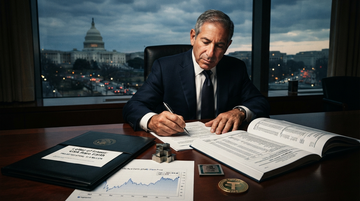
Lutnick's $250M Cantor Windfall Lands in the Middle of Every Trade Fight That Matters
Commerce Secretary Howard Lutnick's 2025 financial disclosure — $250M+ of income, mostly from his prior Cantor Fitzgerald stake — drops on Sept. 4 just as he is the lead U.S. negotiator on tariffs, the overseer of NVIDIA AI-chip export licenses, the architect of a $1.6B Commerce stake in USA Rare Earth (a Cantor-banker company), and the former banker for stablecoin giant Tether that drove the GENIUS Act. The paper trail now hands litigants, importers, and Congress a single thread tying the agency's biggest decisions back to one family's balance sheet.
2026-09-04
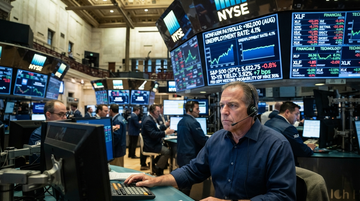
August jobs hit 162,000—now September hinges on whether the Fed treats labor strength as “cooling demand” or “inflation fuel”
The BLS reported that U.S. nonfarm payrolls rose by 162,000 in August with unemployment at 4.1%. That combination shifts the key risk for September: even if wage growth stays contained, a stronger hiring impulse can revive hike pricing through the Fed’s inflation-and-demand reaction function rather than through a simple wage story. Investors should expect duration-sensitive sectors to reprice first, while financials tied to real-rate volatility and capital markets activity may get a more complex, two-sided read.
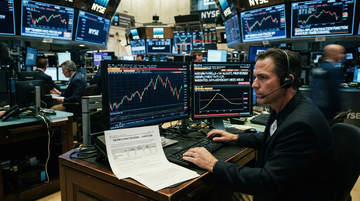
A soft August jobs print won’t necessarily stop a September hike—unless it breaks the “duration trade” channel
With the Federal Reserve signaling a less dot-plot-driven, more reaction-function style of communication under Chairman Warsh, the first-read power of nonfarm payrolls may shift from “policy decision” to “bond-duration repricing.” The market’s key question for September becomes whether a payroll slowdown changes the inflation constraint (oil + shelter) enough to remove the hike’s earnings-quality downside—especially for rate-sensitive cyclicals and low-income retail.

NBIM’s proposed cut to U.S. Treasuries turns “ally demand” into a term-premium risk
Norges Bank Investment Management (NBIM) has proposed reducing the government-bond weighting inside its benchmark and cutting its U.S. Treasury exposure materially. Even if the move is gradual, it reframes official-sector demand for duration as a portfolio-design variable—one that can pressure term premium, auction dynamics, and the dollar when U.S. supply rises.

Trump ties tariff retaliation to the Fed: a September risk where rate cuts become the “payment” the White House demands
A reported White House threat—cut rates or the U.S. will stop trading with certain deficit countries—fuses trade retaliation with Fed independence into one coercion channel. If markets treat it as credible, the Sept. 17 FOMC decision shifts from a pure monetary debate to a compound tariff-and-stagflation shock that can keep duration yields and the dollar pressured while growth expectations roll over.

A $600M Turkish bank just got SDN-listed — that's a bull signal for JPM, Citi and BofA, not a crude headline
OFAC on September 4, 2026 put Golden Global Bank, Turkey's 35th-largest lender, on the SDN list under E.O. 13902 for laundering tens of millions for the IRGC-Qods Force. The small target is the point: by SDN-listing a niche correspondent-banking node, Treasury forces every larger Turkish and EM bank — and every US money-center that clears their dollars — to police Iran's residual reach or risk losing US account access. The trade is the correspondent gatekeepers (JPMorgan Chase, Citigroup, Bank of America) and short Turkish lira funding, not crude oil.

Warsh’s “quieter Fed” makes the NFP print a protocol change—not a rate forecast. Here’s what survives
Kevin Warsh’s push to reduce forward guidance and rely on a more explicit reaction function shifts what traders do on jobs-report day. With the market already leaning toward a September hike, today’s NFP becomes the first test of the new playbook—rewarding cross-asset “surprise” interpretation and punishing any strategy built on prior-message pre-positioning.
What to expect
Evidence-first notes with a visible point of view.
This section collects sharp takes on earnings, shareholder meetings, and market structure. Each new piece should make the thesis, the facts, and the implications obvious within the first few screens.
Expect direct analysis, not generic commentary.
Expect the data to be explicit and the argument to be easy to follow.
Plutux is not an investment adviser. Market data and AI-generated analysis are for information and education only, not investment advice. Disclaimer