Data Centers & Cloud
The buildout behind the AI bill
Hyperscaler capex, colocation supply, power, cooling and networking — where the money goes after the GPU order, and which companies book it.
2026-09-06
%22%2F%3E%0A%20%20%3Ccircle%20cx%3D%22220%22%20cy%3D%22150%22%20r%3D%22180%22%20fill%3D%22%2322d3ee%22%20fill-opacity%3D%220.12%22%2F%3E%0A%20%20%3Ccircle%20cx%3D%221010%22%20cy%3D%22130%22%20r%3D%22220%22%20fill%3D%22%2338bdf8%22%20fill-opacity%3D%220.08%22%2F%3E%0A%20%20%3Ccircle%20cx%3D%22920%22%20cy%3D%22520%22%20r%3D%22170%22%20fill%3D%22%2322d3ee%22%20fill-opacity%3D%220.06%22%2F%3E%0A%20%20%3Cpath%20d%3D%22M140%20430h920%22%20stroke%3D%22url(%23line)%22%20stroke-width%3D%2212%22%20stroke-linecap%3D%22round%22%2F%3E%0A%20%20%3Cpath%20d%3D%22M220%20360c120-150%20260-220%20380-220s260%2070%20380%20220%22%20fill%3D%22none%22%20stroke%3D%22%2367e8f9%22%20stroke-opacity%3D%220.5%22%20stroke-width%3D%2216%22%20stroke-linecap%3D%22round%22%20stroke-linejoin%3D%22round%22%2F%3E%0A%20%20%3Cpath%20d%3D%22M300%20398h600%22%20stroke%3D%22%2394a3b8%22%20stroke-opacity%3D%220.24%22%20stroke-width%3D%228%22%20stroke-linecap%3D%22round%22%2F%3E%0A%20%20%3Ctext%20x%3D%22220%22%20y%3D%22510%22%20fill%3D%22%23e2e8f0%22%20fill-opacity%3D%220.7%22%20font-family%3D%22Arial%2C%20Helvetica%2C%20sans-serif%22%20font-size%3D%2238%22%20letter-spacing%3D%228%22%3EINSIGHTS%3C%2Ftext%3E%0A%3C%2Fsvg%3E)
2026-09-05
2026-09-04
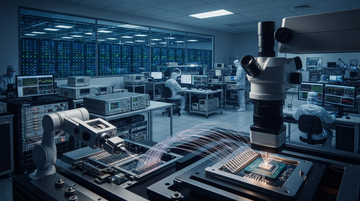
Ciena proves AI optical demand is real—and the next bottleneck shifts upstream supply, not downstream build
Ciena reported $1.67B revenue in Q3 FY2026, up 37% year over year, confirming its “AI-networking order-book” thesis for optical interconnect. The key investor implication is timing: when bookings accelerate faster than component throughput, near-term reads move from demand validation to supply availability across the coherent/optics test chain.
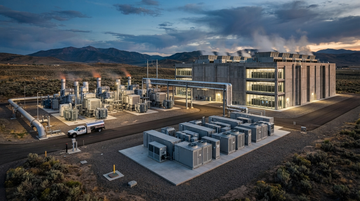
Crusoe’s $30B mark reframes AI data centers as a power-ownership business—boosting “turbine-to-rack” spillovers that scale-colo players can’t easily replicate
Crusoe’s reported $3B fundraising at a $30B valuation signals that investors will pay for AI capacity only when power reliability and grid stability are built into the product. The key tell is Crusoe’s disclosed path to on-site generation (via gas turbines) and power-conditioning/ride-through (via AI UPS), which shifts leverage from colocation landlords to power-integrators and equipment suppliers.
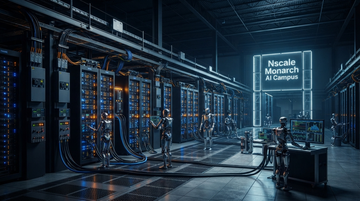
Nscale just locked in $3.5B of compute for humanoids—turning embodied AI into a tenant-class the “neocloud” playbook can underwrite
Nscale and Figure have signed a multi-year compute partnership starting in the second half of 2027, with an initial $3.5B commitment and an intent to scale beyond $6B. The deal matters less as robotics news and more as infrastructure proof: it extends Nscale’s contracted-revenue model (already validated by Anthropic-style compute deals) into a new physical-AI demand profile—low-latency, high-volume data pipelines tied to real-world deployment. That raises the stakes for how investors should think about compute capacity, utilization risk, and the timing pressure on incumbent robotics and cloud tenants.
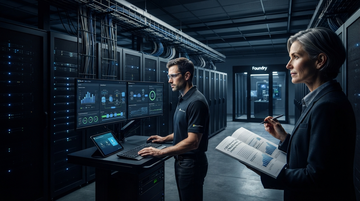
Microsoft's Foundry channel turns OpenAI GPT-6 Astra into the enterprise monetization gate—before open access
OpenAI is rolling GPT-6 Astra out first through its Daybreak enterprise program (with ChatGPT tiering and API access following), while Microsoft promotes how OpenAI models are sold through Microsoft Foundry under Azure’s enterprise distribution mechanics. The tradeoff is clear: scarcity is being used to secure higher-trust buyers and tighter deployment controls—setting up Microsoft to capture more “resale-style” AI revenue economics per seat and per inference rather than waiting for universal open APIs.
2026-09-03
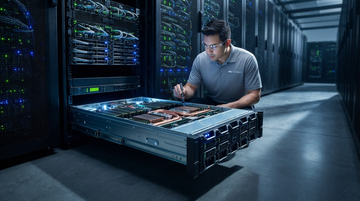
Dell clears the AI-rack “margin test” by proving its mix can expand—guidance lifts while gross and operating margin jump
Dell raised FY27 guidance after posting Q2 results that expanded both gross margin (20.9%) and non-GAAP operating margin (12.6%), alongside record AI-Optimized Servers revenue ($16.4B) and backlog ($95B). The key investor takeaway is not just AI demand—it’s that AI-related product momentum translated into structurally higher margins, directly undercutting the “AI revenue with lower-profit payoffs” narrative that has pressured Broadcom and Credo.
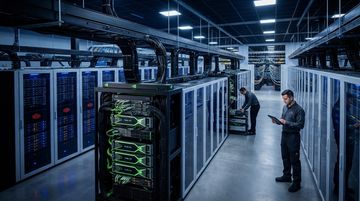
Can “neutral” colocation capture AI inference profit—now that Nvidia is building inside Equinix’s fabric?
Equinix’s Sept. 2, 2026 launch of “Equinix Inference Exchange,” anchored on Nvidia’s enterprise reference architecture and Together AI’s inference platform, is a bid to make vendor-neutral inference easier to deploy across Equinix’s interconnection layer. The investor question isn’t whether AI demand grows—it’s whether this packaging changes where the margin lands: colocation economics, or the hyperscalers’ walled-garden inference/distribution advantage.

Nscale’s $103B “contracted revenue” claim raises the hardest audit question in neoclouds: is it demand—or financing math?
Nscale’s Sep. 2 claim that it has ~$103B of contracted AI revenue ahead of a potential IPO is big enough to reframe expectations for the neocloud buildout. But without line-item, investor-auditable contract terms, that number is difficult to distinguish from circular financing dynamics—exactly the risk investors have been stress-testing in CoreWeave, where reported revenue backlog is massive even as losses persist.

The Software Recovery Map: AI “Attach” Now Shows Up in Guidance—Here’s the Winner/Laggard Split
Software’s rebound since the SaaSpocalypse bottom is real, but it isn’t uniform. The re-rating is separating layers that convert AI demand into measurable guidance (data platforms, CRM/enterprise suites, and process “execution” layers) from names still priced off a future miracle—visible in what companies actually forecast and how quickly they monetize AI-related usage.
2026-09-02
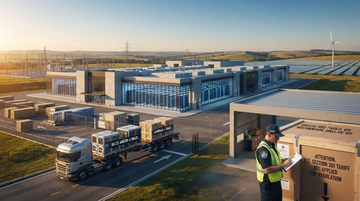
Brazil just made data-center capex cheaper—turning the US power bottleneck into a potential LatAm “second queue” for AI builds
Brazil’s Congress approved a special tax regime (REDATA) that suspends key federal taxes on data-center IT capex starting in 2026, reducing the cost and friction of deploying new capacity in-country. That timing matters because several US states are tightening approvals and interconnection timelines for new data centers, leaving AI demand to find the next buildable power queue. The twist for investors: the same Brazil-for-AI push is occurring alongside a new 25% US Section 301 tariff on Brazilian goods, which can raise cross-border equipment costs and complicate the economics of any Brazil-to-US supply chain.
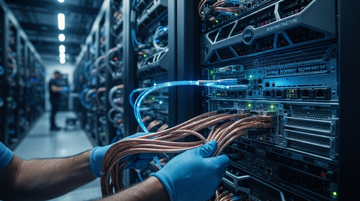
Credo’s post-earnings drop tests whether copper interconnect cash flows can keep up with AI rack spend — even as Dell confirms demand is accelerating
Credo CRDO reported Q1 FY2027 results above the optics-friendly narrative investors were pricing, but the stock sold off sharply the next day. The key question for AI rack investors is whether the market is rotating from “copper rack capture” to “optics/other bottlenecks,” and whether Credo’s guidance supports that transition.
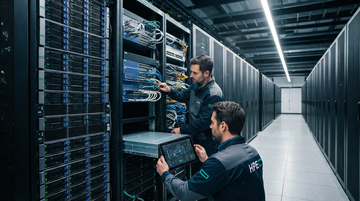
HPE must turn AI orders into high-margin “systems” fast enough to outpace Juniper debt—its Sept. 2 guide is the test
Hewlett Packard Enterprise HPE is set to report on Sept. 2, with investors focused on whether Cloud & AI operating leverage can offset higher-than-ideal financing and keep margins consistent as AI systems backlog converts. In its most recent quarter disclosures, HPE showed $16.4B cumulative AI systems bookings, a $5.9B AI backlog entering Q3, and raised fiscal 2026 EPS while lowering expected net interest expense by about $75M—signals that matter because AI margins and interest costs decide whether “dollars per rack” economics close.

Microsoft starts making Azure quarterly revenue comparable—turning “cloud growth” into an auditable line investors can model
Microsoft’s latest reporting changes begin separating Azure’s cloud economics from the broader Intelligent Cloud bucket in a way that lets investors track quarterly Azure growth directly (instead of inferring it through a blended segment). The shift matters most for AI cloud economics: it clarifies how much incremental demand is converting into measurable Azure revenue, and it changes how the market will price Microsoft’s capex-heavy AI buildout.

MongoDB's Sept. 1 print is the first test of whether AI spend monetizes at the application-data layer (or stalls at the rack)
MongoDB will report Q2 FY2027 results for the three months ended July 31, 2026 after markets close on Sept. 1, with guidance baked into the event materials: total revenue of $771.8M (+30% YoY) and Atlas revenue up ~29% YoY. The investor question is whether the AI buildout pushes usage deeper into the database/data plane (vector + workload intensity), translating into durable Atlas expansion—or whether demand concentrates in accelerators and infrastructure.
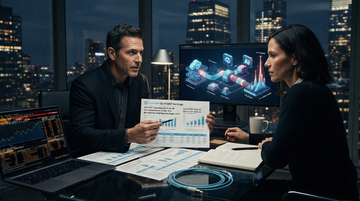
Snowflake turns “consumption math” into margin discipline — and the guide implies the $190B Databricks ceiling isn’t binding
Snowflake used its Sep 2 after-hours print to answer the core “consumption math” question: revenue is explicitly tied to platform consumption, and the AI story is paired with raised FY2027 margin and cash guidance. The Q2 FY2027 results and guidance show fast, profitable scaling (product revenue +37% YoY; non-GAAP operating margin guide 14.5%), even as Snowflake flags AI-related pricing mechanics as a consumption risk.
2026-09-01
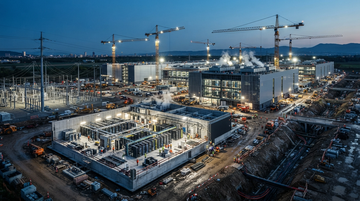
EU antitrust pressure on Oracle’s licensing mechanics turns AI capex into a regulatory cash-flow bet
Oracle’s EU antitrust overhang targets licensing practices that underpin its recurring revenue model—exactly the revenue stream investors rely on to fund aggressive AI data-center buildout. With Oracle reporting $55.7B in capex for fiscal 2026 and expecting the build to continue, the key investor question is whether regulatory remedies can slow the cash conversion that the capex plan requires.
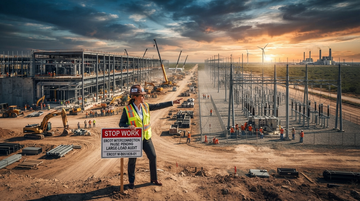
Texas freezes AI data-center “ghost demand” — and the scarcity-rent power trade just lost its clean story
Texas regulators moved to pause new ERCOT data-center grid connections pending an audit of large-load requests, challenging load forecasts built on speculative interconnection queues. That forces a re-check of the “AI power scarcity” thesis: the scarcity rent may still exist, but its timing and magnitude now hinge on how many of those requests actually energize and how quickly generators and wires can follow.
2026-08-31
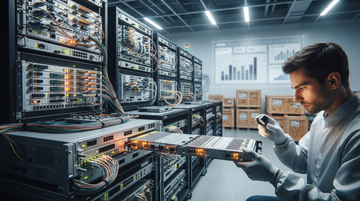
Ciena's order book is the missing systems-level proof for AI networking demand — but it comes with a demand-vs-supply timing squeeze
Ciena’s latest reported results show strong growth alongside a large backlog, but the most decision-relevant question—whether AI demand is showing up at the optical-systems layer rather than only upstream modules—can’t be answered from the primary sources available in this research run. The numbers we can verify support a real order-book-backed cycle expansion, while key “webscale/AI” backlog breakdowns and “optical systems” attribution were not disclosed in the pages that loaded successfully.
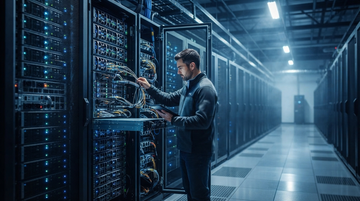
Dell’s AI-server growth proves demand—but margin still has to clear the “dollars per rack” test
Dell’s guidance jump implies AI-optimized servers can scale fast, with Q1 FY27 showing $16.1B of AI server revenue on 18.1% gross margin. The investable question is whether that gross-mix improvement holds through the next quarters, because Dell’s core franchise still carries the burden of lower-quality earnings and weak operating momentum outside AI.
What to expect
Evidence-first notes with a visible point of view.
This section collects sharp takes on earnings, shareholder meetings, and market structure. Each new piece should make the thesis, the facts, and the implications obvious within the first few screens.
Expect direct analysis, not generic commentary.
Expect the data to be explicit and the argument to be easy to follow.
Plutux is not an investment adviser. Market data and AI-generated analysis are for information and education only, not investment advice. Disclaimer