Data Centers & Cloud
The buildout behind the AI bill
Hyperscaler capex, colocation supply, power, cooling and networking — where the money goes after the GPU order, and which companies book it.
2026-07-23
%22%2F%3E%0A%20%20%3Ccircle%20cx%3D%22220%22%20cy%3D%22150%22%20r%3D%22180%22%20fill%3D%22%2322d3ee%22%20fill-opacity%3D%220.12%22%2F%3E%0A%20%20%3Ccircle%20cx%3D%221010%22%20cy%3D%22130%22%20r%3D%22220%22%20fill%3D%22%2338bdf8%22%20fill-opacity%3D%220.08%22%2F%3E%0A%20%20%3Ccircle%20cx%3D%22920%22%20cy%3D%22520%22%20r%3D%22170%22%20fill%3D%22%2322d3ee%22%20fill-opacity%3D%220.06%22%2F%3E%0A%20%20%3Cpath%20d%3D%22M140%20430h920%22%20stroke%3D%22url(%23line)%22%20stroke-width%3D%2212%22%20stroke-linecap%3D%22round%22%2F%3E%0A%20%20%3Cpath%20d%3D%22M220%20360c120-150%20260-220%20380-220s260%2070%20380%20220%22%20fill%3D%22none%22%20stroke%3D%22%2367e8f9%22%20stroke-opacity%3D%220.5%22%20stroke-width%3D%2216%22%20stroke-linecap%3D%22round%22%20stroke-linejoin%3D%22round%22%2F%3E%0A%20%20%3Cpath%20d%3D%22M300%20398h600%22%20stroke%3D%22%2394a3b8%22%20stroke-opacity%3D%220.24%22%20stroke-width%3D%228%22%20stroke-linecap%3D%22round%22%2F%3E%0A%20%20%3Ctext%20x%3D%22220%22%20y%3D%22510%22%20fill%3D%22%23e2e8f0%22%20fill-opacity%3D%220.7%22%20font-family%3D%22Arial%2C%20Helvetica%2C%20sans-serif%22%20font-size%3D%2238%22%20letter-spacing%3D%228%22%3EINSIGHTS%3C%2Ftext%3E%0A%3C%2Fsvg%3E)

ServiceNow’s raised 2026 subscription outlook makes “AI attach rate” a margin-timing test—not just a growth story
ServiceNow’s management raised its full-year 2026 subscription revenue outlook to $15.760B–$15.780B, citing AI-driven demand. For investors, the key question shifts from whether AI is selling to whether the adoption (attach) curve is steep and early enough to lift margins before the next renewal and cost cycle timing mismatch.

ServiceNow’s Raised Subscription Forecast Turns the AI “Attach Rate” Into a Timing Test—Here’s the Evidence You Can Check
ServiceNow NOW lifted its fiscal 2026 annual subscription revenue outlook again, citing AI-driven demand rather than any customer-led pullback. The key investor question is whether AI is creating incremental net expansion (more usage-driven revenue and retention) or simply pulling forward contract timing—so this article maps the forecast change to remaining performance obligations and what ServiceNow does (and does not) disclose about renewals/churn dynamics.
2026-07-22
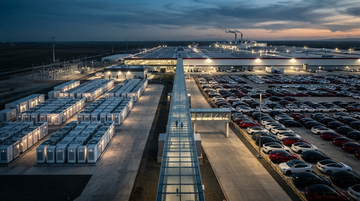
Alphabet’s Q2 2026 Preview: AI-Proof Search Cashflow Beats Cloud Growth Risk
Ahead of Alphabet’s Q2 2026 results, the market’s real bet is whether AI-integrated search features can protect ad monetization while Google Cloud’s growth holds up despite intensifying competition. The latest accessible fundamentals show Alphabet remains a high-margin cash machine, but the supply-chain question is whether capex intensity keeps outpacing monetization. Investors should judge the quarter by (1) ad durability signals, (2) cloud margin/operating leverage, and (3) capital intensity trajectory.
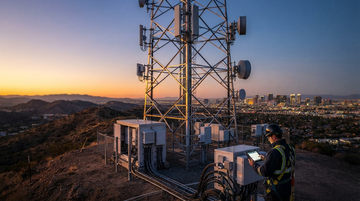
Crown Castle’s Q2 2026 Setup: Stable Cash Flows, but Interest-Rate/Refinancing Discipline Will Drive the Real Signal
Crown Castle CCI is heading into its Q2 2026 print with a business model that can keep operating cash flows steady even when headline earnings are noisy. The key investor read-through is whether management can protect interest coverage and liquidity while navigating tower-capex and refinancing at today’s rate levels.

Super Micro’s Q4 2026 Gross-Margin Jump (15%–17% vs 8.2%–8.4%) Is Real—but the Risk Is “Backlog Quality,” Not Demand
Super Micro Computer SMCI signaled a preliminary fiscal Q4 gross margin of 15%–17%, nearly doubling prior guidance to ~8.2%–8.4%, alongside a record $60B+ new-orders backlog. The setup looks like genuine AI infrastructure operating leverage, but the stock move will ultimately hinge on whether that margin expansion converts into repeatable revenue mix and cash (not just accounting timing) as production ramps and shipments catch up.
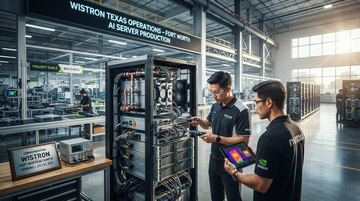
Wistron's $700M Texas AI-Server Factory Is the “Domestic Scaling” Test for NVIDIA’s Supercomputer Supply Chain
Wistron opened a $700M, 324,000-square-foot AI-server assembly-and-test facility in Fort Worth on July 21, 2026, built to support NVIDIA’s next wave of AI systems. The U.S. move matters less because it changes the chip source—and more because it stress-tests integration, yield, thermal/liquid-cooling readiness, and speed-to-ramp for high-volume Blackwell Ultra and Vera Rubin “system” production. For investors, the key question is whether domestic manufacturing reduces latency and risk enough to win sustained orders without permanently worsening Wistron’s working-capital and cash-flow profile.
2026-07-21
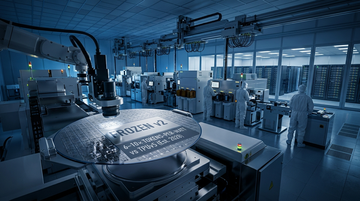
Google’s “Frozen v2” (Gemini-aware) chip targets 6–10× better tokens-per-watt by 2028—reshaping the AI inference hardware stack
Reuters/The Information reports Google is developing an internally named “Frozen v2” server chip that bakes Gemini model elements into hardware, targeted for as early as 2028 deployment. The chip is expected to deliver 6–10× more AI tokens per unit of power than Google’s latest custom silicon and is intended to complement (not replace) Google’s existing TPU roadmap—aiming to relieve compute bottlenecks as AI capex rises. For investors, the key question isn’t only whether the chip works, but whether Google can turn improved tokens-per-watt into measurable inference cost leverage versus competitors’ GPUs/accelerators, with TSMC likely central to the advanced packaging and manufacturing ramp.
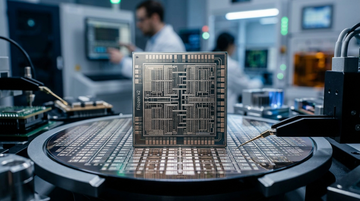
Google Develops 'Frozen v2' Chip With Gemini Baked Into Silicon — A 6-10x Efficiency Play for 2028
Reuters reported on July 20, 2026 that Google is developing a new server chip codenamed 'Frozen v2' that embeds elements of its Gemini model directly into the hardware. The chip is projected to be 6–10x more efficient than current custom Google AI silicon (measured by tokens served per watt) and is targeted for deployment as early as 2028. The 'Frozen' program runs alongside but does not replace Google's existing TPU roadmap (TPU 8t/8i announced at Cloud Next '26) and signals an architectural shift toward model-silicon co-design, putting further pressure on the GPU-centric AI compute stack.
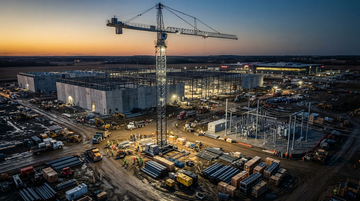
Oracle's $165B AI Megacampus Bet Hits Cost Overruns — BBB Rating, $55.7B FY26 Capex, New Debt/Equity Raise Looms
On July 20, 2026, multiple outlets reported Oracle is facing multibillion-dollar cost overruns across its $165B AI data-center buildout, including its flagship Wisconsin ($15B, ~1 GW) and El Paso/Texas (Project Jupiter) sites. FY2026 capex reached $55.7B — exceeding Oracle's own $50B guidance and up 162% YoY. The company has signaled further debt and equity issuance to fund expansion while its credit rating has slid to BBB, triggering a lawsuit with the Wisconsin Public Service Commission over $100M+ annual financial guarantees. Concerns include local power-grid constraints in New Mexico and broader questions about hyperscaler AI infrastructure returns.
2026-07-20

Databricks' $188B Coatue-Led Round Resets the Private-AI Ceiling: What a 40% Markup in Six Months Says About the Enterprise Data Stack
On July 17, 2026, Databricks signed a term sheet for a strategic funding round led by Coatue that values the data/AI platform at $188B — a roughly 40% step-up from its ~$134B valuation in December 2025. The round totals about $3B from new and existing investors and is expected to close later this summer. It comes on the heels of a separate ~$5B raise earlier in 2026 and stretches Databricks' lead as the most valuable non-foundation-model AI private company, sharpening questions about IPO timing, AI infrastructure economics, and the relative pricing of public SaaS peers.
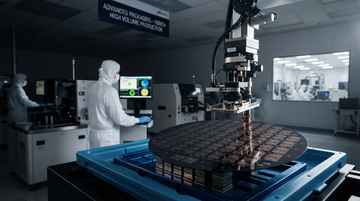
Micron Stock Snap: SK Hynix's Memory Price Warning Reprices the AI Memory Oligopoly
On July 19–20, 2026, Micron shares snapped a recent losing streak after an SK Hynix memory-price warning reinforced that the AI-driven DRAM/HBM cycle remains supply-constrained into 2027 and beyond. The warning follows SK Hynix CEO Kwak Noh-jung's comments on July 10 calling 2027 the 'worst year' for memory supply shortages, with the crunch expected to last to 2030 — and comes as memory stocks (SK Hynix, Micron, SanDisk, Western Digital) sold off sharply the prior week on concerns about peak-cycle pricing.
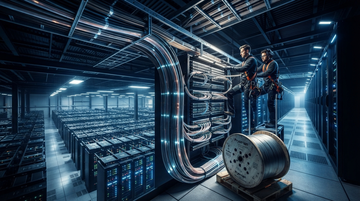
Molex-Prysmian's $6.29B Data-Center Cable Deal Is the Newest Anchor for the Hyperscaler Optical Supply Chain
On July 20, 2026, Koch-owned Molex struck a 10-year, up to $6.29 billion (€5.5 billion) deal with Italy's Prysmian for the supply of optical cables used inside AI data centers, including a €550 million upfront payment. The agreement — one of the largest hyperscaler-adjacent cabling contracts ever disclosed — follows Prysmian's May 2026 guidance that hyperscaler deals would push 2028 EBITDA up ~64% from 2024, and a $4.68B M&A exploration to bolt on capacity. The deal locks in critical optical interconnect supply at a moment when AI-driven data-center fiber demand is competing with telecom and subsea projects for the same Prysmian capacity.

Prologis's Third $18.2B Bid for Segro Just Got Rejected — What Happens Before the July 22 Takeover Panel Deadline
On July 17, 2026, Segro's board unanimously rejected Prologis's third sweetened takeover offer valued at approximately £13.5 billion ($18.16 billion), comprising £2.7 billion in cash and 0.0890 new Prologis shares per Segro share. The bid carries a 33.8% premium to Segro's June 23 closing price but was dismissed as still materially undervaluing the UK warehouse landlord. Under UK Takeover Panel rules, Prologis has until July 22, 2026 to either make a formal offer or walk away, with Bloomberg reporting a possible secondary London Stock Exchange listing as a sweetener. The proposed merger would create the world's largest industrial REIT at a time when data-center demand is reshaping the logistics property thesis.
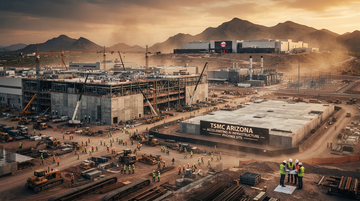
TSMC Accelerates Arizona Buildout, Lifts 2026 Capex to $60-64B — The AI 'Megatrend' Is Now a US Foundry Story
On July 20, 2026, TSMC CFO Wendell Huang told CNBC the company is accelerating its Arizona fab buildout to capitalize on what he called a 'multi-year structural' AI 'megatrend', with the Arizona pipeline raised to $265 billion on top of an additional $100 billion commitment. TSMC simultaneously lifted full-year 2026 capex guidance to $60-64 billion (from a prior $52-56B) and confirmed Phase 1 of Arizona is in production on 4nm, with advanced packaging also being built on-site. Crucially, Huang disclosed that US fab construction costs run 4-5x Taiwan levels, a key margin datapoint for assessing the long-run economics of US-based AI chip manufacturing.
2026-07-19
2026-07-18

Amazon, Alphabet, Microsoft, and Meta Are Turning AI Capex Into a Return-on-Compute Test
The latest capex debate is not about whether the hyperscalers are spending enough. It is about whether the next dollar of AI infrastructure produces a return that is high enough to justify the power, memory, and financing burden.
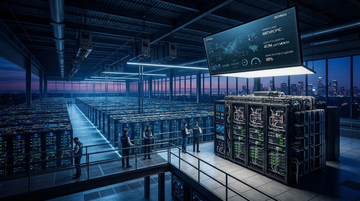
Meta's Anthropic Lease Turns AI Compute Into a Wholesale Market
A potential $10 billion deal to rent compute to Anthropic would move Meta one step closer to treating its AI infrastructure like a saleable utility. That changes the market's question from 'is Meta overinvesting?' to 'can Meta monetize spare capacity better than the cloud incumbents?'

Meta's AWS Poach Turns AI Infrastructure Into a Cloud-Business Trial
Hiring a senior Amazon Web Services executive is a small headline with a large read-through: Meta is no longer just buying compute, it is starting to organize itself like a compute platform. That changes the valuation debate around AI capex, cloud economics, and what counts as a durable moat.
2026-07-16
2026-07-15
What to expect
Evidence-first notes with a visible point of view.
This section collects sharp takes on earnings, shareholder meetings, and market structure. Each new piece should make the thesis, the facts, and the implications obvious within the first few screens.
Expect direct analysis, not generic commentary.
Expect the data to be explicit and the argument to be easy to follow.
Plutux is not an investment adviser. Market data and AI-generated analysis are for information and education only, not investment advice. Disclaimer