Data Centers & Cloud
The buildout behind the AI bill
Hyperscaler capex, colocation supply, power, cooling and networking — where the money goes after the GPU order, and which companies book it.
2026-07-27
%22%2F%3E%0A%20%20%3Ccircle%20cx%3D%22220%22%20cy%3D%22150%22%20r%3D%22180%22%20fill%3D%22%2322d3ee%22%20fill-opacity%3D%220.12%22%2F%3E%0A%20%20%3Ccircle%20cx%3D%221010%22%20cy%3D%22130%22%20r%3D%22220%22%20fill%3D%22%2338bdf8%22%20fill-opacity%3D%220.08%22%2F%3E%0A%20%20%3Ccircle%20cx%3D%22920%22%20cy%3D%22520%22%20r%3D%22170%22%20fill%3D%22%2322d3ee%22%20fill-opacity%3D%220.06%22%2F%3E%0A%20%20%3Cpath%20d%3D%22M140%20430h920%22%20stroke%3D%22url(%23line)%22%20stroke-width%3D%2212%22%20stroke-linecap%3D%22round%22%2F%3E%0A%20%20%3Cpath%20d%3D%22M220%20360c120-150%20260-220%20380-220s260%2070%20380%20220%22%20fill%3D%22none%22%20stroke%3D%22%2367e8f9%22%20stroke-opacity%3D%220.5%22%20stroke-width%3D%2216%22%20stroke-linecap%3D%22round%22%20stroke-linejoin%3D%22round%22%2F%3E%0A%20%20%3Cpath%20d%3D%22M300%20398h600%22%20stroke%3D%22%2394a3b8%22%20stroke-opacity%3D%220.24%22%20stroke-width%3D%228%22%20stroke-linecap%3D%22round%22%2F%3E%0A%20%20%3Ctext%20x%3D%22220%22%20y%3D%22510%22%20fill%3D%22%23e2e8f0%22%20fill-opacity%3D%220.7%22%20font-family%3D%22Arial%2C%20Helvetica%2C%20sans-serif%22%20font-size%3D%2238%22%20letter-spacing%3D%228%22%3EINSIGHTS%3C%2Ftext%3E%0A%3C%2Fsvg%3E)

The “$250B” Nvidia–OpenAI financing idea would turn AI data centers into a lender-controlled asset class
Reuters previously confirmed Nvidia’s $100B-scale vendor-plus-equity investment plan to help OpenAI build at least 10GW of data-center capacity. But if a reported Nvidia-backed $250B financing guarantee materializes, the economics of capacity ownership could shift from hyperscalers to a tighter loop of chips → equity stakes → project capital—changing who captures returns and who bears buildout risk.
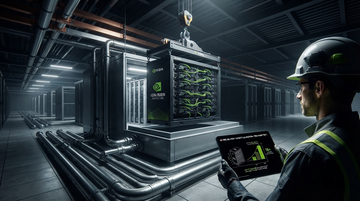
Nvidia’s Vera Rubin just got an “order-of-magnitude” pre-model customer—SSI turns the frontier compute race into a contracted capacity story
Nvidia confirmed a long-term strategic partnership with Ilya Sutskever’s Safe Superintelligence Inc. for access to the next-generation Vera Rubin compute platform, with SSI saying it can raise compute by about an order of magnitude. The investor takeaway isn’t “more AI revenue” but earlier, contracted demand visibility: a private frontier lab locking compute before any product exists changes how to think about Nvidia’s capacity-to-customer pipeline and the downstream capex and power/memory bottlenecks.
2026-07-26
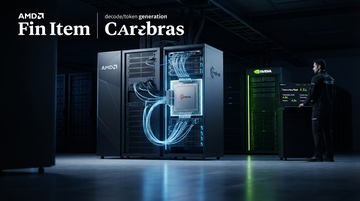
AMD and Cerebras just proved inference can be disaggregated—yet NVIDIA still owns the system moat
The AMD-Cerebras partnership describes a single disaggregated inference workflow that splits prompt/throughput on AMD’s Helios from decode/token generation on Cerebras’ Wafer-Scale Engine, targeting up to 5x higher tokens-per-second-per-watt. That architecture-level openness is investable for the components that get “stage-based” pricing power, but NVIDIA’s hardest moat remains: end-to-end platform integration across the stack and the economics of system-level performance tuning.

Claude Opus 5’s lower price shifts the frontier profit pool toward inference capacity—and NVIDIA is the clearest compute beneficiary
Anthropic’s Claude Opus 5 keeps Opus-tier pricing while introducing multiple cost-efficiency levers (prompt caching thresholds, effort-level efficiency, and fast-mode billing) that can lower effective $/work. That combination matters for the “arms race” because cheaper capability plus easier cost controls tends to pull more budget into hyperscaler inference throughput, raising compute utilization at the same time that model-lab unit economics face more pricing pressure.

CoreWeave just proved hyperscaler build beats pure-play certainty — but Nvidia locking still sets the floor
CoreWeave disclosed that Meta committed to pay about $21B for AI cloud capacity running through December 2032, lifting the relationship toward a ~$35B multi-year total. The stock’s selloff after Meta’s competing cloud push signals a new market reality: tier-1 compute gets owned by self-build hyperscalers, while pure-play neoclouds face utilization and churn risk even when contract headlines look “secure.”

Nasdaq’s Pre‑Earnings “Capex Confession” Sell Signal Hits Semis First—Because Hyperscaler Guidance Can Break the Math
On the tape, the Nasdaq can reprice AI exposure before hyperscalers even print, when investors treat guidance tone as a proxy for whether $300B+ of planned infrastructure spend stays intact. For semiconductors, the key risk isn’t “AI demand exists or not”—it’s whether hyperscaler capex cadence and margin narratives soften fast enough to pull forward a downgrade cycle through the supply chain.

Nvidia’s SK Hynix $500B-style memory lock-up reframes HBM as a contracted utility—tightening the HBM choke point for every other AI GPU maker
Public reporting confirms Nvidia has secured advanced AI memory supply from SK hynix via a multiyear technology partnership announced June 7, 2026. The key market impact is structural: when the “input bottleneck” gets prepaid and custom-developed, HBM behaves less like a commodity and more like a utility with allocation power—compressing upside for Micron and Samsung and making AMD- and Broadcom-adjacent supply strategies more substitute-constrained.

NVIDIA's Vera Rubin entering full production turns the 2026 AI demand debate into a supply-chain scheduling problem
Jensen Huang’s explicit confirmation that Vera Rubin is “in full production” removes the biggest uncertainty from the AI cycle: whether the post-Blackwell ramp is on schedule. For investors, the reframing is immediate—2026–27 hyperscaler capex and TSMC advanced packaging allocations now map more directly to HBM4 and CoWoS throughput timing, not just product positioning.

A single Northern Virginia line fault made PJM absorb a 3 GW “AI load step” — and it instantly made backup power a grid-reliability business
On July 22, a Northern Virginia transmission line fault triggered hyperscale data centers to automatically transfer load to backup power, while PJM recorded a sudden drop of more than 3 GW (~3% of demand at the time). The event reframes “backup power” from a discretionary reliability feature into an underwriting-grade requirement for AI capacity—turning power-management, switching, and generator/energy systems into the true beneficiaries of AI scaling.

Alphabet Is Becoming the Proxy Target in a New US–EU Digital-Sovereignty Trade Fight
The EU’s July 16 DMA actions force changes to Alphabet control points like Android access and search data, while President Trump says the US will retaliate with a Section 301 probe over the EU’s €890m Google fine. For investors, the key risk is not the fine itself—it’s that reciprocal enforcement turns compliance into a repeating headline discount on Alphabet’s next earnings cycle and cloud margins.

The Grid Reliability Cap Starts at 100°F: Why AI’s Power Boom Is Forcing Utilities to Reprice Delivery Risk
A single PJM disturbance that dropped “more than 3 gigawatts” after a transmission-line fault shows how tightly today’s grid margins are being used up by data-center load. Layer that with GE Vernova’s surge in electrification demand and you get a new investment reality: the limiting factor is no longer just generation—it’s transformer/dispatchability delivery under hotter, more volatile peak weather.

Verizon Turns Dark Fiber Into AI Backhaul Control After Securing a >$1B Google Contract
Verizon VZ secured a >$1B dark-fiber connectivity contract with Google, announced July 24, 2026, shifting telco fiber from “consumer access” toward AI data-center backhaul scarcity. For investors, the deal matters less for its headline size and more for what it implies: capacity commitment and routing optionality for Alphabet’s AI build-out—while competitors fight for the remaining lit/less-committed routes.

Uber loses a distribution channel but not necessarily robotaxi demand—Waymo now inherits full-stack economics first in U.S. markets
Reuters reports Waymo is exploring ending its decade-long Uber partnership, which would unwind the only mainstream U.S. on-demand AV surface that existed for riders using Uber. The breakup matters less for near-term demand and more for who pays the hard parts of autonomy: idle vehicles, insurance/risk, and ride-stack capex that was previously outsourced.
2026-07-25

2026-07-24
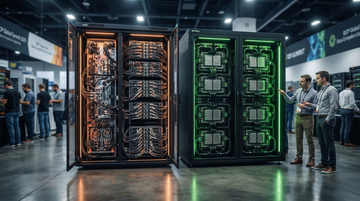
AMD’s Helios Is the First Rack-Scale Bet That Can Let AMD Win More Than GPU Share
With Helios, AMD moves from selling accelerators to selling a complete, double-wide rack-scale AI platform built on open rack standards—meant to compete in the same “one-rack is the system” category as NVIDIA’s NVIDIA NVL72. The decisive investor question is whether hyperscalers treat rack-scale as a compute-ops platform decision (favoring Helios’s open, Ethernet-based scale-up/scale-out) or as an NVIDIA-software-and-interconnect moat that AMD still can’t dislodge.
Oracle’s $7B Pentagon software consolidation win reframes its defense business from “AI megacampus drain” to durable on-prem cashflow
The Pentagon’s nearly $7B, up-to-10-year contract with Oracle is less about frontier AI and more about consolidating sprawling on‑prem enterprise software—plus maintenance and consulting—into a single procurement path. That changes how investors should think about Oracle’s defense exposure: from “spend-heavy AI buildout risk” to a repeatable, subscription-and-license-style government revenue stream tied to IT standardization.
2026-07-23
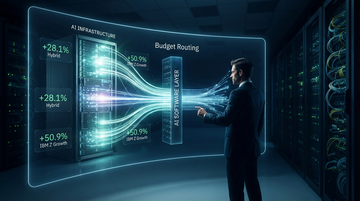
IBM’s Guidance Cut Is a “Budget Routing” Update: AI Spend Looks Shifting from Software to Infrastructure, and IBM’s Mix Exposure Is Real
IBM (IBM) cut its annual revenue-growth outlook on the signal that customers are prioritizing AI infrastructure spending. The key investor question isn’t whether AI demand exists—it’s which layer of the stack gets funded first, because that routing can temporarily favor infrastructure and delay software/certain consulting revenue timing, even as IBM’s infrastructure segment is showing strong growth.

IBM’s “Smaller-than-feared” Outlook Cut Points to AI Budget Routing—Not a Demand Shutdown
Even without a confirmed, load-bearing quote about AI infra vs. software mix from IBM filings this session, the combination of IBM’s segment structure (Software + Consulting + Infrastructure) and the directionality implied by a “less-than-feared” outlook cut supports a “budget routing” framework investors should test. The actionable read-through is that AI budgets may be reallocated between software/professional services procurement and infrastructure build-outs, which can leave revenue less impaired than capex-linked expectations—until segment-by-segment disclosure either confirms or disproves it.

OpenAI’s $750B AI Spend Is a Balance-Sheet Test, Not Just a Capex Story
A widely reported figure—OpenAI planning about $750B of computing-power spending commitments through 2030—forces the real question to the foreground: can the company’s private capital structure fund GPU+data-center buildout at scale before IPO changes the terms of growth. Public supply-chain beneficiaries like Microsoft, NVIDIA, and Oracle already show how cash generation and reinvestment capacity scale with AI demand, implying that OpenAI’s bottleneck is likely financing duration and liquidity timing more than hardware availability.

OpenAI’s Presence Turns “AI Agents” into a Production System—And the Enterprise Agent Stack Just Got a New Interoperability Toll Booth
OpenAI’s Presence is the first OpenAI product surface that behaves like infrastructure: always-on, real-time voice/chat agents deployed with explicit policies, guardrails, evaluation, and continuous post-launch updates. By pairing that with a ChatGPT for small business program, OpenAI attacks both sides of the “agentic enterprise stack”—workflow platforms first, and then SMB distribution—changing how ServiceNow, Salesforce, and Intuit may defend pricing, bundling, and switching costs.
What to expect
Evidence-first notes with a visible point of view.
This section collects sharp takes on earnings, shareholder meetings, and market structure. Each new piece should make the thesis, the facts, and the implications obvious within the first few screens.
Expect direct analysis, not generic commentary.
Expect the data to be explicit and the argument to be easy to follow.
Plutux is not an investment adviser. Market data and AI-generated analysis are for information and education only, not investment advice. Disclaimer