Materials & Supply Chain
Raw materials and the chokepoints that price them
Lithium, rare earths, copper and shipping — permits, export bans and capacity, followed to the miners and manufacturers on either side.
2026-09-07
%22%2F%3E%0A%20%20%3Ccircle%20cx%3D%22220%22%20cy%3D%22150%22%20r%3D%22180%22%20fill%3D%22%2322d3ee%22%20fill-opacity%3D%220.12%22%2F%3E%0A%20%20%3Ccircle%20cx%3D%221010%22%20cy%3D%22130%22%20r%3D%22220%22%20fill%3D%22%2338bdf8%22%20fill-opacity%3D%220.08%22%2F%3E%0A%20%20%3Ccircle%20cx%3D%22920%22%20cy%3D%22520%22%20r%3D%22170%22%20fill%3D%22%2322d3ee%22%20fill-opacity%3D%220.06%22%2F%3E%0A%20%20%3Cpath%20d%3D%22M140%20430h920%22%20stroke%3D%22url(%23line)%22%20stroke-width%3D%2212%22%20stroke-linecap%3D%22round%22%2F%3E%0A%20%20%3Cpath%20d%3D%22M220%20360c120-150%20260-220%20380-220s260%2070%20380%20220%22%20fill%3D%22none%22%20stroke%3D%22%2367e8f9%22%20stroke-opacity%3D%220.5%22%20stroke-width%3D%2216%22%20stroke-linecap%3D%22round%22%20stroke-linejoin%3D%22round%22%2F%3E%0A%20%20%3Cpath%20d%3D%22M300%20398h600%22%20stroke%3D%22%2394a3b8%22%20stroke-opacity%3D%220.24%22%20stroke-width%3D%228%22%20stroke-linecap%3D%22round%22%2F%3E%0A%20%20%3Ctext%20x%3D%22220%22%20y%3D%22510%22%20fill%3D%22%23e2e8f0%22%20fill-opacity%3D%220.7%22%20font-family%3D%22Arial%2C%20Helvetica%2C%20sans-serif%22%20font-size%3D%2238%22%20letter-spacing%3D%228%22%3EINSIGHTS%3C%2Ftext%3E%0A%3C%2Fsvg%3E)

2026-09-06
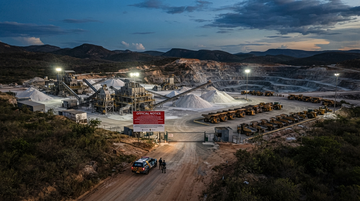
Sigma Lithium just lost its Brazilian permits again — and the ruling exposes who really wins in a Western lithium cycle
On September 5, 2026, a Brazilian court suspended every environmental permit for Sigma Lithium's Grota do Cirilo mine, the fourth legal shock in eight months, even as Albemarle's Q2 print revalidated the lithium cycle and the DFC funnels billions into Western-miner alternatives. The ruling doesn't move global tonnes meaningfully, but it re-prices Brazilian jurisdiction risk inside a market that has spent a year betting on policy-backed US supply: Sigma Lithium trades at a discount for the right reason, Albemarle and Lithium Americas collect the spread, and downstream battery makers face a louder case for sourcing from DFC-aligned projects.

TSMC's 20-fab buildout shows the AI-demand worry is obsolete — equipment is the bottleneck
TSMC is constructing 13 fabs in Taiwan and 5-6 overseas simultaneously, with 2026 capex lifted to $60-64B and equipment procurement demand up 90% in eight months. Q2 2026 gross margins hit a record 67.7% and NVIDIA has locked in 60% of CoWoS output, so the binding constraint has flipped from demand to ASML, Tokyo Electron and the rest of the equipment chain. Investors should size positions to the equipment suppliers and the customer anchors, not the foundry itself.
2026-09-05
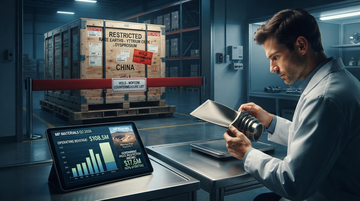
2026-09-02

Credo’s post-earnings drop tests whether copper interconnect cash flows can keep up with AI rack spend — even as Dell confirms demand is accelerating
Credo CRDO reported Q1 FY2027 results above the optics-friendly narrative investors were pricing, but the stock sold off sharply the next day. The key question for AI rack investors is whether the market is rotating from “copper rack capture” to “optics/other bottlenecks,” and whether Credo’s guidance supports that transition.
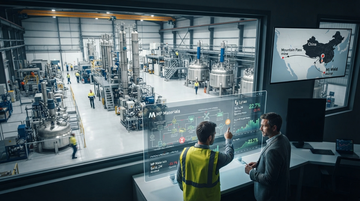
Lynas’s rare-earth takeover “confirmations” turned the market to a financing-and-security question: who can actually pay for the Western supply chain?
Lynas has confirmed it held confidential discussions with MP Materials about a potential transaction, but said those discussions were not ongoing as of February 2024—an admission that reframes Western rare-earth consolidation as a problem of funding and approvals, not just strategy. The more investors anchor on “who owns the only scaled non-China capability,” the more MP Materials and other U.S.-linked rare-earth plays trade on whether capital markets and regulators can clear a path quickly enough to beat China’s supply leverage.
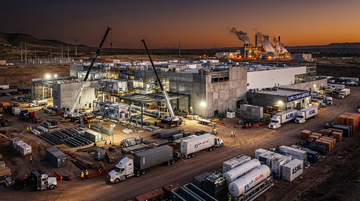
Taiwan’s $20B U.S. push isn’t “Made in USA”—it’s a tariff-shaped fab and factory supply-chain buildout
Taiwan’s government-linked disclosure of an additional $20B of U.S. investment reinforces a clear pattern: tariff-linked relocation is concentrating capacity buildout in Asian electronics ecosystems, not broadly “reshoring” the whole industrial base. The investable opportunity clusters upstream in tools/material handling and gases, and downstream in EMS/thermal/mechanical integration—where relocation turns into orders, not press headlines.
2026-09-01
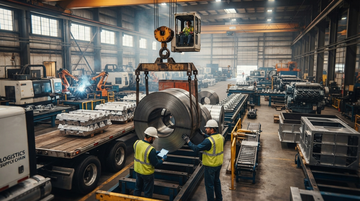
August ISM Manufacturing has one job: prove whether price-growth is slowing enough to dodge the next hike
The Fed’s September decision will hinge on whether the August ISM Manufacturing print keeps the “prices-paid” impulse consistent with cooling inflation—or re-ignites a hike-risk tape. July’s ISM already showed decelerating price pressures (Prices Index falling to 71.1), so the market is likely to focus less on the headline PMI and more on how broad the “higher prices” diffusion stays.
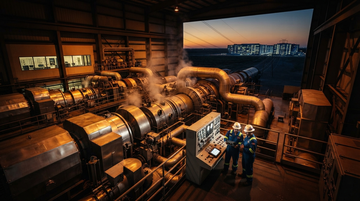
Texas’s AI “scarcity rent” is being earned inside merchant P&Ls — not paid for by customers that think they’re buying power
In ERCOT, the AI/data-center load wave doesn’t just raise prices—it shifts upside into the merchant stack with high hedge coverage. Vistra shows the core mechanic: when it hedges ~100% of 2026 volumes but only ~94% of 2027, the timing and roll risk of scarcity rent can dominate results even if generation economics look strong on the surface.
2026-08-31
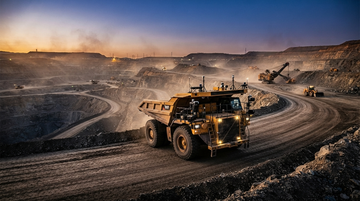
Caterpillar turns mining autonomy into an industrial-AI “deployment engine” — the real bet is whether it monetizes outcomes, not models
Caterpillar says it is applying what it learned from automating mining to “much more dynamic environments” like jobsites and quarries, using edge AI to run real-time inference on equipment. The investment question is whether Cat’s domain know-how becomes a recurring software/services revenue stream—or just raises CapEx demand for every AI layer in the stack.
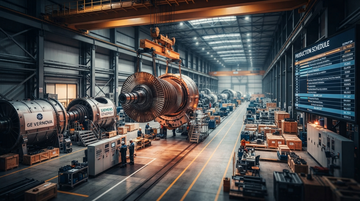
The gas-turbine order book is turning hyperscaler power into a timing bet—OEM slots beat permits by 2027
GE Vernova and Siemens Energy are sitting on huge gas-turbine backlogs while AI-era demand is colliding with unusually tight delivery slots. But the binding constraint for getting megawatts online by 2027 is turning from turbine manufacturing capacity into emissions/permitting sequencing—where delays can strand already-ordered equipment and shift revenue capture toward OEMs with the longest order visibility.

When helium scarcity meets crypto mania: the HNT weekend jump looks less like supply-chain repricing and more like liquidity-driven narrative trading
China’s temporary helium export ban (announced July 10, 2026) is a real physical supply shock for helium-dependent sectors, but it does not translate into a clear, near-term earnings shock for listed helium suppliers. Instead, the reported HNT weekend surge reads more like cross-asset reflexivity—crypto liquidity hunting for “scarcity” story momentum—than a clean reprice of helium gas fundamentals.
2026-08-30

ABF substrates are the one shared bottleneck in the GPU–custom-ASIC race
Even as NVIDIA chips and Google-style custom silicon chase compute per watt, both workflows still converge on ABF build-up film and the laminate stack built from it. Ajinomoto’s ABF price move and Ibiden’s multi-year high-end substrate capex outline a critical supply-chain reality: the AI build-out is not zero-sum on compute—it is constrained by specific materials and laminate capacity.
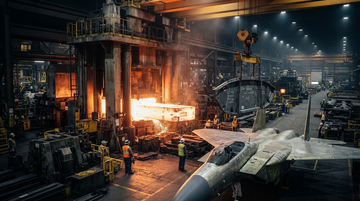
The F-15’s $131B tailwind meets a titanium/forging bottleneck—where aerospace money actually gets minted
Boeing’s Aug. 2026 F-15 “Eagle Crest” contract ceiling ($131.23B) confirms long-duration defense demand, but the metal path from order to delivery still depends on titanium melting, billet/press forging, and specialty-alloy throughput. ATI’s March 2024 commissioning of a 12,500-ton billet forging press and Howmet’s titanium-integration strategy show how primes can’t “pull forward” metal chemistry—so the bottleneck shifts value to specialty-material and forging capacity owners.

AI Data Centers Are Entering a “Cooling Plant” Pricing Regime — Integrated Power + Heat Rejection Designs Can Cut Installation Cost up to 30%
Rack-level liquid cooling gets most of the attention, but every AI megawatt still has to reject heat through the plant mechanical layer: chillers, towers, pumps, valves, and the heat-rejection backbone. A new Trane + Eaton reference design shows why this layer can reprice: it targets up to 15% energy-efficiency gains and up to 30% lower installation costs, shifting value from GPUs to the thermal infrastructure that must scale every new MW.
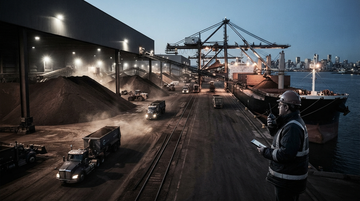
Glencore's leverage is the real “merger-gains” test for Anglo Teck’s $1.4B copper synergy story
Anglo American and Teck say their merger can generate $800M in annual synergies by the end of year four and $1.4B of underlying EBITDA value via Chile copper assets from 2030–2049, plus a US$4.5B special dividend ahead of completion. But the value split is only as credible as the counterparties’ bargaining power—especially Glencore, which is positioned to profit from North American concentrate tightness and can pressure terms through market-linked supply and logistics timing.
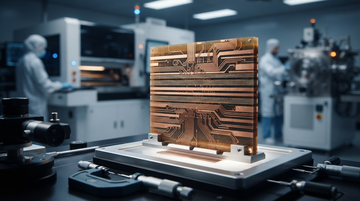
CCL is the hidden bottleneck in 800G/1.6T AI racks: high-speed laminate supply—not board fab—sets how fast AI networking scales
As AI fabrics move from 800G toward 1.6T, the limiting factor shifts from PCB shops to the upstream materials stack that preserves signal integrity at ultra-high frequencies. Copper-clad laminate (CCL) makers are therefore pulling through demand earlier than board assemblers, because every extra layer and every tighter dielectric/trace-loss target consumes more of these low-loss laminates per board.

US–Canada tariff walls are turning magnesium, gallium and germanium into a hidden factory-cost fight—autos, chips and aerospace are the transmission lanes
Canada’s retaliatory tariff schedule effective Sep 8, 2026 creates a direct cost wedge on U.S.-origin tariff lines tied to critical minerals—including magnesium content at the “99.8% by weight” threshold. The bigger market risk is not headline metals—it’s which U.S. industries consume those mineral inputs through alloys, optical/semiconductor processing and defense/aerospace components, and whether North American resourcing can replace China-linked supply quickly enough.

CXL “memory pooling” can monetize scarcity after HBM sells out—without buying more DRAM
Micron’s DRAM/HBM tightness is forcing hyperscalers to redesign capacity access, not just capacity procurement. In that setup, the CXL memory-semantic layer (controllers, retimers, and pooling/switch fabric) is positioned to convert “scarce bytes” into software-like, elastic shared memory—creating a new equipment revenue pool that the market largely hasn’t mapped.
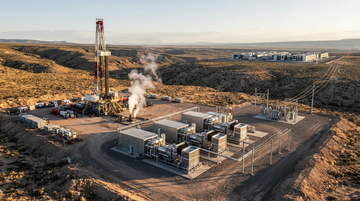
AI’s 24/7 power sprint just found a missing supply-chain map: geothermal’s drill-to-ORC-to-PPA chain
Fervo Energy is converting geothermal from “pilot projects” into bankable 24/7 capacity for AI and data centers—by locking megawatts in PPAs and then moving fast through drilling, permitting, and Organic Rankine Cycle (ORC) equipment. That creates a measurable, investable supply-chain pattern: drill capacity that delivers contracted MW on schedule, ORC turbine/generator OEM scope that scales, and utility-grade offtake economics that are designed to survive the interconnect clock.
What to expect
Evidence-first notes with a visible point of view.
This section collects sharp takes on earnings, shareholder meetings, and market structure. Each new piece should make the thesis, the facts, and the implications obvious within the first few screens.
Expect direct analysis, not generic commentary.
Expect the data to be explicit and the argument to be easy to follow.
Plutux is not an investment adviser. Market data and AI-generated analysis are for information and education only, not investment advice. Disclaimer