Materials & Supply Chain
Raw materials and the chokepoints that price them
Lithium, rare earths, copper and shipping — permits, export bans and capacity, followed to the miners and manufacturers on either side.
2026-08-01
%22%2F%3E%0A%20%20%3Ccircle%20cx%3D%22220%22%20cy%3D%22150%22%20r%3D%22180%22%20fill%3D%22%2322d3ee%22%20fill-opacity%3D%220.12%22%2F%3E%0A%20%20%3Ccircle%20cx%3D%221010%22%20cy%3D%22130%22%20r%3D%22220%22%20fill%3D%22%2338bdf8%22%20fill-opacity%3D%220.08%22%2F%3E%0A%20%20%3Ccircle%20cx%3D%22920%22%20cy%3D%22520%22%20r%3D%22170%22%20fill%3D%22%2322d3ee%22%20fill-opacity%3D%220.06%22%2F%3E%0A%20%20%3Cpath%20d%3D%22M140%20430h920%22%20stroke%3D%22url(%23line)%22%20stroke-width%3D%2212%22%20stroke-linecap%3D%22round%22%2F%3E%0A%20%20%3Cpath%20d%3D%22M220%20360c120-150%20260-220%20380-220s260%2070%20380%20220%22%20fill%3D%22none%22%20stroke%3D%22%2367e8f9%22%20stroke-opacity%3D%220.5%22%20stroke-width%3D%2216%22%20stroke-linecap%3D%22round%22%20stroke-linejoin%3D%22round%22%2F%3E%0A%20%20%3Cpath%20d%3D%22M300%20398h600%22%20stroke%3D%22%2394a3b8%22%20stroke-opacity%3D%220.24%22%20stroke-width%3D%228%22%20stroke-linecap%3D%22round%22%2F%3E%0A%20%20%3Ctext%20x%3D%22220%22%20y%3D%22510%22%20fill%3D%22%23e2e8f0%22%20fill-opacity%3D%220.7%22%20font-family%3D%22Arial%2C%20Helvetica%2C%20sans-serif%22%20font-size%3D%2238%22%20letter-spacing%3D%228%22%3EINSIGHTS%3C%2Ftext%3E%0A%3C%2Fsvg%3E)
2026-07-29

AI hardware is pulling air cargo capacity toward data-center “just-in-time”—and operators with scheduling power are the gatekeepers
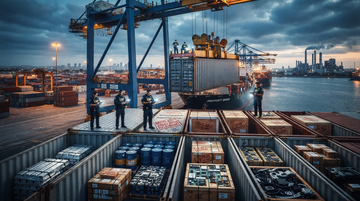
In 2025, air cargo transported more than two-thirds of global AI-related goods, making aircraft utilization and slot allocation a strategic bottleneck rather than a background logistics variable. The air-freight scarcity that e-commerce previously dominated is shifting to dense, time-sensitive AI hardware lanes, where the margin moves from shipping volume to capacity control.

Defense backlogs are not “capacity”—fixed-price contract structure and supply-chain + labor execution decide which primes (and suppliers) actually monetize demand
Across Lockheed Martin and Northrop Grumman, the filings show that backlog growth can coexist with contract-level cost and margin pressure under fixed-price development/early-production risk. Investors should treat backlog as a demand signal—but value conversion hinges on labor availability, supply-chain performance, and how much profit/loss risk sits inside the contract terms.

China’s DUV mass-production pressures Congress: MATCH Act’s servicing ban timing will decide whether Lam Research, Applied Materials, and KLA harvest China growth in 2H26 or lose it to license “latency”
China’s July 27, 2026 shift to mass-producing homegrown immersion DUV tools increases the probability of near-term fab ramp—exactly when the MATCH Act must clear Congress if it’s meant to restrict not just exports, but servicing/maintenance. For the US semicap trio, the key risk is that a servicing ban applies a licensing policy of denial, which can delay tool upkeep and directly disrupt backlog/revenue conversion even if some equipment already sits in-country.

Pentair turns a $1.4B Taco deal into a bet on hydronics (not pool pumps)
While Pentair is absorbing pool-equipment destocking headwinds, its $1.4B acquisition of Taco is structured to shift earnings power toward HVAC/hydronics and other commercial/industrial water infrastructure. The economics (about 10.5x 2026E EBITDA, ~$30M run-rate cost synergies, and $0.10–$0.15 accretion in FY2027) matter because they pay you to wait out pool cyclicality while consolidating distribution-ready “water systems” across categories.
2026-07-28

2026-07-27

fairlife’s restart is a supply-chain stress test—and the next “cyber premium” will be paid in packaging, cold-chain, and automation downtime
Coca-Cola says fairlife’s U.S. production was temporarily suspended after a ransomware event and that it is making significant progress restoring operations. Investors should treat the incident as a broader resilience signal: ultrapasteurized capacity is operationally concentrated, so even short cyber downtime can force expensive, fast substitutions across packaging, logistics, and refrigeration networks. The Coca-Cola Company can absorb disruption better than smaller operators—but the higher-probability winners next time are the listed enablers of continuity (industrial automation, cold-chain efficiency, and critical packaging supply).
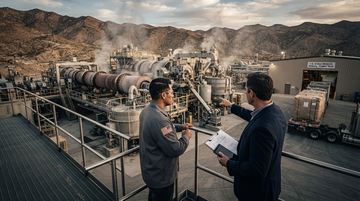
The 2027 U.S. Critical-Minerals Refining Miss Turns Trump’s China-Decoupling Into a Procurement Backdoor
Reuters’ reporting points to a looming 2027 refining/procurement deadline risk that the U.S. may not meet with domestic capacity alone—forcing quieter concessions to restart flow from China-linked feedstocks. The investable shift is less about “trade with China” headlines and more about how lithium/rare-earth processing economics reprice for MP Materials, Albemarle, and adjacent supply-chain constraints across EV, grid storage, and defense programs.
2026-07-26

FAA’s $2.2B Airline Retrofit Rebate Quietly Turns the Altimeter Upgrade into a 2027 Supply-Chain Price War
The FAA is tying part of the C-band wireless proceeds to a radio-altimeter upgrade schedule by offering up to $2.2B in rebates to eligible airlines that retrofit to withstand 5G interference. That converts what looked like an aviation-safety compliance cost into a structured, time-bounded industrial-policy transfer—creating a near-2027 decision fight between airlines’ fleet replacement plans and avionics upgrade timing, while boosting demand visibility for airframe OEM and avionics suppliers.

Australia’s tariff fight with the US is turning into a US “sovereignty” wedge—making Alphabet’s supply chain and AI compute customers the next battleground
The US raised the tariff on Australian exports to 12.5% effective 24 July 2026 as part of a forced-labour Section 301 action, and Prime Minister Anthony Albanese said Australia will directly raise the issue with President Donald Trump. For investors, the real risk is not the tariff line—it’s how the compliance/sovereignty framing can spill into downstream tech procurement and “trusted” supply chains, potentially changing demand and contract terms for AI and digital infrastructure.

Nvidia’s SK Hynix $500B-style memory lock-up reframes HBM as a contracted utility—tightening the HBM choke point for every other AI GPU maker
Public reporting confirms Nvidia has secured advanced AI memory supply from SK hynix via a multiyear technology partnership announced June 7, 2026. The key market impact is structural: when the “input bottleneck” gets prepaid and custom-developed, HBM behaves less like a commodity and more like a utility with allocation power—compressing upside for Micron and Samsung and making AMD- and Broadcom-adjacent supply strategies more substitute-constrained.

NVIDIA's Vera Rubin entering full production turns the 2026 AI demand debate into a supply-chain scheduling problem
Jensen Huang’s explicit confirmation that Vera Rubin is “in full production” removes the biggest uncertainty from the AI cycle: whether the post-Blackwell ramp is on schedule. For investors, the reframing is immediate—2026–27 hyperscaler capex and TSMC advanced packaging allocations now map more directly to HBM4 and CoWoS throughput timing, not just product positioning.

USMCA’s Steel Tariff “Mirror” Push Turns North America into a Tariff Bloc—And It’s the Working-Capital Story for Nucor, Cleveland-Cliffs, and Ternium
A key USMCA dynamic is shifting: the US is using the 2026 USMCA review as leverage over metals and market access, not just arguing about “free trade” rules. For steelmakers, the investable angle is not only pricing power—it’s whether tariff volatility forces contract repricing, reroutes scrap/inputs, and changes working-capital turns inside the North American steel supply chain.
2026-07-25

2026-07-24
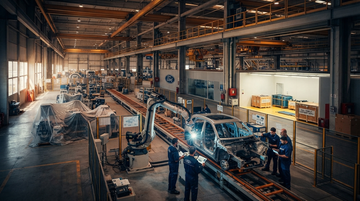
Geely’s “No-Brand-Print” Play in Spain: China EVs First Enter Europe by Taking Over Ford’s Idle Capacity—Not Buying a Publisher-Brand
Geely’s agreement to use Ford’s Almussafes plant in Valencia to produce Geely EVs creates an EU-manufacturing “origin story” that Reuters links directly to avoiding EU tariffs on Chinese EV imports. The real supply-chain message is capacity arbitrage: idle European lines get monetized by China volume, shifting battery/material demand toward whatever can qualify for the JV’s EV ramp instead of whichever OEM owns the logo.

Gold’s “Last Safe Haven” Breaks: Fed-Rate Bets + a Firmer Dollar Can Make Geopolitics Look Secondary
Gold’s recent drop is a clean example of the yield/opportunity-cost channel dominating the hedge narrative: Reuters links the move to firmer USD and rising expectations of Fed hikes, with benchmark 10-year yields up. When gold stops serving as a hedge against rates—and instead loses to higher discount rates and stronger currency—miners and gold-backed flows face a different (and more actionable) set of risks than oil-shock headlines imply.

Newmont’s Q2 Beat Converts Gold Into a P&L Hedge (Not a Trading Call)
Newmont’s Q2 showed how a higher realized gold price flowed through to earnings while the cost stack stayed disciplined: $4,414/oz realized gold with gold AISC of $1,938/oz and 1.181M attributable ounces. The result is a tighter, more hedge-like earnings sensitivity to macro shocks (rates/oil/geopolitics) than investors often price into gold miners—so the “gold vs. oil” conversation should start with the miner’s per-ounce margin, not just the spot chart.

The Vietnam Tariff Shock Is a Margin Bet: Brands Can’t Just “Pay Duty”—They Have to Re-write Contract Math
Vietnam is the apparel exporter that looks most exposed when the U.S. moves from a temporary, broad 10% tariff regime into a higher, country-sliced structure. For the most Vietnam-heavy shippers—like Nike—the spread between Vietnam and alternative sourcing hubs can become a gross-margin event, unless contract pricing and reroute timing are designed to absorb the duty differential.
2026-07-23

FCC’s “Chinese parts” device ban turns into a replacement-lead-time tax: here’s the compliance checklist for who re-certifies, who loses supply, and who pays delays
The FCC’s move to bar sales of devices containing components from “blacklisted” Chinese firms is best modeled as an equipment-authorization and certification disruption—not just a geopolitical headline. Using FCC’s Covered List mechanics and the communications equipment authorization rules, you can map a practical timeline: upstream testing/authorization constraints force redesigns; downstream buyers then face re-certification and possible sales/importation limits that can translate into margin and delivery shocks.

GE Vernova’s Backlog Is Strong—but the “Margin Leakage” Risk Lives in Equipment Mix and Execution-Cost Timing, Not Demand
GE Vernova reports a growing electrification and grid backlog (RPO) of $44.6B, but the backlog’s margin quality depends on equipment-vs-services mix and how execution costs and timelines hit project-level contracts. In its latest filings, GE Vernova shows large RPO growth concentrated in Power and Electrification equipment (where schedule and cost overruns matter most), while it separately flags tangible cost/timeline pressure in other execution-heavy businesses—an investor analogue for what can go wrong. The actionable takeaway: treat backlog growth as necessary proof of demand, and backlog composition + disclosed execution risks as the real predictor of margin and cash-flow outcomes.
What to expect
Evidence-first notes with a visible point of view.
This section collects sharp takes on earnings, shareholder meetings, and market structure. Each new piece should make the thesis, the facts, and the implications obvious within the first few screens.
Expect direct analysis, not generic commentary.
Expect the data to be explicit and the argument to be easy to follow.
Plutux is not an investment adviser. Market data and AI-generated analysis are for information and education only, not investment advice. Disclaimer