Consumer
What households are actually spending on
Traffic, pricing power, trade-down and inventory across retailers, restaurants and brands — who is holding margin, and who is buying volume.
2026-09-07
%22%2F%3E%0A%20%20%3Ccircle%20cx%3D%22220%22%20cy%3D%22150%22%20r%3D%22180%22%20fill%3D%22%2322d3ee%22%20fill-opacity%3D%220.12%22%2F%3E%0A%20%20%3Ccircle%20cx%3D%221010%22%20cy%3D%22130%22%20r%3D%22220%22%20fill%3D%22%2338bdf8%22%20fill-opacity%3D%220.08%22%2F%3E%0A%20%20%3Ccircle%20cx%3D%22920%22%20cy%3D%22520%22%20r%3D%22170%22%20fill%3D%22%2322d3ee%22%20fill-opacity%3D%220.06%22%2F%3E%0A%20%20%3Cpath%20d%3D%22M140%20430h920%22%20stroke%3D%22url(%23line)%22%20stroke-width%3D%2212%22%20stroke-linecap%3D%22round%22%2F%3E%0A%20%20%3Cpath%20d%3D%22M220%20360c120-150%20260-220%20380-220s260%2070%20380%20220%22%20fill%3D%22none%22%20stroke%3D%22%2367e8f9%22%20stroke-opacity%3D%220.5%22%20stroke-width%3D%2216%22%20stroke-linecap%3D%22round%22%20stroke-linejoin%3D%22round%22%2F%3E%0A%20%20%3Cpath%20d%3D%22M300%20398h600%22%20stroke%3D%22%2394a3b8%22%20stroke-opacity%3D%220.24%22%20stroke-width%3D%228%22%20stroke-linecap%3D%22round%22%2F%3E%0A%20%20%3Ctext%20x%3D%22220%22%20y%3D%22510%22%20fill%3D%22%23e2e8f0%22%20fill-opacity%3D%220.7%22%20font-family%3D%22Arial%2C%20Helvetica%2C%20sans-serif%22%20font-size%3D%2238%22%20letter-spacing%3D%228%22%3EINSIGHTS%3C%2Ftext%3E%0A%3C%2Fsvg%3E)

2026-09-06

Workers Are Funding Their Own AI Retraining — Three Rails Are Catching the Dollar Corporate L&D Won't Spend
Workers self-funded roughly $1.5B of AI skills via Coursera and Udemy in 2025 while 56% of employees got no training from their employer, per ManpowerGroup's January 2026 Global Talent Barometer. JPMorgan has cut 30–40% of headcount in some teams and is running ~1,000 AI use cases inside a $19.8B technology budget, while Cognizant reports 7.1% adjusted operating income per associate from AI-assisted coding — proof that corporate L&D dollars are being redirected from training to severance and compute. Three rails are absorbing the worker-paid reskilling dollar: the new for-profit megamerger (Coursera+Udemy), hyperscaler free tiers (Alphabet, Microsoft, Amazon, IBM), and public-sector workforce boards now backed by California's free AI micro-credential pilot and H.R. 7576's proposed 30% tax credit.

Apple's 9-9 launch is the first test of Ternus's hardware playbook — and Morgan Stanley is pricing in a $14B foldable payoff
When Apple unveils the iPhone 18 Pro and its first foldable on September 9, it will mark new CEO John Ternus's debut on the world's biggest consumer-tech stage. Morgan Stanley's Erik Woodring calls it Apple's most consequential iPhone launch since the iPhone X, putting ~$14B of December-quarter revenue on the line for the foldable alone, plus a $200+ like-for-like price hike across the Pro lineup. The thesis hinges on Ternus's hardware credibility restoring pricing power just as NAND and DRAM costs are biting — a bet whose payoff flows directly into the supply chain from TSMC to Foxconn.
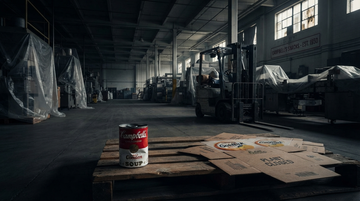
Campbell's 36% Dividend Cut Is the Second Packaged-Food Reset in Two Months — Three More Names Look Exposed
Campbell's joined Conagra on September 3 as the second major packaged-food company to reset its dividend in seven weeks, pairing a 36% payout cut with a 13% salaried layoff and two snack-plant closures on the same day FY27 guidance pointed to another 17–24% drop in adjusted EPS. The reset is no longer a single-name stress test — it is an industry-wide compression of branded volumes against record-high private-label share, and J.M. Smucker, Hormel and General Mills each carry a piece of the same exposure, with Kraft Heinz the only major still declaring victory.

The Pump Hit $4.14 on Labor Day — and Trump Can't Make It Drop Before November
AAA logged a $4.14 national average over Labor Day weekend, beating the 2012 holiday record of $3.82 by 32 cents. With U.S. refineries running at 98% of capacity, distillate inventories 14% below the five-year average, and ExxonMobil and Chevron capturing record Energy Products earnings, the squeeze is structural: independent refiners like Marathon Petroleum, Valero and Phillips 66 are pocketing WTI 3-2-1 crack spreads near $60/bbl — and a White House appeal is not a price-cut mechanism.
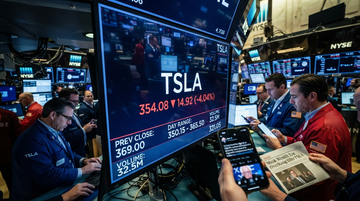
Tesla's $50 Billion 'Musk Discount': Why TSLA Is Now the Cleanest Political-Risk Bet on the Market
After Sen. Bernie Sanders publicly named Elon Musk an oligarch on X on Sep. 4, 2026, Tesla closed at $354 — about 12% below the $402 Wall Street consensus target and 29% below its December 2025 high. The gap is the cleanest read yet on the wealth-tax overhang: a 5% federal levy on Musk's roughly $165 billion Tesla stake would force recurring share supply, while California's Prop 40 wealth-tax vote on Nov. 3, 2026 turns the policy risk into a dateable catalyst. Investors who want exposure to 'MAGA-adjacent populism without paying the populist's stock multiple' now have a single, clean trade.

5th Circuit Cuts NLRB's Reach in Starbucks Case 3-to-1 — and the Cascade Resets Every Pending Union Complaint
A unanimous 5th Circuit panel enforced just one of four unfair-labor-practice theories against Starbucks, denying the surveillance, hiring-portal and store-hours findings at a Wichita store — the latest in 18 months of federal court rulings pulling NLRB enforcement authority back. For Starbucks, with 706 stores already organized and no national contract, the precedent gives the company more legal room to bargain on its own terms, and the company's Q3 FY2026 turnaround (operating margin up 430 bps) is starting to price that in. Investors should read the ruling as a margin-protection signal for Starbucks and for company-operated restaurant and retail peers with the largest direct labor exposure — Chipotle, Dollar General and Amazon — while heavily franchised operators (McDonald's, Yum Brands, Restaurant Brands International) feel less of a direct hit.
2026-09-05
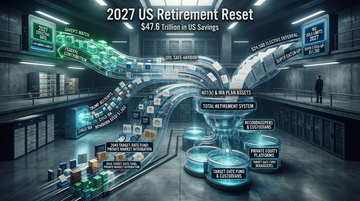
The 2027 Retirement Reset: How a Four-Part Policy Stack Re-Wires $47.6 Trillion in US Savings
On January 1, 2027, a federal Saver's Match, the new Trump Accounts child IRA, the Department of Labor's 401(k) alternatives safe-harbor, and the routine cost-of-living limit bump all take effect at once. Together they channel fresh dollars toward recordkeepers, target-date fund managers, and the private-market platforms positioned to ride the alt-401(k) wave. The trade is concrete: a $1,000 federal match per low-income saver, $5,000-a-year custodial IRAs seeded with $1,000 for newborns, and a DOL proposal that puts private equity inside the default investment of nearly every American worker's retirement plan.
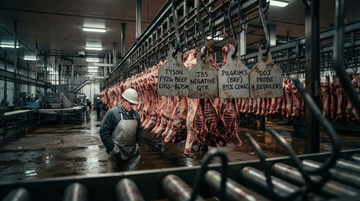
Trump's livestock EO lands on Tyson, JBS and Pilgrim's while they're already bleeding — the 85% concentration the order doesn't actually break
The first federal action against U.S. meat-packing concentration in decades arrives the same week Tyson Foods cut guidance for the second time in 30 days and JBS logged another negative beef quarter. The September 4 executive order opens more aggressive Packers and Stockyards Act enforcement and an interstate pathway for state-inspected meat, but it leaves the Big 4's 85% grip intact — the real near-term margin risk sits at the DOJ, which has now dragged eight retailers into the same probe.
2026-09-04
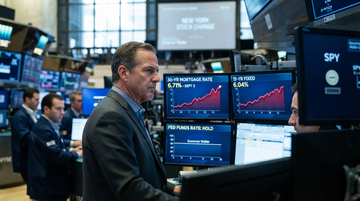
Mortgage rates hit a one-year high because the bond market repriced the “term premium”—not because the Fed suddenly turned hawkish
On Sept. 3, Freddie Mac reported the 30-year fixed mortgage rate at 6.71%, its highest level in over a year. At the same time, Fed Governor Christopher Waller signaled he would support holding the federal funds target—shifting attention from Fed policy transmission to the bond-market term premium channel that mortgage pricing must follow.

Box office is reclaiming pre-pandemic attendance—women and younger moviegoers are driving the swing
U.S. theater admissions are running below 2019, but the mix is shifting: Gen Z and millennials are returning at higher rates, and premium formats are pulling more spend per visit. That combination threatens the “trade-down consumer” bear case by reopening an exhibitor-to-studio cash flow window that had depended on nostalgia pricing rather than real audience recovery.

Tesla’s Cybercab “buy-and-run” pitch turns robotaxi growth into a residual-value bet for retail operators
Tesla’s Sep 3 Cybercab commercial launch is pairing an autonomous-vehicle product with an operator model that puts vehicle-asset and end-of-life risk onto retail buyers—at least in the way the company’s fleet solicitation is structured. The investment issue isn’t whether autonomous rides work; it’s whether utilization + pricing are high enough to absorb depreciation shocks that investors typically assume will be Tesla’s problem, not the buyers’.
2026-09-03

China’s post-price-war delivery era may trap JD and Alibaba in a higher logistics-cost floor
Regulators’ pushback on meal-delivery subsidy “price wars” is shifting competition from coupons to faster logistics infrastructure—re-wiring shoppers to pay for convenience even as subsidies fade. For US-listed JD and Alibaba ADRs, the key question is whether last‑mile unit economics normalize back to pre-war levels or settle into a permanent higher cost floor.
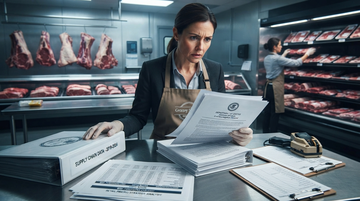
DOJ widens the beef probe to grocers—now the grocery-margin math is on the legal timetable
The Justice Department has expanded its antitrust beef-price investigation to eight major retailers, including Walmart and Costco. By requesting multi-year information on beef purchasing, pricing, margins, and strategy, the DOJ adds a new “conduct and compliance” cost to the already-knife-edge grocery gross-margin and shrink dynamics—shifting which firms absorb beef-chain risk and how quickly they can pass through price.

lululemon’s Q2 print plus guide cut turns premium-athleisure into an inventory story
In lululemon’s Q2 fiscal 2026 results, the company reported slowing momentum while leaving the balance sheet with higher inventory and weaker working-capital dynamics—an uncomfortable mix that management then carried into its forward view. The core takeaway for investors: when premium brand demand cools, markdown risk and cash-collection pressure typically arrive together, and the read-through to peers is strongest in apparel brands that rely on full-price sell-through.

Uber's 10% layoff reframes robotaxi as an opex battle—while challenging how much of the human-driver gig base survives
Uber is cutting about 3,300 roles (~10% of headcount) in its biggest layoffs since COVID, explicitly amid the robotaxi competitive shift. The parts of Uber that get trimmed matter more than the headline number: if the company flattens management while protecting operations, the human-driver cost base stays intact; if it reorganizes support around AV operations, the transition economics will pull future costs away from riders and toward “AV-operator” capacity.
2026-09-02
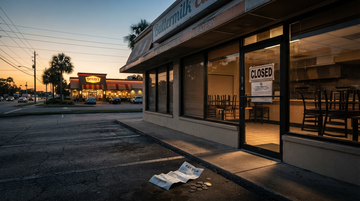
Buttermilk Eatery’s Chapter 11 lands exactly on the low-end consumer stress window—revealing how breakfast “value” breaks first
Asani Restaurant Group LLC (owner of Buttermilk Eatery) filed for Chapter 11 in Florida on Aug. 31, 2026, with reported debts of more than $407,000 against assets exceeding $75,000 and operations concentrated in two St. Petersburg-area locations. The timing matters for investors because it spotlights how limited-liquidity franchisee/independent operators in breakfast—closest to paycheck-to-paycheck demand—can fail before broader, better-capitalized QSR players show stress.
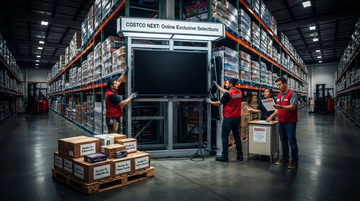
Costco kills Costco Next store fronts without notice—what it signals for the warehouse-club digital business model
Costco has removed access to its “Costco Next” store fronts, telling members the service is no longer available while routing post-purchase issues to individual vendors. The shutdown matters because it spotlights a core mismatch between warehouse-club economics (high trust, tight margin discipline, simple return responsibility) and the marketplace approach that platforms like Amazon and Walmart have made work.

Shein’s HK price discovery makes “de-minimis-free” a margin debate—Temu’s comp gets repriced with every slide
Shein’s second-session weakness on the HKEX turns an IPO valuation story into a live test of cross-border parcel economics after the de-minimis advantage. The market’s reaction is likely to flow through to PDD’s Temu unit expectations—because both models hinge on whether savings from lightweight customs treatment can be replaced by new fulfillment math.
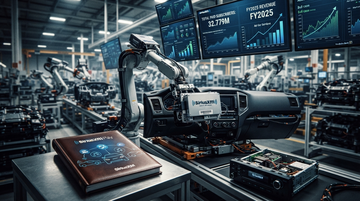
SiriusXM’s “overlooked” pivot isn’t about dying satellite—it's about rebuilding distribution through ad-tier in-car access
Deutsche Bank’s bull case argument (as it’s been described publicly) hinges on SiriusXM’s transition from a largely closed, satellite-driven subscriber base toward an ad-tier, in-car-first listening model. The risk to that transition is timing: in-car audio can be disrupted quickly by connectivity and app-native listening, and SiriusXM’s own filings show that connected-vehicle services are tracked separately from its satellite subscriber math.
What to expect
Evidence-first notes with a visible point of view.
This section collects sharp takes on earnings, shareholder meetings, and market structure. Each new piece should make the thesis, the facts, and the implications obvious within the first few screens.
Expect direct analysis, not generic commentary.
Expect the data to be explicit and the argument to be easy to follow.
Plutux is not an investment adviser. Market data and AI-generated analysis are for information and education only, not investment advice. Disclaimer