%22%2F%3E%0A%20%20%3Ccircle%20cx%3D%22220%22%20cy%3D%22150%22%20r%3D%22180%22%20fill%3D%22%2322d3ee%22%20fill-opacity%3D%220.12%22%2F%3E%0A%20%20%3Ccircle%20cx%3D%221010%22%20cy%3D%22130%22%20r%3D%22220%22%20fill%3D%22%2338bdf8%22%20fill-opacity%3D%220.08%22%2F%3E%0A%20%20%3Ccircle%20cx%3D%22920%22%20cy%3D%22520%22%20r%3D%22170%22%20fill%3D%22%2322d3ee%22%20fill-opacity%3D%220.06%22%2F%3E%0A%20%20%3Cpath%20d%3D%22M140%20430h920%22%20stroke%3D%22url(%23line)%22%20stroke-width%3D%2212%22%20stroke-linecap%3D%22round%22%2F%3E%0A%20%20%3Cpath%20d%3D%22M220%20360c120-150%20260-220%20380-220s260%2070%20380%20220%22%20fill%3D%22none%22%20stroke%3D%22%2367e8f9%22%20stroke-opacity%3D%220.5%22%20stroke-width%3D%2216%22%20stroke-linecap%3D%22round%22%20stroke-linejoin%3D%22round%22%2F%3E%0A%20%20%3Cpath%20d%3D%22M300%20398h600%22%20stroke%3D%22%2394a3b8%22%20stroke-opacity%3D%220.24%22%20stroke-width%3D%228%22%20stroke-linecap%3D%22round%22%2F%3E%0A%20%20%3Ctext%20x%3D%22220%22%20y%3D%22510%22%20fill%3D%22%23e2e8f0%22%20fill-opacity%3D%220.7%22%20font-family%3D%22Arial%2C%20Helvetica%2C%20sans-serif%22%20font-size%3D%2238%22%20letter-spacing%3D%228%22%3EINSIGHTS%3C%2Ftext%3E%0A%3C%2Fsvg%3E)
Policy meets the grocery P&L
What changed on Sep. 2: the DOJ beef probe reaches the retail layer
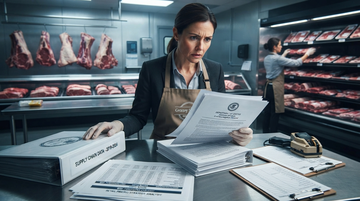
On Sep. 2, 2026, the DOJ Antitrust Division escalated its beef-price scrutiny by expanding its investigation to eight retailers—explicitly including Walmart and Costco. The named firms are Kroger, Publix, Walmart, Albertsons, Aldi, Ahold Delhaize, Costco, and Amazon.
Multiple reports describe letters from Associate Attorney General Stanley E. Woodward Jr. seeking detailed information on retail beef prices, wholesale purchases, costs/margins, and the companies’ market analysis. Reports further indicate the DOJ requested information covering the prior six years—raising the odds that ordinary category-management practices (and internal vendor-management processes) will be examined under an antitrust lens.
Supply-chain to checkout lane
Why retail is the new hinge: DOJ is probing who sets/retains beef pricing power
Earlier beef-price coverage typically emphasized upstream mechanics—meatpacker behavior, cattle availability, and import timing. This escalation widens the causal chain by pulling retailers into questions that sit closer to the shelf: how beef is procured, how price is set (or not passed through), and how margin is retained or compressed during wholesale-cost swings.
Economically, the retail layer is where pass-through policy becomes observable. Grocery retailers can respond to higher wholesale beef costs in three broad ways: (1) reduce promotional intensity, (2) adjust everyday price, or (3) absorb margin (or shift mix) to maintain traffic. DOJ’s focus on margins and pricing conduct raises the risk that only the “what happened” is not enough; the investigation can also evaluate “why it happened” and whether comparable competitors were treated differently without a competitively legitimate explanation.
For Walmart and Costco in particular, the issue is magnified because both businesses have distinct pricing archetypes—high-volume everyday value (Walmart) and membership-driven, low-markup staple pricing with an emphasis on throughput (Costco). When DOJ asks for multi-year margin and pricing data, it can effectively pressure retailers to document the internal decision logic behind beef-category price moves—especially when costs spike.
The margin math investors care about
How this can show up in grocery gross margins—even before any legal verdict
Even if retailers do nothing “illegal,” the investigation can still move quarterly margins through three channels: (1) legal and compliance spend, (2) operational friction from data production, and (3) pricing rigidity if companies become more conservative about promotions, bundling, or wholesale-to-retail pass-through timing.
- Higher legal/compliance overhead can lift expenses in the periods DOJ requests and reviews.
- More cautious promotion behavior can reduce promotional intensity (protecting margin but potentially pressuring volume).
- Slower or narrower pass-through can compress gross margin when wholesale beef costs move faster than retail prices.
The practical takeaway for investors: the near-term impact is less about “beef costs rising” (which already drives grocery spreads) and more about how quickly each retailer can adjust pricing while maintaining documentation discipline. That shifts competitive advantage toward firms with proven, repeatable merchandising/price-setting systems and away from firms whose elasticity depends heavily on aggressive short-cycle promos.
What the retailers’ fundamentals imply about the buffer
Walmart and Costco have different operating buffers—investors should map legal risk to profit structure
Gross margin (TTM)
25.2%
Walmart latest trailing window; based on gross profit and revenue in Walmart company financial metrics.
Operating margin (TTM)
4.3%
Walmart operating income divided by revenue, in Walmart latest trailing window.
Using reported trailing profitability metrics as a directional proxy, Walmart shows a materially higher gross-margin profile than Costco in the latest trailing window. That doesn’t mean Costco is weaker overall—Costco’s business model is built around membership economics and throughput—but it does suggest that, in a retail beef investigation where pricing conduct and margin retention are scrutinized, the “margin cushion” (gross spread) differs meaningfully across business archetypes.
Supply-chain pressure gets reallocated
Upstream vs. downstream: the probe can reroute who bears beef-chain margin risk
When upstream beef-price power is under suspicion, meatpackers and processors can become the focal point. When the probe extends to retailers, margin-risk allocation can shift downstream: retailers may revisit contract terms, require more pricing transparency, or accelerate vendor re-papering to align procurement records with defensible price-setting narratives.
In investor terms, the “who pays” equation can change. If a retailer believes it must show that it did (or did not) coordinate pricing or retain excess margin, it may become more willing to absorb short-term spread to demonstrate fairness—or conversely, it may move to faster, consistent pass-through to reduce perceived discretion.
Investor checklist: what to watch next
Short-term (days–quarters): margin volatility and disclosure clarity
- Quarterly margin commentary that attributes beef-category moves to cost pass-through vs. promotional actions.
- Greater pricing/assortment discipline in fresh/meat departments as legal review increases internal conservatism.
- Higher non-operating line items tied to legal expense and compliance programs (where separately disclosed).
The practical near-term signal is not whether beef prices stop—it’s whether retailers’ reported margin trajectories diverge from historical patterns relative to meat inflation and promotion intensity.
1–3 year horizon
Long-term (1–3 years): procurement transparency becomes a competitive capability
Over the next 1–3 years, this kind of investigation can reshape how grocery buyers negotiate beef pricing and structure vendor governance. Firms with more standardized pricing logic, faster analytics, and cleaner cost/margin documentation can adapt more smoothly if regulators scrutinize decision rules.
- Procurement “rewrite” cycles become more common if contract terms must better reflect defensible pricing logic.
- Category pricing playbooks may standardize to reduce perceived discretionary variation.
- Margin dispersion across retailers can widen if some firms adjust pass-through behavior more quickly.
Related listed stocks tied directly to the retail probe
- Higher spend risk appears because DOJ letters ask for multi-year pricing and margin data that can increase compliance workload over coming quarters.
- Pricing flexibility can tighten if Walmart shifts promotional intensity to preserve defensible pricing conduct during the investigation window.
- Margins may compress faster than peers during beef cost spikes if pass-through policy becomes slower, given higher scrutiny on retail pricing conduct.
- Cost-to-price decisions become more scrutinized because DOJ requested documentation tied to beef purchasing strategy and profit/margin outcomes.
- Gross-spread buffer looks smaller in the latest trailing metrics, so temporary margin absorption could show up more clearly during beef volatility.
- Membership-throughput strategy may blunt volume damage in the short term if Costco maintains price stability while producing records for regulators.
- Local-market pricing tactics get harder to justify if DOJ examines margin retention and pricing conduct across multiple years.
- Legal/compliance friction may weigh on operating leverage as additional category data and margin explanations are compiled.
- Pass-through timing may shift toward more systematic pricing rules over 1–3 years to reduce future conduct risk.
- Margin sensitivity to beef-category moves can rise if DOJ scrutiny reduces room for discretionary promo intensity.
- Procurement transparency becomes a priority because letters include beef purchasing and margin information across a multi-year window.
- Competitive dynamics may change if stronger documentation discipline lets peers adjust pass-through faster after beef cost shocks.
- Amazon’s grocery pricing data will be tested since DOJ letters request retail pricing, margins, and beef purchasing strategy information.
- Near-term headline volatility is possible if pricing/discounting logic triggers additional questions during investigation reviews.
- Watch for policy clarification in filings if Amazon discloses changes to grocery pricing governance after DOJ inquiries progress.
- Retail margin explanations may become more standardized because DOJ requested multi-year cost/margin and pricing conduct detail tied to beef.
- Compliance workload can show up in expenses as data production and legal review expand across markets.
- Pass-through behavior may converge with peers if regulators focus on comparable treatment across retailers over time.