%22%2F%3E%0A%20%20%3Ccircle%20cx%3D%22220%22%20cy%3D%22150%22%20r%3D%22180%22%20fill%3D%22%2322d3ee%22%20fill-opacity%3D%220.12%22%2F%3E%0A%20%20%3Ccircle%20cx%3D%221010%22%20cy%3D%22130%22%20r%3D%22220%22%20fill%3D%22%2338bdf8%22%20fill-opacity%3D%220.08%22%2F%3E%0A%20%20%3Ccircle%20cx%3D%22920%22%20cy%3D%22520%22%20r%3D%22170%22%20fill%3D%22%2322d3ee%22%20fill-opacity%3D%220.06%22%2F%3E%0A%20%20%3Cpath%20d%3D%22M140%20430h920%22%20stroke%3D%22url(%23line)%22%20stroke-width%3D%2212%22%20stroke-linecap%3D%22round%22%2F%3E%0A%20%20%3Cpath%20d%3D%22M220%20360c120-150%20260-220%20380-220s260%2070%20380%20220%22%20fill%3D%22none%22%20stroke%3D%22%2367e8f9%22%20stroke-opacity%3D%220.5%22%20stroke-width%3D%2216%22%20stroke-linecap%3D%22round%22%20stroke-linejoin%3D%22round%22%2F%3E%0A%20%20%3Cpath%20d%3D%22M300%20398h600%22%20stroke%3D%22%2394a3b8%22%20stroke-opacity%3D%220.24%22%20stroke-width%3D%228%22%20stroke-linecap%3D%22round%22%2F%3E%0A%20%20%3Ctext%20x%3D%22220%22%20y%3D%22510%22%20fill%3D%22%23e2e8f0%22%20fill-opacity%3D%220.7%22%20font-family%3D%22Arial%2C%20Helvetica%2C%20sans-serif%22%20font-size%3D%2238%22%20letter-spacing%3D%228%22%3EINSIGHTS%3C%2Ftext%3E%0A%3C%2Fsvg%3E)
Verified what changed, when it changed, and who the policy now directs
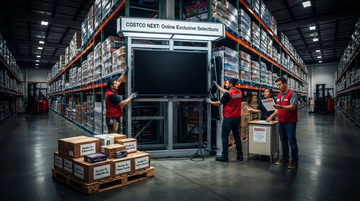
Costco Next “store fronts” are shut; Costco’s member-facing message is direct
What Costco says happened (verbatim customer-facing text)
Access status
“Access to Costco Next store fronts is no longer available.”
Costco Customer Service page for Costco Next Member Services (updated after the shutdown; see source).
Return/warranty handling path
Members are told to contact vendors for eligible returns and warranty inquiries.
The same Costco Customer Service page directs eligible returns/warranty issues to the vendor, and provides contact details for vendors with active return policies.
Multiple reports tied the loss of access to the week of Sept. 1, 2026, with the Costco support page now serving as the primary redirect for the program. While third-party commentary circulated about the lack of prior notice, the key investor-relevant point is that Costco has already converted the program from a shopping channel into a vendor contact workflow: buying pathways are gone; vendor support is the remaining operational reality.
Translate the shutdown into a business-model test investors can use
Why a warehouse-club marketplace can fail even when customer demand exists
Costco’s core value proposition is not “the widest selection at any price.” It is an inventory-and-margin discipline that depends on predictable customer experience: consistent assortment, fast merchandising decisions, and a simple, trusted handling of customer issues.
A third-party marketplace layer adds structural friction: it shifts responsibility boundaries (who handles what, when), increases operational complexity around returns/warranty, and creates a persistent pressure to keep the catalog fresh. That friction can undermine the warehouse-club operating system unless Costco captures enough economics to compensate.
In contrast, platform-heavy models (ex: Amazon and Walmart) can absorb variability because they treat marketplace operations as the business engine—often with scale advantages in fulfillment logistics, seller management, and customer-service tooling.
| Step in the chain | Marketplace-heavy model incentives | Warehouse-club incentives (Costco) | Where failures show up first |
|---|---|---|---|
| Onboarding and catalog growth | Optimize conversion by expanding seller SKUs continuously | Optimize turnover by curating availability and limiting complexity | Catalog freshness becomes an operational commitment, not a marketing lever |
| Returns and warranty ownership | Centralize policy + adjudication across sellers (requires tooling and scale) | Reduce edge-case handling and keep customer experience standardized | Disputes and handoffs increase cost-to-serve and customer friction |
| Brand/partner expectations | Sellers expect stable traffic and predictable program rules | Costco expects program-level “fit” with its membership value proposition | When program rules change abruptly, partners absorb volatility |
| Margin attribution | Marketplace can monetize via take-rate and seller fees | Costco prioritizes overall enterprise margin and predictable economics per unit | If take-rate economics don’t outweigh complexity, the channel gets removed |
Ground the narrative in Costco’s financial discipline—then infer what must be true
Costco’s profitability profile leaves less room for a “maybe” channel
TTM revenue
$293.6B
TTM through FY2026, reported in Costco’s latest income statement extract (as of filing dated 2026-05-28).
TTM gross profit
$37.8B
TTM through FY2026, reported in Costco’s latest income statement extract (as of filing dated 2026-05-28).
TTM operating income
$11.2B
TTM through FY2026, reported in Costco’s latest income statement extract (as of filing dated 2026-05-28).
TTM net income
$8.84B
TTM through FY2026, reported in Costco’s latest income statement extract (as of filing dated 2026-05-28).
Costco’s most recent trailing numbers show a large enterprise with relatively modest operating income relative to revenue. That doesn’t mean every new initiative must immediately prove margin accretion; it does mean a channel that adds service complexity without clearly netting out to Costco-level economics is vulnerable.
Given the support-page language now routes issues to vendors and removes “store fronts” access, the simplest reading is that Costco concluded the marketplace wrapper was no longer worth the operational cost-to-serve and customer-experience risk. Put differently: even if third-party volumes existed, the program’s economics or execution reliability didn’t fit Costco’s margin-and-trust playbook.
Supply-chain mapping: what the shutdown implies for upstream sellers and downstream customer behavior
Supply-chain implications: sellers lose a branded demand surface; members shift back to warehouses and vendor channels
- Upstream partner brands effectively lose a Costco-branded storefront surface area that previously sat between the brand and Costco members, reducing visibility and predictable traffic.
- The operational burden shifts: Costco’s own support guidance pushes post-purchase resolution onto the vendor, increasing partner responsibility for returns and warranty handling.
- Downstream, members are nudged away from a “browse partners” funnel back toward warehouse assortment and direct vendor engagement, because Costco’s page now treats Costco Next as an access-off benefit rather than a continuing shopping destination.
This is the key supply-chain reality investors should model: marketplaces don’t just trade goods; they trade customer attention and service ownership.
Costco has now withdrawn attention from the “Costco Next” layer and re-assigned service ownership to vendors for returns and warranty topics. That combination changes incentives for sellers’ marketing budgets and inventory planning tied to Costco’s online storefront behavior.
Actionable: what investors should watch next, and how to think about near-term versus long-term effects
What changes next: near-term uncertainty vs. long-term digital roadmap lessons
Near-term (days to a quarter): watch for (1) whether Costco quietly re-platforms partner offers into a different “Costco Services” or direct-benefits format, and (2) whether partner brands reference any continuity or migration path in their own customer-facing support pages.
Long-term (1–3 years): this event is a strong signal that Costco’s digital roadmap will prioritize member trust and operational simplicity over marketplace-style catalog expansion. The most likely outcome is not “no e-commerce,” but “e-commerce that stays closer to Costco-managed fulfillment, merchandising, and customer-resolution rules.”
How this feeds into investable reads across retail platforms
- Costco removes “store fronts” access, which suggests digital initiatives that add partner-service complexity face higher kill-risk in days to quarters.
- If margins stay tight, Costco will likely favor controlled commerce formats over marketplace wrappers across the next 1–3 years.
- Amazon’s marketplace engine absorbs seller/service variability, so a Costco retreat can modestly support the platform-normalized path for third-party commerce in coming quarters.
- Walmart’s marketplace model competes on scale and fulfillment integration, which can attract share when warehouse clubs avoid storefront marketplaces; the offset is that customers may still prefer curated offers.
- If “marketplace trust + returns complexity” becomes a sharper constraint for large retailers, platforms relying on variable seller ecosystems could face slower monetization cycles over 1–3 years.