%22%2F%3E%0A%20%20%3Ccircle%20cx%3D%22220%22%20cy%3D%22150%22%20r%3D%22180%22%20fill%3D%22%2322d3ee%22%20fill-opacity%3D%220.12%22%2F%3E%0A%20%20%3Ccircle%20cx%3D%221010%22%20cy%3D%22130%22%20r%3D%22220%22%20fill%3D%22%2338bdf8%22%20fill-opacity%3D%220.08%22%2F%3E%0A%20%20%3Ccircle%20cx%3D%22920%22%20cy%3D%22520%22%20r%3D%22170%22%20fill%3D%22%2322d3ee%22%20fill-opacity%3D%220.06%22%2F%3E%0A%20%20%3Cpath%20d%3D%22M140%20430h920%22%20stroke%3D%22url(%23line)%22%20stroke-width%3D%2212%22%20stroke-linecap%3D%22round%22%2F%3E%0A%20%20%3Cpath%20d%3D%22M220%20360c120-150%20260-220%20380-220s260%2070%20380%20220%22%20fill%3D%22none%22%20stroke%3D%22%2367e8f9%22%20stroke-opacity%3D%220.5%22%20stroke-width%3D%2216%22%20stroke-linecap%3D%22round%22%20stroke-linejoin%3D%22round%22%2F%3E%0A%20%20%3Cpath%20d%3D%22M300%20398h600%22%20stroke%3D%22%2394a3b8%22%20stroke-opacity%3D%220.24%22%20stroke-width%3D%228%22%20stroke-linecap%3D%22round%22%2F%3E%0A%20%20%3Ctext%20x%3D%22220%22%20y%3D%22510%22%20fill%3D%22%23e2e8f0%22%20fill-opacity%3D%220.7%22%20font-family%3D%22Arial%2C%20Helvetica%2C%20sans-serif%22%20font-size%3D%2238%22%20letter-spacing%3D%228%22%3EINSIGHTS%3C%2Ftext%3E%0A%3C%2Fsvg%3E)
Supply chain • Beef packing capacity • Labor-driven throughput risk
The plant that was removing cattle from the chain is coming back—timed for a September reset
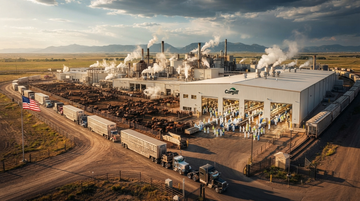
Cargill Cargill Inc said the Fort Morgan, Colorado beef plant will resume production in September after a labor dispute halted cattle slaughtering since April. Workers were expected to return around Aug. 24, with slaughtering restarting the week of Sept. 7.
Workers return
Aug. 24
Fort Morgan, Colorado lockout timeline per Cargill statement reported Aug. 17, 2026
Slaughter restart
Week of Sept. 7
Fort Morgan expected to restart harvest per Cargill statement reported Aug. 17, 2026
Idle since
April
Facility suspended cattle slaughtering a month earlier than May lockout reported Aug. 17, 2026
Capacity math • Where the squeeze forms
Fort Morgan’s stated throughput implies a weekly supply swing large enough to matter for the cattle/beef spread
Fort Morgan is described as capable of processing up to 4,700 head per day at full capacity and was averaging closer to 4,000 head/day before the halt. Even at the lower pre-halt pace, that’s about 20,000 head across a five-day week—small versus national kill, but large relative to a specific regional packing constraint and (crucially) large relative to what was removed for months.
| Scenario | Head per day | Five-day week | Why it matters |
|---|---|---|---|
| Full capacity | 4,700 head | ~23,500 head | Upper-bound throughput returning once the plant ramps |
| Pre-halt average (reported) | 4,000 head | ~20,000 head | More realistic near-term pace if ramp mirrors prior running rate |
Second-order effects • Margins, not just prices
Why extra packing capacity can pressure packer margins even if retail prices don’t instantly fall
- When packing capacity idles, cattle availability converts slower into boxed beef, increasing reliance on adjacent plants’ schedules.
- As a previously offline plant returns, boxed-beef supply grows before cattle supply magically expands, easing the tightness that supports higher spreads.
- Higher throughput can also reduce urgency-based bidding on cattle in the local procurement window around ramp-up, weakening the “cattle squeeze” transmission into live cattle and wholesale beef.
This is the investor-relevant distinction: food inflation doesn’t always reverse immediately because retail contracts and menu pricing lag. But supply-chain squeezes often show up first in the wholesale-to-packer margin layer. That’s why a “return of capacity” event can change margins (and volatility) even if grocery shelf prices move more slowly.
Upstream-to-downstream map • Who feels it first
The supply chain transmission goes cattle → packing scheduling → boxed beef → downstream buyers (restaurants/grocers) via distributor channels
Fort Morgan’s restart directly re-links two critical nodes: upstream procurement (cattle scheduling and kill timing) and downstream product flow (boxed beef volumes into distribution). The practical result is a short-window normalization of packing cadence that can loosen local tightness before it broadens nationally.
| Layer | What the labor shutdown did | What the September restart changes |
|---|---|---|
| Upstream cattle handling | Slaughter slots removed for months; kill timing shifts to other plants | More predictable slaughter slots near ramp → potential easing in urgency bidding |
| Packing & boxed beef | Reduced conversion into boxed beef → localized throughput constraints | Increased conversion into boxed beef → earlier supply relief for wholesale channels |
| Downstream distribution | Distributors rely on remaining supply and higher-frequency sourcing | More stable product flow can reduce short-term spot pressure in some channels |
Market setup • What to watch as the plant ramps
Short-term catalyst: the next 30–60 days hinge on ramp discipline, not just the contract vote
- If ramp roughly matches the reported pre-halt rate (~4,000 head/day), expect the first meaningful effect in the weeks around early September when kill schedules normalize.
- If ramp is slower (labor rehiring, operational catch-up, staffing), relief may be delayed and spread pressure could persist into later quarters.
- If adjacent plants also reduce unplanned overtime as Fort Morgan returns, the entire “squeeze” narrative loses friction in the regional system.
Investor angle • What it means for listed players
Listed equities most exposed are those that (1) buy cattle or (2) price-distribute protein into restaurants and grocers
This event is Cargill-specific, but the market effects show up at publicly traded endpoints: packers with sensitivity to cattle and boxed-beef spreads, and distributors/food service logistics that feel the timing and stability of protein supply.
Related listed stocks (direction tied to margin/supply sensitivity)
- JBS can see weaker boxed-beef tightness if capacity returns reduce spreads that otherwise support packer profitability in the near term.
- If cattle scheduling normalizes, cattle procurement volatility may fall over the next 1–2 months, but effects may be uneven by geography and product mix.
- Over 1–3 years, a labor-driven restart is unlikely to change structural demand for beef—watch for margin mean reversion vs. persistence.
- More stable boxed-beef supply can reduce spot-driven protein cost spikes that would otherwise hit foodservice distributors in coming quarters.
- If beef tightness eases in early September, purchasing leverage improves within weeks, supporting gross margin resilience.
- Over 1–3 years, Sysco benefits if supply-chain volatility remains lower—watch for whether customers resist price decreases.
- Easing protein tightness can reduce upward pressure on meat categories, but retail pricing and promotions can lag by quarters.
- In the next 30–90 days, Kroger’s impact is likely more visible in promotional cadence than in immediate sticker-price cuts.
- Over 1–3 years, sustained relief would help stabilize category inflation, but only if packer spreads compress broadly.
- If wholesale beef tightness loosens, Costco may see more predictable protein procurement costs during the next seasonal buying cycle.
- The key question is whether suppliers pass through reductions quickly—watch for meat price index changes in Q4 FY2026 versus lagged procurement timing.
- Over 1–3 years, sustained capacity normalization would support margin stability, but any renewed labor/plant disruptions would offset.