Consumer
What households are actually spending on
Traffic, pricing power, trade-down and inventory across retailers, restaurants and brands — who is holding margin, and who is buying volume.
2026-07-31
%22%2F%3E%0A%20%20%3Ccircle%20cx%3D%22220%22%20cy%3D%22150%22%20r%3D%22180%22%20fill%3D%22%2322d3ee%22%20fill-opacity%3D%220.12%22%2F%3E%0A%20%20%3Ccircle%20cx%3D%221010%22%20cy%3D%22130%22%20r%3D%22220%22%20fill%3D%22%2338bdf8%22%20fill-opacity%3D%220.08%22%2F%3E%0A%20%20%3Ccircle%20cx%3D%22920%22%20cy%3D%22520%22%20r%3D%22170%22%20fill%3D%22%2322d3ee%22%20fill-opacity%3D%220.06%22%2F%3E%0A%20%20%3Cpath%20d%3D%22M140%20430h920%22%20stroke%3D%22url(%23line)%22%20stroke-width%3D%2212%22%20stroke-linecap%3D%22round%22%2F%3E%0A%20%20%3Cpath%20d%3D%22M220%20360c120-150%20260-220%20380-220s260%2070%20380%20220%22%20fill%3D%22none%22%20stroke%3D%22%2367e8f9%22%20stroke-opacity%3D%220.5%22%20stroke-width%3D%2216%22%20stroke-linecap%3D%22round%22%20stroke-linejoin%3D%22round%22%2F%3E%0A%20%20%3Cpath%20d%3D%22M300%20398h600%22%20stroke%3D%22%2394a3b8%22%20stroke-opacity%3D%220.24%22%20stroke-width%3D%228%22%20stroke-linecap%3D%22round%22%2F%3E%0A%20%20%3Ctext%20x%3D%22220%22%20y%3D%22510%22%20fill%3D%22%23e2e8f0%22%20fill-opacity%3D%220.7%22%20font-family%3D%22Arial%2C%20Helvetica%2C%20sans-serif%22%20font-size%3D%2238%22%20letter-spacing%3D%228%22%3EINSIGHTS%3C%2Ftext%3E%0A%3C%2Fsvg%3E)
Sony Group Raises FY26 Profit Guidance, but PlayStation’s Hardware Mix Reveals the Memory-Cost Test
Sony Group reported its FY2026 first-quarter results on July 31, 2026, with operating profit rising sharply and full-year operating-profit guidance raised to ¥1.72 trillion. The more important signal is inside gaming: software and network revenue is growing faster than PS5 hardware, allowing the group to improve earnings even as memory costs remain a direct risk to console economics. That makes the result positive for Sony’s digital mix, but a warning that hardware demand alone may not absorb higher DRAM and NAND prices.

Tesla's 1.2 Million-Vehicle Probe Is a Valuation Test, Not Yet a Recall
NHTSA is investigating 1,198,300 older Model 3 and Model Y vehicles after 156 reports of a lower suspension link detaching, but it has identified no crashes, injuries or deaths. The direct repair liability is still unquantifiable; the larger issue is that Tesla trades at roughly 212 times trailing free cash flow while spending more than $25 billion this year on AI, making any evidence of weak hardware controls disproportionately important.
2026-07-30

Adidas’ “up-revenue, down-profit” miss is the sportswear version of a margin bear cycle
Adidas’ Q2 update kept the revenue story moving higher, but its profit trajectory broke on margin headwinds tied to freight/sourcing, higher US tariffs, FX translation, and inventory decisions. That combination matters because it signals the premium-discretionary scare is spreading via cost-of-goods and working-capital drag—not simply slowing demand—raising the risk that Nike, Lululemon, On Holding, and Deckers face similar gross-margin math in coming quarters.

Campari’s “tariff tailwind” lifts guidance—but the company still can’t prove demand strength without the missing volume proof
Campari’s raised profit outlook is explicitly linked to a tariff-environment benefit, but the disclosed guidance mechanics don’t automatically confirm underlying volume and mix strength. Investors should treat the update as a policy-cost signal first, and demand-quality signal only if Campari’s organic sales/mix path is accelerating alongside margins.

Haleon’s H1 “US slip / Oral Health win” reframes the staples trade into a category bet
Haleon reaffirmed full-year guidance, but H1’s internal split matters: Oral Health delivered mid-single-digit growth while North America slowed versus stronger Emerging Markets. For investors running “premium staples” pair trades, the earnings print shifts the question from “staples resilience” to “which category compounds when the US consumer softens.”
Magnum's cost-cuts can lift profits without breaking Ben & Jerry’s—if the “brand engine” keeps pulling volume
Magnum MICC is showing a classic split: restructuring-style cost takeout supports earnings optics while its largest ice-cream brands still grow. The key investor question is whether Magnum’s margins can expand without relying on further one-off cost actions—especially after the Unilever separation that restructured the business model.

Reddit's AI Ad Engine Is Working—But Google May Be Training Its Own Traffic Threat
Reddit delivered $805 million of second-quarter revenue and $762 million of advertising revenue as AI-powered campaign automation improved advertiser performance. The tension is structural: the same AI ecosystem that helps Reddit sell more ads can also summarize Reddit discussions inside Google's search results, weakening the referral traffic and data leverage that support the platform. Investors should treat the ad product as the near-term earnings engine and search erosion as the long-term valuation risk.

UMG.AS’s Q2 streaming-led beat shows catalog owners still have pricing power—but the next 12–18 months hinge on platform deal renegotiations, not subscriber counts
Universal Music Group’s Q2 growth was driven by streaming-related pricing and “Streaming 2.0” agreement benefits, including wholesale price increases that added 3.5 percentage points to recorded-music growth. The investable implication: if platforms can’t outgrow rising content costs, the pricing runway shifts from consumer subscription momentum to who controls the catalog and the contract terms.

“Made in USA” fraud isn’t just slipping past AI—it’s exploiting the AI governance gap at Walmart and Amazon
A new Columbia Law School report finds that AI shopping assistants at Walmart and Amazon can detect “Made in USA” violations, yet they don’t proactively police the claims. With the FTC escalating “Made in USA” enforcement and an executive order explicitly flagging online marketplaces, the enforcement vacuum becomes the real economic loophole—and a compliance-first strategy can turn into a competitive moat.

Zoox’s NHTSA “No Steering Wheel” Paid-Use Exemption Changes the AV Business Model Math
NHTSA granted Zoox a temporary, commercial-use exemption that caps deployment at 2,500 vehicles annually for two years—and it does so for purpose-built robotaxis that lack steering wheels and other human controls. This is not the same regulatory story as Waymo or Tesla: it explicitly uses the FMVSS-exemption pathway to remove “human fallback” assumptions from the safety and unit-economics equation.
2026-07-29
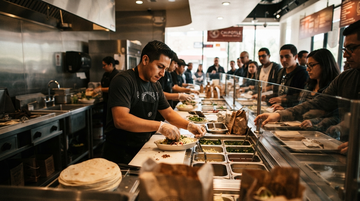
Chipotle's Raised Sales Guide Raises the Wrong Question: Is Traffic Returning or Just Being Purchased?
Chipotle raised full-year comparable restaurant sales growth guidance into a low-single-digit range, and Q2 comps showed growth driven by both average check and transactions. The investor risk is that this “traffic” could be partially value-pulled (promo/LTO mix) rather than sustainably broadened demand—changing how food-cost leverage and margins behave next.

DoorDash's Part 135 move turns drone delivery from a partnership add-on into a regulated, asset-heavy moat
DoorDash says its DoorDash Labs unit earned FAA Part 135 air-carrier certification on Jul 29, 2026, and is launching an in-house “DoorDash Air” vertical stack. That changes the economics of last-mile drone delivery because DoorDash can amortize its own aircraft + hub setup while shifting integration away from Wing/Flytrex/Manna partners—while Part 135 certification acts like a regulatory capacity barrier.

EssilorLuxottica’s Q2 smart-eyewear profit beat proves attach-rate—not novelty—can scale
In EssilorLuxottica’s Q2 print, AI-powered wearables and myopia management show up together with margin expansion, turning smart glasses from buzz into earnings validation. The second-order investor opportunity is the ecosystem that benefits once mainstream brands + optical retail install demand: lens/optics supply, AR display supply chains, and optical retailers with higher service-led attach.

Ford's truck profit engine can’t run forever on “wealthy buyers” alone—its 2026 EBIT lift is also a math problem
Ford raised its 2026 adjusted EBIT outlook to $10–$11B, explicitly citing strong pricing/product mix and truck-led demand even as EV losses continue. The durable question for investors is whether North American truck affordability pressure can stay contained without eroding the very margin bridge that is offsetting Ford’s Model e losses.

Kia is betting $600M+ on Mexico EV localization to protect USMCA eligibility if North America tightens battery sourcing
Kia’s planned $600M-plus Nuevo León expansion is less about “Mexico EV capacity” and more about keeping EVs on a USMCA-compliant path as rules increasingly scrutinize batteries and originating inputs. USMCA already contains an “advanced battery” originating framework and requires higher regional value content thresholds (75% for passenger vehicles and light trucks), which makes factory-level localization—and supplier flexibility—an option worth paying for. If the USMCA review process leads to tighter proof requirements or higher battery localization expectations, companies with battery supply chains that can credibly shift origin will be the near-term winners.

Mondelez’s pricing works—until elasticity turns a “volume cushion” into a “volume problem” in Europe
In Mondelez's latest disclosures, higher net pricing is still doing the heavy lifting, but management explicitly flags that pricing actions are creating continued elasticity-driven volume weakness—especially in chocolate in Europe. That split matters for investors because it implies branded power is real, yet pass-through is not linear: retailers and private label become more important exactly when volumes start to slip.

Mondelez proves loyalty works—until input-cost pricing meets elasticity
In Q2, Mondelez grew Organic Net Revenue by 2.2% on higher net pricing and favorable volume/mix, even while admitting that pricing actions have adversely impacted consumer demand, particularly in Europe. The investable question isn’t whether snack brands have pricing power—it’s whether category loyalty can keep absorbing the next cocoa/inputs-driven cost shock without volume giving way again.

P&G’s “muted” 2027 implies brand power stops trading up—and margin protection turns into a promotion math problem
P&G’s latest filings and earnings disclosures point to a cautious consumer environment where brand-driven pricing has less “upside” than investors assumed, shifting the burden to mix, elasticity, and promotional discipline. The key investment question becomes whether P&G can keep volume steady without funding growth with higher trade and share-of-wallet pressure.

Qualcomm’s data-center pivot is built on handset cash—but mobile weakness is already shaping the funding timeline
Qualcomm QCOM says handset represents roughly one-third of QCT revenues by fiscal 2029, while targeting data-center revenues of more than $15B by fiscal 2029 and $5B in fiscal 2027. The key investable question is whether handset cash generation remains durable enough to fund that ramp through a cyclical, memory-constrained mobile cycle—especially after Qualcomm explicitly expects near-term demand hits from handset supply constraints.

Qualcomm's guidance stress-tests whether handset cash can fund a data-center pivot
In its Q3 FY2026 outlook, Qualcomm guided revenue of $9.2B–$10.0B and non-GAAP EPS of $2.10–$2.30, explicitly baking in memory-supply pressure that hits handset demand. The financial durability question is answerable from cash generation: TTM operating cash flow is $14.285B and free cash flow is $12.502B, but the pivot only creates shareholder value if data-center/edge expansions can offset handset volatility without compressing returns.
What to expect
Evidence-first notes with a visible point of view.
This section collects sharp takes on earnings, shareholder meetings, and market structure. Each new piece should make the thesis, the facts, and the implications obvious within the first few screens.
Expect direct analysis, not generic commentary.
Expect the data to be explicit and the argument to be easy to follow.
Plutux is not an investment adviser. Market data and AI-generated analysis are for information and education only, not investment advice. Disclaimer