Consumer
What households are actually spending on
Traffic, pricing power, trade-down and inventory across retailers, restaurants and brands — who is holding margin, and who is buying volume.
2026-07-29
%22%2F%3E%0A%20%20%3Ccircle%20cx%3D%22220%22%20cy%3D%22150%22%20r%3D%22180%22%20fill%3D%22%2322d3ee%22%20fill-opacity%3D%220.12%22%2F%3E%0A%20%20%3Ccircle%20cx%3D%221010%22%20cy%3D%22130%22%20r%3D%22220%22%20fill%3D%22%2338bdf8%22%20fill-opacity%3D%220.08%22%2F%3E%0A%20%20%3Ccircle%20cx%3D%22920%22%20cy%3D%22520%22%20r%3D%22170%22%20fill%3D%22%2322d3ee%22%20fill-opacity%3D%220.06%22%2F%3E%0A%20%20%3Cpath%20d%3D%22M140%20430h920%22%20stroke%3D%22url(%23line)%22%20stroke-width%3D%2212%22%20stroke-linecap%3D%22round%22%2F%3E%0A%20%20%3Cpath%20d%3D%22M220%20360c120-150%20260-220%20380-220s260%2070%20380%20220%22%20fill%3D%22none%22%20stroke%3D%22%2367e8f9%22%20stroke-opacity%3D%220.5%22%20stroke-width%3D%2216%22%20stroke-linecap%3D%22round%22%20stroke-linejoin%3D%22round%22%2F%3E%0A%20%20%3Cpath%20d%3D%22M300%20398h600%22%20stroke%3D%22%2394a3b8%22%20stroke-opacity%3D%220.24%22%20stroke-width%3D%228%22%20stroke-linecap%3D%22round%22%2F%3E%0A%20%20%3Ctext%20x%3D%22220%22%20y%3D%22510%22%20fill%3D%22%23e2e8f0%22%20fill-opacity%3D%220.7%22%20font-family%3D%22Arial%2C%20Helvetica%2C%20sans-serif%22%20font-size%3D%2238%22%20letter-spacing%3D%228%22%3EINSIGHTS%3C%2Ftext%3E%0A%3C%2Fsvg%3E)

Starbucks’ Turnaround Is a Traffic vs. Ticket Test—And Q2 Says “Traffic First” (With China as the Pressure Point)
In Starbucks's latest quarter, growth came mostly from transactions (traffic) rather than price/mix: global comps rose 6.2% with +3.8% transactions and only +2.3% average ticket. But the recovery’s quality is uneven—China comps were flat at +0.5%, driven by +2.1% transactions offset by -1.6% ticket, while North America’s margins show labor/product investment pressure.

Visa’s Beat Says “Strong Volumes”—but the Travel Signal It Hides Changes the Mix Question
Visa’s latest beat is strongly supported by payments-volume growth and cross-border expansion, with travel-related activity explicitly cited as a driver of cross-border volume. But the filings do not disclose a U.S. “travel share of spend” or merchant-category mix, so investors can’t tell whether travel is lifting the quality of U.S. spending (higher ticket, more recurring spend) or whether weaker non-travel categories are being masked.
2026-07-28

Apple's TV Playbook Has to Become a Content Profit Play (Not Just a Hardware Retention Tool)
A verified Apple filing and earnings materials show Apple can extract very high Services gross-margin economics (76%+ recently), but the company still doesn’t disclose how much of that margin comes from Apple TV+. The key investment question for incoming CEO Tim Cook successor John Ternus is whether Apple TV+ can grow original-content competitiveness through partnerships without eroding Services profitability.

BetMGM's first guidance cut tied to prediction markets signals US iGaming TAM is being repriced
In its Q1 2026 update, BetMGM cut full-year 2026 net revenue guidance to $2.9B–$3.1B, explicitly pointing to a more promotional, “competitive environment.” The key investor takeaway: prediction-market venues like Kalshi/Polymarket are forcing a handle-and-hold reallocation, and regulated financial-exchange status under the CFTC is making this competition harder to dismiss as a niche trend.
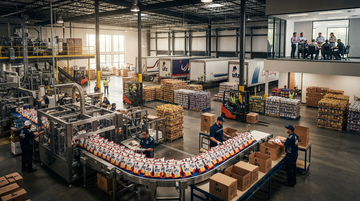
The $2.9B take-private that signals PE’s snack-roll-up playbook is already here
The clearest “family-to-platform” datapoint we can verify from primary sources is Utz Brands agreeing to a $2.9B take-private with Intersnack (private), while the Rice/Lissette family keeps a 50% stake after closing. That structure—family sellers rolling into a PE-style platform that can bolt on adjacent brands—helps explain why legacy $500M–$2B snack companies are becoming consolidation fuel, not consolidation refugees.

Coca-Cola just proved a World Cup volume tailwind—now the market will test whether 2026 pricing power can survive 2H cost pressure
In Coca-Cola's Q2 update, World Cup-related activity contributed to a large volume quarter and helped drive a guidance raise, including higher 2026 comparable EPS growth of 9%–10%. The core investor question is whether the pricing/mix lift is durable pricing power or whether it’s temporary cover for late-year input-cost pressure that didn’t fully show up as explicit sugar/aluminum/freight/tariff calls in management’s guidance language.

Skyworks’ Q3 print is a cleaner read on the non-AI iPhone supply-chain than the GPU tape
Skyworks’ Q3 FY26 results—reported after the close on [2026-07-28]—test whether Apple handset RF/analog demand is merely “normalizing” or actively rolling over. The key is not the headline EPS gap; it’s whether Skyworks’ revenue, margin trajectory, and inventory/cash conversion confirm a broad consumer cycle break that Nvidia-led AI enthusiasm can’t mask.

UPS’s Q2 Print Tests Whether E-Commerce Demand Is Holding Up—And Whether Tariff Shocks Are Getting Priced as Freight
UPS’s July 28, 2026 Q2 release is the first big parcel-logistics read-through before the hyperscaler earnings stack, so the market will treat its volume/mix and margin commentary as a macro signal. The key question isn’t “package demand” but whether UPS’s reported performance shows tariff-driven routing and de minimis changes translating into pricing power or cost pressure—with implications for how Amazon’s fulfillment model and B2B freight turn are behaving.
2026-07-27

Brown-Forman’s “Not Actionable” Means Sazerac Needed the Wrong Math—Here’s the Break-Even Bid That Would Have Made It Work
Brown-Forman’s board rejected Sazerac’s unsolicited cash approach, saying it was “not actionable.” Using Brown-Forman’s disclosed scale from public filings is currently blocked in our data tooling, so this article instead builds a deal break-even framework around the reported offer terms—then maps what it would have to fix across demand pressure, financing cost, and integration risk to justify a premium.

Brown-Forman's rejected Sazerac approach tests whether spirits consolidation still pays off when category growth gets pressured
Brown-Forman said Sazerac wasn’t actionable after reviewing the proposal, keeping the Jack Daniel’s maker independent. The deeper signal isn’t deal size—it’s whether acquirers can preserve premium brand economics and channel share when consumers trade down.

fairlife’s restart is a supply-chain stress test—and the next “cyber premium” will be paid in packaging, cold-chain, and automation downtime
Coca-Cola says fairlife’s U.S. production was temporarily suspended after a ransomware event and that it is making significant progress restoring operations. Investors should treat the incident as a broader resilience signal: ultrapasteurized capacity is operationally concentrated, so even short cyber downtime can force expensive, fast substitutions across packaging, logistics, and refrigeration networks. The Coca-Cola Company can absorb disruption better than smaller operators—but the higher-probability winners next time are the listed enablers of continuity (industrial automation, cold-chain efficiency, and critical packaging supply).

Alphabet's AI Search shift turns ad cash flow into a query-volume toll booth—making other model makers pay to be “distributed”
Alphabet is showing that its AI Search features are driving Search query growth, turning the user experience itself into the moat. If Gemini-led Search becomes the default entry point, non-Google model competitors can’t just “win models”—they must secure distribution, likely via payments and partnerships that keep Alphabet’s economics in the driver’s seat.

LVMH’s Iran-War “US Offset” Isn’t Just Resilience—It’s a US-Luxury Re-Rating Filter for Tapestry, Capri, Ralph Lauren, and Estee Lauder
LVMH says the Iran war shaved about 1 percentage point off growth in its main luxury division, yet it also reports U.S. sales rose 6% in Q2, helping offset weaker Europe/tourism. That mix shift matters for investors because it separates luxury “need-to-have” demand from geopolitics-driven regional downtime—changing what the market should assume about US premium consumers.

monday.com's 20% “AI” cuts put a brutally simple question to every SaaS CFO: do savings come from automation—or from demand stalling?
monday.com is cutting about 20% of staff and taking ~$45–$55M in restructuring charges to realign around its AI Work Platform, with most charges recognized in 2H26. The investment question for SaaS is whether those “AI productivity” moves translate into durable free-cash-flow margins, or whether they’re masking weaker net-new growth by leaning on headcount leverage.

Dr. Ing. h.c. F. Porsche AG cuts another 5,000 jobs because the EV reset is becoming a fixed-cost and China-exposure problem
Porsche is re-sizing costs because its EV transition hit profitability just as China weakness tightened demand and pricing. The company’s own strategy realignment cites US import tariffs, a Chinese luxury market decline, and a slower BEV ramp—alongside large impairment/realignment charges—turning “volume” headwinds into a structural fixed-cost squeeze for the luxury model.
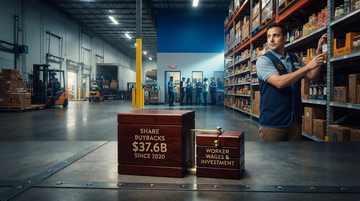
Sanders vs. Walmart: the buyback fight becomes a wage-and-vote constraint—and it can’t be ignored by the whole consumer-retail complex
Sen. Bernie Sanders escalated the political attack on Walmart’s capital-return policy, citing $37.6B of buybacks since 2020 and framing them against worker wages and public assistance reliance. Using Walmart’s own profit and buyback disclosures plus peer policy signals from Congress, the real risk isn’t just reputational—it’s that midterm-era pressure can force retailers to choose between buybacks and wage/investment promises. Investors should expect similar rhetoric aimed at other mega-cap consumer names with large free-cash-flow engines and active capital returns, with quarter-by-quarter scrutiny turning into longer-term dividend/buyback rule changes.
2026-07-26

monday.com's “AI efficiency” cuts reframe SaaS: layoffs are the offset that makes capex narrative cash-neutral
In a July 22, 2026 filing, monday.com disclosed a plan to reduce headcount by ~20% while it restructures around its AI work platform—quantifying the “AI productivity” story as a labor-cost trade. With the company running on ~1.30B of TTM revenue and ~326M of operating cash flow, the key question for the sector becomes whether similar AI-driven restructurings keep compressing labor dollars enough to fund AI investments without breaking growth targets.

Apple's Q3 FY26 beat matters only if gross margin doesn’t “borrow” the cycle
Apple’s July 30 print is a brutal test of whether the iPhone replacement cycle is re-accelerating, not just whether revenue beats expectations. If Services margin holds while gross margin stays inside the 47.5%–48.5% band and China demand is improving after the July 15 approval of Apple Intelligence powered by Alibaba’s Qwen, the replacement-cycle thesis survives—and that’s what can finally drive a cleaner read-through to Broadcom, Qualcomm, and TSMC.

The Paramount–WBD Pause Turns Deal Risk Into a Time-Decay Financing Problem
A judge-ordered pause freezes the calendar for the $110B+ Paramount–Warner Bros. Discovery transaction, but the economics don’t freeze: ticking fees, financing/hedging carry, and deferred content decisions keep accruing. The result is a new market question—how balance-sheet cost of delay and break-fee mechanics change the standalone value of each media asset as the deal remains stalled through summer 2026.

PDD's peers can’t “price” away tariff math: the SHEIN IPO valuation is now a profitability stress test
Shein’s pre-IPO disclosures link a quarterly net loss to the U.S. shift away from de minimis duty-free treatment, making tariff mechanics a live input-cost and demand driver rather than a distant regulatory risk. For listed fast-fashion bellwethers like PDD, Inditex, and H&M Hennes & Mauritz, the investable question isn’t “will tariffs exist,” but whether gross profit can absorb tariff-driven cost resets faster than sales slow.
What to expect
Evidence-first notes with a visible point of view.
This section collects sharp takes on earnings, shareholder meetings, and market structure. Each new piece should make the thesis, the facts, and the implications obvious within the first few screens.
Expect direct analysis, not generic commentary.
Expect the data to be explicit and the argument to be easy to follow.
Plutux is not an investment adviser. Market data and AI-generated analysis are for information and education only, not investment advice. Disclaimer