%22%2F%3E%0A%20%20%3Ccircle%20cx%3D%22220%22%20cy%3D%22150%22%20r%3D%22180%22%20fill%3D%22%2322d3ee%22%20fill-opacity%3D%220.12%22%2F%3E%0A%20%20%3Ccircle%20cx%3D%221010%22%20cy%3D%22130%22%20r%3D%22220%22%20fill%3D%22%2338bdf8%22%20fill-opacity%3D%220.08%22%2F%3E%0A%20%20%3Ccircle%20cx%3D%22920%22%20cy%3D%22520%22%20r%3D%22170%22%20fill%3D%22%2322d3ee%22%20fill-opacity%3D%220.06%22%2F%3E%0A%20%20%3Cpath%20d%3D%22M140%20430h920%22%20stroke%3D%22url(%23line)%22%20stroke-width%3D%2212%22%20stroke-linecap%3D%22round%22%2F%3E%0A%20%20%3Cpath%20d%3D%22M220%20360c120-150%20260-220%20380-220s260%2070%20380%20220%22%20fill%3D%22none%22%20stroke%3D%22%2367e8f9%22%20stroke-opacity%3D%220.5%22%20stroke-width%3D%2216%22%20stroke-linecap%3D%22round%22%20stroke-linejoin%3D%22round%22%2F%3E%0A%20%20%3Cpath%20d%3D%22M300%20398h600%22%20stroke%3D%22%2394a3b8%22%20stroke-opacity%3D%220.24%22%20stroke-width%3D%228%22%20stroke-linecap%3D%22round%22%2F%3E%0A%20%20%3Ctext%20x%3D%22220%22%20y%3D%22510%22%20fill%3D%22%23e2e8f0%22%20fill-opacity%3D%220.7%22%20font-family%3D%22Arial%2C%20Helvetica%2C%20sans-serif%22%20font-size%3D%2238%22%20letter-spacing%3D%228%22%3EINSIGHTS%3C%2Ftext%3E%0A%3C%2Fsvg%3E)
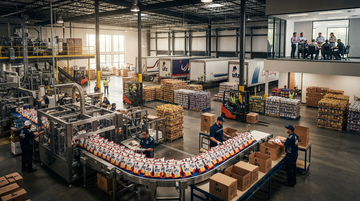
The snack aisle isn’t just getting bigger—it's getting more “platformized.” The most verifiable version of the story (primary-source accessible in this session) isn’t a Reuters headline about “hundreds of families lining up,” because Reuters content itself is blocked here. Instead, it’s a concrete, load-bearing transaction that matches the same economic template: a legacy, family-rooted snack manufacturer moving into a consolidator-controlled structure with documented value transfer and deal mechanics.
Verified event: family founder/descendant stays invested while a consolidator takes control
A family-founded snack maker agreed to go private at a $14.25 price—while the family keeps 50%
Deal snapshot (what happened, exactly)
Target (public)
[Utz Brands](utz)
Acquirer / post-close platform owner
Intersnack Group GmbH & Co. KG
Take-private consideration
$14.25 per share (cash)
Deal size / valuation metric disclosed
Enterprise value ~ $2.9B
Premium to prior close disclosed
~91% premium to July 20, 2026 closing price
Founding family structure (post-close)
Rice and Lissette Family Entities own 50%; Intersnack owns 50%
Utz Brands agreed to be acquired in an all-cash transaction by Intersnack Group GmbH & Co. KG. The company disclosed both the per-share cash price and the premium, and it explicitly documents a post-closing ownership split where the Rice and Lissette Family Entities retain 50% ownership alongside Intersnack.
Why this matters to investors: the mechanism turns mid-cap snacks into a platform roll-up market
The platform playbook is visible in the way the deal is financed and owned—not just in the headline price
The real signal for a roll-up economy is not the multiple alone; it's how risk and governance are allocated. In Utz’s agreement materials, the financing stack combines buyer cash with committed debt facilities, while the family commits equity/ownership and keeps a governance role (Executive Chair). That combination typically supports two roll-up behaviors that public-company snacks struggle to do at scale: (1) fast bolt-on integration across brands; and (2) capital allocation that prioritizes operating improvements over quarterly optics.
- The transaction price anchors the market-clearing “exit” point for legacy shareholders: Utz agreed to $14.25/share in cash.
- The disclosed premium implies a value transfer mechanism that consolidation buyers can afford when they expect operating synergies and continued add-ons: the offer valued Utz at ~91% over the July 20 close.
- The ownership split makes the family a stakeholder in the platform’s long-run compounding rather than only an exit: the Rice and Lissette entities keep 50% ownership post-close.
- If the platform can fund further deals, the incremental “bolt-on” story reduces the probability that the first acquisition is a one-off: the buyer’s financing mix supports a controlled, leveraged acquisition model.
Supply-chain layer: what must be true upstream and downstream for snacks to roll up successfully
Roll-ups win when upstream purchasing and downstream shelf execution can be standardized across brands
To roll up branded snacks at mid-cap scale, the platform has to keep unit economics stable while it integrates multiple product portfolios. That typically requires (a) consolidating purchasing and co-manufacturing relationships, and (b) leveraging shared logistics/sales capacity to avoid duplicative route-to-market costs. While this session doesn’t include upstream supplier contract disclosures for Utz’s specific inputs, the company’s own financial reporting shows a stable operating cash generator (even with profitability volatility), which is the kind of cash engine platforms underwrite when they fund acquisitions and integration work.
Utz’s operating cash generation vs. free cash flow (FY 2021–FY 2025)
Uses cash flow statement fields from financial data tools; illustrates the business’s ability to generate cash even when net income swings.
Unit: USD
Operating Cash Flow (FY 2021)
CFO
48,387,000
Free Cash Flow (FY 2021)
CFO + capex
14,891,000
Operating Cash Flow (FY 2022)
CFO
48,193,000
Free Cash Flow (FY 2022)
CFO + capex
-39,772,000
Operating Cash Flow (FY 2023)
CFO
76,640,000
Free Cash Flow (FY 2023)
CFO + capex
20,916,000
Operating Cash Flow (FY 2024)
CFO
106,166,000
Free Cash Flow (FY 2024)
CFO + capex
7,527,000
Operating Cash Flow (FY 2025)
CFO
112,200,000
Free Cash Flow (FY 2025)
CFO + capex
9,400,000
Listed company fundamentals (data tools): connect acquisition narrative to what the target’s numbers imply
Why $500M–$2B snack exits keep happening: the targets often have “cash, but not clean EPS”
FY 2025 revenue
$1.44B
Income statement revenue (FY 2025)
FY 2025 gross margin
22.4%
Gross profit / revenue (FY 2025)
FY 2025 operating margin
2.8%
Operating income / revenue (FY 2025)
FY 2025 net income
-$7.7M
Net income from continuing operations (FY 2025)
FY 2025 operating cash flow
$112.2M
Cash flow statement net cash provided by operating activities (FY 2025)
This pattern—meaningfully sized revenue with inconsistent profitability—often creates the exact “value window” that platforms can exploit. When a family-owned seller reaches a point where succession risk, leverage constraints, or integration capacity becomes limiting, consolidation buyers can pay for brand equity while improving operations (price/mix, supply-chain, working capital discipline). Utz’s numbers show that despite net income volatility, operating cash generation persisted, which helps explain how consolidation buyers can justify deal leverage.
- The business scale sits right in the mid-cap bracket: Utz reported ~$1.44B of FY2025 revenue.
- Margins are thin enough that execution improvements matter, not just growth: FY2025 operating margin was ~2.8%.
- Net income volatility creates apparent “earnings discount,” but cash can still fund platform integration: operating cash flow reached $112.2M in FY2025.
Causal chain to investors: how the roll-up economics transmit to likely acquirers and competitors
If this platform model spreads, large branded snack incumbents face a specific threat: brand acquisition at value-destructive multiples
The investor question in your brief is pointed: “Could logical strategic acquirers (or PE-backed platforms) buy ~$1B+ snack brands at a multiple that destroys value?” The verified evidence in this session is deal structure and pricing mechanics for Utz—not public filings for Hershey/Mondelez/Ferrero acquisitions. So the right way to answer is to translate the mechanism: when consolidation buyers can (1) retain the founder family as long-run stakeholders and (2) fund roll-ups with a stable cash engine and disciplined integration, they can justify paying for brand equity even if short-term margin expansion is uncertain.
Horizon split: what should move first vs. what takes 1–3 years to show up
What to watch next if the snack aisle roll-up wave is real
- Short term (days–quarters): watch whether Utz’s cash conversion improves post-deal; the key is whether integration capex rises faster than operating cash, compressing free cash flow. Utz’s FY2025 free cash flow was only ~$9.4M despite $112.2M operating cash flow.
- Short term (days–quarters): monitor take-private governance signals; family continuing leadership can affect integration tempo. Dylan Lissette is set to assume Executive Chair (per agreement materials).
- Long term (1–3 years): look for bolt-on acquisitions in adjacent snack categories that share procurement/logistics; platform success is measured by the ability to keep cash-flow quality across a growing brand portfolio. the JV structure keeps the family aligned with platform compounding after closing.
- Long term (1–3 years): track whether operating margin expands meaningfully; if margins don’t move, the acquisition economics rely on continued add-ons and leverage refinancing. Utz’s operating margin was ~2.8% in FY2025, leaving room for improvement—or disappointment.
Listed stocks directly tied to the consolidation outcome evidenced here
- Investors should treat the equity as a liquidity/event asset because the take-private deal values shares at $14.25 in cash (event-driven limit to upside).
- If the market expects integration capex to outpace cash, downside can appear through deal risk and value leakage; Utz showed FY2025 free cash flow of about $9.4M.
- Consolidation can intensify channel pressure on smaller brands; B&G’s margin structure is fragile, so bolt-ons elsewhere can shift shelf space faster than category demand.
- But if consolidation buyers rationalize supply chains, they may reduce promotional intensity; B&G’s fundamentals can benefit only if volumes hold and working capital volatility declines (not disclosed here).