Consumer
What households are actually spending on
Traffic, pricing power, trade-down and inventory across retailers, restaurants and brands — who is holding margin, and who is buying volume.
2026-07-26
%22%2F%3E%0A%20%20%3Ccircle%20cx%3D%22220%22%20cy%3D%22150%22%20r%3D%22180%22%20fill%3D%22%2322d3ee%22%20fill-opacity%3D%220.12%22%2F%3E%0A%20%20%3Ccircle%20cx%3D%221010%22%20cy%3D%22130%22%20r%3D%22220%22%20fill%3D%22%2338bdf8%22%20fill-opacity%3D%220.08%22%2F%3E%0A%20%20%3Ccircle%20cx%3D%22920%22%20cy%3D%22520%22%20r%3D%22170%22%20fill%3D%22%2322d3ee%22%20fill-opacity%3D%220.06%22%2F%3E%0A%20%20%3Cpath%20d%3D%22M140%20430h920%22%20stroke%3D%22url(%23line)%22%20stroke-width%3D%2212%22%20stroke-linecap%3D%22round%22%2F%3E%0A%20%20%3Cpath%20d%3D%22M220%20360c120-150%20260-220%20380-220s260%2070%20380%20220%22%20fill%3D%22none%22%20stroke%3D%22%2367e8f9%22%20stroke-opacity%3D%220.5%22%20stroke-width%3D%2216%22%20stroke-linecap%3D%22round%22%20stroke-linejoin%3D%22round%22%2F%3E%0A%20%20%3Cpath%20d%3D%22M300%20398h600%22%20stroke%3D%22%2394a3b8%22%20stroke-opacity%3D%220.24%22%20stroke-width%3D%228%22%20stroke-linecap%3D%22round%22%2F%3E%0A%20%20%3Ctext%20x%3D%22220%22%20y%3D%22510%22%20fill%3D%22%23e2e8f0%22%20fill-opacity%3D%220.7%22%20font-family%3D%22Arial%2C%20Helvetica%2C%20sans-serif%22%20font-size%3D%2238%22%20letter-spacing%3D%228%22%3EINSIGHTS%3C%2Ftext%3E%0A%3C%2Fsvg%3E)

Small businesses just sued over “forced labor” tariffs—turning tariff power into a refund-and-injunction fight at the importer level
Two U.S. small businesses challenged the Trump administration’s Section 301 “forced labor” tariffs in the Court of International Trade, arguing the program preserved the invalidated emergency-tariff architecture rather than providing a reasoned, practice-specific remedy. The demand-side wedge matters for investors because it shifts outcomes from “policy backlash” to “case-by-case duty collection, injunction risk, and refund exposure,” with immediate pressure on downstream importers and sellers and longer-run uncertainty for cross-border supply-chain pricing.

U.S. tariff “emergencies” are becoming a permanent import tax—and the pass-through floor is now an earnings risk
The new tariff layers announced around the July 24 expiry window are built on authorities that cover nearly all U.S. imports and can be extended, turning tariff cost into a recurring P&L input rather than a one-off shock. The sectors most exposed are the ones that (1) rely on contract pricing, (2) face long receivables cycles, and (3) have limited leverage to reprice without demand destruction—so pass-through eventually breaks, not instantly.

When Uber stops distributing Waymo, robotaxi unit economics shift from “demand rental” to “pricing owned”—and that matters more than the driverless tech
The Uber-Waymo Phoenix robotaxi partnership ended on June 29, 2026, with Waymo vehicles re-integrated into its own Phoenix fleet while remaining on Uber’s app in Austin and Atlanta. This split stress-tests robotaxi economics: if margin survives when the platform loses Uber’s demand funnel, the “full-stack” margin path becomes real—otherwise robotaxis become an asset-heavy utility that needs distribution partners to monetize utilization.
2026-07-25

American Express's 10% Revenue Guide Still Fails to Lift Profit—Because Variable Rewards Costs Rise in Step With Affluent Spend
American Express raised its 2026 revenue growth guidance to ~10% while holding an unchanged profit outlook, widening the gap between card-member spending momentum and issuer economics. In the latest quarter, higher Card Member rewards/benefits drive “variable customer engagement costs” higher even as credit loss metrics stay stable, so profitability is being capped by the rewards cost lag/elasticity rather than by credit normalization.

Bluesky’s Attie Turns the Open Social Graph Into a Research Infrastructure—Not Just Another Feed
Bluesky’s expanded Attie product adds “Quests,” shifting the open AT Protocol from a publishing network into a queryable social-research layer. If enough users and third-party AT Protocol apps adopt it, the capture of value may move away from engagement metrics and toward downstream analytics, decisioning, and model training—while the largest risk is uneven data quality and trust.

Midjourney just bought Co–Star—because consumer AI needs a habit loop, not just a better model
Midjourney’s acquisition of personalized social astrology app Co–Star signals a shift from “model quality” competition to “retention system” building—identity, context, and interaction loops tied to an ongoing subscription or credit flow. Co–Star already runs on freemium in-app purchases and uses an AI+human workflow to keep users returning with personalized daily/compatibility content, giving Midjourney an engagement layer it didn’t have in its image-generation-first product.

OpenAI’s Codex Micro Makes a Case for “AI-Native” Input—And It Could Rewire Peripherals Economics
OpenAI’s Codex Micro (a $230, 13-key mechanical keypad) is built to control AI coding agents through agent/status keys, a workflow joystick, and a “reasoning” dial—paired to the ChatGPT desktop app. The financial edge isn’t the first limited-run hardware; it’s whether specialized controls reduce agent workflow friction enough to create a durable peripheral category that shifts device margin and distribution leverage toward platform-linked hardware makers and ecosystem integrators.

World Cup Demand Can Lift U.S. Hotels—but Middle East Disruption Can Still Squeeze Online Travel Platform Margins
The next earnings wave will effectively run two experiments at once: whether U.S. World Cup travel creates clean pricing-power for hotels and whether Middle East disruptions keep denting platform demand and economics. SEC filings show Booking Holdings estimated Middle East conflict reduced room-night growth by ~2 percentage points via cancellations and slower new bookings—so any U.S. surge may not fully translate to platform profit.
2026-07-24
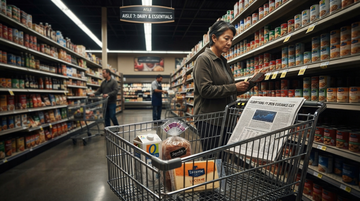
Albertsons’ outlook cut turns “trade-down” from a theory into a grocery-aisle fact
Albertsons’ guidance reset—forecasting fiscal 2026 identical sales down 0.5% to 1.5% and adjusted EPS of $1.75 to $1.85—was sharp enough to re-price the consumer story for grocers. The key market takeaway isn’t that the consumer is “weak,” it’s that spending is bifurcating: value-first, mass/discount-leaning trips are taking share from traditional grocery formats, forcing price-investment to defend volume.
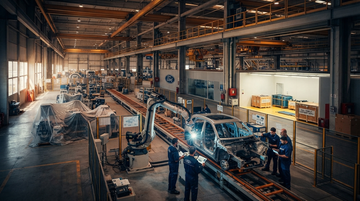
Geely’s “No-Brand-Print” Play in Spain: China EVs First Enter Europe by Taking Over Ford’s Idle Capacity—Not Buying a Publisher-Brand
Geely’s agreement to use Ford’s Almussafes plant in Valencia to produce Geely EVs creates an EU-manufacturing “origin story” that Reuters links directly to avoiding EU tariffs on Chinese EV imports. The real supply-chain message is capacity arbitrage: idle European lines get monetized by China volume, shifting battery/material demand toward whatever can qualify for the JV’s EV ramp instead of whichever OEM owns the logo.
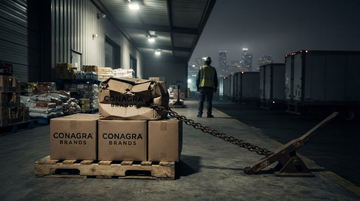
Nestlé and the 'Trojan Horse' Lobby: Why Big Food Is Now Treating the Label as a Balance-Sheet Item
Nestlé, PepsiCo, Coca-Cola and the rest of the AFIT coalition are spending 17x more on Washington lobbying than a year ago — not to fight regulation, but to redefine the federal label itself. The play turns ingredient disclosure from a compliance cost into a margin lever, and Conagra's 50% dividend cut nine days ago is the first hard signal of how exposed the holdouts are.

Tesla: The “Robotaxi Tone Shift” Looks Like a CapEx Switch—Toward Optimus/AI Through 2026
Tesla’s latest disclosures show Robotaxi is still being expanded while the company simultaneously flags a 2026 CapEx regime of “in excess of $25 billion.” With Robotaxi scaling happening alongside new Optimus production-line work and Musk’s “spend on capex as fast as we can” framing, the market’s “delay” narrative reads less like retreat and more like capital reallocation into AI/robotics capacity.

The Vietnam Tariff Shock Is a Margin Bet: Brands Can’t Just “Pay Duty”—They Have to Re-write Contract Math
Vietnam is the apparel exporter that looks most exposed when the U.S. moves from a temporary, broad 10% tariff regime into a higher, country-sliced structure. For the most Vietnam-heavy shippers—like Nike—the spread between Vietnam and alternative sourcing hubs can become a gross-margin event, unless contract pricing and reroute timing are designed to absorb the duty differential.

Volkswagen’s 2026 growth floor becomes an earnings/Europe demand-reset signal—restructuring moves from ‘cost program’ to OEM P&L control
Volkswagen AG is not merely trimming costs; it has framed 2026 as a low-growth band (sales revenue +0% to +3%) while pushing a transformation that targets overhead, plant efficiency, and product/tech complexity. That combination turns the EU demand reset into an internal OEM lever—meaning suppliers should expect slower volume pass-through and faster mix-driven re-rating rather than a clean demand rebound.
2026-07-23

Amazon’s Prime Video “AI-first” redesign is a monetization upgrade: it aims to convert more of your clicks into transactions—especially ads
Amazon’s Prime Video UI refresh (starting July 23, 2024) shifts the experience to AI-assisted discovery and clearer “included vs costs extra” browsing, using LLMs to simplify content summaries. Separately, Amazon Ads’ “Dynamic TV Creative” (announced May 11, 2026) uses AI to automatically personalize interactive video ad formats at impression time, and Amazon reports large incrementality in brand search, detail views, cart actions, and purchase rates—signaling a streaming monetization funnel built on better conversion paths, not necessarily higher content spend.

GM’s “Resilient Demand” Margin Lift Implies a Very Specific EV Loss Cessation Path—And Tariffs Remain a Live Variable
GM’s July 21 update frames margin durability around resilient consumer demand and pricing discipline, while simultaneously publishing a 2026 GMNA EBIT-adjusted margin target of 8.0%–10.0% and a 2026 EBIT-adjusted tariff swing of roughly $2.5B–$3.5B. The underlying risk is that EV losses and EV-related charges have recently been material (e.g., multi‑billion dollar realignment charges in 2025), so “resilient demand” only holds if EV mix and incentive intensity don’t force GM back into similar loss dilutions.

Nike Flashes a Tariff-Refund Margin “Beat,” but Greater China Still Shrinks: The Buffer Won’t Fix Demand
Nike recognized a $986 million U.S. tariff-recovery benefit in fiscal 2026 and booked $684 million of IEEPA tariff receivables—helping consolidated cost-of-sales optics. But the same filing shows Greater China revenue fell from $6.586B to $5.847B and Greater China operating income declined from $1.602B to $1.278B, alongside management’s warning that declining store traffic, elevated promotions, and higher marketplace inventory should worsen into fiscal 2027. Investors should treat the margin improvement as a timing/policy buffer, not a “China demand recovery” signal, and pressure-test forward assumptions for both growth and promotional intensity.

When jobless claims hit a 1969-low, the “soft landing” story may be the risky one: it can mean hiring scarcity—not fewer layoffs
U.S. initial jobless claims fell to 187,000 for the week ending July 18, 2026, the kind of print that usually strengthens the soft-landing narrative. But the same data level can also reflect tight hiring funnels (delayed hires, higher hiring friction, fewer separations counted) rather than an improving labor-market turn—changing how investors should think about Fed timing, consumer resilience, and equity duration.
2026-07-22

Shein’s HK IPO Committee Nod Isn’t the Finish Line—It’s a Test of Trust, Supply-Chain Discipline, and Profitability
Shein has cleared a major procedural hurdle: approval from the Hong Kong listing committee, bringing the fast-fashion retailer closer to an IPO window in 2026. For investors, the real question is whether the company can convert capital-markets access into durable margins and governance credibility—at a time when public e-commerce peers like JD.com, Alibaba, and PDD Holdings already trade on very different “path to profit” narratives.
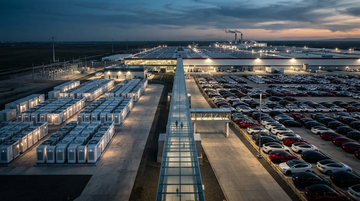
Tesla’s Q2 2026 Earnings Still Come Down to Automotive Margin Math—Energy Can Offset, But Not Replace the Signal
Tesla’s Q2 2026 print will be interpreted primarily through whether automotive gross margin stabilizes while deliveries normalize. The market focus is likely to treat energy storage as the stabilizer and automotive margin as the driver—because operating leverage in autos determines how much upside (or downside) the energy segment can absorb.
What to expect
Evidence-first notes with a visible point of view.
This section collects sharp takes on earnings, shareholder meetings, and market structure. Each new piece should make the thesis, the facts, and the implications obvious within the first few screens.
Expect direct analysis, not generic commentary.
Expect the data to be explicit and the argument to be easy to follow.
Plutux is not an investment adviser. Market data and AI-generated analysis are for information and education only, not investment advice. Disclaimer