Consumer
What households are actually spending on
Traffic, pricing power, trade-down and inventory across retailers, restaurants and brands — who is holding margin, and who is buying volume.
2026-08-28
%22%2F%3E%0A%20%20%3Ccircle%20cx%3D%22220%22%20cy%3D%22150%22%20r%3D%22180%22%20fill%3D%22%2322d3ee%22%20fill-opacity%3D%220.12%22%2F%3E%0A%20%20%3Ccircle%20cx%3D%221010%22%20cy%3D%22130%22%20r%3D%22220%22%20fill%3D%22%2338bdf8%22%20fill-opacity%3D%220.08%22%2F%3E%0A%20%20%3Ccircle%20cx%3D%22920%22%20cy%3D%22520%22%20r%3D%22170%22%20fill%3D%22%2322d3ee%22%20fill-opacity%3D%220.06%22%2F%3E%0A%20%20%3Cpath%20d%3D%22M140%20430h920%22%20stroke%3D%22url(%23line)%22%20stroke-width%3D%2212%22%20stroke-linecap%3D%22round%22%2F%3E%0A%20%20%3Cpath%20d%3D%22M220%20360c120-150%20260-220%20380-220s260%2070%20380%20220%22%20fill%3D%22none%22%20stroke%3D%22%2367e8f9%22%20stroke-opacity%3D%220.5%22%20stroke-width%3D%2216%22%20stroke-linecap%3D%22round%22%20stroke-linejoin%3D%22round%22%2F%3E%0A%20%20%3Cpath%20d%3D%22M300%20398h600%22%20stroke%3D%22%2394a3b8%22%20stroke-opacity%3D%220.24%22%20stroke-width%3D%228%22%20stroke-linecap%3D%22round%22%2F%3E%0A%20%20%3Ctext%20x%3D%22220%22%20y%3D%22510%22%20fill%3D%22%23e2e8f0%22%20fill-opacity%3D%220.7%22%20font-family%3D%22Arial%2C%20Helvetica%2C%20sans-serif%22%20font-size%3D%2238%22%20letter-spacing%3D%228%22%3EINSIGHTS%3C%2Ftext%3E%0A%3C%2Fsvg%3E)

Amazon's AI shopping loop is showing up as Retail revenue conversion, not just capex optics
Evercore ISI’s Aug 28 read reframes Amazon’s agentic AI as an on-site sales engine: it cites survey evidence that shoppers using Alexa AI are buying products they previously wouldn’t have found, lifting the probability of higher retail revenue per visitor. The market’s AI model often treats the spend as a “compute-only” bet; Amazon’s own segment reporting shows how that revenue, once it lands in North America and International, flows alongside advertising and subscription services—where AI improvements can compound.

Gap’s Old Navy CEO change is a traffic-recovery call, not a makeover—here’s the unit-economics math investors should watch
Gap named Michael Francis as Old Navy CEO effective November 2, 2026 after reporting a slowdown in Old Navy traffic that drove its weakest same-store dynamics. The market’s ~12% jump looks like optimism that a new customer-focused leader can translate visits into full-price sales and cash flow, but Gap’s own financial trajectory shows the biggest risk is execution on demand (not just leadership).

Qantas's premium momentum is the “best case” Delta and United are trying to price in—if fuel and fares don’t reprice first
Qantas reported FY26 profitability pressure while still pointing to premium strength and rolled out another layer of business-class product refresh on Aug 27, 2026. The investor takeaway for US airlines is not that premium demand is immune to cost shocks, but that the premium-cabin demand signal can partially offset fuel and rate risk—if carriers keep monetizing higher-yield long-haul seats faster than costs reset.
2026-08-27
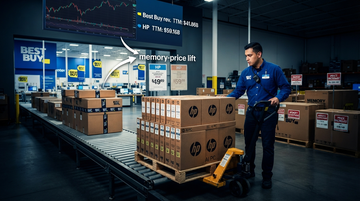
Best Buy “computing strength” looks real, but memory-price lift can fool the retail tape
Best Buy’s earnings showed strength tied to “computing,” yet the same period’s broader hardware pricing pressure implies a big share of the sales lift could be margin-neutral price passthrough rather than true AI-PC unit acceleration. Meanwhile, HP isn’t confirming an AI-PC demand inflection with its shipment mix, raising the odds that consumers are upgrading into higher memory costs—not because AI PCs are pulling-forward usage.
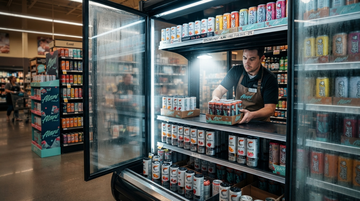
Celsius proves “better-for-you” can still steal energy-drink growth—yet its base brand is shrinking, and margins are taking the hit
Celsius posted Q2 results showing the category’s “fizz” is losing ground inside the same energy shelf: its portfolio drove outsized dollar share and a large share of zero-sugar growth, even as the core CELSIUS brand revenue fell. The key investor question is whether growth is durable or just a mix shift—Q2’s margin compression and brand decline suggest it’s not a clean continuation, and that compounding depends on execution plus switching the retailer capital question from “cold vault access” to “repeat rate.”
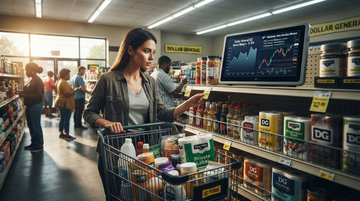
Dollar General’s Q2 FY2026 shows “trade-down” with margin help—but the Fed window is judging low-income strain in real time
Dollar General’s Q2 FY2026 print delivered stronger-than-prior-year traffic and a sharp gross-margin lift, turning consumer stress into earnings resilience. The trade-down story looks real in demand (traffic and ticket), but investors should watch whether the cost and inventory levers that boosted margins can stay intact as the September rate decision approaches.

Court filings show Murdoch floated reuniting Fox and News Corp—now the sports-rights and AI-licensing scale question hits FOXA and NWSA
Unsealed court materials cited by Reuters say Rupert Murdoch contemplated reversing the 2013 split and re-merging Fox Corporation and News Corp, with Lachlan Murdoch’s side arguing such talks should remain redacted because a deal could still happen. If the market moves from “succession drama” to “deal mechanics,” the biggest investable swing will be how FOXA and NWSA value the combined leverage in sports rights, streaming packaging, and premium-news/financial-data licensing.

Hormel’s Q3 print shows pricing held—while grocery-style volumes slid, tightening the path to a steadier Q4
In Hormel Foods’s Q3 FY2026 report (ended Jul 26, 2026), organic net sales fell ~2% alongside retail volume pressure, while foodservice still showed modest net sales growth. That mix suggests trade-down isn’t crushing protein pricing power yet—but it is already hitting throughput, making Q4 a volumes-versus-price timing game rather than a pure cost story.

HP Inc.'s AI-PC story is failing the first test: unit momentum isn’t showing up, and memory costs decide the margin outcome
HP’s latest quarter showed revenue resilience while the PC side weakened, forcing investors to separate “AI-PC mix” rhetoric from unit-driven refresh demand. The bigger risk isn’t the AI features themselves—it’s that elevated memory/component costs can swamp any pricing benefit, especially if the upgrade cycle stalls on shipment volumes.

Urban Outfitters' Q2 shows Gen‑Z demand isn’t cracking—it’s getting sorted, brand by brand
In Urban Outfitters' Q2 FY2027 results (ended July 31, 2026), growth held up across its brand portfolio, while inventory rose fast enough to stress the “which side are you on?” question heading into back-to-school. The differentiator is Urban Outfitters' mix: Free People and Anthropologie are outperforming comps, but inventory growth suggests management is still fighting for sell-through rather than waiting for demand to fully stabilize.
2026-08-26
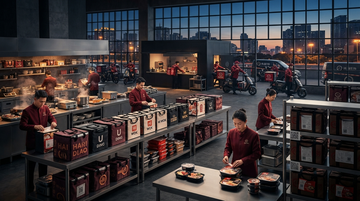
Haidilao’s delivery-and-multi-brand pivot turns margin defense into a discretionary-spending tell
In its latest interim update filed with Hong Kong exchange, Haidilao International Holding reported delivery revenue surging to RMB 2,051.4 million (+121.2%) and “other restaurant operations” rising to RMB 1,271.4 million (+113.1%). The implication for investors is sharper than the headline: if delivery mix plus multi-brand scale are holding steady profitability while same-store sales flatten, China consumers may be shifting spend back toward value-focused occasions rather than trading down to silence.

Mortgage Demand Slips Again as the Fed’s September “Hike-or-Cut” Window Peaks
Mortgage demand is showing the fastest, most mechanical downside to a whipsaw rate path: the MBA purchase index fell 4% and contract rates rose to 6.81% for the week ending July 31. As the Fed heads into its mid-September decision window, the real question for housing-linked earnings is whether builders can keep incentives absorbing affordability pressure— or whether demand breaks first.

The back-to-school earnings tape is splitting retail into two economies: winners raise, while foot-traffic holes and sneaker demand cracks spread
In a tight earnings cluster, Abercrombie & Fitch and Kohl's signaled resilience by raising guidance, while Bath & Body Works pointed to weaker store traffic and DICK'S Sporting Goods cratered after warning of softer footwear/sneaker demand. The supply-chain implication is straightforward: brand pull and inventory discipline are buying share, but where demand gets delayed, promotional intensity and gross-margin pressure travel upstream fast.
2026-08-25

Apple’s new Mac mini + Mac Studio bet that on-device AI can turn “memory cost” into a higher-priced upgrade cycle
Apple’s Aug 24–25 Mac mini and Mac Studio refresh leans hard on unified memory and on-device model execution—up to 32GB in the Mac mini (M6) and up to 512GB in the Mac Studio (M5 Ultra), with up to 4.3x faster on-device AI performance claims. The key investor question is whether this “memory-bundled AI” packaging can reprice consumer desktops upward even as DRAM/Unified Memory stays expensive and tight supply already pressured Apple’s expectations.

Canada’s 15% retaliation is a consumer-durables and electronics hit—so margins, not energy, are what US investors should model next
Canada’s Aug. 25 retaliation package sets 15% counter-tariffs on US steel, dairy, appliances and electronics effective Sept. 8, contradicting the prior read that pressure would mainly land on oil/uranium/potash and power. For US-listed suppliers to these categories, the near-term question shifts from energy spreads to tariff-driven demand and pricing power—with a second risk layer emerging from Trump’s threatened 50% auto tariffs starting Jan. 1.

DICK'S Sporting Goods signals an athletic-footwear “channel” problem—here are the branded inventory risks most exposed before back-to-school
DICK'S Sporting Goods’ latest quarter adds retail-channel confirmation that the athletic-footwear slowdown is landing as inventory and markdown risk, not just brand demand. That transmission matters because the companies with the thinnest inventory “margin of safety” are the ones that can’t wait for back-to-school to fix sell-through.

Lego’s record H1 shows toy demand can pay up—and the proof matters for Mattel/Hasbro tariff pass-through
Lego’s first-half results (as reported for H1 2025) delivered record revenue and double-digit growth while the broader toy market remains fragile, reinforcing that consumers keep buying premium-branded play when sellers lift prices. For Mattel and Hasbro, the investor question shifts from “will customers trade down?” to “can pricing actions protect gross margin when tariffs add cost?”

Unilever’s “less-is-more” portfolio squeeze turns the staples conglomerate model into a break-up trade
Unilever is using portfolio thinning—explicitly “simpler, sharper, and faster”—to refocus on fewer consumer categories after years of divestments and a major ice-cream demerger. The investor implication is a new staples playbook: when brand-count diversification stops improving returns, the market pays more for focused pure-plays than for scale-with-no-specialization—setting up what activists could target next in the US.
2026-08-24

Amazon's 60% device price hikes confirm memory pricing power is moving into consumer hardware
Amazon raised prices on multiple first-party devices—including the Echo Dot base model—by as much as 60%, explicitly citing “significant increases” in memory and storage component costs. The move is a retail-grade proof point that DRAM/NAND tightness can translate into end-demand pricing, sharpening 2H26 contract-price narratives for Micron, SK Hynix, and Samsung Electronics while increasing the near-term risk that Amazon’s device ecosystem growth depends on a tighter—or costlier—hardware attachment loop.

Europe’s EV share above 25% makes the “demand split” real—while the U.S. stalls
Europe’s July EV momentum marks a demand milestone at >25% of new-car registrations, tightening the linkage between EV volume growth and downstream winners in batteries and charging. With U.S. EV share stuck around the low-single digits (and July sales down ~41% YoY), the market’s relative-demand math now favors firms levered to Europe’s next wave—and pressures ICE-heavy and “EU-limited” EV strategies.
What to expect
Evidence-first notes with a visible point of view.
This section collects sharp takes on earnings, shareholder meetings, and market structure. Each new piece should make the thesis, the facts, and the implications obvious within the first few screens.
Expect direct analysis, not generic commentary.
Expect the data to be explicit and the argument to be easy to follow.
Plutux is not an investment adviser. Market data and AI-generated analysis are for information and education only, not investment advice. Disclaimer