%22%2F%3E%0A%20%20%3Ccircle%20cx%3D%22220%22%20cy%3D%22150%22%20r%3D%22180%22%20fill%3D%22%2322d3ee%22%20fill-opacity%3D%220.12%22%2F%3E%0A%20%20%3Ccircle%20cx%3D%221010%22%20cy%3D%22130%22%20r%3D%22220%22%20fill%3D%22%2338bdf8%22%20fill-opacity%3D%220.08%22%2F%3E%0A%20%20%3Ccircle%20cx%3D%22920%22%20cy%3D%22520%22%20r%3D%22170%22%20fill%3D%22%2322d3ee%22%20fill-opacity%3D%220.06%22%2F%3E%0A%20%20%3Cpath%20d%3D%22M140%20430h920%22%20stroke%3D%22url(%23line)%22%20stroke-width%3D%2212%22%20stroke-linecap%3D%22round%22%2F%3E%0A%20%20%3Cpath%20d%3D%22M220%20360c120-150%20260-220%20380-220s260%2070%20380%20220%22%20fill%3D%22none%22%20stroke%3D%22%2367e8f9%22%20stroke-opacity%3D%220.5%22%20stroke-width%3D%2216%22%20stroke-linecap%3D%22round%22%20stroke-linejoin%3D%22round%22%2F%3E%0A%20%20%3Cpath%20d%3D%22M300%20398h600%22%20stroke%3D%22%2394a3b8%22%20stroke-opacity%3D%220.24%22%20stroke-width%3D%228%22%20stroke-linecap%3D%22round%22%2F%3E%0A%20%20%3Ctext%20x%3D%22220%22%20y%3D%22510%22%20fill%3D%22%23e2e8f0%22%20fill-opacity%3D%220.7%22%20font-family%3D%22Arial%2C%20Helvetica%2C%20sans-serif%22%20font-size%3D%2238%22%20letter-spacing%3D%228%22%3EINSIGHTS%3C%2Ftext%3E%0A%3C%2Fsvg%3E)
Earnings read-through for energy drinks
The headline isn’t Celsius’s growth—it’s the trade-off: share is rising, but the core brand is shrinking
Celsius Q2 2026 revenue
$817.9M
Three months ended Jun 30, 2026 (reported Aug 6, 2026)
Gross margin
48.1%
Three months ended Jun 30, 2026 vs. 51.5% a year earlier
Celsius brand revenue (core CELSIUS)
$387.0M
Three months ended Jun 30, 2026 vs. $438.1M a year earlier (-11.7%)
North America revenue
$790.7M
Three months ended Jun 30, 2026
In Q2, Celsius effectively “bought” growth with portfolio mix. Total revenue rose to $817.9M (+11% YoY), but the base CELSIUS brand revenue fell to $387.0M (-11.7% YoY) while acquisitions/roll-ups carried the quarter.
That matters because “better-for-you” energy-drink theses fail when consumers trade down within the same value proposition (same-customer, less repeat). Q2 shows some of that internal pressure—yet it also shows the portfolio can still win shelf space and category dollars.
| Brand line (as disclosed) | Q2 2026 revenue | Q2 2025 revenue | YoY change |
|---|---|---|---|
| CELSIUS brand | $387.0M | $438.1M | -11.7% |
| Alani Nu | $364.4M | $301.2M | +21.0% |
| Rockstar Energy | $66.5M | Not comparable (acquired Aug 28, 2025) | N/A |
Category mechanism
“Better-for-you” is still compounding—but Q2 suggests it’s doing it by blending brands, not by expanding the core
Celsius’s Q2 release ties its retail momentum to two things investors can measure: (1) how much shelf dollars its portfolio captures inside the U.S. RTD energy category and (2) how much incremental growth its portfolio generates when category growth is occurring.
For Q2, Celsius disclosed that its portfolio (CELSIUS, Alani Nu, and Rockstar Energy) tracked retail sales increased 31.0% over the 13-week period ended Jun 28, 2026, while the portfolio held ~20.1% dollar share in the U.S. RTD energy category. It also disclosed the portfolio contributed ~30% of the $640 million growth in zero-sugar U.S. energy during Q2 2026.
That is the investor “yes” part of the thesis: the better-for-you/zero-sugar channel can still take dollars even when the category’s overall buying pattern softens.
- Celsius’s portfolio held ~20.1% U.S. RTD energy dollar share for the 13-week period ended Jun 28, 2026, showing shelf capture despite broader consumer caution.
- The portfolio accounted for ~30% of zero-sugar energy growth ($640M) in Q2 2026, implying demand isn’t only substitution from legacy energy.
- The core CELSIUS brand declined 2% in retail sales over the same 13-week period ended Jun 28, 2026, indicating pressure inside the flagship line.
Why the core brand is wobbling
The data points to execution friction: promotions, channel timing, and retailer cold-space constraints
Q2’s margin and brand weakness are consistent with a common “energy in a slowing shopper tape” pattern: companies buy repeat by spending more trade/promo, but that can temporarily weaken gross margin.
In the Q2 release, Celsius attributed the gross margin decline primarily to higher promotional and incentive activity as a percentage of revenue and channel mix; it also noted offsets from integration improvements and the absence of an inventory step-up expense related to the Alani Nu acquisition.
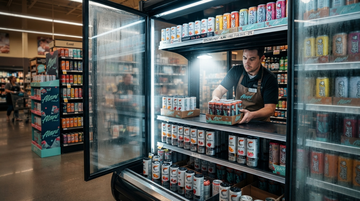
Separately, the release includes retailer-level constraints that can cap velocity. Celsius disclosed that productivity improved with ~7% fewer distribution points and that dollars per point rose ~16% vs. 1Q, but it flagged that gaining cold vault/permanent cooler space can require more retailer capital and labor—meaning growth can stall until retailers are willing/able to invest in the cooler footprint.
| Reported driver | Where it shows up | What it likely means for repeat |
|---|---|---|
| Higher promotional & incentive activity (% of revenue) | Lower gross margin (48.1%) | More price/trade support needed to maintain movement |
| Channel mix and shipment timing/inventory rebalancing | Core brand revenue decline (-11.7%) | Short-term volume execution variance vs. longer-run demand |
| Fewer distribution points, higher dollars/point | Better productivity but not total brand growth | Retailer footprint optimization can’t fully replace cold-space growth |
| Retailer capital/labor needed for cold vault/coolers | Celsius growth may require retailer rollout | Repeat may improve as physical merchandising expands |
Supply-chain and margin structure
Margins don’t just track demand—they track commodity costs, mix, and integration timing
Energy drinks look “simple” at retail, but the margin bridge is where the category is won. Celsius’s Q2 disclosure says gross margin fell to 48.1% from 51.5%, with commentary including (a) promotional/incentive intensity and channel mix, (b) integration improvements, and (c) commodity cost inflation—specifically aluminum—partially offsetting integration gains.
This is important for the better-for-you niche because it’s often priced as a premium. If premium pricing holds, margins can be resilient. If premium relies on continued promo intensity and the cost stack rises (aluminum), margins compress even when share is stable.
Investor read-through vs. category leaders
The real question: does Celsius keep growing when the growth engine shifts from mix to repeat?
Monster and Red Bull dominate the mainstream U.S. energy market with long-established distribution and brand scale. The better-for-you wedge typically works when it is both (1) a flavor/format innovation engine and (2) a repeat-friendly, habit-building “morning-to-workout” choice.
Celsius’s Q2 pattern answers part of that: portfolio share and zero-sugar growth contribution remain strong. But the core brand’s retail sales down ~2% and -11.7% revenue decline show the habit engine inside the flagship line is currently weaker than the portfolio story.
For PepsiCo, the market relevance is that it controls major beverage routes and can influence shelf conditions through broader category execution. The topic claim that PepsiCo’s U.S. energy volumes “still haven’t recovered” is not quantified in the Celsius Q2 source material, so this article does not treat that as a verified figure.
- Celsius’s portfolio kept gaining RTD energy share (~20.1% dollars), which supports the idea that better-for-you/zero-sugar remains a growth pocket.
- Celsius’s core brand lost both revenue (-11.7%) and retail sales (-2%), which raises the risk that growth is currently mix-driven rather than habit-driven.
- Celsius’s margin compressed 340 bps to 48.1%, implying that keeping demand may currently require more commercial spend than investors expect for a premium niche.
Horizons: what moves first vs. what matters later
Near-term signal is promo/margin; long-term signal is whether coolers convert into repeat
Short term (days to the next couple quarters), the key monitoring items are: gross margin stabilization and whether promotional/incentive intensity stays elevated. Q2 already flags that promotional/incentive and channel mix are involved in the margin decline.
Long term (1–3 years), the thesis depends on physical availability and repeat. Celsius’s Q2 disclosure about cold vault/permanent cooler space suggests that the merchandising “infrastructure” must expand for sustained velocity. If retailer capital/labor constraints lift and Celsius can convert cooler placement into repeat, the core brand’s decline can stabilize and flip.
Right now, the most investable interpretation is mixed: portfolio momentum looks healthy, but the core brand needs to stop bleeding and margins need to stop deteriorating.
Listed stocks most exposed to this earnings signal
- Celsius’s Q2 gross margin fell to 48.1% from 51.5%, raising the near-term risk that growth still needs higher commercial support.
- Celsius’s portfolio tracked retail sales rose 31.0% over the 13-week period ended Jun 28, 2026, supporting a continued share-capture path.
- Celsius’s core CELSIUS brand declined 2% in retail sales, implying mix may be carrying results until repeat improves.
- If better-for-you and zero-sugar continue to absorb ~30% of incremental growth, Monster’s mainstream energy line can face slower unit math even if it defends share.
- Monster’s earnings power is typically stronger when commodity and promo intensity are lower; Celsius’s Q2 margin compression hints at a sector-wide promo environment risk.
- The next read is whether Monster keeps re-stabilizing velocity while retailers prioritize cooler space allocation for premium energy brands.
- Celsius’s Q2 shows zero-sugar energy growth is still happening; that’s a competitive input to PepsiCo’s energy execution in the U.S.
- If portfolio-led share gains persist, PepsiCo could see tougher shelf battles for energy in the next 1–2 quarters.
- PepsiCo is a large indirect beneficiary of channel stabilization; any category slowdown would still flow through its beverages mix even if not directly quantified here.
- A stronger “better-for-you energy” shelf share dynamic can shift incremental dollars away from Coca-Cola energy-adjacent categories.
- Coca-Cola’s beverage portfolio is broad, but retail execution in coolers can still matter when energy expands through physical availability.
- The key watch item is whether premium energy growth sustains without further margin dilution across the category.