%22%2F%3E%0A%20%20%3Ccircle%20cx%3D%22220%22%20cy%3D%22150%22%20r%3D%22180%22%20fill%3D%22%2322d3ee%22%20fill-opacity%3D%220.12%22%2F%3E%0A%20%20%3Ccircle%20cx%3D%221010%22%20cy%3D%22130%22%20r%3D%22220%22%20fill%3D%22%2338bdf8%22%20fill-opacity%3D%220.08%22%2F%3E%0A%20%20%3Ccircle%20cx%3D%22920%22%20cy%3D%22520%22%20r%3D%22170%22%20fill%3D%22%2322d3ee%22%20fill-opacity%3D%220.06%22%2F%3E%0A%20%20%3Cpath%20d%3D%22M140%20430h920%22%20stroke%3D%22url(%23line)%22%20stroke-width%3D%2212%22%20stroke-linecap%3D%22round%22%2F%3E%0A%20%20%3Cpath%20d%3D%22M220%20360c120-150%20260-220%20380-220s260%2070%20380%20220%22%20fill%3D%22none%22%20stroke%3D%22%2367e8f9%22%20stroke-opacity%3D%220.5%22%20stroke-width%3D%2216%22%20stroke-linecap%3D%22round%22%20stroke-linejoin%3D%22round%22%2F%3E%0A%20%20%3Cpath%20d%3D%22M300%20398h600%22%20stroke%3D%22%2394a3b8%22%20stroke-opacity%3D%220.24%22%20stroke-width%3D%228%22%20stroke-linecap%3D%22round%22%2F%3E%0A%20%20%3Ctext%20x%3D%22220%22%20y%3D%22510%22%20fill%3D%22%23e2e8f0%22%20fill-opacity%3D%220.7%22%20font-family%3D%22Arial%2C%20Helvetica%2C%20sans-serif%22%20font-size%3D%2238%22%20letter-spacing%3D%228%22%3EINSIGHTS%3C%2Ftext%3E%0A%3C%2Fsvg%3E)
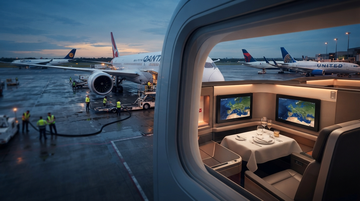
Qantas’s Aug 27, 2026 update landed with a rare combo in one window: management tied profitability narratives to premium demand, and it showed another step in the business-class “product treadmill.” For investors watching Delta Air Lines and United Airlines underwrite 2027 capacity and revenue assumptions, Qantas functions like a cross-border stress test: it’s far enough from US pricing dynamics to help separate “demand resilience” from “US fare pricing power,” but close enough in fleet technology and long-haul yield logic to be decision-relevant.
The verified setup
Qantas showed premium strength in FY26 while detailing a business-seat upgrade path for its next aircraft deliveries
- Qantas said premium cabin revenue grew 15% in FY26, and it framed that as running about twice the pace of economy.
- Qantas said its London/Paris/Rome connection seat factor rose to 90% during the fourth quarter, alongside adding nearly 16,000 seats to/from Europe in that quarter.
On Aug 27, 2026, Qantas also disclosed the next evolution of its Business seats for future fleet plans. For its Airbus A321XLR configured for the new product, it described a lie-flat bed with a sliding privacy door and stated that the first 16 such aircraft would begin arriving in 2028.
What the premium signal is really measuring
Premium demand durability usually shows up first in cabin mix and load factors—not in full P&L until costs stabilize
In airlines, premium-cabin demand is a “monetization” story more than a “margins are safe” story. The early indicators tend to be: (1) cabin revenue growth outpacing economy, (2) premium-ish routes sustaining higher seat factors, and (3) evidence the airline can justify a product refresh without immediately cutting capex or delaying fleet improvements.
Qantas’s FY26 premium framing—15% premium cabin growth and a 90% seat factor on key Europe connections—fits that pattern: the demand signal is measurable before fuel/rate dynamics fully translate into consolidated profit.
Supply chain and cost transmission
Fuel and fleet-product capex don’t hit the same way—so watch the timing gap between premium strength and earnings sensitivity
There are two overlapping transmission channels to airline earnings.
First, fuel: spot and hedging dynamics flow into cost of revenue quickly, and they can overwhelm yield gains if hedging protections roll off or if demand cools after fares rise.
Second, cabin refresh: new seats and inflight product upgrades are an investment in customer willingness-to-pay. But that investment doesn’t permanently fix cost pressure; it mainly affects revenue quality and upgrade behavior over time.
Qantas’s Aug 27 materials show both channels in the same news cycle: premium monetization indicators (premium cabin revenue growth and high seat factor) and a continuing business-seat refresh plan for aircraft deliveries starting in 2028. That makes the “timing gap” visible: premium demand can look strong before new seats physically impact 2027 capacity and before fuel cost shock clears from the P&L.
Direct earnings read-through using listed US carriers
If premium mix stays strong, US carriers should see better revenue quality—but the current P&L still depends on cost and financing conditions
United Airlines (TTM)
Revenue: $62.9B
TTM through Jun 30, 2026, reported Jul 16, 2026
United Airlines (TTM)
Net income: $3.5B
TTM through Jun 30, 2026, reported Jul 16, 2026
Delta Air Lines (TTM)
Revenue: $68.3B
TTM through Jun 30, 2026, reported Jul 10, 2026
Delta Air Lines (TTM)
Net income: $4.0B
TTM through Jun 30, 2026, reported Jul 10, 2026
These US topline and bottom-line snapshots don’t prove premium strength is winning right now—but they set the bar for what has to happen for the premium-demand thesis to matter. The Qantas read-through is that premium mix can help carriers protect net income quality when costs reprice.
For American Airlines Group, the listed financial snapshot shows a weaker earnings profile in the same TTM window. That difference is a reminder: premium demand may not translate into the same degree of earnings resilience across carriers if route mix, fleet mix, and cost structure differ.
Decision-grade interpretation for 2027 planning
The premium test: can carriers underwrite higher long-haul yield without assuming fuel will behave?
| Signal type | What Qantas disclosed | Why US airline investors should care |
|---|---|---|
| Premium monetization (FY26) | Premium cabin revenue grew 15% | Cabin mix improved fast enough to qualify as a revenue-quality offset. |
| Route demand (Q4 FY26) | London/Paris/Rome seat factor rose to 90% | High-yield-ish routes stayed heavily utilized during the same cost-risk window. |
| Capacity to Europe (Q4 FY26) | Added nearly 16,000 seats to/from Europe | Capacity expansion suggests confidence that demand holds at higher fare levels. |
| Business-seat refresh (future fleet) | First 16 A321XLRs with the new Business Suite arrive in 2028 | Refresh is staged: the demand signal can matter before product delivery fully hits. |
Non-obvious causal chain investors can act on
Premium demand helps most when it changes upgrade economics before it changes reported profitability
Here’s the causal chain that links Qantas’s premium indicators to what US airlines are underwriting:
1) When premium cabin revenue grows faster than economy, carriers typically gain flexibility on how they allocate higher demand to higher-fare products (including upgrades). 2) That flexibility shows up in seat-factor strength on flagship routes (Qantas highlighted Europe seat factor to 90%). 3) Product refresh acts like a future “option”: it improves the expected value of converting discretionary demand into paid premium seats, not just discounted cash fares.
The key nuance for 2027 planning: the premium demand signal can improve booking quality and reduce the probability of aggressive discounting before new hardware has fully arrived. That’s exactly why Qantas’s Aug 27 window is unusually useful as a cross-border read.
Horizons: what moves first vs. what should be visible later
Short term: booking tone; medium term: yield and unit revenue; long term: sustained cabin-value premium
- Near term (weeks to one quarter): investors should expect premium indicators to show up in guidance tone and route-level unit metrics before they show up in cost-sensitive margins.
- Next 2–4 quarters: watch whether US carriers can keep international premium mix elevated without sacrificing forward bookings via fare promotions; sustained premium growth supports higher load factors on long-haul banks.
- 1–3 years: the business-seat refresh cycle matters because it can raise the floor for willingness-to-pay and reduce reliance on discounting during demand soft patches.
Listed stocks most exposed to this premium-demand vs. cost-repricing tradeoff
- Premium mix signals can support Delta’s revenue quality when costs reprice, with Delta generating $68.3B revenue and $4.0B net income over TTM through Jun 30, 2026.
- If Qantas-style premium strength persists, Delta should protect international long-haul unit revenue in the next 1–2 quarters even as fuel risk remains.
- Delta’s ability to monetize upgrades matters: premium demand durability tends to reduce the probability of heavy discounting on high-yield routes.
- United’s TTM through Jun 30, 2026 shows $62.9B revenue and $3.5B net income, so premium mix outperformance can matter quickly if costs reset slower than yields.
- If long-haul premium demand stays resilient, United should see stronger cabin mix translate into better load-factor sustainability on core international banks.
- The risk is timing: if fuel/financing costs reprice faster, premium cushioning may not prevent margin compression within 1–4 quarters.
- American’s TTM through Jun 30, 2026 shows -$0.3B net income, meaning premium demand alone is less likely to save earnings quickly versus more resilient peers.
- If premium demand is durable, American can benefit through pricing power, but route and cost structure may still dominate the next two quarters.
- A premium-cabin lift is helpful, yet if costs reset, earnings volatility can remain higher until unit costs normalize.
- Qantas guided the premium-demand thesis with premium cabin revenue growth of 15% in FY26, and its Europe seat factor reaching 90% in Q4—stronger premium mix is the key investor signal to validate in later periods.
- The business-seat refresh is staged for future aircraft: Qantas said the first 16 A321XLRs with new Business Suites arrive in 2028, so near-term P&L won’t immediately capture the full product value.
- The downside case is cost repricing: if fuel/rates worsen, premium indicators may not fully offset consolidated earnings pressure.