%22%2F%3E%0A%20%20%3Ccircle%20cx%3D%22220%22%20cy%3D%22150%22%20r%3D%22180%22%20fill%3D%22%2322d3ee%22%20fill-opacity%3D%220.12%22%2F%3E%0A%20%20%3Ccircle%20cx%3D%221010%22%20cy%3D%22130%22%20r%3D%22220%22%20fill%3D%22%2338bdf8%22%20fill-opacity%3D%220.08%22%2F%3E%0A%20%20%3Ccircle%20cx%3D%22920%22%20cy%3D%22520%22%20r%3D%22170%22%20fill%3D%22%2322d3ee%22%20fill-opacity%3D%220.06%22%2F%3E%0A%20%20%3Cpath%20d%3D%22M140%20430h920%22%20stroke%3D%22url(%23line)%22%20stroke-width%3D%2212%22%20stroke-linecap%3D%22round%22%2F%3E%0A%20%20%3Cpath%20d%3D%22M220%20360c120-150%20260-220%20380-220s260%2070%20380%20220%22%20fill%3D%22none%22%20stroke%3D%22%2367e8f9%22%20stroke-opacity%3D%220.5%22%20stroke-width%3D%2216%22%20stroke-linecap%3D%22round%22%20stroke-linejoin%3D%22round%22%2F%3E%0A%20%20%3Cpath%20d%3D%22M300%20398h600%22%20stroke%3D%22%2394a3b8%22%20stroke-opacity%3D%220.24%22%20stroke-width%3D%228%22%20stroke-linecap%3D%22round%22%2F%3E%0A%20%20%3Ctext%20x%3D%22220%22%20y%3D%22510%22%20fill%3D%22%23e2e8f0%22%20fill-opacity%3D%220.7%22%20font-family%3D%22Arial%2C%20Helvetica%2C%20sans-serif%22%20font-size%3D%2238%22%20letter-spacing%3D%228%22%3EINSIGHTS%3C%2Ftext%3E%0A%3C%2Fsvg%3E)
Consumer discretionary • Apparel retail • Brand turnaround
The CEO swap is the market buying a traffic thesis
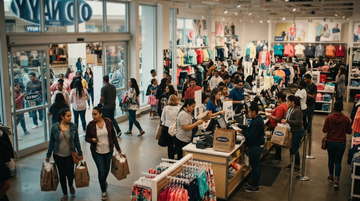
Gap’s stock popped after the company announced a new Old Navy CEO—Michael Francis—effective November 2, 2026, replacing Haio Barbeito in the operating role. The underlying story isn’t “we need a new face,” it’s that Old Navy’s recovery math is being stress-tested by an unexpected slowdown in traffic.
Old Navy traffic impact on results
Traffic slowed
Gap said Old Navy saw an “unanticipated slowdown in traffic” alongside its first negative same-store performance since Q2 2023 (Q2 2026 results coverage).
Market reaction
+12%
Gap shares rose about 12% in extended trading after the Old Navy CEO announcement (reported Aug 27, 2026).
Event verification • Leadership transition
What Gap actually announced about Old Navy leadership—and the handoff window
Gap’s leadership transition press release is explicit on structure and timing. Michael Francis is appointed President and Chief Executive Officer of Old Navy, with Haio Barbeito stepping down from the CEO role effective November 2, 2026 and moving into an advisory capacity through January 30, 2027.
Turnaround math • Demand → margin → cash
Traffic is upstream of unit economics: fewer visits force more markdowns, and markdowns feed cash pressure
Apparel brands don’t lose money only from weak sales—they lose money when weakness forces a clearance cycle. In that chain, traffic (store visits, app sessions, and shop-and-go behavior) is the earliest leading indicator. When visits slow, brands either (1) accept lower sell-through and hold inventory longer, or (2) raise promotional intensity and protect sell-through at the cost of margin.
- Old Navy traffic weakness was explicitly cited by Gap as a driver behind negative same-store dynamics (Q2 2026 results coverage).
- Gap’s corporate financials show it has been sustaining positive cash generation: TTM net cash from operating activities of about $1.945B and free cash flow of about $1.277B (TTM through Jun/ended period reported in Gap’s latest annual/TTM financials).
- In retail turnarounds, the biggest danger is that cash flow remains positive while profitability visibility worsens—investors then reprice the turnaround multiple once markdown intensity returns.
What the numbers say about Gap’s current financial “capacity to invest”
Gap can fund a turnaround—but its balance-sheet structure means execution still has to stick
Gap has produced positive operating cash and free cash flow on a trailing basis, giving it room to invest in merchandising, marketing, and store/omnichannel improvements. However, inventory and capital intensity are still the fulcrum: if traffic doesn’t translate into sell-through, the cash story can deteriorate quickly even if revenue looks “less bad” than the prior quarter.
| Metric | Latest trailing value | What it implies for the Old Navy CEO bet |
|---|---|---|
| Revenue (TTM) | $15.40B | Turnaround credibility improves when revenue stabilization is followed by margin protection. |
| Operating income (TTM) | $1.30B | Profit exists today; persistent margin weakness would reduce the “room to invest.” |
| Net cash from operating activities (TTM) | $1.945B | Supports marketing/merchandise spend needed to re-accelerate traffic. |
| Free cash flow (TTM) | $1.277B | A key test is whether traffic recovery leads to fewer markdown-driven working-capital swings. |
Supply chain & merchandising • Full pipeline, not a leadership headline
The supply-chain transmission line runs through merchandise planning, not just “brand vibes”
Old Navy’s revival depends on how quickly the company can rebalance its merchandise plan when demand changes. Traffic slowdowns force a different allocation of inventory across categories, price points, and channels. That affects (a) markdown cadence, (b) working capital, and (c) the ability to fund the next product cycle. A new CEO can change the customer agenda, but the pipeline reality is that inventory decisions made before November will still show up in near-term financials.
- Traffic-led demand changes are typically visible first in sell-through rates, then in promotional intensity, then in markdown margins.
- Merchandising speed matters because apparel has short seasonal cycles; if allocation lags traffic, clearance becomes the default adjustment.
- The CEO’s customer-focus background only helps if it drives tighter feedback loops between marketing signals and buying decisions.
Where the bet can show up first • Short-term and long-term
What to watch next: conversion metrics in the next few quarters, and profitability durability over 12–36 months
- In the days/weeks after the announcement, investors will look for evidence that traffic stabilization is real—Gap already pointed to “significant improvement” in Old Navy traffic and sales in the past month (Q2 2026 results coverage).
- In the next 1–2 earnings cycles before Francis fully assumes the CEO role, the leading indicator should be whether promotional cadence softens alongside traffic—because that’s how markdown pressure turns back into margin.
- Over 12–36 months, the durability test is whether revenue growth and cash generation remain aligned; Gap’s recent positive free cash flow suggests it can invest, but investors will demand that investments translate into sustainable unit economics.
Investable cross-check • Which business models win when demand is uncertain
Why value/off-price leaders set the bar for Old Navy’s conversion job
In a market where consumer budgets are pressured, off-price and value-oriented retailers can benefit because they translate shopper trips into bargains at scale. That raises the bar for Old Navy: it can’t only attract visits—it must deliver compelling price/assortment outcomes without relying on constant markdowns. The CEO swap is effectively Gap trying to close that conversion gap faster than the competitive set adjusts.
Listed-market read-throughs (who benefits or suffers if Old Navy’s conversion improves—or doesn’t)
- Traffic stabilization plus improved conversion should help Gap protect operating income versus a clearance-driven margin cycle.
- Positive operating cash flow (~$1.945B TTM) gives Gap leverage to fund the turnaround while conversion is being rebuilt.
- If traffic improves but margins don’t, the market will likely discount the CEO bet quickly during the next earnings window.
- If Old Navy needs deeper markdowns to drive sell-through, shoppers may shift toward value channels—supporting Ross Stores demand for bargains.
- Weak conversion at Old Navy tends to pull category traffic toward off-price baskets, which can stabilize TJX volume expectations.
- If the apparel value shift accelerates further, Kohl's promo-heavy model could face either stronger traffic or increased price pressure—direction depends on markdown intensity.
- If budget-constrained shoppers treat apparel as discretionary trim, Walmart can siphon demand; the CEO bet in Old Navy only works if it beats that traffic reallocation.
- A better Old Navy conversion could slow traffic flight to Target, but if Old Navy relies on promotions, category share can keep drifting.