Consumer
What households are actually spending on
Traffic, pricing power, trade-down and inventory across retailers, restaurants and brands — who is holding margin, and who is buying volume.
2026-08-24
%22%2F%3E%0A%20%20%3Ccircle%20cx%3D%22220%22%20cy%3D%22150%22%20r%3D%22180%22%20fill%3D%22%2322d3ee%22%20fill-opacity%3D%220.12%22%2F%3E%0A%20%20%3Ccircle%20cx%3D%221010%22%20cy%3D%22130%22%20r%3D%22220%22%20fill%3D%22%2338bdf8%22%20fill-opacity%3D%220.08%22%2F%3E%0A%20%20%3Ccircle%20cx%3D%22920%22%20cy%3D%22520%22%20r%3D%22170%22%20fill%3D%22%2322d3ee%22%20fill-opacity%3D%220.06%22%2F%3E%0A%20%20%3Cpath%20d%3D%22M140%20430h920%22%20stroke%3D%22url(%23line)%22%20stroke-width%3D%2212%22%20stroke-linecap%3D%22round%22%2F%3E%0A%20%20%3Cpath%20d%3D%22M220%20360c120-150%20260-220%20380-220s260%2070%20380%20220%22%20fill%3D%22none%22%20stroke%3D%22%2367e8f9%22%20stroke-opacity%3D%220.5%22%20stroke-width%3D%2216%22%20stroke-linecap%3D%22round%22%20stroke-linejoin%3D%22round%22%2F%3E%0A%20%20%3Cpath%20d%3D%22M300%20398h600%22%20stroke%3D%22%2394a3b8%22%20stroke-opacity%3D%220.24%22%20stroke-width%3D%228%22%20stroke-linecap%3D%22round%22%2F%3E%0A%20%20%3Ctext%20x%3D%22220%22%20y%3D%22510%22%20fill%3D%22%23e2e8f0%22%20fill-opacity%3D%220.7%22%20font-family%3D%22Arial%2C%20Helvetica%2C%20sans-serif%22%20font-size%3D%2238%22%20letter-spacing%3D%228%22%3EINSIGHTS%3C%2Ftext%3E%0A%3C%2Fsvg%3E)
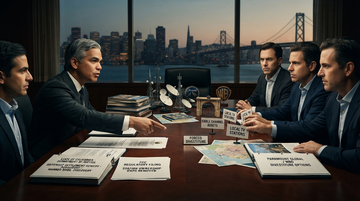
California is pressuring Paramount-Warner to sell TV cable channels just as the FCC loosened station consolidation—making divestiture terms a moving target for bidders
California Attorney General Rob Bonta is expected to push a settlement remedy that includes divesting certain TV/cable channels in the Paramount–Warner Bros. Discovery deal. With the FCC voting to eliminate the 39% national local-station ownership cap, the bargaining value of any forced station or channel relief shifts—potentially changing what station-group buyers can pay and what price Paramount–WBD must justify to close.

Shein’s HK IPO pricing at up to $27B confirms the de minimis shock—and shows the “late backers” got marked down the most
Shein’s Hong Kong IPO has priced with a maximum valuation of about $27B, roughly one-third below the previously reported $40B “reset” level. The final print lands after the formal end of U.S. de minimis treatment, a change Shein disclosed as a direct headwind to U.S. net revenues and profitability.

XPeng's Q2 margin test cuts through China’s EV price-war story—because robotaxi upside is optional only if the core P&L stops bleeding
XPeng's latest reported-quarter profitability profile (gross profit, operating loss, and cash/working-capital posture) is the missing “does there exist a profitable floor?” evidence for the China EV margin debate. For investors, the key question is not whether robotaxi/ADAS can move the multiple, but whether the company can convert demand and mix into sustained unit-level economics before tariff and competition pressure forces further pricing cuts.

FTC settlement forces Zillow and Redfin to reverse a $100M “pay-to-exit” deal in multifamily rental listings—turning the portal arms race into a competition test for ad-driven housing marketplaces
The FTC says Zillow paid Redfin $100 million to stop competing in the internet listing services (ILS) advertising market for multifamily rentals, suppressing head-to-head pricing and innovation. The resulting settlement (Aug. 24, 2026) compels Redfin to relaunch its rental ILS advertising business within six months and requires Zillow to unwind recruitment and contract-lock restraints—reshaping how investors should think about “super-app” housing moat economics.
2026-08-23

Ben & Jerry’s mission clauses just got less “absolute” — and that re-prices governance risk for every CPG owner brand with a social mandate
A judge narrowed Ben & Jerry’s lawsuit over Unilever’s alleged efforts to suppress the brand’s social-activism voice, dismissing most claims and leaving only missed-payment claims. The ruling matters less because it ends the dispute than because it clarifies how enforceable “mission clauses” are when they collide with an owner’s contractual and governance rights—turning brand identity activism from a moral argument into a balance-sheet risk.

Luxury’s China “green shoots” look real—then the investor test is simple: do margins and guidance stop deteriorating
New signals from Europe’s luxury complex suggest an incremental demand turn in China, but the markets will only re-rate the group if brands convert that into improving operating income and forward commentary. For U.S.-listed luxury bellwethers with heavy China exposure—Tapestry, Capri Holdings, Ralph Lauren, and The Estée Lauder Companies—the key question is whether China revenue stabilization is already showing up in segment profitability.
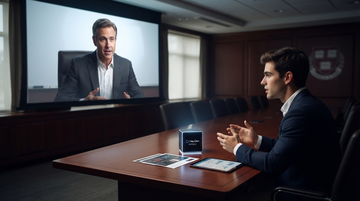
Harvard’s $699 AI-avatar bootcamp is a price-discovery strike against “seat-based” education
Harvard Business School’s HBS Foundry bootcamp is priced at $699 and uses HeyGen-made AI avatars to provide feedback during practice pitches and board-meeting simulations. If elite-brand instruction can be unbundled into avatar-led coaching, universities and edtech platforms gain a scalable product surface—while legacy courses face margin compression and higher avatar-IP leverage costs.

HP Inc. is betting on AI-PC refresh timing, but its margins still hinge on memory cost physics
HP Inc. can benefit from the same “personal AI” narrative driving Microsoft, yet its reported segment math shows operating margin at Personal Systems is sensitive to commodity headwinds. The investor question for the Aug 2026 print is whether AI-PC momentum is enough to offset memory/storage cost pressure as HP’s PC portfolio cycles into the next demand window.

PDD Holdings faces the first full-quarter test of whether Temu can keep winning after de minimis is formally suspended
PDD reports Q2 with the U.S. de minimis administrative exemption suspended for merchandise valued at $800 or less arriving via modes other than international postal—removing the cost advantage that made Temu’s direct-to-consumer cross-border economics work. The quarter’s revenue and margin quality (not just headline growth) should reveal whether Temu can re-route around duties and compliance friction or whether demand elasticity shows up immediately in the numbers.
2026-08-22

Apple trims Siri and Vision Pro headcount—then pays for the interface shift with distribution power
Apple is cutting more than 200 roles across Siri and Vision Pro teams as it realigns toward “new devices and artificial intelligence,” according to reporting. For investors, the more important signal isn’t cost control—it’s that Apple is backing away from owning the consumer voice-and-AR interface while competitors can move faster on model-led interaction loops.

KE Holdings's Q2 GTV asks the real housing question: stimulus to transact, or stimulus to sustain?
In KE Holdings's Q2 print, total gross transaction value (GTV) rose to RMB933.8B and existing-home GTV grew faster than new-home GTV—while gross margin jumped to 28.6%. The key investor test is whether this mix shift is a durable turn in existing-home turnover (demand quality) or a policy-responsive pulse (demand timing).

BJ's Wholesale Club shows how club membership can outcompete “off-price” in the trade-down battle
In BJ's Wholesale Club's second-quarter print, member economics grew faster than sales, even with merchandise margin pressure. That makes the club model—membership, fuel/grocery mix, and digital—look structurally better at keeping the trade-down customer than pure off-price retail, as reflected by both Target's tariff-boosted quarter and Ross Stores's traffic-led off-price comps.

Philip Morris's Zyn Ultra authorizations harden a pouch moat competitors can't copy fast
On Aug. 21, 2026, the FDA authorized marketing of 11 ZYN ULTRA moist nicotine pouch SKUs under the PMTA pathway. Because each SKU must clear product-specific evidence review, the action adds regulatory “stay-on-the-shelf” capacity to Philip Morris International’s U.S. smoke-free growth story—while raising the bar for Altria and other pouch challengers competing on speed to authorization.

Nevada’s first paid-robotaxi approvals put Tesla’s Cybercab unit economics ahead of the 2027 promise
Nevada’s Transportation Authority approved paid autonomous ride-hailing for Tesla’s Cybercab fleet in Clark County, capping Tesla’s initial deployment at 5,000 vehicles for the first 12 months. That shifts the bet from “rollout timeline” to regulated, revenue-per-mile execution—where compliance, take-rate, and utilization will matter as much as autonomy progress.

TikTok’s $400M COPPA settlement effectively sets a new “price per platform enforcement” — and it should sharpen the risk math for Meta, Snap, and Alphabet (YouTube)
The U.S. Department of Justice announced a $400M children’s privacy settlement tied to COPPA enforcement against TikTok and ByteDance, including $300M paid immediately and a further $100M contingent on vacating a prior consent decree. Unlike teen-liability cases that live in the “platform immunity” universe, this is a direct compliance-liability datapoint that helps regulators and investors think in enforcement-cost terms for youth-facing product design.

NHTSA’s Waymo child-collision probe turns regulatory timing into a first-order cost—long before Cybercab’s rollout
NHTSA’s Office of Defects Investigation has opened a child-collision inquiry into Waymo’s robotaxi, and the record request/response cadence is now the key swing variable for robotaxi scaling. The market lesson is simple: even “data-backed” safety claims can’t substitute for regulatory throughput, because fleets pay in time, frictional redesign cycles, and delayed route/permission expansion.
2026-08-21

China’s record EV recall turns safety enforcement into a competitive weapon—Tesla, Xiaomi, BYD face a new margin risk
China’s SAMR disclosed a multi-brand, record-scale EV recall in which remedies mix free labeling with software fixes, including an OTA window-lowering strategy after severe crashes. The competitive takeaway is that regulators can now turn safety compliance—especially for software-defined features—into a cost and reputation lever that hits the highest-volume China EV players first.

NHTSA’s ~1M GM engine probe targets the pickup profit engine—and the cash-flow risk is asymmetric if “the fix” didn’t fix it
NHTSA opened an engineering probe covering 997,743 General Motors pickup trucks and SUVs over reported engine failures and whether GM’s prior remedy worked. The market focus won’t be the headline count; it will be warranty-cost math tied to GM’s most margin-sensitive North American franchise, where an engine recall can behave like a forced earnings reset rather than a routine liability.
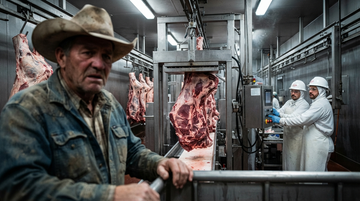
A 90-day beef import window won’t break the “cattle squeeze”—it mainly shifts margins inside the packing chain
Policy easing on certain beef import quotas can relieve near-term pressure on retail prices, but it does not directly fix the underlying bargaining mechanics between ranchers and packers. The first-order effect is usually on packer gross margins (through input cost and product mix), while cattle prices react more slowly and less reliably.

NVIDIA's Linux/Chromebook GeForce NOW update turns cloud gaming into a recurring, software-like GPU monetization layer
NVIDIA is pushing GeForce NOW onto Linux and Chromebooks with an “out of beta” native Linux app plus a Chromebook “Fast Pass” that bundles a year of service and prioritizes access. The move matters for investors because it targets lower-utilization device segments and can turn existing GeForce-grade GPU capacity into stickier, subscription-style revenue—at the same time that platform walled gardens face higher pressure.
What to expect
Evidence-first notes with a visible point of view.
This section collects sharp takes on earnings, shareholder meetings, and market structure. Each new piece should make the thesis, the facts, and the implications obvious within the first few screens.
Expect direct analysis, not generic commentary.
Expect the data to be explicit and the argument to be easy to follow.
Plutux is not an investment adviser. Market data and AI-generated analysis are for information and education only, not investment advice. Disclaimer