Consumer
What households are actually spending on
Traffic, pricing power, trade-down and inventory across retailers, restaurants and brands — who is holding margin, and who is buying volume.
2026-08-07
%22%2F%3E%0A%20%20%3Ccircle%20cx%3D%22220%22%20cy%3D%22150%22%20r%3D%22180%22%20fill%3D%22%2322d3ee%22%20fill-opacity%3D%220.12%22%2F%3E%0A%20%20%3Ccircle%20cx%3D%221010%22%20cy%3D%22130%22%20r%3D%22220%22%20fill%3D%22%2338bdf8%22%20fill-opacity%3D%220.08%22%2F%3E%0A%20%20%3Ccircle%20cx%3D%22920%22%20cy%3D%22520%22%20r%3D%22170%22%20fill%3D%22%2322d3ee%22%20fill-opacity%3D%220.06%22%2F%3E%0A%20%20%3Cpath%20d%3D%22M140%20430h920%22%20stroke%3D%22url(%23line)%22%20stroke-width%3D%2212%22%20stroke-linecap%3D%22round%22%2F%3E%0A%20%20%3Cpath%20d%3D%22M220%20360c120-150%20260-220%20380-220s260%2070%20380%20220%22%20fill%3D%22none%22%20stroke%3D%22%2367e8f9%22%20stroke-opacity%3D%220.5%22%20stroke-width%3D%2216%22%20stroke-linecap%3D%22round%22%20stroke-linejoin%3D%22round%22%2F%3E%0A%20%20%3Cpath%20d%3D%22M300%20398h600%22%20stroke%3D%22%2394a3b8%22%20stroke-opacity%3D%220.24%22%20stroke-width%3D%228%22%20stroke-linecap%3D%22round%22%2F%3E%0A%20%20%3Ctext%20x%3D%22220%22%20y%3D%22510%22%20fill%3D%22%23e2e8f0%22%20fill-opacity%3D%220.7%22%20font-family%3D%22Arial%2C%20Helvetica%2C%20sans-serif%22%20font-size%3D%2238%22%20letter-spacing%3D%228%22%3EINSIGHTS%3C%2Ftext%3E%0A%3C%2Fsvg%3E)

Sweetgreen proves the “fresh-supply moat” can fracture when consumers fear the food category—not the brand
Sweetgreen cut full-year guidance after linking weaker demand since mid-July to a multistate cyclosporiasis (Cyclospora) outbreak. The key market read-through: in fast-casual, brand safety processes can be structurally irrelevant when the category’s perceived risk rises faster than companies can reassure customers.

Take-Two’s GTA VI launch date is a bookings test—FY2027 net bookings target rises to $8.0B–$8.2B if the blockbuster restarts the engine
Take-Two is tying its FY2027 Net Bookings outlook to the November 19, 2026 launch of Grand Theft Auto VI. The key question for investors is whether that headline release can lift a business where recurrent consumer spending already drives 78% of FY2026 net bookings—not just spike full-game sales. The real value-chain impact will show up first in bookings conversion and then in how durable recurrent spending remains after the initial launch wave.

Under Armour UAA is forecasting a sharper 2026 sales drop because North America demand is breaking the “Nike turnaround” script—suggesting the discount-tier in US sportswear is now its own structural industry
Under Armour UAA just disclosed an outlook that implies a faster 2026 North America deterioration and lower full-year revenue expectations versus its earlier “slight decline” framing. The investment takeaway isn’t just weaker sales—it’s that the category is splitting: Nike NKE appears to be stabilizing at the premium end, while Under Armour’s wholesale-heavy, value/discount positioning faces persistent demand softness that compresses the whole margin stack.
2026-08-06

Airbnb's Q2 Beat Looks Like Pricing + Take-Rate Discipline—Not a Sustainable Demand Step-Up
In Airbnb's Q2 print, the key investor question is whether growth came from more room nights or from better monetization (ADR and implied take rate). The company’s own framing around the FIFA World Cup 2026 “tailwind” makes this read a mix-shift test: revenue can beat even if room-night growth is only steady—as long as monetization holds through the event’s rollout curve.

The Walt Disney Company's Q2 Print Turns Streaming vs. ESPN vs. Parks Into a Margin Fork, Not a Growth Narrative
Disney’s first Q2 2026 earnings print after the A+E exit announcement reframes the stock’s debate: the streaming engine is showing sharp operating-income expansion, while ESPN’s sports-rights cost burden is explicitly weighing on segment profitability and parks are decelerating at the margin. Investors now have to underwrite a three-part cash machine—streaming margins, ESPN rights inflation, and parks attendance/operating momentum—rather than treating streaming as the single growth lever.

eBay's focus-category guidance quietly rotates the buyer mix toward luxury and collectibles—right as Etsy cuts teams tied to growth execution
eBay’s latest outlook ties its momentum to “focus categories” and Depop, with third-quarter GMV guidance of 22.0–22.4 (FX-neutral +10% to +12%). Etsy, by contrast, is shrinking its marketplace workforce and absorbing charges while its active buyers drift lower—making the competitive shift in buyer mix the real battleground.

Restaurant Brands International's quarter shows the US consumer isn’t “more divided” — it’s buying Burger King and Tim Hortons enough to offset the value-faltering fear
In Restaurant Brands International’s latest quarter, Burger King (U.S.) delivered grew comparable sales 8.5% while Tim Hortons (Canada) eked out +0.1%—still enough to lift company-wide comparable sales to +3.8% despite cautious street expectations. That mix suggests the market may be over-reading “value vs. premium” narratives, because RBI is showing demand breadth across adjacent price tiers rather than a collapse of the mainstream consumer.
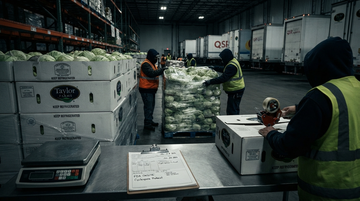
One produce supplier can hit multiple QSR banners at once—what the Taylor Farms Cyclospora case implies for next-quarter same-store sales risk
A FDA-linked, 9-state Cyclospora outbreak traced to iceberg lettuce from Taylor Farms de Mexico exposed Taco Bell customers across 9 states and sickened 1,947 people. The investor takeaway isn’t just recall-cycle headlines—it’s that a single ingredient failure can become a chain-wide same-store-sales variable through franchise remedies, insurance claims, and distributor pull-through effects before the next earnings print.

Warner Bros. Discovery finally quantifies the “sports rights tax”: NBA absence dragged Q2 advertising growth by 20% (ex-FX)
In its standalone Warner Bros. Discovery Q2 2026 results, the company explicitly ties weaker advertising growth to the absence of the NBA in the current-year quarter, stating it negatively impacted the YoY growth rate by 20% (ex-FX). The “sports rights as a moat” story is being repriced in real time: the linear-to-streaming bridge is only working if the lost live-rights economics can be replaced without permanently impairing ad growth.
2026-08-05

Block's 2026 profit lift is the clearest US consumer + Bitcoin “through-line” fintech read—because Cash App grows without credit-bubble risk
Block raised its 2026 gross profit outlook to $12.33B, and the raise’s core driver was Cash App growth alongside resilient consumer spending. That matters because it’s the opposite of the “trade-down + layoffs/cost cutting” fintech narrative, and it points to steadier merchant economics and embedded crypto-related payment flows.

Booking Holdings's Q2 only passes the “Hormuz shock decoupling” test if its region mix and monetization hold while US softens
In Booking Holdings's latest quarter, the company produced $7.352B of revenue and $2.54 EPS on $3.108B of free cash flow, giving a strong baseline for whether demand is geographically reallocating. But the decisive “US-subsidized by Europe/Asia” conclusion requires Q2 2026 geographic/segment disclosures that were not reliably retrievable from the filings pages in this session, so the article separates what is verified (financials) from what remains not disclosed (region-specific pressure) and flags the exact missing proof.

Compass:: Q2 2026 shows synergy “realization” beats retention—but the cost base still needs transaction volume to cooperate
In Compass’ first fully post-close quarter for the Anywhere combination, agent retention held at 95.5% while realized OPEX synergies were already embedded in guidance, with $180M of free cash flow in Q2. The deeper risk is that fixed-cost scale rises faster than commission economics can flex when existing-home turnover stays weak, making “synergy plus volume” the only math that works.
![Disney [DIS] sells its last A+E stake—Hearst’s $1.2B control grab becomes the clearest “linear-TV cash-flow” M&A read-through in ~2 years insight cover](https://images-1379091077.cos.na-ashburn.myqcloud.com/insights/covers/20260805_disney_hearst_ae_deal_2026_08_360px.png)
Disney [DIS] sells its last A+E stake—Hearst’s $1.2B control grab becomes the clearest “linear-TV cash-flow” M&A read-through in ~2 years
Disney is exiting its 50% ownership in A+E Global Media via an all-cash deal valued at about $1.2B that gives Hearst full control—an unusually clean signal for how buyers are pricing cable-network cash flows. The timing matters: Disney is already recognizing impairment pressure on the A+E investment, and the transaction simultaneously redeploys cash away from linear minority stakes into controllable, scale-friendly media assets.

Etsy's 12% layoff reads like a marketplace GMV reset—not a “trade-down” growth bet
Etsy’s restructuring trimmed about 11% of its marketplace workforce (≈225 people) and targeted a $25–$30M cost charge, signaling management is prioritizing cost discipline over re-accelerating engagement. For investors, the clean read is that Etsy’s problem looks more like platform efficiency under discretionary softness than broad consumer “value winner” rotation—and that distinction matters for how you underwrite post-AI seller-tooling spend.

Global Payments Just Linked Middle East Travel Shocks to Payment Throughput—This Is the “Decoupling” Myth Breaking
In its Q2 2026 update, Global Payments tied a forecast cut to weaker Middle East travel spending—an earnings-channel risk that shows up in payment processing volumes, not just in hotels or energy. The key investor takeaway: when travel volumes wobble, the payment stack becomes a near-real-time transmission mechanism into revenue and cash generation.

Shopify.’s “$0 guidance” isn’t the point—its Q2 margin math is
In Shopify‘s Q2 2026 report, revenue growth re-accelerated while operating income rose to $488M and operating cash flow hit $658M. Even without the brief’s claimed “$0 guidance” detail being confirmable from the opened primary exhibit chunk, the disclosed quarter results show the real question investors should ask: whether Shopify can convert GMV-linked merchant growth into sustained operating margin while AI and payment costs intensify.

Spotify's 33.4% gross margin turns into an AI-royalties stress test after the Suno/GEMA ruling
Spotify’s Q2 2026 milestone of 300M premium subscribers coincided with a record 33.4% gross margin—so the next pressure point is no longer user growth, but rights cost under AI music generation. The Munich court ruling that Suno violated copyright and was ordered to disclose illicit revenue raises the probability that “AI ingestion + AI output” will become a first-principles, contractual rights-liability chain for streaming platforms in 2026–2027.
2026-08-04
![Chipotle [CMG] Isn’t the Suspected Outbreak—But the “Traffic Shock” Math Still Applies insight cover](https://images-1379091077.cos.na-ashburn.myqcloud.com/insights/covers/20260804_chipotle_food_safety_360px.png)
Chipotle [CMG] Isn’t the Suspected Outbreak—But the “Traffic Shock” Math Still Applies
A primary FDA update on a 2026 multistate foodborne illness outbreak implicated Taco Bell locations and iceberg lettuce from Taylor Farms de Mexico—not Chipotle. Even so, Chipotle [CMG] still faces the same investor problem: how fast a suspected outbreak narrative can pull transactions down when the model is already sensitive to traffic and menu disruption.
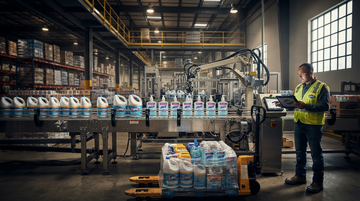
Clorox Just Got a Real-Staples “Re-Rate” Test—Purell Is Doing the Work
Clorox’s GOJO/Purell bolt-on did not just add scale—it changed the company’s 2026 outlook math, with guidance explicitly tracking margin headwinds and transaction costs tied to the deal. For investors, the question shifts from “does hygiene sell volumes?” to “can margin-mix from higher-quality hygiene assets defend earnings through the AI-era spend normalization?”

Electronic Arts‘ $55B PIF Take-Private Just Met a Bookings Miss—So the Console Live-Services Pipeline Is the Only Deal Math That Matters
EA’s Saudi-PIF-backed $55B go-private deal is set to close around Aug. 4, 2026, but the timing is now being judged against a Q1 bookings miss. The market’s “deal” framing is secondary: investors should focus on whether EA can sustain console/PC live-service monetization through its multi-year content cadence to make the cash ramp required by an LBO credible.
What to expect
Evidence-first notes with a visible point of view.
This section collects sharp takes on earnings, shareholder meetings, and market structure. Each new piece should make the thesis, the facts, and the implications obvious within the first few screens.
Expect direct analysis, not generic commentary.
Expect the data to be explicit and the argument to be easy to follow.
Plutux is not an investment adviser. Market data and AI-generated analysis are for information and education only, not investment advice. Disclaimer