%22%2F%3E%0A%20%20%3Ccircle%20cx%3D%22220%22%20cy%3D%22150%22%20r%3D%22180%22%20fill%3D%22%2322d3ee%22%20fill-opacity%3D%220.12%22%2F%3E%0A%20%20%3Ccircle%20cx%3D%221010%22%20cy%3D%22130%22%20r%3D%22220%22%20fill%3D%22%2338bdf8%22%20fill-opacity%3D%220.08%22%2F%3E%0A%20%20%3Ccircle%20cx%3D%22920%22%20cy%3D%22520%22%20r%3D%22170%22%20fill%3D%22%2322d3ee%22%20fill-opacity%3D%220.06%22%2F%3E%0A%20%20%3Cpath%20d%3D%22M140%20430h920%22%20stroke%3D%22url(%23line)%22%20stroke-width%3D%2212%22%20stroke-linecap%3D%22round%22%2F%3E%0A%20%20%3Cpath%20d%3D%22M220%20360c120-150%20260-220%20380-220s260%2070%20380%20220%22%20fill%3D%22none%22%20stroke%3D%22%2367e8f9%22%20stroke-opacity%3D%220.5%22%20stroke-width%3D%2216%22%20stroke-linecap%3D%22round%22%20stroke-linejoin%3D%22round%22%2F%3E%0A%20%20%3Cpath%20d%3D%22M300%20398h600%22%20stroke%3D%22%2394a3b8%22%20stroke-opacity%3D%220.24%22%20stroke-width%3D%228%22%20stroke-linecap%3D%22round%22%2F%3E%0A%20%20%3Ctext%20x%3D%22220%22%20y%3D%22510%22%20fill%3D%22%23e2e8f0%22%20fill-opacity%3D%220.7%22%20font-family%3D%22Arial%2C%20Helvetica%2C%20sans-serif%22%20font-size%3D%2238%22%20letter-spacing%3D%228%22%3EINSIGHTS%3C%2Ftext%3E%0A%3C%2Fsvg%3E)
Verified outbreak facts (what happened, who was exposed, and what the regulator traced)
A multi-state QSR-linked outbreak was tied to one ingredient supply lane
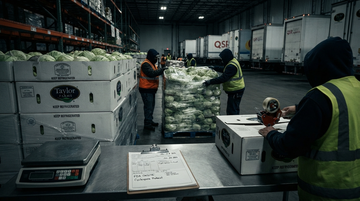
On July 24, 2026, the U.S. FDA updated a 9-state Cyclospora multistate outbreak that was linked to iceberg lettuce sourced from central Mexico and associated with Taco Bell exposures. FDA’s traceback specifically names Taylor Farms de Mexico as the implicated lettuce source, and notes the recalled product was used by Taco Bell locations that received the recalled iceberg lettuce.
Illness onset window
Jun 22–Jul 20, 2026
Outbreak investigation update (current update dated Jul 24, 2026)
Total illnesses
1,947
Cyclospora infections reported in the 9-state outbreak
Hospitalizations
98
Hospitalized cases reported in the outbreak
Deaths
0
No deaths reported in FDA’s update
What FDA said about the supply link (and the recipient QSR)
Implicated ingredient
Iceberg lettuce (central Mexico)
FDA identifies the produce source and outbreak linkage
Implicated supplier
Taylor Farms de Mexico
Named as the source in the FDA update
Restaurant exposure
Taco Bell locations
FDA states Taco Bell locations received recalled lettuce; FDA ties exposures to Taco Bell
Causal chain (how a produce outbreak becomes a same-store-sales variable)
Why investors should model it like a demand + cost shock, not a recall headline
A regulator-linked foodborne incident changes store economics through a sequence that can arrive faster than your next quarter’s guidance cycle:
1) Immediate operational disruption: brands often remove the implicated ingredient and accelerate substitution/holding protocols. 2) Consumer behavior lag: even when the outbreak window is narrow, perceived risk can depress traffic and/or shift mix. 3) Cost and compensation mechanics: lawsuits, franchisee goodwill costs, and distributor/supplier remediation (including potential insurance claims) tend to crystallize with a lag that can land in earnings close.
In this case, FDA reports a large infection count (1,947) with 98 hospitalizations and identifies Taco Bell exposures tied to recalled lettuce supplied by Taylor Farms de Mexico.
| Transmission channel | First observable sign | Likely timing | What to quantify next |
|---|---|---|---|
| Traffic / same-store sales | Comparable sales softness and guest-count commentary | Days to weeks | Direction and magnitude vs. prior-year comps |
| Ingredient sourcing churn | Menu substitutions; vendor/contract updates | Weeks | Management language on supply continuity |
| Litigation / claims | New accrual language; legal expenses; settlements | Weeks to quarters | Changes in G&A, legal reserves, or other expense lines |
| Franchise remedies | Fee waivers, cooperative marketing, or compensation | Quarterly reporting | Any shift in franchise revenue/settlement disclosure |
| Distributor knock-ons | Inventory pull, cold-chain adjustments, re-shipping | Weeks | Working-capital impacts (payables/receivables) at large distributors |
Supply-chain mapping (upstream and downstream entities you can actually track)
This case spotlights a repeatable supply-chain pattern: producer → distributor → chain banners
FDA’s update gives us an upstream anchor (Taylor Farms de Mexico) and a downstream QSR recipient (Taco Bell exposures tied to recalled iceberg lettuce). To make this investable, you then connect the operational “blast radius” to the parties most likely to feel reimbursement, remediation, or service-level disruption.
For listed-market linkage, large foodservice distributors like Sysco are the practical next node: they can be pulled into inventory rebalancing, sourcing substitution, and logistics adjustments when a traced ingredient batch is removed across a network. (The FDA document itself names Taco Bell and the producer; the distributor impact is an inference grounded in typical foodservice distribution economics, and should be validated in company commentary and later disclosures.)
Outbreak severity scale (the magnitude that drives traffic + claims probability)
FDA current update: illness count and hospitalizations provide the base-rate for how likely the incident becomes an earnings-relevant cost and demand shock.
Unit: cases
Illnesses (cases)
Total illnesses in FDA update
1,947
Hospitalizations
Hospitalized cases in FDA update
98
Deaths
Deaths reported by FDA in update
0
Company-level relevance (what listed players this can touch—and what it can change)
From a supplier recall to a brand’s quarterly narrative: the chain-wide operational risk turns into a comp-sales variable
Important constraint: FDA’s July 2026 update names Taco Bell (within the restaurant universe) as the QSR exposure. The brief’s “simultaneous outbreaks across multiple chains” framing is not fully supported by this single FDA document (no other chains are named in this FDA update).
So the correct investor move is to treat this as a case study for how regulator-traced produce incidents transmit, then apply the same logic when you see (a) another chain being named in a subsequent FDA/CDC traceback or (b) distributor inventory pulls that span multiple customers.
With that scope, the direct listed link we can justify from this FDA primary source is: Yum! Brands (operator of Taco Bell) as the downstream chain. We also include other listed QSR names below only as “market structure” exposure to the same supply-chain mechanics (not because FDA names them in this specific outbreak).
Yum! Brands scale (context)
YUM
Operator of Taco Bell; included due to FDA-named Taco Bell exposure
McDonald’s scale (context)
MCD
Not named in this FDA outbreak update; included as a modeling comparator for similar operational risk mechanics
Restaurant Brands (context)
QSR
Not named in this FDA outbreak update; modeling comparator for distributor/service disruption channels
Chipotle (context)
CMG
Not named in this FDA outbreak update; included as a higher-sensitivity guest-confidence comparator
Horizons (what moves first vs. what hits later)
Short-term catalyst: operational removal and traffic psychology; long-term: supplier/distributor contract tightening and claim accruals
- Within days–weeks, brands that get pulled into a traceback tend to adjust ingredient controls; this is the first lever that can move guest confidence and order behavior.
- Within the next quarter, legal/claims and remediation costs can hit P&L even if operations normalize—especially when illness counts are large and hospitalizations occur.
- Over 1–3 years, expect tighter supplier QA, more robust hold-and-release testing, and clearer contract clauses around outbreak compensation and insurance retentions.
- Distributors face second-order effects when ingredient removals propagate across cold-chain networks; watch working-capital and logistics commentary.
Listed stocks with evidence-backed linkage to this supply-chain transmission
- FDA named Taco Bell exposure in the 1,947-illness Cyclospora case, so downstream comp traffic risk becomes plausible for the next quarter as guest confidence adjusts.
- Because FDA reports 98 hospitalizations, claims/litigation accrual risk rises relative to a low-severity incident, even if the outbreak is geographically limited.
- FDA ties the traced ingredient to an identifiable producer-to-foodservice chain, so inventory pull-through and logistics disruptions are likely to show up in service metrics within weeks for large distributors.
- Because distributor cost impacts are indirect (not named in the FDA doc), the next quarter’s working-capital/logistics commentary is the validation catalyst.
- This specific FDA update does not name McDonald’s, but similar ingredient-trace failures can become comp-sales variables through consumer confidence and vendor hold orders.
- Watch for ingredient QA and supplier-change language in filings after traced outbreaks—that is where contract economics surface first.
- The outbreak source in FDA is producer-linked to a single ingredient and recipient chain; that structure means franchise and distributor economics can move even without brand-level recall coverage.
- Validate via quarterly disclosures on supply continuity and franchise remedies once other tracebacks name brands.
- FDA did not name Chipotle in this update; however, higher-precision sourcing models can still transmit risk when traceback connects to shared produce footprints.
- The key near-term check is earnings-call guest-confidence language in the next quarter after regulator updates.