%22%2F%3E%0A%20%20%3Ccircle%20cx%3D%22220%22%20cy%3D%22150%22%20r%3D%22180%22%20fill%3D%22%2322d3ee%22%20fill-opacity%3D%220.12%22%2F%3E%0A%20%20%3Ccircle%20cx%3D%221010%22%20cy%3D%22130%22%20r%3D%22220%22%20fill%3D%22%2338bdf8%22%20fill-opacity%3D%220.08%22%2F%3E%0A%20%20%3Ccircle%20cx%3D%22920%22%20cy%3D%22520%22%20r%3D%22170%22%20fill%3D%22%2322d3ee%22%20fill-opacity%3D%220.06%22%2F%3E%0A%20%20%3Cpath%20d%3D%22M140%20430h920%22%20stroke%3D%22url(%23line)%22%20stroke-width%3D%2212%22%20stroke-linecap%3D%22round%22%2F%3E%0A%20%20%3Cpath%20d%3D%22M220%20360c120-150%20260-220%20380-220s260%2070%20380%20220%22%20fill%3D%22none%22%20stroke%3D%22%2367e8f9%22%20stroke-opacity%3D%220.5%22%20stroke-width%3D%2216%22%20stroke-linecap%3D%22round%22%20stroke-linejoin%3D%22round%22%2F%3E%0A%20%20%3Cpath%20d%3D%22M300%20398h600%22%20stroke%3D%22%2394a3b8%22%20stroke-opacity%3D%220.24%22%20stroke-width%3D%228%22%20stroke-linecap%3D%22round%22%2F%3E%0A%20%20%3Ctext%20x%3D%22220%22%20y%3D%22510%22%20fill%3D%22%23e2e8f0%22%20fill-opacity%3D%220.7%22%20font-family%3D%22Arial%2C%20Helvetica%2C%20sans-serif%22%20font-size%3D%2238%22%20letter-spacing%3D%228%22%3EINSIGHTS%3C%2Ftext%3E%0A%3C%2Fsvg%3E)
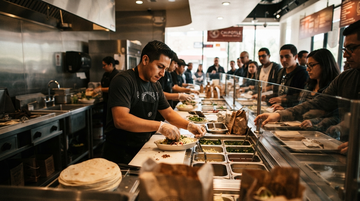
Chipotle just turned the usual traffic debate into a numbers debate. In its Q2-to-full-year story, management framed momentum as improving comparable sales, while the core question for investors remains whether that momentum is broad-based guest recovery or promotions/value-deal support that temporarily lifts visits.
This matters because the same headline “comps improved” can mean very different profit paths: transaction-led traffic tends to preserve operating leverage, while check-led or promo-fueled traffic can compress margins and increase sensitivity to food inflation.
Verified guidance + what comp components actually tell you
Chipotle’s guide moved into low-single-digit comps—Q2 growth showed both check and transactions
Q2 2026 comparable sales
+2.2%
Second-quarter comp increase cited in management’s raised guidance release (average check and transactions both positive).
Q2 2026 average check (component)
+1.2%
Component of comparable restaurant sales increase for the quarter ended Jun. 30, 2026.
Q2 2026 transactions (component)
+1.0%
Component of comparable restaurant sales increase for the quarter ended Jun. 30, 2026.
Q1 2026 comparable sales
+0.5%
Recent baseline comp improving into Q2 (transactions and check not both positive in the same direction).
The key investor read-through is that Q2 didn’t rely solely on pricing/mix. Management reported a +2.2% comparable sales increase split into +1.2% average check and +1.0% transactions.
That split supports a “both levers are working” interpretation—but it still doesn’t prove traffic is structural versus subsidized by promotions or novelty.
How to distinguish menu innovation vs value-deal dependence
Why “transactions up” can still hide value-deal dependence
- Menu innovation can lift transactions sustainably when LTOs expand repeat visits and not just one-time curiosity; value-deals lift transactions mainly during redemption windows, then fade.
- If transactions rise alongside check, that can indicate broadening demand; if check rises faster than transactions, it can signal mix/price support rather than a guest-volume reset.
- For food-cost leverage, the market should watch whether higher transactions also raise throughput and utilization enough to offset any incremental promotional labor/marketing spend.
- A polarized consumer base can create “two-speed traffic”: higher-income guests absorb price increases, while deal-sensitive guests shift visits to offer timing—raising comps but increasing volatility.
Chipotle’s disclosed Q2 comp components—check +1.2% and transactions +1.0%—reduce the chance that the quarter was purely a price/mix outcome. Still, the evidence publicly disclosed here is comp mathematics, not guest-quality attribution (promo vs innovation) or redemption impact on margins.
From comp components to margin math (what changes, and why)
The margin test: can Chipotle convert improving comps into durable operating income?
| Fiscal year | Revenue (USD) | Net income (USD) | What investors should watch |
|---|---|---|---|
| 2023 | $9.87B | $1.23B | Transition from lower comps: whether utilization and pricing offset input costs. |
| 2024 | $11.31B | $1.53B | Whether operating efficiency holds as comps stabilize. |
| 2025 | $11.93B | $1.54B | Conversion of revenue into net income without margin compression. |
A sustained transaction-led recovery should, in theory, improve operating leverage because incremental demand spreads fixed labor and restaurant overhead over more transactions.
But if the recovery is value-pulled, management may need to sustain a higher offer cadence to keep transactions up, which can blunt margins even when comps rise.
Causal chain: comp split → traffic quality → supply chain pressure → restaurant margin
Full-supply-chain lens: what “value dependence” would imply across the food stack
A “traffic purchased” pattern tends to propagate through the supply chain and operations in ways that investors can detect.
1) Food procurement mix: promos can shift unit demand toward certain proteins/ingredients, changing short-term purchase timing. 2) Waste and throughput: higher variability in redemption can increase forecasting error, affecting waste and prep efficiency. 3) Labor and execution: promotion-heavy traffic requires tighter execution and can increase operational complexity.
None of that is proven by the comp component split alone—but it’s the mechanism that makes this debate financially meaningful.
Short-term vs long-term: what to watch next quarter vs next year
What should move first if Chipotle’s recovery is structural
Chipotle’s profitability baseline: revenue and net income remained resilient into 2025
Use as context for whether future comps translate into earnings durability.
Unit: USD
FY 2023 revenue
9,871,649,000
FY 2024 revenue
11,313,853,000
FY 2025 revenue
11,925,601,000
- In the next 1–2 quarters, investors should see whether transaction growth persists beyond the specific momentum windows that drove Q2 +1.0% transactions.
- In the next 1–3 years, the “menu innovation vs value dependence” answer will show up in whether comp improvement is increasingly transactions-led rather than check-led or promo-cycled.
- The most important risk is that margin durability (not just comps) deteriorates if offer cadence stays high enough to offset food-cost normalization.
Where this traffic-quality debate likely matters most in listed restaurant peers
- If value promos drive traffic volatility at peers, McDonald's can gain by retaining customers through everyday value platforms, potentially supporting unit volumes in the next 1–2 quarters.
- A peer’s promo dependence usually implies higher competitive marketing intensity; that can increase the relative appeal of McDonald's scale economics over 1–3 years.
- If the market concludes restaurant ‘traffic’ is being bought, Starbucks faces a higher hurdle to prove beverage traffic is structural versus offer-driven within the next two quarters.
- On the upside, sustained transaction growth would still translate into operating leverage for Starbucks because fixed costs are already in place over 1–3 years.
- A Chipotle-style value-deal debate can lift demand for brands that can run promotions efficiently; Yum! Brands may benefit if consumers shift toward large-scale value formats in the next 1–2 quarters.
- If input costs rise, scale procurement can stabilize margins; Yum! Brands should preserve earnings quality over 1–3 years relative to less scaled peers.
- If peer traffic is promo-dependent, Restaurant Brands International can gain share via loyalty and value bundles, but margin impact depends on promo depth this year.
- If the consumer ‘polarization’ story strengthens (premium vs deal), Restaurant Brands International could see mixed demand by brand mix over 1–3 years.