%22%2F%3E%0A%20%20%3Ccircle%20cx%3D%22220%22%20cy%3D%22150%22%20r%3D%22180%22%20fill%3D%22%2322d3ee%22%20fill-opacity%3D%220.12%22%2F%3E%0A%20%20%3Ccircle%20cx%3D%221010%22%20cy%3D%22130%22%20r%3D%22220%22%20fill%3D%22%2338bdf8%22%20fill-opacity%3D%220.08%22%2F%3E%0A%20%20%3Ccircle%20cx%3D%22920%22%20cy%3D%22520%22%20r%3D%22170%22%20fill%3D%22%2322d3ee%22%20fill-opacity%3D%220.06%22%2F%3E%0A%20%20%3Cpath%20d%3D%22M140%20430h920%22%20stroke%3D%22url(%23line)%22%20stroke-width%3D%2212%22%20stroke-linecap%3D%22round%22%2F%3E%0A%20%20%3Cpath%20d%3D%22M220%20360c120-150%20260-220%20380-220s260%2070%20380%20220%22%20fill%3D%22none%22%20stroke%3D%22%2367e8f9%22%20stroke-opacity%3D%220.5%22%20stroke-width%3D%2216%22%20stroke-linecap%3D%22round%22%20stroke-linejoin%3D%22round%22%2F%3E%0A%20%20%3Cpath%20d%3D%22M300%20398h600%22%20stroke%3D%22%2394a3b8%22%20stroke-opacity%3D%220.24%22%20stroke-width%3D%228%22%20stroke-linecap%3D%22round%22%2F%3E%0A%20%20%3Ctext%20x%3D%22220%22%20y%3D%22510%22%20fill%3D%22%23e2e8f0%22%20fill-opacity%3D%220.7%22%20font-family%3D%22Arial%2C%20Helvetica%2C%20sans-serif%22%20font-size%3D%2238%22%20letter-spacing%3D%228%22%3EINSIGHTS%3C%2Ftext%3E%0A%3C%2Fsvg%3E)
What happened
The June retail sales report did not say the consumer rolled over. It said the consumer is less clean than the headline suggests.
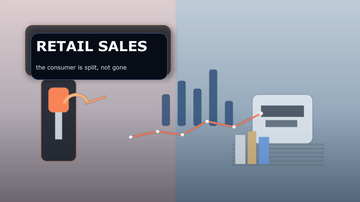
June retail sales rose 0.2% from May, matching the top-line consensus, but the important detail is that the control group - the series that feeds directly into GDP calculations - rose 0.5%. Ex-gasoline sales were up 0.7%, which means the consumer still has spending power once the fuel mask is removed.
That is not a recession print. It is a composition print. Gas station sales fell 5.3% because lower fuel prices do the work of reducing nominal sales, not because households suddenly stopped buying. Online spending and auto-related spending were stronger than the headline suggested.
The market's reaction was telling. Treasury yields edged up because the report did not give bond bulls a clean slowdown story, and Dallas Fed President Lorie Logan kept the door open to higher rates if inflation does not keep cooling.
Why it matters
The Fed does not need a hot consumer to stay hawkish. It only needs a consumer that refuses to cool fast enough.
Logan's message was simple: inflation progress is real, but the path back to 2% is still fragile. When that view meets retail sales that are not soft enough to force easy easing, the market gets trapped between two narratives: disinflation and resilience.
That trap matters for equity leadership. If demand stays firm but not explosive, the market keeps favoring companies with pricing power and balance-sheet durability over the most cyclical names. That is one reason defensive growth and quality still matter even when the economy is not rolling over.
It also matters for consumers themselves. Lower gas prices are helping the nominal headline, but the real spending mix is becoming more selective. That tends to help discount retailers, staples, and firms with high-frequency necessity exposure while pressuring discretionary categories that rely on broader wallet expansion.
June 2026 consumer snapshot
The headline softens, but the underlying demand signal stays more durable than bears want.
Unit: percent
Retail sales MoM (%)
Headline growth
0.2
Ex-gas sales (%)
Underlying demand
0.7
Control group (%)
GDP-linked strength
0.5
Gas station sales (%)
Price effect
-5.3
10Y yield (%)
Rates back up
4.6
2Y yield (%)
Policy path still alive
4.2
Second-order implications
The consumer is splitting into winners and laggards, and that split is more important than the headline growth rate.
The strongest read-through is to category selection. If gas is suppressing the headline, then companies tied to online retail, value positioning, and promotion-heavy traffic may look stronger than premium discretionary names. The consumer is not dead; the consumer is being more tactical.
That also keeps pressure on the Federal Reserve. A resilient control group means the economy is still generating enough nominal activity to keep policy restrictive. At the same time, softer gas and goods inflation make it harder for the Fed to justify another hike without fresh evidence.
The practical implication is a more selective market. Rate-sensitive shares can still work if the bond market believes the inflation tail is shorter. But the consumer data says you cannot simply assume a rapid slowdown will bail out the most expensive growth names.
| Line item | What it says | Why investors care |
|---|---|---|
| Headline retail sales | +0.2% | Looks soft but not weak |
| Ex-gas retail sales | +0.7% | Underlying demand is firmer than the headline |
| Control group | +0.5% | Supports Q2 GDP growth |
| Gas station sales | -5.3% | Lower fuel prices distort nominal sales |
| Treasury yields | Higher | Markets see less room for easy easing |
What to monitor
Watch gas prices, the next CPI/PPI/PCE sequence, and whether the consumer keeps spending into discretionary categories or narrows back into necessities.
The first tell is gas. If fuel prices rebound, the headline can deteriorate again even if real demand stays intact.
The second tell is inflation. If the next prints stay soft, Logan's case loses force. If services re-accelerate, the case for higher rates gets louder.
The third tell is category breadth. A narrow consumer favors staples and discounters. A broader consumer helps the whole retail complex.