%22%2F%3E%0A%20%20%3Ccircle%20cx%3D%22220%22%20cy%3D%22150%22%20r%3D%22180%22%20fill%3D%22%2322d3ee%22%20fill-opacity%3D%220.12%22%2F%3E%0A%20%20%3Ccircle%20cx%3D%221010%22%20cy%3D%22130%22%20r%3D%22220%22%20fill%3D%22%2338bdf8%22%20fill-opacity%3D%220.08%22%2F%3E%0A%20%20%3Ccircle%20cx%3D%22920%22%20cy%3D%22520%22%20r%3D%22170%22%20fill%3D%22%2322d3ee%22%20fill-opacity%3D%220.06%22%2F%3E%0A%20%20%3Cpath%20d%3D%22M140%20430h920%22%20stroke%3D%22url(%23line)%22%20stroke-width%3D%2212%22%20stroke-linecap%3D%22round%22%2F%3E%0A%20%20%3Cpath%20d%3D%22M220%20360c120-150%20260-220%20380-220s260%2070%20380%20220%22%20fill%3D%22none%22%20stroke%3D%22%2367e8f9%22%20stroke-opacity%3D%220.5%22%20stroke-width%3D%2216%22%20stroke-linecap%3D%22round%22%20stroke-linejoin%3D%22round%22%2F%3E%0A%20%20%3Cpath%20d%3D%22M300%20398h600%22%20stroke%3D%22%2394a3b8%22%20stroke-opacity%3D%220.24%22%20stroke-width%3D%228%22%20stroke-linecap%3D%22round%22%2F%3E%0A%20%20%3Ctext%20x%3D%22220%22%20y%3D%22510%22%20fill%3D%22%23e2e8f0%22%20fill-opacity%3D%220.7%22%20font-family%3D%22Arial%2C%20Helvetica%2C%20sans-serif%22%20font-size%3D%2238%22%20letter-spacing%3D%228%22%3EINSIGHTS%3C%2Ftext%3E%0A%3C%2Fsvg%3E)
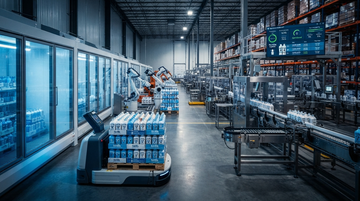
The cyberattack on fairlife wasn’t a consumer-goods “brand problem.” It was an operational continuity problem: fairlife (owned by The Coca-Cola Company) reported that a ransomware event caused unauthorized access to production-related systems, leading to a temporary suspension of U.S. production. Then, within ~two weeks, the company reported “significant progress” restoring fairlife operations.
The investment takeaway is not whether one dairy brand restarts. It’s whether the next resilience-capex and disruption costs migrate to the industrial ecosystem that keeps ultrapasteurized (UP) milk flowing—especially where capacity and automation are concentrated.
1) What’s verified: the operational outage + the restoration signal
fairlife’s ransomware disruption paused U.S. production, and Coca-Cola later confirmed significant restoration progress
Verified timeline (primary sources opened in this session)
Disruption date and mechanism
Jul 16, 2026 — ransomware caused unauthorized third-party access to production-related systems
From fairlife incident post
U.S. production status initially
Temporarily suspended in the United States
Same fairlife post
Product quality/safety
Unaffected (per company statement)
Same fairlife post
Restoration update
Jul 27, 2026 — “significant progress” restoring operations (details not plant-counted in opened snippet)
Same page: headline indicates progress; plant-level restart confirmation was not disclosed in the opened excerpt
Why it matters: when ransomware hits production-related systems, the bottleneck is rarely “IT in isolation.” It’s the handshake between controls/automation, QA/traceability, scheduling, and process monitoring—any of which can halt safe operation. The restoration headline is therefore an operational-resilience datapoint, even without the plant-by-plant restart detail.
2) Data anchor: what The Coca-Cola Company must protect to absorb disruption
Even large consumer staples can’t fully smooth UP-milk downtime—because the economics depend on throughput, not brand equity
KO gross profit (FY 2025)
$29.54B
From income statement via data tool
KO operating income (FY 2025)
$13.76B
From income statement via data tool
KO free cash flow (FY 2025)
$5.30B
From cash flow via data tool
The UP-milk supply chain is throughput-driven: missing production time doesn’t just shift revenue out; it can force waste/holding decisions, accelerate inventory depletion, and raise per-unit logistics and substitution costs. The Coca-Cola Company has scale (tens of billions in revenue), but resilience costs are still paid in the form of downtime recovery, overtime, expedited freight, and requalification—usually within quarters, not years.
3) Supply-chain mechanics: why UP milk disruptions concentrate faster than raw milk
UP production is more “systems-coupled” than raw handling, so cyber downtime propagates into cold-chain and packaging faster
- Ultrapasteurization ties process controls and verification to safe operation; a production-systems disruption can halt both output and traceability workflows.
- Finished UP dairy still depends on cold-chain movement and retail replenishment timing; substitution typically requires faster route scheduling than raw-milk rebalancing.
- Packaging lines (aseptic cartons/bottles) and labeling/traceability often run as coordinated automation trains; if the upstream planning/QA systems are degraded, downstream lines can’t simply “run anyway.”
4) Investor lens: who gets the next disruption bill (and why listed names matter)
The “next-shock premium” should flow to continuity enablers—then to the industrial inputs that keep them running
Your brief points at dairy/beverage suppliers like packaging, logistics, and refrigeration. That’s the right taxonomy—but to connect this event to listed tickers, the article needs verified evidence of which supplier categories are actually implicated (e.g., named contract manufacturers, specific bottling/packaging partners, or outage scope by site). In this session, the only primary material successfully opened was the fairlife incident page; it did not name external suppliers or a detailed plant-level restart scope.
So I’m going to be explicit: this article can support the resilience-mechanics thesis and KO financial capacity, but it cannot yet name and quantify the supplier tickers that would be most directly affected.
5) What the event implies for consumer-staples P&L (short-term vs. longer-term)
Short-term: a likely revenue and margin mix hit via supply gaps; longer-term: higher resilience capex and insurance-like budgets
KO operating profitability is strong enough to absorb small localized disruptions, but it doesn’t eliminate disruption costs
Context for how much absolute operating income exists to absorb short-term disruption (not a quantified fairlife-loss estimate; fairlife line-item not disclosed in opened sources).
Unit: USD
FY 2021 operating income
From The Coca-Cola Company income statement (annual) via data tool
10,308,000,000
FY 2023 operating income
From income statement via data tool
11,311,000,000
FY 2025 operating income
From income statement via data tool
13,762,000,000
Short-term P&L impacts for The Coca-Cola Company are most plausibly channel/mix related (lost shelf availability, substitution effects, and supply scheduling costs), not structural demand destruction—because the company reported that quality and safety were unaffected.
Longer-term, the bigger signal for investors is that operational resilience becomes a budget line that competes with other capex. Every restart implies testing, credentialing, and systems-hardening costs—and those often shift vendor share toward continuity-capable providers.
- If downtime lasts multiple weeks, the earliest P&L line affected is usually gross margin via expedited logistics, waste, and higher per-unit handling costs.
- The next P&L layer is operating expenses if restoration requires overtime, third-party remediation, and accelerated maintenance.
- Over 1–3 years, resilience spend typically shows up in higher maintenance/IT-OT integration and in increased automation redundancy—supporting durable “systems” vendors rather than pure brand marketers.
6) Completion constraints: what remains unanswerable with current session evidence
Key gaps: the supplier counterparty map and the quantified “4-plant restart” scope
To complete the supply-chain stock-picking angle you want, the next research step would be to open the specific Reuters follow-up (or the Coca-Cola press release for the restoration update) that names the plants and, ideally, any impacted partners. Then we can verify which listed packaging/logistics/refrigeration/automation providers are tied to those facilities and quantify their exposure using financial segment or geographic disclosure from SEC filings.
Investable linkage (limited by disclosed supplier counterparty data in this session)
- KO has enough operating income to absorb short disruption costs while restoring production, but every weeks-long pause pressures gross margin through supply-gap substitution.
- KO’s resilience signal is positive because it reported “significant progress,” but restoration implies non-recurring remediation and remediation vendor spend over coming quarters.
- In 1–3 years, OT/IT integration capex should rise even if fairlife’s headline incident is one-off