Consumer
What households are actually spending on
Traffic, pricing power, trade-down and inventory across retailers, restaurants and brands — who is holding margin, and who is buying volume.
2026-09-01
%22%2F%3E%0A%20%20%3Ccircle%20cx%3D%22220%22%20cy%3D%22150%22%20r%3D%22180%22%20fill%3D%22%2322d3ee%22%20fill-opacity%3D%220.12%22%2F%3E%0A%20%20%3Ccircle%20cx%3D%221010%22%20cy%3D%22130%22%20r%3D%22220%22%20fill%3D%22%2338bdf8%22%20fill-opacity%3D%220.08%22%2F%3E%0A%20%20%3Ccircle%20cx%3D%22920%22%20cy%3D%22520%22%20r%3D%22170%22%20fill%3D%22%2322d3ee%22%20fill-opacity%3D%220.06%22%2F%3E%0A%20%20%3Cpath%20d%3D%22M140%20430h920%22%20stroke%3D%22url(%23line)%22%20stroke-width%3D%2212%22%20stroke-linecap%3D%22round%22%2F%3E%0A%20%20%3Cpath%20d%3D%22M220%20360c120-150%20260-220%20380-220s260%2070%20380%20220%22%20fill%3D%22none%22%20stroke%3D%22%2367e8f9%22%20stroke-opacity%3D%220.5%22%20stroke-width%3D%2216%22%20stroke-linecap%3D%22round%22%20stroke-linejoin%3D%22round%22%2F%3E%0A%20%20%3Cpath%20d%3D%22M300%20398h600%22%20stroke%3D%22%2394a3b8%22%20stroke-opacity%3D%220.24%22%20stroke-width%3D%228%22%20stroke-linecap%3D%22round%22%2F%3E%0A%20%20%3Ctext%20x%3D%22220%22%20y%3D%22510%22%20fill%3D%22%23e2e8f0%22%20fill-opacity%3D%220.7%22%20font-family%3D%22Arial%2C%20Helvetica%2C%20sans-serif%22%20font-size%3D%2238%22%20letter-spacing%3D%228%22%3EINSIGHTS%3C%2Ftext%3E%0A%3C%2Fsvg%3E)

Phil Schiller’s App Store handoff tightens the “gatekeeper” grip—while courts and AI assistants test whether Apple’s 30% era is over
Phil Schiller has stepped back from day-to-day App Store and Apple events oversight, with leadership of App Store operations expected to sit under Eddy Cue’s Services remit. That timing matters because Apple is also fighting in federal court over commission treatment for “linked-out” App Store purchases, and the same profit pool is now being stress-tested by AI assistant distribution and antitrust/DMA-style scrutiny. The key investment question shifts from “who sets the gate?” to “who sets the commission terms next—and do they hold margins as the app-economy route to users changes?”

BYD's H1 export surge proves China’s EV price war is now a global margin fight
In BYD’s first-half 2026 numbers, exports climbed sharply while profit fell, showing that volume growth is not automatically protecting margins when China’s competitive pricing spreads offshore. The next question for investors is where BYD finds cost headroom (batteries, scale, FX) and how that pricing pressure transmits to global OEMs and battery suppliers.

NIO's Q2 shows delivery growth can coexist with liquidity risk
NIO NIO reported Q2 FY2026 revenue of RMB32,136.9M and gross margin of 18.4% while still posting GAAP operating and net losses. The key investor test is whether the ONVO ramp can convert higher deliveries into cash-generation fast enough to extend the runway—because management’s “next twelve months” liquidity language is not the same as free-cash-flow durability.

The “shoulder season” discount is evaporating—turning airfare savings into a year-round pricing-power test for Expedia, Booking Holdings, and airlines
New consumer pricing data show the gap between peak-season and shoulder-season fares is shrinking—so the market is moving from seasonal deal-making to sustained “peak-like” pricing. That shift matters because airlines and online travel agencies monetize pricing power through booking mix and yield, not just high-demand quarters.
2026-08-31

How an “ad auction” remedy could squeeze Amazon’s retail-media profit engine—and tilt ad budgets to rivals
The FTC and 22 states sued Amazon over allegations that it secretly inflated prices in its online advertising auctions for years, seeking injunctions and monetary relief. The economic risk for Amazon isn’t just refunds: a court-ordered change to disclosure and auction mechanics would directly attack the “toll” it charges sellers and brands—and could shift retail-media spend toward ad networks and retail-media platforms that can credibly offer cleaner, more verifiable pricing.
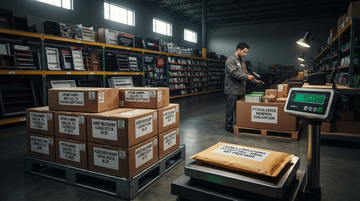
GameStop's cash-first store shrink turns the earnings story from “meme” to “milking leases”
GameStop’s latest update frames a weaker near-term quarterly sales outlook alongside continued store portfolio optimization and the completed exit of France operations via divestiture accounting. The investor takeaway is not just lower top-line—it's that the market is now valuing execution of cost/lease rationalization and capital preservation over any retail-speculation multiple.
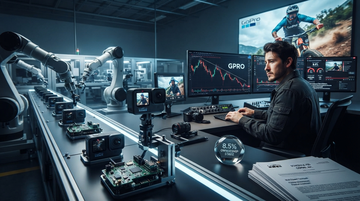
GoPro's creator-owner moment tests whether reach can substitute for a hardware turnaround
Mark Fischbach (Markiplier) disclosed a passive 8.5% stake in GoPro, giving a consumer-hardware turnaround story a new kind of capital: creator distribution plus potential relevance. But GoPro is still burning cash (TTM operating cash flow of -$19.6M) and has deteriorating profitability, so the real question for investors is whether creator-driven demand can beat the product and margin math.

Honda–Nissan’s SDV software deal turns a shelved merger into a 2029 consolidation playbook
Honda and Nissan are moving from merger talks to a joint vehicle-software effort, targeting a shared operating system and onboard computer for fiscal 2029. For investors, the bigger signal isn’t “cooperation” — it’s that Japanese OEMs are consolidating software and control-unit supply chains to compress time-to-market and reduce integration cost, tightening the competitive space around Tesla’s software-first approach.

Offerpad’s Nasdaq relisting is a “housing bottom” test for iBuyers: Q2 liquidity economics show Cash Offer can scale—but still needs a rate-friendly resale window
Offerpad’s OPAD transfer to Nasdaq on Aug. 31, 2026 is not an iBuyer comeback by itself, but it gives the market a fresh price discovery moment for whether instant-cash offers can sustain margins in a still-stiff mortgage-rate environment. In its latest reported quarter, Cash Offer generated most of revenue while the company’s overall gross profit stayed thin and operating cash flow swung negative—so the iBuyer model’s next phase depends more on resale velocity than on the “cash” headline.

Tesla's Solar Roof exit is a confession, not a setback — it killed 0.17% of US residential solar to free up the energy segment that actually scales
After a decade and roughly 3,000 installed systems, Tesla quietly told certified installers in mid-August 2026 it will stop supplying Solar Roof tiles and only sell conventional panels going forward. The retreat is small in unit terms but huge as a signal: Tesla's energy segment — now a $12.77B business at a 29.8% gross margin in FY2025 — is Megapack-led, not roof-tile-led, and the $240M Q2 warranty true-up shows what custom-manufactured products cost when they don't scale. The move tightens the moat around utility-scale storage, validates Enphase and SolarEdge as the inverter standard for the rest of residential solar, and hands roof-replacement economics back to traditional players like Sunrun and the legacy installer base — while LG Energy Solution collects a $4.3B tailwind from the Megapack cell deal.

When Wella files for a US IPO, the real question isn’t beauty—it’s whether a debt-led carve-out can still price “prestige” in a soft consumer tape
KKR’s move to take Wella Company public forces investors to underwrite a premium that would normally be reserved for steady, consumer-defensive demand. The filing’s leverage and carve-out structure become the market’s stress test: can brand-led hair/beauty cash flows outperform rising costs and cyclical pressure without KKR-like financial engineering?
2026-08-30
Affirm turns BNPL’s “credit-curve vs. M&A” fight into a guidance-and-funding test
Affirm’s Q4 FY2026 print and FY2027 outlook are the first live read-through for whether BNPL can keep widening monetization even as funding costs reprice higher. The company is already showing a meaningful shift in earnings power in its filings, so investors now need the Q4 letter’s funding-cost and credit-performance details to judge if that model survives the next rate-and-consumer stress cycle.

IMAX’s sale openness is really a value-unbundling bet on its technology-and-content licensing engine
IMAX’s stated openness to a sale reframes the company as more than a theater footprint story: investors should expect buyers to underwrite the premium-format licensing rail (technology products plus content solutions) using box-office-linked economics rather than gate counts. The near-term trading impulse may be headline-driven, but the deal math hinges on how “system backlog → recurring licensing revenue” converts under a higher multiple buyer.

Oura’s $3B IPO bet isn’t on smart rings—it’s on a subscription “health-data toll road” that investors must underwrite at a $16B+ valuation
Oura has signaled a potential U.S. IPO that could raise up to $3B and value the business at more than $16B, while projecting roughly $2B in 2026 sales. That combination implies the market is paying consumer-tech multiples for recurring health-data economics—so the real debate is whether retention and downstream monetization can persist even as Apple, Garmin, and other smart-ring entrants scale marketing and device cycles.

Smart-ring value doesn’t start in sapphire or sensors—it locks in at the recurring health-data subscription
The next wearable “boom” is still constrained by the physical parts—biosignal optics, power, and skin-contact materials—but the investable margin is increasingly determined by who controls the recurring health-data layer. Oura’s move toward public markets makes that hardware-vs-subscription split measurable, while FDA’s stance on non-authorized glucose claims shows why regulated signal quality—not the enclosure—drives durable platforms.

Cheese-name fights are now a live USMCA timing test: why “Parmesan-type” labels can slow the Mexico track and reshape dairy-flow economics
A new U.S.–Mexico friction point over protected cheese names is colliding with the first 2026 USMCA review window. Because cheese labels act like market-access rails for bulk and branded supply chains, the dispute can change what clears customs and how fast exporters redeploy volume—before tariffs and quotas even become the headline.
2026-08-29

Apple TV+ just got its first “real” churn test—Apple One is the retention hedge, and the next price move will hinge on what Netflix and Disney do after Aug. 28
On Aug. 28, Apple raised Apple TV+ to $14.99/month (and $119/year) and lifted its Apple One Individual plan to $21.95/month. The event is a direct test of whether a comparatively thin originals/catalog can hold “premium” pricing, while Apple One’s bundle math shifts churn risk away from the standalone streaming line—setting up a near-term signal for broader SVOD pricing power.

Burlington's “tariff-refund beat” flips the margin-quality question: can lower prices keep earning without the refund cash?
Burlington reported strong EPS momentum in Q2 FY26 and raised FY26 adjusted EPS guidance, but the quarter’s sales/margin setup included a $55.5M tariff-refund benefit recognized in cost of sales. That creates a direct test: whether Burlington can reinvest refund dollars into sharper prices and still sustain earnings power after the one-time tailwind fades.

Walmart’s $50M opioid case close removes an EPS overhang—and tightens the remaining “liability ladder” on manufacturers and distributors
On Aug. 28, 2026, the U.S. government announced a $50 million settlement with Walmart to resolve allegations tied to invalid opioid prescriptions filled by its pharmacies. The amount is small versus Walmart’s prior multistate opioid framework, and the case is framed as “allegations only,” which matters for how investors should think about remaining exposure across the opioid supply chain.
2026-08-28

What to expect
Evidence-first notes with a visible point of view.
This section collects sharp takes on earnings, shareholder meetings, and market structure. Each new piece should make the thesis, the facts, and the implications obvious within the first few screens.
Expect direct analysis, not generic commentary.
Expect the data to be explicit and the argument to be easy to follow.
Plutux is not an investment adviser. Market data and AI-generated analysis are for information and education only, not investment advice. Disclaimer