%22%2F%3E%0A%20%20%3Ccircle%20cx%3D%22220%22%20cy%3D%22150%22%20r%3D%22180%22%20fill%3D%22%2322d3ee%22%20fill-opacity%3D%220.12%22%2F%3E%0A%20%20%3Ccircle%20cx%3D%221010%22%20cy%3D%22130%22%20r%3D%22220%22%20fill%3D%22%2338bdf8%22%20fill-opacity%3D%220.08%22%2F%3E%0A%20%20%3Ccircle%20cx%3D%22920%22%20cy%3D%22520%22%20r%3D%22170%22%20fill%3D%22%2322d3ee%22%20fill-opacity%3D%220.06%22%2F%3E%0A%20%20%3Cpath%20d%3D%22M140%20430h920%22%20stroke%3D%22url(%23line)%22%20stroke-width%3D%2212%22%20stroke-linecap%3D%22round%22%2F%3E%0A%20%20%3Cpath%20d%3D%22M220%20360c120-150%20260-220%20380-220s260%2070%20380%20220%22%20fill%3D%22none%22%20stroke%3D%22%2367e8f9%22%20stroke-opacity%3D%220.5%22%20stroke-width%3D%2216%22%20stroke-linecap%3D%22round%22%20stroke-linejoin%3D%22round%22%2F%3E%0A%20%20%3Cpath%20d%3D%22M300%20398h600%22%20stroke%3D%22%2394a3b8%22%20stroke-opacity%3D%220.24%22%20stroke-width%3D%228%22%20stroke-linecap%3D%22round%22%2F%3E%0A%20%20%3Ctext%20x%3D%22220%22%20y%3D%22510%22%20fill%3D%22%23e2e8f0%22%20fill-opacity%3D%220.7%22%20font-family%3D%22Arial%2C%20Helvetica%2C%20sans-serif%22%20font-size%3D%2238%22%20letter-spacing%3D%228%22%3EINSIGHTS%3C%2Ftext%3E%0A%3C%2Fsvg%3E)
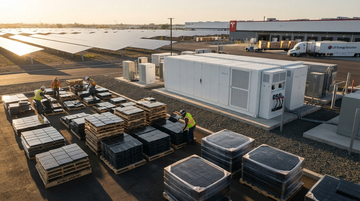
The kill was quiet, but the data behind it isn't
On or around August 20–21, 2026, Tesla told third-party certified installers it would no longer supply Solar Roof tiles, and within days the company's solar roof URL redirected to its conventional panels page; \"Solar Roof\" was quietly removed from the Energy navigation menu, leaving Solar Panels, Powerwall, and Megapack. There was no press release. The product first unveiled by Elon Musk in October 2016 ended as a soft pivot, not an announcement — and the timing tells you what the company finally concluded internally.
- Tesla internally concluded Solar Roof \"not financially viable,\" per sources who told Electrek — the formal reason for ending tile supply.
- Peak installation: roughly 21–32 roofs/week against a stated target of 1,000/week — more than 95% short of plan.
- Estimated total US installations: ~3,000 Solar Roof systems over roughly seven years, or about 0.17% of residential solar installations in 2022.
- Customer price escalation triggered a 2023 class-action settlement of about $6M covering ~8,636 affected customers; one contract reportedly jumped from ~$72,000 to ~$146,000 before installation.
- Average installed cost ran around $16/W versus ~$3/W for conventional panels — a premium too wide to survive a 21% projected 2026 decline in US residential solar.
Why the tile lost: a custom-built product in a commodity market
Solar Roof used proprietary glass tiles assembled at Gigafactory Buffalo — the same New York plant where Panasonic Holdings co-built cells and modules with Tesla from 2017 through 2020, before Panasonic exited the joint solar-cell production in 2020. Unlike commodity panels, every tile required bespoke manufacturing equipment, and per-unit cost rose as volumes fell short of plan. The technical performance compounded the problem: ventilation gaps reportedly caused the integrated system to underperform standard panels, with photovoltaic efficiency dropping roughly 0.5% per degree Celsius of heat buildup.
On top of that, the One Big Beautiful Bill Act (OBBBA), signed July 4, 2025, eliminated the 30% federal Residential Clean Energy Credit (Section 25D) for systems placed in service after December 31, 2025. Wood Mackenzie's US residential solar forecast already calls for a 21% decline in 2026 before any Solar Roof exit — a brutal backdrop for a luxury-priced, custom-built product to find scale.
| Metric | Solar Roof (tiles) | Conventional panels | Source |
|---|---|---|---|
| Avg. installed cost | ~$16/W | ~$3/W | Solar.com / Solar Reviews |
| Peak installation pace | ~21–32/week | n/a (commodity) | Electrek / Tesla 2021 target |
| Cumulative US installs (through 2022) | ~3,000 | millions of homes | Wood Mackenzie via Electrek |
| Share of 2022 US residential solar | ~0.17% | balance | Electrek, Aug 26, 2026 |
| Federal 25D credit eligibility (post-2025) | Repealed | Repealed | IRS / OBBBA, Jul 4, 2025 |
Energy is now a Megapack story — and the Q2 margin print confirms it
The segment Tesla is leaning into is a different business. Energy generation and storage revenue hit $3.139B in Q2 2026 (up 13% YoY) on 13.5 GWh of deployments — the second-highest quarter ever behind Q4 2025's 14.2 GWh — while Megapack utility-scale units carried the growth and Powerwall deployments declined. For full-year 2025, Tesla Energy posted $12.771B in revenue (+27% YoY) at a 29.8% segment gross margin, up from 26.2% in 2024. Deployments across Megapack and Powerwall reached 46.7 GWh in 2025, up 49% YoY.
Tesla energy revenue, FY2025
$12.77B
+27% YoY; 10-K filed Jan 29, 2026
Energy segment gross margin, FY2025
29.8%
vs. 26.2% in FY2024; 10-K filed Jan 29, 2026
Energy storage deployed, Q2 2026
13.5 GWh
second-highest quarter on record; 10-Q filed Jul 23, 2026
Energy storage deployed, FY2025
46.7 GWh
+49% YoY; 10-K filed Jan 29, 2026
Energy segment gross margin, Q2 2026
20.4%
down from 39.5% in Q1; 10-Q filed Jul 23, 2026
The supply chain that just shrunk — and the one that's growing
Upstream, the Solar Roof exit removes a small but real pull on custom tile production at Buffalo. The much bigger story is on the cell side: in March 2026, the US government confirmed LG Energy Solution will supply $4.3B of LFP battery cells from a new Michigan plant to Tesla for energy storage systems, with mass production targeted for H1 2026. That deal underwrites Megapack and Powerwall volumes — the products that now define Tesla Energy — and shifts LFP cell sourcing away from China for the US grid-storage market.
Downstream, the residential installer base changes shape. With Solar Roof gone, Tesla will pair its newly US-made 420-watt solar panel (assembled at Buffalo, deliveries started Q1 2026) with Powerwall 3 — its integrated inverter/battery — and lean on its 7,000+ certified installer network across 35+ countries rather than in-house crews. Enphase Energy and SolarEdge keep the rest of the rooftop inverter market; Sunrun keeps the financed residential lease model. The legacy installer ecosystem — already thinned by SunPower's August 2024 Chapter 11 — consolidates further around commodity panels plus storage.
| Company | Q2 2026 revenue | YoY change | What it means for residential |
|---|---|---|---|
| Tesla (energy segment) | $3.14B | +13% | Powerwall + Megapack carry the segment; tile exit is noise |
| Sunrun | $870.0M | +53% | 74% battery attach rate on new systems; storage-led growth |
| Enphase Energy | $291.9M | +3% QoQ | US sell-through down 34% YoY; residential weakness persists |
| SolarEdge | $346.2M | +20% | GAAP gross margin 27.5%; Q3 guidance weak on US residential |
| Fluence Energy (Q3 FY2026) | n/a (BESS) | Backlog $6.4B | Utility-scale pure-play; data-center demand 16 GWh pipeline |
What actually changes for each stock
The Solar Roof kill doesn't move Tesla's revenue line — energy segment gross profit from the tile business was rounding-error small, and Tesla never broke out Solar Roof revenue separately in its 10-K. What it changes is the story investors have to underwrite: Tesla Energy is now an industrial-scale battery business with a residential battery attachment on the side, not a vertically integrated roofing product. That has implications for valuation multiples (BESS peers like Fluence Energy trade on backlog, not residential attach) and for management attention as Tesla pushes Megapack 3, the Shanghai Megafactory, and the Houston solar-cell plant filed in Texas.
- Short-term (days–quarters): Tesla Q2 energy GM compression is the bigger story than Solar Roof. Watch Q3 2026 for warranty tail and Megapack ASP trend.
- Short-term: Enphase and SolarEdge get a clean narrative — the only viable tile is no tile; commodity panels + their microinverters/optimizers are the residential standard.
- Short-term: Sunrun's 74% battery attach rate on Q2 installs validates the \"solar + storage lease\" model Tesla is now imitating with its restarted solar lease program.
- Long-term (1–3 years): LG Energy Solution is the cleanest structural beneficiary — the $4.3B Tesla cell deal anchors US LFP capacity for grid storage regardless of how the residential tile business evolves.
- Long-term: Panasonic Holdings is no longer exposed to Tesla's residential solar ambitions; it has already exited the Buffalo solar JV (2020) and is now a battery-side partner through its Tesla EV cell relationship.
- Long-term: Tesla's pivot to Powerwall 3 + commodity panels (with the US-made 420W module from Buffalo) means Powerwall 3's integrated inverter becomes the de facto Tesla stack — but in a market where Enphase IQ8 and SolarEdge Home Hub already own the installer mindshare.
The synthesis — what the exit really says
The Solar Roof failure was a custom-manufacturing problem disguised as a technology story. A residential-solar product priced 5x the commodity baseline cannot survive a 21% contracting US residential market and a federal tax-credit repeal — even with Tesla's brand, even with Powerwall attachment, even with the $2B SolarCity acquisition that started it. The data is unambiguous: ~3,000 installed systems after seven-plus years, peak install pace 95% below target, and a $6M class-action settlement for price escalation.
For Tesla, the more meaningful 2026 signal is on the energy P&L, not the Solar Roof obituary: gross margin went from 39.5% to 20.4% in a single quarter, and management's \"mid- to low-20%\" long-term margin guide re-prices the segment toward pure-play BESS economics. That makes Fluence Energy — with a $6.4B backlog and a 16 GWh data-center pipeline — the more honest comparable for Tesla Energy than any residential-solar peer, even though Tesla also sells Powerwall.
Related stocks
- Tesla energy segment hit $3.14B Q2 2026 revenue on 13.5 GWh deployed, but segment gross margin collapsed to 20.4% from 39.5% — a $240M warranty true-up and Megapack ASP compression reset the segment toward mid-20% margins.
- Solar Roof tile exit removes a structurally unprofitable product line; ~3,000 systems installed over seven-plus years represented ~0.17% of US residential solar in 2022.
- LG Energy Solution's $4.3B Tesla cell deal (confirmed March 2026, US-made LFP from Michigan) anchors Megapack/Powerwall volumes through 2027+ regardless of how the residential tile business evolves.
- Enphase Q2 2026 revenue of $291.9M was flat QoQ but the US residential sell-through fell 34% YoY — a contracting market where Solar Roof's exit removes the only vertically integrated tile alternative.
- Powerwall 3 ships with its own integrated inverter, but Powerwall attach in Tesla's own channel is the niche; the broader US residential installer base still standardizes on IQ8 microinverters.
- Long-term: as Sunrun and SunPower alumni consolidate around commodity panels + storage, Enphase's installer relationships become the de facto hardware layer for ~70%+ of US residential solar.
- SolarEdge posted Q2 2026 revenue of $346.2M (+20% YoY) with GAAP gross margin of 27.5%, but guided Q3 weak as US residential demand stays pressured.
- Solar Roof's exit removes a competitor with custom inverter integration; SolarEdge Home Hub and Energy Bank remain the alternative DC-optimized stack for traditional rooftop.
- Watch for Q3 2026 commentary on US attach rates — a clean read on whether the OBBBA-driven 21% residential decline is bottoming.
- Sunrun Q2 2026 revenue of $870M (+53% YoY) with a 74% battery attachment rate on new systems validates the \"solar + storage lease\" model.
- Tesla's restarted solar lease program (first deliveries Q1 2026) mirrors Sunrun's 25-year lease / 5-year buyout structure, but Sunrun already owns the cash-flow-positive direct-to-home sales channel.
- Long-term: as legacy installer SunPower stays wound down (Chapter 11, Aug 2024), Sunrun consolidates share — and battery-led revenue growth insulates it from pure-panel margin compression.
- Fluence Energy Q3 FY2026 backlog of $6.4B (+14% QoQ, +30%+ YoY) and a 16 GWh data-center pipeline make it the cleanest pure-play on the BESS demand that now defines Tesla Energy.
- Tesla's Q2 2026 segment gross margin collapse to 20.4% re-prices the energy-storage business toward Fluence-style economics — utility-scale volume, not residential premium.
- Q3 FY2026 orders of $1.4B (~3x YoY) and a $550M hyperscaler award signal the data-center storage TAM is structurally ahead of Tesla's Megapack capacity buildout.
- LG Energy Solution's $4.3B Tesla LFP cell deal (US-made, Michigan plant, H1 2026 production) anchors grid-scale storage cell demand independent of the Solar Roof outcome.
- LG ES plans to nearly double global ESS battery production in 2026 and secure new orders above the 2025 record of ~90 GWh — Tesla is the largest single anchor tenant.
- Solar Roof exit is irrelevant to LG ES — the cell deal is Megapack/Powerwall, the products that drove Tesla's 46.7 GWh of energy storage deployments in FY2025.
- Panasonic Holdings exited Tesla's Buffalo solar JV in 2020; Solar Roof's August 2026 discontinuation closes the chapter but adds no incremental drag.
- Watch: Panasonic's Kansas EV battery plant (de-risking Tesla US cell sourcing) and any re-entry into US LFP cells as LG Energy Solution takes the bulk of Tesla's ESS cell demand.
- Solar Roof exit is a non-event for Panasonic Holdings revenue; the watch item is whether Panasonic bids into the same US LFP ESS cell market that LG ES just won.