Industrials
Order books, backlogs and factory economics
Capex cycles, freight rates, automation and labour, followed through the machinery, transport and construction names that price them first.
2026-09-04
%22%2F%3E%0A%20%20%3Ccircle%20cx%3D%22220%22%20cy%3D%22150%22%20r%3D%22180%22%20fill%3D%22%2322d3ee%22%20fill-opacity%3D%220.12%22%2F%3E%0A%20%20%3Ccircle%20cx%3D%221010%22%20cy%3D%22130%22%20r%3D%22220%22%20fill%3D%22%2338bdf8%22%20fill-opacity%3D%220.08%22%2F%3E%0A%20%20%3Ccircle%20cx%3D%22920%22%20cy%3D%22520%22%20r%3D%22170%22%20fill%3D%22%2322d3ee%22%20fill-opacity%3D%220.06%22%2F%3E%0A%20%20%3Cpath%20d%3D%22M140%20430h920%22%20stroke%3D%22url(%23line)%22%20stroke-width%3D%2212%22%20stroke-linecap%3D%22round%22%2F%3E%0A%20%20%3Cpath%20d%3D%22M220%20360c120-150%20260-220%20380-220s260%2070%20380%20220%22%20fill%3D%22none%22%20stroke%3D%22%2367e8f9%22%20stroke-opacity%3D%220.5%22%20stroke-width%3D%2216%22%20stroke-linecap%3D%22round%22%20stroke-linejoin%3D%22round%22%2F%3E%0A%20%20%3Cpath%20d%3D%22M300%20398h600%22%20stroke%3D%22%2394a3b8%22%20stroke-opacity%3D%220.24%22%20stroke-width%3D%228%22%20stroke-linecap%3D%22round%22%2F%3E%0A%20%20%3Ctext%20x%3D%22220%22%20y%3D%22510%22%20fill%3D%22%23e2e8f0%22%20fill-opacity%3D%220.7%22%20font-family%3D%22Arial%2C%20Helvetica%2C%20sans-serif%22%20font-size%3D%2238%22%20letter-spacing%3D%228%22%3EINSIGHTS%3C%2Ftext%3E%0A%3C%2Fsvg%3E)
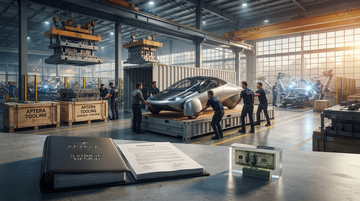
Aptera Just Signed a $44 Million Factory Plan With $10 Million in the Bank
On August 20, 2026, Aptera handed its tooling, pilot-build and high-volume production work to Shanghai's Launch Design in a program worth up to ~$44 million — roughly a third of it payable in warrants rather than cash. The asset-light math is real: Aptera says $180–205 million total gets it to 20,000 vehicles a year, less than Rivian spent on capex in the last twelve months. The problem is the other end of the balance sheet: $10.1 million of cash on June 30, 2026, an $8 million quarterly cash burn, and an equity line that can practically deliver only about $10 million more before new shares must be registered.
Maserati’s 71% sales collapse makes a China rescue a capacity play—not a U.S. software test
Reuters reports that Stellantis is discussing a long-term Maserati partnership with Huawei and Anhui Jianghuai Automobile, pairing Huawei’s Harmony platform with Maextro in China and Maserati internationally. Maserati deliveries fell from about 27,000 in 2023 to fewer than 8,000 in 2025, while the brand posted a €198 million adjusted operating loss; the Huawei platform manufactured by Anhui Jianghuai Automobile had delivered more than 10,000 Maextro S800 cars. The proposed market split avoids a disclosed U.S. conflict, but a Chinese-software-equipped Maserati sold in America would face connected-vehicle restrictions.
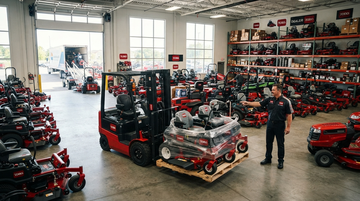
Toro raised FY guidance after a record Q3—suggesting dealers can restock without waiting for rate relief
Toro’s fiscal Q3 ended July 31, 2026 and delivered record sales growth (+8.4%) and a +50% jump in reported EPS, then lifted full-year ranges. The mix matters: management linked the raise to continued strong end-market demand and productivity-driven margin expansion across both Professional and Residential, implying healthier dealer channel dynamics than the usual “wait-and-see” consumer narrative.
2026-09-03
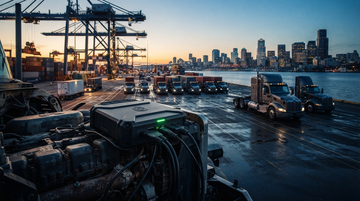
Samsara’s Q2 FY2027 print is the “fleet AI” stress test—whether software monetizes at the asset layer, not the rack
Samsara scheduled its Q2 FY2027 financial release for Sept. 3, 2026 (quarter ended Aug. 1, 2026), positioning the company as a clean read-through of whether “physical AI” can convert into measurable, recurring revenue. The current evidence available in primary sources during this run confirms only the release timing—not the results—so the AI-monetization conclusion below is framed as what investors must verify in the forthcoming print.

Shipping’s Hormuz “war premium” is driving the rally—your fade map is which segments can’t reprice fast enough
The Strait of Hormuz disruption has pushed shipping equities to their best levels in more than a decade, but much of the upside is repricing risk—not underlying trade growth. For investors, the key question is whether carriers can lock in today’s higher charter economics before de-escalation lets rates, insurance costs, and sentiment snap back.
2026-08-31

2026-08-30
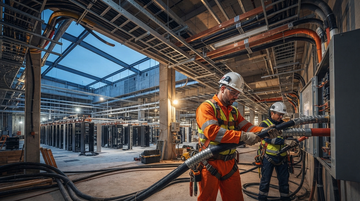
When labor—not chips—is the schedule gate: $/watt pricing starts shifting from builders to crews
U.S. electricians are projected to average ~72.7k job openings per year through 2035, but AI data-center build-outs are forcing the power-and-automation ecosystem to treat computational loads as a reliability and integration problem with construction knock-ons. In that setup, contractors with craft-skilled self-perform capacity are already reporting backlog and execution visibility that can turn labor scarcity into pricing power—while weaker execution capability faces schedule slippage risk.
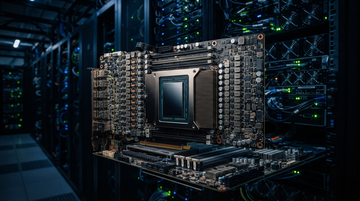
AI Data Centers Are Entering a “Cooling Plant” Pricing Regime — Integrated Power + Heat Rejection Designs Can Cut Installation Cost up to 30%
Rack-level liquid cooling gets most of the attention, but every AI megawatt still has to reject heat through the plant mechanical layer: chillers, towers, pumps, valves, and the heat-rejection backbone. A new Trane + Eaton reference design shows why this layer can reprice: it targets up to 15% energy-efficiency gains and up to 30% lower installation costs, shifting value from GPUs to the thermal infrastructure that must scale every new MW.
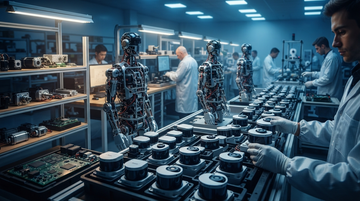
Humanoid “concept robots” hide a simpler truth: suppliers get paid before OEMs prove scale
Even when robot OEMs are still selling demos, the humanoid buildout already forces bulk purchases in components—especially perception sensors and high-precision motion—so supplier revenue can start earlier than consumer-facing robot shipments. The investor opportunity is mapping which listed component makers are positioned for that early, contract-led spend while policy and qualification risks (notably around China-linked lidar supply) decide who gets paid—and when.
2026-08-29
2026-08-28
2026-08-27
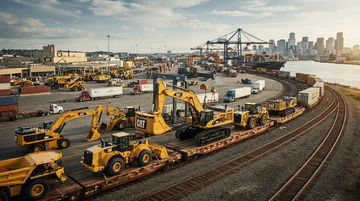
Caterpillar and the capex cycle got the Fed’s “cut” story harder to defend after durable-goods core orders stayed firm while consumer prices ran hot
The U.S. durable-goods print showed new orders rising for July and—crucially—core capital-goods demand staying resilient, aligning with an ongoing investment cycle. With July retail sales posting their first monthly dip and July inflation measures staying elevated, the near-term policy question shifts toward “how high for how long,” which matters for industrial earnings and order visibility.
Rivian’s CFO exit to GE Vernova spotlights a real execution-and-cash tradeoff—EV ramp risk is rising as grid/AI demand pulls finance talent
Rivian RIVN disclosed that CFO Claire McDonough plans to resign effective Oct. 30, 2026, appointing Derek Mulvey as interim CFO. The timing matters: Rivian is already in the R2 ramp phase, while GE Vernova GEV has built its growth story around grid modernization for AI-driven power needs—so the CFO move reads less like a personal career step and more like capital-and-people reallocation.
2026-08-25
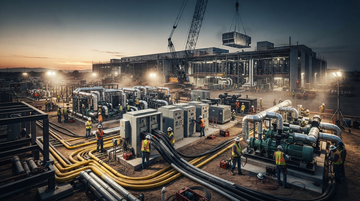
The AI data-center buildout’s schedule risk is shifting from permits to field capacity—and it changes who prints margin
As AI megawatt demand accelerates, the bottleneck is increasingly the “build the building” layer: general contractor throughput and the MEP electrical/mechanical labor pool that physically delivers power and cooling. For listed contractors and engineering-services firms, that translates into a different margin map than the chip stack: working-capital intensity and execution reliability start to matter more than design throughput alone.
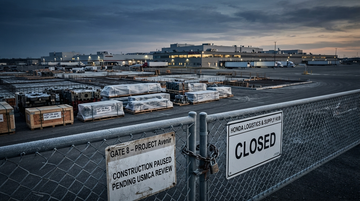
Honda makes USMCA a capex switch: suppliers feel the “order-book freeze” first
Honda said it may not proceed with an eighth North American assembly plant unless the USMCA trade deal is extended, with a decision due in the next year or two and a potential target start around 2030. The immediate market implication is less about unit volumes and more about upstream supplier behavior: when OEM construction gates close, new tooling, logistics lanes, and cross-border sourcing agreements slow down first.
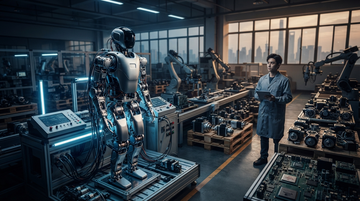
Unitree’s IPO-to-slump turn reframes China humanoid robotics: when “capital magnet” becomes valuation froth
Unitree [9880.HK]’s Shanghai debut drew a ~460% first-day surge versus the IPO offer price (150.80 yuan) before the stock later softened, shifting the debate from “funding windfall” to “bubble risk.” The repricing matters most for the robotics supply chain that investors were paying upfront for—especially automation and industrial-intermediate names that sit closer to unit economics than the robot makers themselves.
2026-08-24

2026-08-23

2026-08-22

2026-08-21
What to expect
Evidence-first notes with a visible point of view.
This section collects sharp takes on earnings, shareholder meetings, and market structure. Each new piece should make the thesis, the facts, and the implications obvious within the first few screens.
Expect direct analysis, not generic commentary.
Expect the data to be explicit and the argument to be easy to follow.
Plutux is not an investment adviser. Market data and AI-generated analysis are for information and education only, not investment advice. Disclaimer