Policy & Trade
Tariffs, export controls, and who absorbs them
Rulings, sanctions and trade negotiations traced to the companies that pay for them — margin by margin, route by route.
2026-09-07
%22%2F%3E%0A%20%20%3Ccircle%20cx%3D%22220%22%20cy%3D%22150%22%20r%3D%22180%22%20fill%3D%22%2322d3ee%22%20fill-opacity%3D%220.12%22%2F%3E%0A%20%20%3Ccircle%20cx%3D%221010%22%20cy%3D%22130%22%20r%3D%22220%22%20fill%3D%22%2338bdf8%22%20fill-opacity%3D%220.08%22%2F%3E%0A%20%20%3Ccircle%20cx%3D%22920%22%20cy%3D%22520%22%20r%3D%22170%22%20fill%3D%22%2322d3ee%22%20fill-opacity%3D%220.06%22%2F%3E%0A%20%20%3Cpath%20d%3D%22M140%20430h920%22%20stroke%3D%22url(%23line)%22%20stroke-width%3D%2212%22%20stroke-linecap%3D%22round%22%2F%3E%0A%20%20%3Cpath%20d%3D%22M220%20360c120-150%20260-220%20380-220s260%2070%20380%20220%22%20fill%3D%22none%22%20stroke%3D%22%2367e8f9%22%20stroke-opacity%3D%220.5%22%20stroke-width%3D%2216%22%20stroke-linecap%3D%22round%22%20stroke-linejoin%3D%22round%22%2F%3E%0A%20%20%3Cpath%20d%3D%22M300%20398h600%22%20stroke%3D%22%2394a3b8%22%20stroke-opacity%3D%220.24%22%20stroke-width%3D%228%22%20stroke-linecap%3D%22round%22%2F%3E%0A%20%20%3Ctext%20x%3D%22220%22%20y%3D%22510%22%20fill%3D%22%23e2e8f0%22%20fill-opacity%3D%220.7%22%20font-family%3D%22Arial%2C%20Helvetica%2C%20sans-serif%22%20font-size%3D%2238%22%20letter-spacing%3D%228%22%3EINSIGHTS%3C%2Ftext%3E%0A%3C%2Fsvg%3E)

Citi’s China Brokerage License Re-Entry Is a “Fee Wallet” Event—But the Stock May Still Be Underpricing the Friction Risk
Reuters reports Citigroup. expects approval for a wholly-owned mainland China brokerage business as soon as September 2026, enabling onshore A-share brokerage, underwriting, research, and principal trading. The move directly upgrades Citi’s China fee pipeline, but the same re-entry faces policy and execution frictions that can delay monetization, which helps explain why the market may not fully re-rate Citigroup yet.

Italy's \"Voluntary\" Bank and Energy Ask Hides a €1.5–2B Extraction — and US ADR Investors Should Care
Italy's deputy prime minister Antonio Tajani asked banks and energy firms on Sept. 4 to \"bring forward\" tax payments for the 2027 budget, framing it as a negotiated, voluntary extension of two prior sector accords. Underneath the label sits a third round of cash from a banking system that has already paid €1.2B more tax in H1 2026 versus H1 2025, an energy sector that funded the August fuel-excise extension on the same model, and a coalition split where Deputy PM Salvini is publicly pushing a harder 5%-of-profits levy. The trade for US-based holders of UniCredit and Intesa Sanpaolo ADRs is not whether Italy hits the sector again — it already has — but whether Rome's template migrates to Spain or France and turns a managed extraction into a peripheral-Europe spread event.
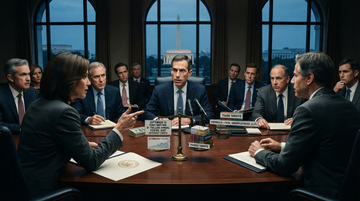
162K Jobs and a Trade Ultimatum: The September Fed Meeting Is Now a $1 Trillion Debt Showdown
The August payrolls surprise pushed Fed pricing toward a September hike at the same moment President Trump demanded cuts and floated halting trade with deficit countries. With $1 trillion in annual federal interest costs, the September 16 FOMC meeting is no longer a monetary-policy decision — it is a test of whether the central bank can remain independent of a White House treating interest rates as debt-service management.

The Reported $20B SK Hynix FX Trade Turns AI Memory Into Korea’s Won Shock Absorber
Reuters reported that South Korea’s foreign-exchange authorities bought about $20 billion of dollars sold by SK Hynix after its July Nasdaq offering, while official government disclosures confirm that the ADR inflow helped move the won from the 1,550 range toward the upper 1,400s. The important distinction is that the public record supports a state absorption trade, not a confirmed legal order forcing repatriation. AI-memory profits made the flow large enough to matter for currency policy, but the intervention also makes SK Hynix’s dollar-conversion choices more policy-sensitive.
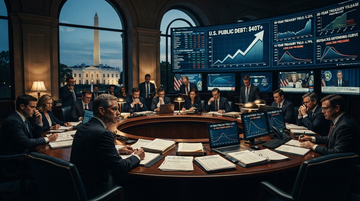
The Bond Market Just Became the Fiscal Disciplinarian — Why 'All-Hands-on-Deck' Is the Treasury's New Baseline
With U.S. debt crossing $40 trillion, the average interest rate on that debt more than doubling since 2021, and Treasury Secretary Bessent doubling long-end buybacks to defend the curve, the bond market is now enforcing fiscal restraint Congress will not. The trajectory — not the next auction — is the story, and it leaves mortgage REITs, long-duration fund managers, and rate-sensitive bank books bearing the bulk of the cost.
2026-09-06

Bessent's $40 oil call breaks the airline–refiner trade in two
Treasury Secretary Scott Bessent's Friday projection of $40–$50 crude once the Iran war ends turns the post-Iran trade into a mirror image: airlines that bled through a $4/gal fuel quarter get a 2027 margin tailwind, while refiners like Marathon Petroleum, Valero Energy and Phillips 66 — whose Q2 2026 refining margins doubled — face the unwind of the record crack spread that drove their 80%+ year-to-date run.
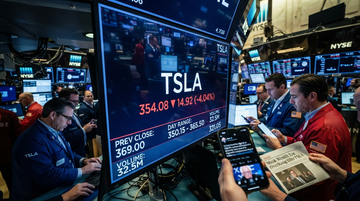
Tesla's $50 Billion 'Musk Discount': Why TSLA Is Now the Cleanest Political-Risk Bet on the Market
After Sen. Bernie Sanders publicly named Elon Musk an oligarch on X on Sep. 4, 2026, Tesla closed at $354 — about 12% below the $402 Wall Street consensus target and 29% below its December 2025 high. The gap is the cleanest read yet on the wealth-tax overhang: a 5% federal levy on Musk's roughly $165 billion Tesla stake would force recurring share supply, while California's Prop 40 wealth-tax vote on Nov. 3, 2026 turns the policy risk into a dateable catalyst. Investors who want exposure to 'MAGA-adjacent populism without paying the populist's stock multiple' now have a single, clean trade.
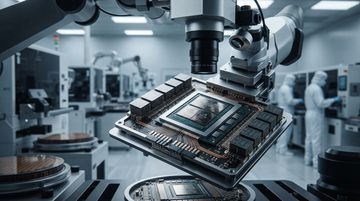
Nvidia Closed Green on the Day the Jobs Beat Sank Everything Else — the AI Capex Trade Has Stopped Waiting for the Fed
On Friday Sept 4, 2026, NVIDIA closed at $230.36 — within $5.38 of its $235.74 record — while the S&P 500 (-0.38%), Nasdaq (-0.29%) and Dow (-0.51%) all fell after a hawkish August jobs beat (+162k vs. 56k consensus) pushed the 2-year Treasury yield 5bps higher to 4.38%. The split is the cleanest read yet that AI infrastructure capex has become its own cycle: hyperscalers are committing more than $600B in 2026 alone, SK Hynix-Nvidia have a $500B+ initiative on the books, and Micron's 2026 HBM is fully sold out. The bottleneck is supply, not demand — and it sits above the foundry, in TSMC CoWoS packaging and HBM memory, not at the GPU itself.
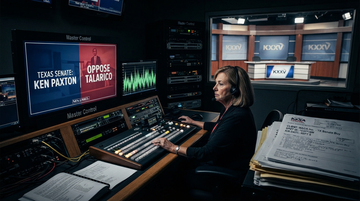
$500M, 60 Days: How Trump's MAGA Inc. Pledge Reshapes the Midterm Trade
Trump's September 4 pledge to deploy $400-500M from his MAGA Inc. super PAC, with the first $10M hitting Texas on September 5, converts the next eight weeks into a sector-level reelection bet. Local broadcasters Nexstar, Gray Television, and Sinclair book the ad revenue immediately; healthcare, energy, and tariff-exposed sectors get repriced against the probability of a Trump-aligned Congress. Investors who treat this as a generic political headline will miss the most concentrated political flow of the cycle.
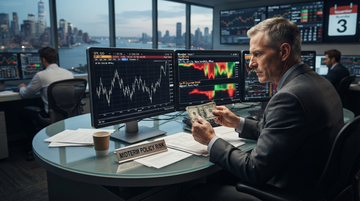
Trump's $500M Late Bet Tilts the Midterm Trade — and the Sector Tape
Trump's pledge of $400–500M from MAGA Inc. in the final 60 days before the November 3 midterms turns healthcare, tariff-exposed retail, and energy into policy binaries the market has to price in real time. With Eli Lilly, Novo Nordisk, and Pfizer already absorbing a Most-Favored-Nation drug regime that now spans 89% of the branded market, and Walmart and Home Depot banking $20.6B in tariff refunds, the question isn't whether the spending shifts odds — it does, ~10-to-1 against Democrats in super-PAC firepower — but which equities carry the most asymmetric pain or upside across two horizons: a 60-day policy tape and a 2027–2028 codification tape.
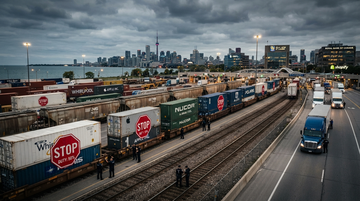
O'Leary Calls Canada the 'Ridiculously Fantastic' Trade—Here Are the US Names That Actually Get Crushed
On August 31, Kevin O'Leary framed Canada's tariff standoff as a five-year contrarian opportunity. The asymmetry he ignored: Canada's September 8 retaliation slaps 50% duties on US smartphones, 25% on appliances, and 50% on aluminum and copper wire—products sitting in Apple's $44B/quarter Americas revenue, Whirlpool's $2.6B/quarter North America segment, and the export books of Nucor, Alcoa, and Polaris. The real trade is short the US exporters, long the Canadian pivot plays: Royal Bank of Canada just printed record C$6.0B in Q3, and Shopify's Canadian tech base is the cleanest beneficiary.
China Is Now One Month of NVIDIA's Revenue — Which Is Why the Mid-September AI Talks Aren't a Chip Reset
Reuters reported on Sept 4 that Treasury Secretary Scott Bessent will lead the first US–China talks devoted purely to AI risk in mid-September, days before the Sept 24 Trump–Xi summit. The reported agenda is agentic cyberattacks, labs policing themselves, and American complaints that Moonshot AI distilled Anthropic's models — export licences are not on it. NVIDIA's own filings show why neither side has silicon left to trade: China fell to 7.0% of first-half revenue, and management assumes zero China data-center compute in its outlook. The asset actually exposed is Anthropic's roughly $2 trillion IPO, which now markets straight through a diplomatic process — with Broadcom, Micron, CrowdStrike and Cambricon sitting on the transmission lines.

Missiles on Warships, Missiles on Tankers: Why War-Risk Insurance — Not Crude — Breaks First
An IRGC ballistic-missile launch at two U.S. warships on Sept 5 triggered CENTCOM strikes that disabled three Iranian shadow-fleet tankers — the M/T Downy, Stark 1 and Kylo — under a new 'tanker-for-tanker' doctrine. The first market to break isn't Brent, which has plateaued near $95/bbl; it's war-risk insurance, already at 7.5-10% of hull value after a 40-fold rise from pre-war levels, against a Lloyd's consortium capacity of just $400M. Listed VLCC pure-plays Frontline, DHT Holdings and International Seaways sit on the right side of the freight squeeze; defense names from Lockheed Martin to Northrop Grumman get a secondary bid as Iran tests the U.S. Navy's Aegis air-defense envelope.
2026-09-05
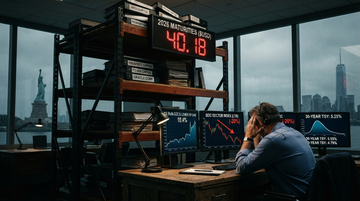
Why the August jobs beat became the worst news for the weakest US borrowers
A 162K payroll print reset Fed-cut bets and shoved the 30-year Treasury to 5.25%, dragging riskiest CCC spreads to 10.4% and pushing $40.1B of 2026 defaults onto a wall that already includes Ares Capital, Prospect Capital, FS KKR Capital, and an Oracle teetering one notch above junk. BDCs and middle-market direct lenders sit at the bottom of the chain — and the BDC sector is already down 20% from February highs with NAVs marking lower, so the transmission into share prices is mechanical, not a 2027 problem.
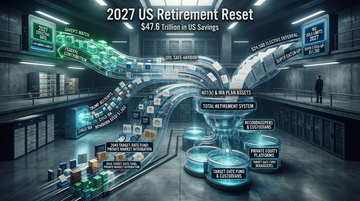
The 2027 Retirement Reset: How a Four-Part Policy Stack Re-Wires $47.6 Trillion in US Savings
On January 1, 2027, a federal Saver's Match, the new Trump Accounts child IRA, the Department of Labor's 401(k) alternatives safe-harbor, and the routine cost-of-living limit bump all take effect at once. Together they channel fresh dollars toward recordkeepers, target-date fund managers, and the private-market platforms positioned to ride the alt-401(k) wave. The trade is concrete: a $1,000 federal match per low-income saver, $5,000-a-year custodial IRAs seeded with $1,000 for newborns, and a DOL proposal that puts private equity inside the default investment of nearly every American worker's retirement plan.
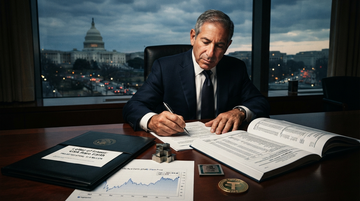
Lutnick's $250M Cantor Windfall Lands in the Middle of Every Trade Fight That Matters
Commerce Secretary Howard Lutnick's 2025 financial disclosure — $250M+ of income, mostly from his prior Cantor Fitzgerald stake — drops on Sept. 4 just as he is the lead U.S. negotiator on tariffs, the overseer of NVIDIA AI-chip export licenses, the architect of a $1.6B Commerce stake in USA Rare Earth (a Cantor-banker company), and the former banker for stablecoin giant Tether that drove the GENIUS Act. The paper trail now hands litigants, importers, and Congress a single thread tying the agency's biggest decisions back to one family's balance sheet.
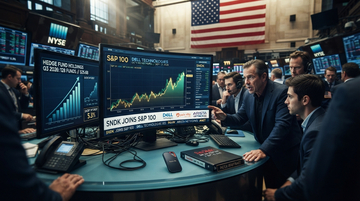
SanDisk Soars Into the S&P 100 — With Hedge Fund Holdings Already Doubled, the Forced-Buyer Trade Gets Its Real Test
SanDisk joins the S&P 100 on September 21, 2026, alongside Dell Technologies, Palo Alto Networks and Arista Networks, pulling every S&P 100 index fund into a stock that's already rallied roughly 600% year-to-date. With 128 hedge funds now holding $25.6B of shares (up 125% quarter-on-quarter) and short interest still at 5.3% of float, this isn't just another index add — it's the first structural forced-buyer test for the AI-storage trade, and the re-rating-versus-derating risk lives in the gap between passive flow and crowded positioning.
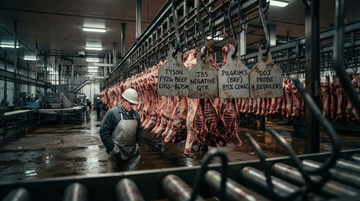
Trump's livestock EO lands on Tyson, JBS and Pilgrim's while they're already bleeding — the 85% concentration the order doesn't actually break
The first federal action against U.S. meat-packing concentration in decades arrives the same week Tyson Foods cut guidance for the second time in 30 days and JBS logged another negative beef quarter. The September 4 executive order opens more aggressive Packers and Stockyards Act enforcement and an interstate pathway for state-inspected meat, but it leaves the Big 4's 85% grip intact — the real near-term margin risk sits at the DOJ, which has now dragged eight retailers into the same probe.
2026-09-04
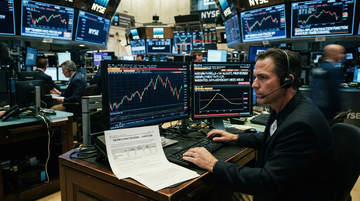
A soft August jobs print won’t necessarily stop a September hike—unless it breaks the “duration trade” channel
With the Federal Reserve signaling a less dot-plot-driven, more reaction-function style of communication under Chairman Warsh, the first-read power of nonfarm payrolls may shift from “policy decision” to “bond-duration repricing.” The market’s key question for September becomes whether a payroll slowdown changes the inflation constraint (oil + shelter) enough to remove the hike’s earnings-quality downside—especially for rate-sensitive cyclicals and low-income retail.

Ford and GM want Congress to shut the door—statute would target the “connected” wedge, not just the tariff
A coalition backed by major U.S. automakers is urging Congress to codify a permanent ban that targets Chinese “connected” vehicles, software, and hardware—not just raise tariffs. The investor question is whether a legislative exclusion strengthens Tesla’s pricing moat and weakens Detroit’s competitor set, while also surviving the post–U.S. Supreme Court tightening on delegated tariff powers.
What to expect
Evidence-first notes with a visible point of view.
This section collects sharp takes on earnings, shareholder meetings, and market structure. Each new piece should make the thesis, the facts, and the implications obvious within the first few screens.
Expect direct analysis, not generic commentary.
Expect the data to be explicit and the argument to be easy to follow.
Plutux is not an investment adviser. Market data and AI-generated analysis are for information and education only, not investment advice. Disclaimer