Policy & Trade
Tariffs, export controls, and who absorbs them
Rulings, sanctions and trade negotiations traced to the companies that pay for them — margin by margin, route by route.
2026-07-15
%22%2F%3E%0A%20%20%3Ccircle%20cx%3D%22220%22%20cy%3D%22150%22%20r%3D%22180%22%20fill%3D%22%2322d3ee%22%20fill-opacity%3D%220.12%22%2F%3E%0A%20%20%3Ccircle%20cx%3D%221010%22%20cy%3D%22130%22%20r%3D%22220%22%20fill%3D%22%2338bdf8%22%20fill-opacity%3D%220.08%22%2F%3E%0A%20%20%3Ccircle%20cx%3D%22920%22%20cy%3D%22520%22%20r%3D%22170%22%20fill%3D%22%2322d3ee%22%20fill-opacity%3D%220.06%22%2F%3E%0A%20%20%3Cpath%20d%3D%22M140%20430h920%22%20stroke%3D%22url(%23line)%22%20stroke-width%3D%2212%22%20stroke-linecap%3D%22round%22%2F%3E%0A%20%20%3Cpath%20d%3D%22M220%20360c120-150%20260-220%20380-220s260%2070%20380%20220%22%20fill%3D%22none%22%20stroke%3D%22%2367e8f9%22%20stroke-opacity%3D%220.5%22%20stroke-width%3D%2216%22%20stroke-linecap%3D%22round%22%20stroke-linejoin%3D%22round%22%2F%3E%0A%20%20%3Cpath%20d%3D%22M300%20398h600%22%20stroke%3D%22%2394a3b8%22%20stroke-opacity%3D%220.24%22%20stroke-width%3D%228%22%20stroke-linecap%3D%22round%22%2F%3E%0A%20%20%3Ctext%20x%3D%22220%22%20y%3D%22510%22%20fill%3D%22%23e2e8f0%22%20fill-opacity%3D%220.7%22%20font-family%3D%22Arial%2C%20Helvetica%2C%20sans-serif%22%20font-size%3D%2238%22%20letter-spacing%3D%228%22%3EINSIGHTS%3C%2Ftext%3E%0A%3C%2Fsvg%3E)
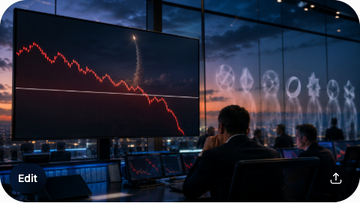
SpaceX Just Closed Below Its $135 IPO Price for the First Time - And the Private-to-Public Trade Is Now the Binding Test for Every Late-Stage Name in the Pipeline
CNBC reported on July 15, 2026 that SpaceX closed at $135.27 on its fourth consecutive losing session - the first close below the record $86B June 2026 IPO price of $135 - days after the Nasdaq-100 inclusion brought passive buyers in and ahead of the 13th Starship test flight on Thursday July 16. The break-under is the cleanest single read on whether the late-2025 / early-2026 private-mark pricing holds when $400B+ of cumulative private-tech paper tries to clear the public market. The read-through is direct for Anthropic, OpenAI, Stripe, Shein, Databricks, Canva, and the entire late-stage private cohort now queuing for 2026-2028 IPO windows.

Trump vs Hochul's NY Data-Center Moratorium Is the First Real Test of Whether AI Capex Has a Political Ceiling
President Trump publicly slammed New York Governor Kathy Hochul's new executive order barring for up to a year the construction of data centers that use 50+ MW of power, the first state-level moratorium of its kind in the U.S. Trump wrote on Truth Social that New York 'has made a terrible decision' and urged the state to change policy 'IMMEDIATELY.' The moratorium is the first concrete political constraint on the AI capex stack from a U.S. state, and the read-through is direct for Microsoft, Alphabet, Amazon, Meta, Nvidia, Equinix, Digital Realty, and every AI-infrastructure issuer with a NY exposure.
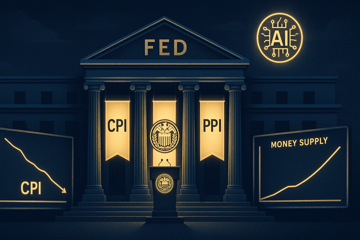
Warsh Just Turned the Fed From a Single-Mandate Inflation Fighter Into a Multi-Task Force Monetary Experiment
CNBC reported on July 15, 2026 that Fed Chair Kevin Warsh used two days of congressional testimony to launch a multi-pronged review of how the Fed measures inflation, restore money-supply reporting, and convene an all-bullish AI task force - all while CPI and PPI both printed unexpected declines. Fed Governor Lisa Cook pointed to AI spending as a potential inflation driver and warned 'inflation risks now outweighing employment risks.' The Fed meets in two weeks and markets are split on whether rates rise, hold, or fall - and the read-through is direct for every rate-sensitive sector, every AI capex issuer, and the bond market that is now repricing the Fed governance premium.
2026-07-14

Hundreds of Economists Are Telling the Market What the AI Trade Does Not Want to Hear
AP reported on July 13 that hundreds of economists signed a joint letter calling for immediate action on AI's economic impact and job-displacement risks. The market is still pricing AI as a productivity story. The economists are forcing a parallel conversation about labor-market disruption, antitrust, and AI-specific regulation that can change the political risk premium on the entire AI trade.

Nvidia's Asia Buyer Crackdown Turns Export Compliance Into a Moat
Nvidia is halving its list of authorized Asian buyers and tightening checks across Singapore, Malaysia, and Japan. The immediate effect is less channel freedom, but the deeper read is that compliance is becoming part of Nvidia's pricing power and its geopolitical firewall.
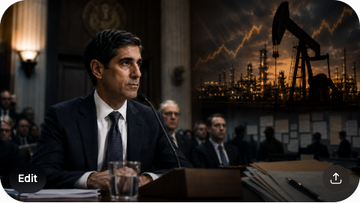
Warsh's First Testimony Meets an Oil Shock and a 4.6% Treasury Yield
The market is heading into Kevin Warsh's first congressional testimony with oil prices higher, Treasury yields repricing, and traders already leaning hawkish. The question is no longer whether inflation is cooling in a straight line; it is whether the Fed's communication reset makes the market tolerate less forward guidance and more volatility.
2026-07-13

Bank Lending Guidance Turns Immigration Status Into a Credit Underwriting Variable
Federal regulators are now explicitly telling banks to treat immigration status as part of credit-risk analysis for borrowers who may not be legally authorized to work in the U.S. That is more than a policy headline: it changes underwriting, compliance costs, and the way banks think about certain customer segments.

China's Export Surge Shows AI Demand Is Still Pulling Global Supply Chains
China's June export data is not just a macro surprise. The 27% jump in exports and 36% rise in imports show that AI-related demand is still rippling through semiconductors, electronics, EVs, and shipping, even while domestic demand remains softer than the headline trade numbers imply.

The Strait of Hormuz Shock Is an Inflation Test Before It Is an Energy Trade
The latest U.S.-Iran escalation sent Brent and WTI higher, but the market consequence is broader than oil beta. If shipping risk persists, airlines, chemicals, retailers, and rate-sensitive growth all absorb a second-round inflation tax.

Paramount and Warner Bros. Discovery Are Being Repriced by Antitrust, Not Just Deal Math
The legal fight over the Paramount-Warner deal is no longer a merger-arbitrage footnote. With 12 states now trying to freeze the transaction, the market has to price regulatory duration, media concentration risk, and the possibility that content distribution gets revalued before the deal ever closes.
2026-07-11

Canada Tariff Shock Reopens the Trade War Discount
A 35% tariff on many Canadian imports is not just a political headline. It is a tax on the most integrated bilateral supply chain in North America, and the market should price it as an inflation, margin, and FX event.

Canada's 35% Tariff Threat Reprices North American Trade
A 35% tariff on many Canadian imports is a direct hit to the North American supply chain. It pressures energy, autos, industrial margins, and eventually inflation.

Meta's DSA Problem Reintroduces a Regulatory Discount to the Stock
The European Commission's preliminary DSA finding turns Meta's engagement design into a valuation issue, not just a compliance headline.
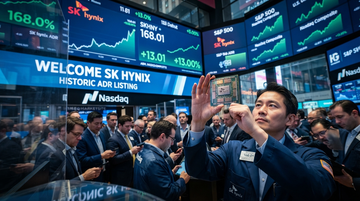
SK hynix Debut Turned the AI Memory Trade Into a Market-Wide Vote
The largest foreign ADR listing ever did more than reward one chipmaker. It re-priced memory scarcity, lifted U.S. indexes, and forced investors to ask whether AI supply still justifies premium multiples.
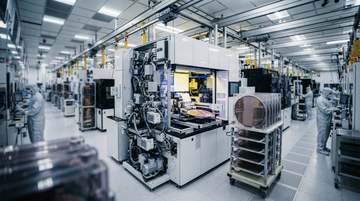
TSMC and ASML Are About to Tell the Market Whether the Semi Trade Is Still Safe
The next semiconductor earnings week is not just about one quarter. It is the first real test of whether AI capex still expands the tools and foundry stack or whether the market starts pricing saturation.
2026-07-10

Commerce's UAE Export-Control Reset Reopens a Strategic Tech Corridor
BIS said it will significantly upgrade the UAE under the EAR, remove it from Country Groups D:3 and D:4, and reclassify it as A:5, enabling license-free exports, reexports, and in-country transfers for certain military items, satellites, spacecraft, and dual-use items relevant to oil, desalination, and civil nuclear power. The inference for investors is that U.S. semiconductor, defense, and systems vendors with Gulf exposure may face a friendlier export backdrop, including names like Nvidia and AMD as a policy read-through.

Europe's Addictive-Design Case Puts Meta's Engagement Flywheel on Trial
The European Commission's preliminary DSA finding is not really about a fine. It is about whether Meta can keep maximizing session length, autoplay, and infinite scroll without changing the product architecture that drives ad yield.

Treasury's Iran Sanctions Reprice the Energy-Risk Premium
Treasury targeted a key Supreme Leader financier and Iranian exchange houses that move billions of dollars annually after Iran resumed attacks on international shipping in the Strait of Hormuz. The market implication is broader than sanctions optics: it raises the near-term risk premium for oil, tanker routes, and financial channels tied to the Middle East, which can matter for Exxon, Chevron, shipping names, and the broader macro tape.
2026-07-09

Micron's $3 Billion Supply-Chain Bet Says the AI Memory Trade Is Moving Upstream Again
Micron's July 9 investment to support GlobalWafers, secure a 10-year wafer supply agreement, and deepen U.S. manufacturing makes the AI memory trade look less like a pure pricing story and more like an input-control story. The read-through reaches wafers, substrates, equipment, and every buyer that still thinks memory is only a component line.
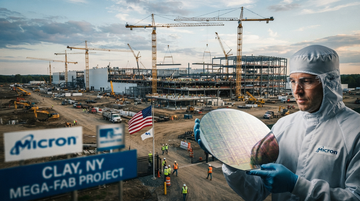
Micron's $250 Billion U.S. Build Turns AI Memory Into Industrial Policy
Micron's expanded U.S. capex plan is bigger than a semiconductor press release. By lifting domestic investment above $250 billion and tying in a $500 million wafer deal, the company is telling the market that AI memory scarcity is now a national supply-chain project.
What to expect
Evidence-first notes with a visible point of view.
This section collects sharp takes on earnings, shareholder meetings, and market structure. Each new piece should make the thesis, the facts, and the implications obvious within the first few screens.
Expect direct analysis, not generic commentary.
Expect the data to be explicit and the argument to be easy to follow.
Plutux is not an investment adviser. Market data and AI-generated analysis are for information and education only, not investment advice. Disclaimer