Policy & Trade
Tariffs, export controls, and who absorbs them
Rulings, sanctions and trade negotiations traced to the companies that pay for them — margin by margin, route by route.
2026-09-05
%22%2F%3E%0A%20%20%3Ccircle%20cx%3D%22220%22%20cy%3D%22150%22%20r%3D%22180%22%20fill%3D%22%2322d3ee%22%20fill-opacity%3D%220.12%22%2F%3E%0A%20%20%3Ccircle%20cx%3D%221010%22%20cy%3D%22130%22%20r%3D%22220%22%20fill%3D%22%2338bdf8%22%20fill-opacity%3D%220.08%22%2F%3E%0A%20%20%3Ccircle%20cx%3D%22920%22%20cy%3D%22520%22%20r%3D%22170%22%20fill%3D%22%2322d3ee%22%20fill-opacity%3D%220.06%22%2F%3E%0A%20%20%3Cpath%20d%3D%22M140%20430h920%22%20stroke%3D%22url(%23line)%22%20stroke-width%3D%2212%22%20stroke-linecap%3D%22round%22%2F%3E%0A%20%20%3Cpath%20d%3D%22M220%20360c120-150%20260-220%20380-220s260%2070%20380%20220%22%20fill%3D%22none%22%20stroke%3D%22%2367e8f9%22%20stroke-opacity%3D%220.5%22%20stroke-width%3D%2216%22%20stroke-linecap%3D%22round%22%20stroke-linejoin%3D%22round%22%2F%3E%0A%20%20%3Cpath%20d%3D%22M300%20398h600%22%20stroke%3D%22%2394a3b8%22%20stroke-opacity%3D%220.24%22%20stroke-width%3D%228%22%20stroke-linecap%3D%22round%22%2F%3E%0A%20%20%3Ctext%20x%3D%22220%22%20y%3D%22510%22%20fill%3D%22%23e2e8f0%22%20fill-opacity%3D%220.7%22%20font-family%3D%22Arial%2C%20Helvetica%2C%20sans-serif%22%20font-size%3D%2238%22%20letter-spacing%3D%228%22%3EINSIGHTS%3C%2Ftext%3E%0A%3C%2Fsvg%3E)
2026-09-04
A soft August jobs print won’t necessarily stop a September hike—unless it breaks the “duration trade” channel
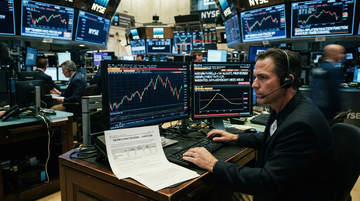
With the Federal Reserve signaling a less dot-plot-driven, more reaction-function style of communication under Chairman Warsh, the first-read power of nonfarm payrolls may shift from “policy decision” to “bond-duration repricing.” The market’s key question for September becomes whether a payroll slowdown changes the inflation constraint (oil + shelter) enough to remove the hike’s earnings-quality downside—especially for rate-sensitive cyclicals and low-income retail.

Ford and GM want Congress to shut the door—statute would target the “connected” wedge, not just the tariff
A coalition backed by major U.S. automakers is urging Congress to codify a permanent ban that targets Chinese “connected” vehicles, software, and hardware—not just raise tariffs. The investor question is whether a legislative exclusion strengthens Tesla’s pricing moat and weakens Detroit’s competitor set, while also surviving the post–U.S. Supreme Court tightening on delegated tariff powers.

Fannie Mae and Freddie Mac’s VantageScore switch re-routes the mortgage “credit toll” away from FICO
A federal Housing regulator ordered the Enterprises to fully implement [VantageScore 4.0] for loans sold to Fannie Mae and Freddie Mac, giving lenders a second conforming-mortgage credit-score option. The immediate effect is policy-driven pricing pressure at FICO and incremental monetization opportunities for the bureau-backed VantageScore ecosystem—especially Equifax, Experian, and TransUnion—with GSE distribution as the transmission channel.

NBIM’s proposed cut to U.S. Treasuries turns “ally demand” into a term-premium risk
Norges Bank Investment Management (NBIM) has proposed reducing the government-bond weighting inside its benchmark and cutting its U.S. Treasury exposure materially. Even if the move is gradual, it reframes official-sector demand for duration as a portfolio-design variable—one that can pressure term premium, auction dynamics, and the dollar when U.S. supply rises.

Maserati’s 71% sales collapse makes a China rescue a capacity play—not a U.S. software test
Reuters reports that Stellantis is discussing a long-term Maserati partnership with Huawei and Anhui Jianghuai Automobile, pairing Huawei’s Harmony platform with Maextro in China and Maserati internationally. Maserati deliveries fell from about 27,000 in 2023 to fewer than 8,000 in 2025, while the brand posted a €198 million adjusted operating loss; the Huawei platform manufactured by Anhui Jianghuai Automobile had delivered more than 10,000 Maextro S800 cars. The proposed market split avoids a disclosed U.S. conflict, but a Chinese-software-equipped Maserati sold in America would face connected-vehicle restrictions.

Trump’s “chip shield” raises the price of being “American-made” — Tennessee’s polysilicon plant becomes the first real test case
A Reuters investigation describes how a Tennessee polysilicon project faces closure risk as a “shield” meant to favor U.S.-sourced inputs ends up taxing the downstream supply chain instead. The policy mechanism—tariffs plus price floors that do not actually differentiate by where the polysilicon was sourced—pushes U.S. input costs higher and helps drive away the remaining customers needed to keep the plant running.

67,000 Trezor customers just made self-custody's data layer the next regulatory fight
On Sep 4, 2026, Trezor disclosed that a breach at its shipping vendor ShipMonk exposed another ~67,000 US customers' home addresses and contact data, taking the total above80,000 — and revealed that the data sat in ShipMonk's systems years after Trezor said it had been deleted. The incident hands US regulators their first clean test case for whether non-custodial wallet vendors owe data-security obligations under securities, commodities, or consumer-protection law, and reframes listed custodial rails from Coinbase to Robinhood as the defensive trade while chip suppliers STMicroelectronics and Microchip Technology capture a $0.72B hardware-wallet market growing toward $2.25B by 2031.

Trump ties tariff retaliation to the Fed: a September risk where rate cuts become the “payment” the White House demands
A reported White House threat—cut rates or the U.S. will stop trading with certain deficit countries—fuses trade retaliation with Fed independence into one coercion channel. If markets treat it as credible, the Sept. 17 FOMC decision shifts from a pure monetary debate to a compound tariff-and-stagflation shock that can keep duration yields and the dollar pressured while growth expectations roll over.

US operational control over Venezuela’s oil moves the China-crude bottleneck to Beijing’s balance sheet
A Sep. 4, 2026 step by the US to control Venezuelan oil exports tightens the link between crude supply and PDVSA’s payment mechanics, threatening China’s ability to keep receiving cargoes and recycling proceeds into debt service. The immediate market question becomes which downstream buyers and refiners absorb the rerouted heavy barrels—and which capital structures face the largest working-capital stress.
2026-09-03

Coinbase's new director adds a policy premium—not because volumes spike, but because the vote-counting problem gets easier
Coinbase added Anthony Armstrong to its board, effective immediately on September 1, 2026. The market may treat it like a trading story, but the real near-term lever is governance: board composition can affect how investors underwrite Coinbase’s policy timing (CLARITY Act) and its cost of compliance—factors that can move the stock even when transaction revenue is flat.

DOJ widens the beef probe to grocers—now the grocery-margin math is on the legal timetable
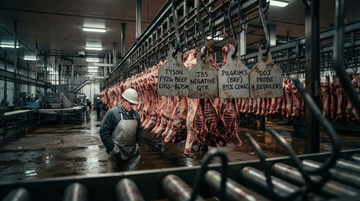
The Justice Department has expanded its antitrust beef-price investigation to eight major retailers, including Walmart and Costco. By requesting multi-year information on beef purchasing, pricing, margins, and strategy, the DOJ adds a new “conduct and compliance” cost to the already-knife-edge grocery gross-margin and shrink dynamics—shifting which firms absorb beef-chain risk and how quickly they can pass through price.

Waller’s “no-hike” signal breaks the September script: the bonds-vs-oil trade just lost its anchor
Fed Governor Christopher Waller signaled that a September rate hike is conditional on inflation re-accelerating, explicitly tying his decision to the August inflation data ahead of the Sept. 15–16 FOMC. That message cooled Treasury yields even as oil stayed elevated, forcing markets to re-price the “two-hike” path from a rates-first story into a conditional-hold story.

Polymarket’s $300M Trump Jr.-linked lifeline tests whether politics can out-rail JPMorgan’s debanking
Polymarket’s reported $300M investment from Donald Trump Jr.-linked 1789 Capital arrives right after JPMorgan ended its banking relationship with the platform and as New York City opens a marketing-focused investigation. The key question for investors: does politically connected capital actually loosen the “banking rail” bottleneck, or does it simply buy time while regulators keep squeezing distribution and compliance?
2026-09-02

Markets may be pricing “hands-off” AI deregulation—yet the FSB is warning that frontier AI could destabilize finance via cyber risk
At the G20 technology meeting, the US pressed for a light-touch, non-institutional approach to AI governance (“Carolina Principles”). In parallel, the FSB chair warned that frontier AI could materially worsen cyber risk and trigger a potentially disorderly financial-stability correction—creating a policy divergence that may keep near-term AI capex risk premia low while raising longer-tail tail-risk.

GLP-1’s “aftermath” is boosting breast implant demand—why Establishment Labs could be the next device-spillover trade
A fresh TD Securities note ties rising GLP-1 use to a faster pace of U.S. breast augmentation procedures and related “post-weight-loss” volume demand, framing the opportunity as the drug’s downstream correction cycle rather than the drug sales themselves. For Establishment Labs, the bullish setup hinges on whether GLP-1-driven weight loss keeps shifting patients toward implant-based restoration as the Motiva U.S. launch scales.

DOJ’s Google ad-tech breakup shot is blocked again: who loses the “divestiture discount” trade?
A Sept. 2, 2026 court order blocks the U.S. from forcing Alphabet’s Google to sell AdX, keeping the company’s ad-tech stack intact. With structural relief repeatedly rejected, the “breakup discount” narrative for ad-tech competitors and related shorts has a clearer problem: the most likely remedy path is behavioral, not divestiture.

The $40B ETF shuffle: offshore conversions are rerouting foreign demand—and inviting a Treasury/IRS test
A Bloomberg report links roughly $40B of new ETF restructuring to a strategy that helps non-U.S. investors reduce exposure to U.S. estate tax on U.S.-situs assets. The risk for the industry is not just lost flows to U.S.-listed funds, but a possible Treasury/IRS tightening that could unwind parts of the economics and shift demand toward alternative fund wrappers.

Astra just hit OpenAI’s first “Critical Cyber” line—and OpenAI responded by turning capability into a gated product
OpenAI says its upcoming Astra model may meet the “Critical” cybersecurity threshold in its Preparedness Framework, which it defines in terms of end-to-end, minimally supervised cyberattack ability. In response, OpenAI is tightening execution controls—adding higher-frequency monitoring to all Astra inference with tools and requiring the strictest security safeguards for Astra/cyber workloads—effectively limiting how agentic security power can be operationalized.

Shein’s HK price discovery makes “de-minimis-free” a margin debate—Temu’s comp gets repriced with every slide
Shein’s second-session weakness on the HKEX turns an IPO valuation story into a live test of cross-border parcel economics after the de-minimis advantage. The market’s reaction is likely to flow through to PDD’s Temu unit expectations—because both models hinge on whether savings from lightweight customs treatment can be replaced by new fulfillment math.
What to expect
Evidence-first notes with a visible point of view.
This section collects sharp takes on earnings, shareholder meetings, and market structure. Each new piece should make the thesis, the facts, and the implications obvious within the first few screens.
Expect direct analysis, not generic commentary.
Expect the data to be explicit and the argument to be easy to follow.
Plutux is not an investment adviser. Market data and AI-generated analysis are for information and education only, not investment advice. Disclaimer