Policy & Trade
Tariffs, export controls, and who absorbs them
Rulings, sanctions and trade negotiations traced to the companies that pay for them — margin by margin, route by route.
2026-08-22
%22%2F%3E%0A%20%20%3Ccircle%20cx%3D%22220%22%20cy%3D%22150%22%20r%3D%22180%22%20fill%3D%22%2322d3ee%22%20fill-opacity%3D%220.12%22%2F%3E%0A%20%20%3Ccircle%20cx%3D%221010%22%20cy%3D%22130%22%20r%3D%22220%22%20fill%3D%22%2338bdf8%22%20fill-opacity%3D%220.08%22%2F%3E%0A%20%20%3Ccircle%20cx%3D%22920%22%20cy%3D%22520%22%20r%3D%22170%22%20fill%3D%22%2322d3ee%22%20fill-opacity%3D%220.06%22%2F%3E%0A%20%20%3Cpath%20d%3D%22M140%20430h920%22%20stroke%3D%22url(%23line)%22%20stroke-width%3D%2212%22%20stroke-linecap%3D%22round%22%2F%3E%0A%20%20%3Cpath%20d%3D%22M220%20360c120-150%20260-220%20380-220s260%2070%20380%20220%22%20fill%3D%22none%22%20stroke%3D%22%2367e8f9%22%20stroke-opacity%3D%220.5%22%20stroke-width%3D%2216%22%20stroke-linecap%3D%22round%22%20stroke-linejoin%3D%22round%22%2F%3E%0A%20%20%3Cpath%20d%3D%22M300%20398h600%22%20stroke%3D%22%2394a3b8%22%20stroke-opacity%3D%220.24%22%20stroke-width%3D%228%22%20stroke-linecap%3D%22round%22%2F%3E%0A%20%20%3Ctext%20x%3D%22220%22%20y%3D%22510%22%20fill%3D%22%23e2e8f0%22%20fill-opacity%3D%220.7%22%20font-family%3D%22Arial%2C%20Helvetica%2C%20sans-serif%22%20font-size%3D%2238%22%20letter-spacing%3D%228%22%3EINSIGHTS%3C%2Ftext%3E%0A%3C%2Fsvg%3E)

Virtu Financial jumps ~11% on Aug. 21—market makers are effectively charging the realized-vol toll booth during the Treasury-buyback + crypto volatility regime
Virtu Financial shares surged ~11% on Aug. 21, spotlighting market-structure sensitivity to realized volatility. The key question for investors: whether volatility tied to larger Treasury liquidity-support buybacks and crypto’s momentum-driven whipsaws can translate into sustained market-making economics rather than just a one-day price spike.

NHTSA’s Waymo child-collision probe turns regulatory timing into a first-order cost—long before Cybercab’s rollout
NHTSA’s Office of Defects Investigation has opened a child-collision inquiry into Waymo’s robotaxi, and the record request/response cadence is now the key swing variable for robotaxi scaling. The market lesson is simple: even “data-backed” safety claims can’t substitute for regulatory throughput, because fleets pay in time, frictional redesign cycles, and delayed route/permission expansion.
2026-08-21

China’s record EV recall turns safety enforcement into a competitive weapon—Tesla, Xiaomi, BYD face a new margin risk
China’s SAMR disclosed a multi-brand, record-scale EV recall in which remedies mix free labeling with software fixes, including an OTA window-lowering strategy after severe crashes. The competitive takeaway is that regulators can now turn safety compliance—especially for software-defined features—into a cost and reputation lever that hits the highest-volume China EV players first.

DOJ’s a16z probe targets a venture-capital operating system: board seats on competing startups
Reporting from Axios, TechCrunch, and Inc says the DOJ is investigating Andreessen Horowitz for alleged “interlocking directorates” tied to partners sitting on the boards of rival companies, including Databricks and Fivetran. If the theory survives, venture governance—not just product competition—could become a regulated variable that rewrites how founders price “top-tier” board access.

ECB’s hike repricing to ~3% by late-2027 could “break” the USD-funded AI carry trade—starting with US duration and dollar funding costs
Traders are repricing the ECB deposit rate toward 3% by late-2027 while the Fed eases, widening the global rates split that typically supports USD-funded risk-taking. For US-linked AI capex, the key transmission is not just FX; it is the feedback loop into USD funding costs and the valuation of long-duration cash flows.

A 90-day beef import window won’t break the “cattle squeeze”—it mainly shifts margins inside the packing chain
Policy easing on certain beef import quotas can relieve near-term pressure on retail prices, but it does not directly fix the underlying bargaining mechanics between ranchers and packers. The first-order effect is usually on packer gross margins (through input cost and product mix), while cattle prices react more slowly and less reliably.
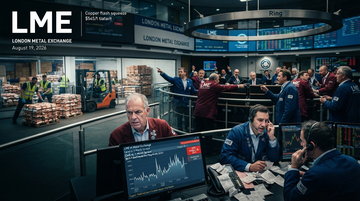
LME copper’s flash squeeze wasn’t a tariff tell—it was a margin-call mechanics reveal that physical tightness can spread company-to-company
The LME copper cash-to-near prompt spread spiked sharply during the Aug. 19, 2026 “flash squeeze,” turning what looked like a price debate into a delivery-and-margin problem. The key investor takeaway is transmission: when nearby supply gets scarce, positions get forced into physical delivery, and the first-order effect shifts from “tariff gauge” talk to “who has liquidity, who has metal, and who can pass through tightness” across copper producers and electrification/AI buyers.

Inside the Pentagon’s “Right to Repair” fight: the policy push targets the defense primes’ sustainment IP profit pool
The Pentagon is pushing contracts to grant the military access to “necessary tools, software, and technical data” so it can repair and sustain weapons without being blocked by intellectual-property limits. Industry pushback is effectively a push to protect the high-margin sustainment economics that come from restricted access to technical data packages—an issue that matters for aftermarket revenue assumptions across RTX, LMT, NOC, GD, and HII.

Ross Stores' full-year raise arrives as U.S. retail sales dip—off-price trade-down is holding better than headline demand
Ross Stores lifted FY2026 earnings and same-store sales guidance after reporting strong Q1 results, pointing to demand that’s more “traffic-led” than recession-led. With U.S. retail sales falling in July for the first time in nine months, the raise is a real-time read-through that consumers aren’t stopping shopping—they’re trading into off-price assortments and Ross’s inventory turn discipline.
2026-08-20
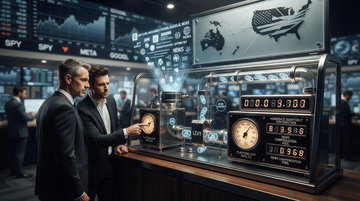
Australia just turned “pay for news” into a levy that prices Meta/Google ad economics—and may become the playbook for the U.S. Journalism Competition fight
Australia’s “News Bargaining Incentive” statutory levy turns news licensing from a negotiated transfer into a recurring cost line for large online platforms—creating an explicit pricing benchmark. The same mechanics explain why the U.S. Journalism Competition & Preservation Act is increasingly viewed as an international “template,” because it could operationalize a comparable bargaining-and-compensation regime.
Citi’s dollar call is really an equity-flow warning: buyback policy can switch off USD demand
Citi’s Aug. 20 structural downgrade to the dollar ties the next leg of FX risk to a policy-controlled US buyback channel rather than a pure Fed timing story. If Washington tightens or constrains corporate buybacks, the biggest immediate transmission line runs through US equities—changing how global investors fund USD exposure and hedging demand.

After the $1T crypto flush, ETH leads a “melt-up”—and the real test is whether regulation headlines now beat ETF flows
The rebound day shows ETH outgaining BTC and majors, a pattern that only looks like “flow regime” improvement if shorts are repairing faster than ETFs are withdrawing. On Aug. 18, 2026 the SEC proposed “Regulation Crypto Assets,” proposing fit-for-purpose offering exemptions and an investment-contract safe harbor—setting the stage for a catalyst that can trigger positioning and short-covering beyond spot ETF flows.
Trump’s FDA pick Overton turns therapy-class FDA odds into a portfolio bet: psychedelics & non-opioid pain up, vaccines down
Heidi Overton’s nomination is being read by sell-side analysts as a cross-therapeutic shift in how FDA leadership signals risk tolerance—supportive for psychedelic and non-opioid pain programs, but less friendly for vaccines. The investors’ problem is that this “repricing by class” can move approval timelines without yet proving which platform companies actually monetize first.

FTC’s personalized-pricing disclosure push would turn “price-discrimination math” into customer-facing notices—raising compliance costs across the consumer stack
The FTC is seeking public comment on an enforcement-policy approach that would require clearer disclosure when businesses use personalized, data-driven methods to set prices. For investors, the key risk is not just reputational: disclosure can weaken willingness-to-pay extraction, expose discounting logic, and force product, data, and checkout redesign across retail, travel, subscriptions, and consumer fintech.

After the “slip-to-2027” scare, the White House just put 2026 Clarity back on the table—so what changes for Coinbase?
The Aug. 19 White House crypto summit revived the legislative push behind the CLARITY Act, targeting clearer market-structure rules for crypto brokers and exchanges. At the same time, the SEC’s “Regulation Crypto Assets” proposal leans into a structured exemption + conditional safe-harbor approach—meaning the market’s repricing can transmit quickly into fee-and-rail economics (platform trading, custody/stablecoin monetization, and institutional access) rather than waiting for a full “doomsday-to-clear” cycle.
Wolfspeed’s outlook break shows the SiC trade is splitting: AI power could stay tight, but EV/industrial SiC demand is no longer a one-way bet
Wolfspeed’s Aug. 19 guidance reset (and the stock’s -7.5% pre-market move into Aug. 20) is the first “hard” datapoint that AI datacenter power silicon and EV/industrial SiC are moving out of lockstep. The message for investors: the market may reward the SiC supply chain differently by end-market—tight 48V-to-rack power needs versus a cooling EV/industrial ramp—creating winners in adjacent power silicon and control platforms while pressuring wafer/device oversupply.
2026-08-19

Analog Devices ADI calls out AI-linked signal-chain strength—showing analog demand is no longer the “late” trade, it’s the supply bottleneck
Analog Devices’ latest guidance commentary reinforces that AI capex is spilling into mature-node analog/mixed-signal—power management, data converters, and upstream signal conditioning—rather than staying confined to GPUs. The investor takeaway: the next constraint may be not compute, but the analog “plumbing” that turns electricity into usable, low-noise data in data-center racks.

Berkshire Hathaway is selling Nucor even as tariffs should be “most” protective — which points to a demand problem the market isn’t pricing
Berkshire Hathaway’s successor, Greg Abel, has trimmed Nucor by more than half in the latest disclosed portfolio changes, turning a steel trade that looked tariff-protected into something Abel no longer wants as a bet. The deeper read isn’t “tariffs stop working”; it’s that steel upside is being driven by order and end-demand durability, and when demand weakens, even a tariff bloc can fail to prevent earnings compression. For investors, the move shifts focus from the tariff math to the domestic steel order book, working-capital intensity, and how fast producers can re-price supply.

Tariff Whiplash Gets a 3-Day Refund: What Gets repriced first in autos, dairy, alcohol, and construction materials
The 50% Section 338 tariffs on select Canadian goods were paused for three days right before the midnight start, followed by a “deal” framework. For markets, the investment question shifts from “damage” to “unwind”: which sector discounts were priced for immediate tariff flow disruption—and how fast they can reverse when the policy shock is temporarily removed.

Lagarde’s “order” warning reframes EURUSD: the risk isn’t just currency—it’s Europe’s supply-chain competitiveness lagging the US
ECB President Christine Lagarde says the weakening of a rules-based global order—specifically tied to America’s pullback from Western security leadership—is eroding the conditions behind Europe’s post-war growth model. The bigger market risk may be the second-order transmission: slower European investment and scaling under geoeconomic fragmentation, which can pressure both competitiveness and the euro’s role in trade, not merely EURUSD spot levels.
What to expect
Evidence-first notes with a visible point of view.
This section collects sharp takes on earnings, shareholder meetings, and market structure. Each new piece should make the thesis, the facts, and the implications obvious within the first few screens.
Expect direct analysis, not generic commentary.
Expect the data to be explicit and the argument to be easy to follow.
Plutux is not an investment adviser. Market data and AI-generated analysis are for information and education only, not investment advice. Disclaimer