Policy & Trade
Tariffs, export controls, and who absorbs them
Rulings, sanctions and trade negotiations traced to the companies that pay for them — margin by margin, route by route.
2026-07-30
%22%2F%3E%0A%20%20%3Ccircle%20cx%3D%22220%22%20cy%3D%22150%22%20r%3D%22180%22%20fill%3D%22%2322d3ee%22%20fill-opacity%3D%220.12%22%2F%3E%0A%20%20%3Ccircle%20cx%3D%221010%22%20cy%3D%22130%22%20r%3D%22220%22%20fill%3D%22%2338bdf8%22%20fill-opacity%3D%220.08%22%2F%3E%0A%20%20%3Ccircle%20cx%3D%22920%22%20cy%3D%22520%22%20r%3D%22170%22%20fill%3D%22%2322d3ee%22%20fill-opacity%3D%220.06%22%2F%3E%0A%20%20%3Cpath%20d%3D%22M140%20430h920%22%20stroke%3D%22url(%23line)%22%20stroke-width%3D%2212%22%20stroke-linecap%3D%22round%22%2F%3E%0A%20%20%3Cpath%20d%3D%22M220%20360c120-150%20260-220%20380-220s260%2070%20380%20220%22%20fill%3D%22none%22%20stroke%3D%22%2367e8f9%22%20stroke-opacity%3D%220.5%22%20stroke-width%3D%2216%22%20stroke-linecap%3D%22round%22%20stroke-linejoin%3D%22round%22%2F%3E%0A%20%20%3Cpath%20d%3D%22M300%20398h600%22%20stroke%3D%22%2394a3b8%22%20stroke-opacity%3D%220.24%22%20stroke-width%3D%228%22%20stroke-linecap%3D%22round%22%2F%3E%0A%20%20%3Ctext%20x%3D%22220%22%20y%3D%22510%22%20fill%3D%22%23e2e8f0%22%20fill-opacity%3D%220.7%22%20font-family%3D%22Arial%2C%20Helvetica%2C%20sans-serif%22%20font-size%3D%2238%22%20letter-spacing%3D%228%22%3EINSIGHTS%3C%2Ftext%3E%0A%3C%2Fsvg%3E)

Did the Fed’s “worst-long-bond-day” finally break the 30-year Treasury auction? The market is about to learn via the bid-cover vs. tail
Today’s $25B 30-year auction is the first real stress test of whether foreign/indirect demand still absorbs US long-end supply at a 5%+ post-Fed backdrop. The key isn’t the headline yield alone—it’s whether bid-cover holds while the tail (price concession) stays contained versus recent auctions, i.e., whether the “Fed put” is transmitting into auction clearing.

Campari’s “tariff tailwind” lifts guidance—but the company still can’t prove demand strength without the missing volume proof
Campari’s raised profit outlook is explicitly linked to a tariff-environment benefit, but the disclosed guidance mechanics don’t automatically confirm underlying volume and mix strength. Investors should treat the update as a policy-cost signal first, and demand-quality signal only if Campari’s organic sales/mix path is accelerating alongside margins.
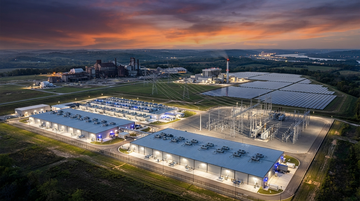
DOE’s Genesis Mission turns Western Kentucky’s federal land + grid into an AI power price war (and reallocates who wins the interconnect)
DOE’s Genesis Mission framing shifts AI-site competition from “who can finance power” to “who can secure a power-and-infrastructure backstop on federal land.” For investors, the key transmission mechanism is simple: a credible federal acceleration reduces time/cost risk for every downstream interconnect, generation build, and co-location campus—re-ranking utilities and grid-capex beneficiaries versus pure-play private bets.

The EU’s €10B “AI gigafactory” bid turns compute sovereignty into a margin test for US hyperscalers
The EU is preparing to fund firms to build seven AI gigafactories with €10B of public money—an explicit attempt to secure raw AI compute inside Europe. For investors, the actionable question is whether this sovereign capacity forces a pricing and workload-location squeeze on NVIDIA, Microsoft, and Amazon, while turning grid build-out capacity into a near-term bottleneck for utilities and power equipment suppliers like Schneider Electric.

FCC license-renewal pressure turns broadcast regulation into a “viewpoint risk premium”—ABC is warning station groups to price it in
ABC and Disney argue the FCC is using broadcast license-renewal leverage to chill network and local editorial coverage, framing it as unconstitutional intimidation. For listed station-group owners like Nexstar and Sinclair, the investor-relevant risk is not just a single license outcome—it's that regulation could be repriced as a standing probability of editorial interference, compressing deal multiples and raising “Washington discount rates.”

Haleon’s H1 “US slip / Oral Health win” reframes the staples trade into a category bet
Haleon reaffirmed full-year guidance, but H1’s internal split matters: Oral Health delivered mid-single-digit growth while North America slowed versus stronger Emerging Markets. For investors running “premium staples” pair trades, the earnings print shifts the question from “staples resilience” to “which category compounds when the US consumer softens.”

The Aug 1 “voluntary” 30-day review makes OpenAI and Anthropic buy a government timeline—or lose it
A White House executive order (June 2, 2026) sets up a voluntary pre-release federal review framework for “covered frontier models,” with key agency deliverables feeding into an August 1 implementation milestone. If OpenAI MSFT and Anthropic (unlisted) are inside the first wave, they effectively turn a short window into a durable release-preemption advantage—while everyone else faces a longer, more political customer-acquisition and deployment lag.

Paramount–WBD’s news-archive consolidation could become a new “data bottleneck” — and cable/AI buyers pay the price
Archival producers warn that a Paramount–Warner Bros. Discovery deal could consolidate CNN/CBS news archives under one private owner, increasing gatekeeping over licensing and preservation. In parallel, AI training’s copyright-cost baseline has shifted—making archive access less like a media afterthought and more like a priced input for distribution and model training.

A $83.3M Defamation Appeal Becomes a SCOTUS Pricing Question: How High Can Immunity—and Media Risk—Go?
Trump’s July 28, 2026 filing asks SCOTUS to reset the ceiling on civil defamation damages tied to statements made in office. The practical market impact isn’t just legal precedent—it’s how aggressively media, podcasts, and speakers price their “presidential-speech” risk, especially if courts treat immunity as narrower (or broader) than the Second Circuit allowed.

US Strike on Iran Forces a 2026 Risk-Premium Reprice: Oil’s “Discount” Is No Longer the Trade
A US strike on Iran reopens Strait-of-Hormuz tail-risk in hours, reversing the recent de-escalation-driven deflationary narrative for crude pricing. The fastest transmission is not headlines—it is how refiners’ and defense primes’ hedging, working-capital timing, and near-term contract marks must reprice under higher oil volatility.

“Made in USA” fraud isn’t just slipping past AI—it’s exploiting the AI governance gap at Walmart and Amazon
A new Columbia Law School report finds that AI shopping assistants at Walmart and Amazon can detect “Made in USA” violations, yet they don’t proactively police the claims. With the FTC escalating “Made in USA” enforcement and an executive order explicitly flagging online marketplaces, the enforcement vacuum becomes the real economic loophole—and a compliance-first strategy can turn into a competitive moat.
2026-07-29

FTC’s Hims & Hers Pixel Case Makes Meta and Snap the Real Compliance Bottleneck for Telehealth PHI Advertising
The FTC (with LA County and Utah) alleges Hims & Hers sent sensitive health data to Meta and Snap pixel tracking systems used for ad targeting/measurement. The key shift for investors is that the “HIPAA pixel loophole” becomes a de facto gatekeeping constraint on the entire consumer-telehealth ad-tech stack—raising compliance, remediation, and potential usage-cost risks for Meta META and Snap SNAP alongside the advertiser.

Kia is betting $600M+ on Mexico EV localization to protect USMCA eligibility if North America tightens battery sourcing
Kia’s planned $600M-plus Nuevo León expansion is less about “Mexico EV capacity” and more about keeping EVs on a USMCA-compliant path as rules increasingly scrutinize batteries and originating inputs. USMCA already contains an “advanced battery” originating framework and requires higher regional value content thresholds (75% for passenger vehicles and light trucks), which makes factory-level localization—and supplier flexibility—an option worth paying for. If the USMCA review process leads to tighter proof requirements or higher battery localization expectations, companies with battery supply chains that can credibly shift origin will be the near-term winners.

China’s DUV mass-production pressures Congress: MATCH Act’s servicing ban timing will decide whether Lam Research, Applied Materials, and KLA harvest China growth in 2H26 or lose it to license “latency”
China’s July 27, 2026 shift to mass-producing homegrown immersion DUV tools increases the probability of near-term fab ramp—exactly when the MATCH Act must clear Congress if it’s meant to restrict not just exports, but servicing/maintenance. For the US semicap trio, the key risk is that a servicing ban applies a licensing policy of denial, which can delay tool upkeep and directly disrupt backlog/revenue conversion even if some equipment already sits in-country.
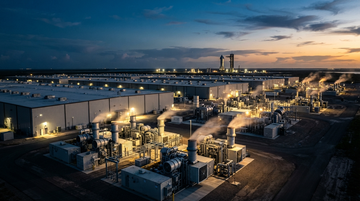
House Democrats Just Forced xAI/SpaceXAI to Answer a Clean-Air Permitting Loophole—Turning 27–60 “Unpermitted” Gas Turbines Into a Federal Risk
A House Energy & Commerce ranking-member letter to SpaceXAI demands documents and site-visit access about Colossus 1/2 turbines alleged to be operating “without air permits,” explicitly describing an attempted dodge via “mobile sources.” For hyperscalers planning behind-the-meter gas capacity, the message is simple: once on-site turbines reach scale, permitting becomes a federal oversight issue, pushing the market mix toward utility PPAs (and away from regulatory arbitrage).
2026-07-28

AT&T turns spectrum into fixed-wireless and AI backhaul capacity—an $23B deal that resets the 5G arms race
AT&T is buying 50 MHz of nationwide spectrum from EchoStar for ~$23B, with FCC buildout conditions that directly shape where and when the capacity shows up. The investor angle is less “more consumer 5G” and more “mid-band for air-interface + transport for AI”: Verizon’s recent dark-fiber AI backhaul model implies carriers are monetizing connectivity as compute-adjacent infrastructure.
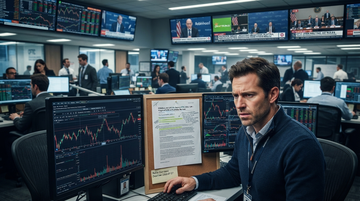
CFTC’s prediction-market rule “public-interest” fight is becoming a liquidity game—Robinhood is positioned to profit from the friction
The CFTC’s proposed “Prediction Markets; Public Interest Determinations” rule drew enough public pushback that platforms are increasingly pricing regulatory drag into their business models. That makes order-flow durability—not just contract design—the real moat, with Robinhood exposed to both the upside of trading volumes and the downside of compliance costs.

China’s first mass-produced 28nm-class immersion DUVs target ASML’s mid-range DUV bottleneck—so the real $20B risk is supply mix, not EUV panic
A Shanghai state-backed supplier has begun mass-producing homegrown immersion DUV lithography tools aimed at 28nm-class patterning, targeting ~5 systems in 2026 and ~20 in 2027 for SMIC, Hua Hong, and CXMT. The near-term threat to ASML is less about replacing EUV and more about speeding up domestic substitution in the mature-node “DUV volume” layer—where capex flows are large and timing matters.

Google's €890M DMA fine becomes a multi-year damages threat because private plaintiffs already filed with courts as the evidence anchor moves from regulator to litigation
The EU’s first major DMA fine against Google totaled €890M across (1) self-preferencing in Search and (2) anti-steering restrictions in Play. News of private damages claims right after the enforcement decision matters because private cases can convert a one-time regulator finding into recurring P&L exposure—especially once courts treat the regulator’s factual record as a “smoking gun.” For Alphabet, the key investor question is not the €890M fine itself, but how much incremental loss-making cashflows emerge if multiple venues (Search + Play) scale into follow-on judgments and settlement ranges.

J&J’s $5.5B talc settlement is the end of the overhang—but only if the third-party class actually gets funded
Johnson & Johnson’s most recent talc resolution step removes a chunk of remaining litigation accounting risk, but the real investor question is structural: what entity funds the third-party claimant class and at what participation rate. J&J’s filings show it still carries a remaining talc balance (~$3.7B as of 2Q26), so the “$5.5B close” narrative only fully de-risks the stock if the class funding mechanism performs as promised.
What to expect
Evidence-first notes with a visible point of view.
This section collects sharp takes on earnings, shareholder meetings, and market structure. Each new piece should make the thesis, the facts, and the implications obvious within the first few screens.
Expect direct analysis, not generic commentary.
Expect the data to be explicit and the argument to be easy to follow.
Plutux is not an investment adviser. Market data and AI-generated analysis are for information and education only, not investment advice. Disclaimer