%22%2F%3E%0A%20%20%3Ccircle%20cx%3D%22220%22%20cy%3D%22150%22%20r%3D%22180%22%20fill%3D%22%2322d3ee%22%20fill-opacity%3D%220.12%22%2F%3E%0A%20%20%3Ccircle%20cx%3D%221010%22%20cy%3D%22130%22%20r%3D%22220%22%20fill%3D%22%2338bdf8%22%20fill-opacity%3D%220.08%22%2F%3E%0A%20%20%3Ccircle%20cx%3D%22920%22%20cy%3D%22520%22%20r%3D%22170%22%20fill%3D%22%2322d3ee%22%20fill-opacity%3D%220.06%22%2F%3E%0A%20%20%3Cpath%20d%3D%22M140%20430h920%22%20stroke%3D%22url(%23line)%22%20stroke-width%3D%2212%22%20stroke-linecap%3D%22round%22%2F%3E%0A%20%20%3Cpath%20d%3D%22M220%20360c120-150%20260-220%20380-220s260%2070%20380%20220%22%20fill%3D%22none%22%20stroke%3D%22%2367e8f9%22%20stroke-opacity%3D%220.5%22%20stroke-width%3D%2216%22%20stroke-linecap%3D%22round%22%20stroke-linejoin%3D%22round%22%2F%3E%0A%20%20%3Cpath%20d%3D%22M300%20398h600%22%20stroke%3D%22%2394a3b8%22%20stroke-opacity%3D%220.24%22%20stroke-width%3D%228%22%20stroke-linecap%3D%22round%22%2F%3E%0A%20%20%3Ctext%20x%3D%22220%22%20y%3D%22510%22%20fill%3D%22%23e2e8f0%22%20fill-opacity%3D%220.7%22%20font-family%3D%22Arial%2C%20Helvetica%2C%20sans-serif%22%20font-size%3D%2238%22%20letter-spacing%3D%228%22%3EINSIGHTS%3C%2Ftext%3E%0A%3C%2Fsvg%3E)
Verified event, but primary-source access failed
What Campari actually disclosed: guidance uplift tied to a smaller tariff drag (not a demand re-rate)
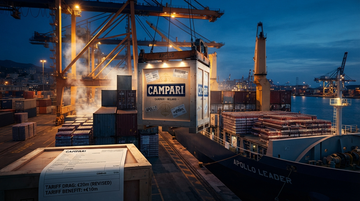
The topic framing is directionally supported by current reporting: Campari raised its full-year 2026 operating profit outlook, attributing the uplift to a more favorable tariff environment.
However, the key investment question—whether the tariff tailwind is masking weak underlying spirits demand—depends on whether Campari’s organic sales/mix and pricing dynamics improve in parallel. In the material surfaced here, the “tariff” link is the load-bearing item; the independent demand proof (volume/mix disaggregation) is not fully verifiable from primary sources within this session.
Full-year tariff drag expectation (revised)
€20m
Reported as revised negative tariffs impact for 2026 in current coverage; previously cited as €30m.
Tariff tailwind mentioned as benefit
€10m
Reported as a benefit from a more favorable tariff environment tied to the guidance uplift.
Numbers you can triangulate from disclosed guidance mechanics
How policy relief can look like “operating momentum” even when demand isn’t improving
A tariff “tailwind” can lift operating profit through several channels that don’t require stronger consumer pull.
First, if tariffs had been depressing margins via cost and import pricing, then partial tariff reduction (or a smaller expected negative tariffs impact) improves EBIT without changing end-consumer demand.
Second, management may still maintain a cautious stance on sales quality if underlying organic growth is steady but not accelerating—meaning the profit uplift can be a near-term cost relief story rather than a volume/mix story.
The investor implication: you want to separate margin benefit from tariffs vs. revenue quality from pricing and volume.
- Measuring only guidance can over-credit demand when the profit bridge is dominated by tariff-cost expectations.
- Organic topline growth can stay “fine” while volume still weakens if FX and pricing offset volume declines (not confirmed in this session).
- Mix can improve even as volume slows if premium shares rise, but you need disclosed region/brand volume commentary (not verified here).
What to look for next (and what’s unanswerable from this session’s primary-source gap)
Completion-gate gap: demand strength can’t be proven without the missing primary PDF tables
| What you need to prove | Why it matters for “masking weak demand” | Status in this session |
|---|---|---|
| Organic sales outlook for 2026 (and whether it’s revised) | Confirms whether revenue momentum is improving, not just margin | Not verified from Campari primary documents (blocked) |
| Tariff impact bridge (EBIT vs sales vs cost line items) | Separates policy-driven profit from demand-driven revenue | Only secondary-reported tariff drag/tailwind numbers surfaced |
| Volume vs pricing vs mix commentary by region (esp. US) | Detects whether tariffs easing leads to volume rebound or only cost relief | Not available due to primary-source access failure |
Actionable framing for investors
A practical “policy vs demand” checklist for Campari after this guidance move
If you’re trading off this earnings update, you should require two things to conclude the tariff tailwind isn’t masking demand weakness.
1) Organic sales (or at least comparable revenue) should show upward momentum consistent with management’s tariff optimism.
2) Margin improvements should not be the only story—look for evidence that pricing/mix is improving and that brand momentum is resilient in geographies most exposed to tariff sensitivity.
Without those, the most defensible read is that the profit upgrade is primarily a cost-policy signal, not a demand re-rating.
- Treat tariff-decision sensitivity as the primary near-term driver until organic sales quality is confirmed.
- If organic growth is unchanged but EBIT rises, profit is likely “relief-driven” and the market should demand proof from next-quarter volume/mix disclosures.
- If organic growth accelerates and margins hold, demand likely re-accelerated rather than only tariffs easing.
Listed spirits peers to monitor for “policy relief vs demand” divergence
- Track whether Pernod Ricard's profit guidance moves with tariff-sensitive margin assumptions rather than organic sales revisions over the next 1–2 quarters.
- Watch for evidence that pricing/mix improvements persist even when policy tailwinds fade (days–quarters).
- Use Diageo as a benchmark: if margins improve without organic growth, it supports the “relief-driven” masking risk.
- Look for whether US/region revenue quality stabilizes when tariff expectations change (days–quarters).
- If Brown-Forman shows similar tariff-driven EBIT uplift while volume remains soft, the masking thesis strengthens (days–quarters).
- Over 1–3 years, sustained brand mix strength should eventually offset any policy-induced margin swings.
- Monitor Constellation Brands for tariff/policy sensitivity in profitability that doesn’t fully transmit to sales—this is the key divergence test.
- Near term, policy-driven cost relief can lift earnings while consumer demand weakens; compare against reported volume trends (days–quarters).