%22%2F%3E%0A%20%20%3Ccircle%20cx%3D%22220%22%20cy%3D%22150%22%20r%3D%22180%22%20fill%3D%22%2322d3ee%22%20fill-opacity%3D%220.12%22%2F%3E%0A%20%20%3Ccircle%20cx%3D%221010%22%20cy%3D%22130%22%20r%3D%22220%22%20fill%3D%22%2338bdf8%22%20fill-opacity%3D%220.08%22%2F%3E%0A%20%20%3Ccircle%20cx%3D%22920%22%20cy%3D%22520%22%20r%3D%22170%22%20fill%3D%22%2322d3ee%22%20fill-opacity%3D%220.06%22%2F%3E%0A%20%20%3Cpath%20d%3D%22M140%20430h920%22%20stroke%3D%22url(%23line)%22%20stroke-width%3D%2212%22%20stroke-linecap%3D%22round%22%2F%3E%0A%20%20%3Cpath%20d%3D%22M220%20360c120-150%20260-220%20380-220s260%2070%20380%20220%22%20fill%3D%22none%22%20stroke%3D%22%2367e8f9%22%20stroke-opacity%3D%220.5%22%20stroke-width%3D%2216%22%20stroke-linecap%3D%22round%22%20stroke-linejoin%3D%22round%22%2F%3E%0A%20%20%3Cpath%20d%3D%22M300%20398h600%22%20stroke%3D%22%2394a3b8%22%20stroke-opacity%3D%220.24%22%20stroke-width%3D%228%22%20stroke-linecap%3D%22round%22%2F%3E%0A%20%20%3Ctext%20x%3D%22220%22%20y%3D%22510%22%20fill%3D%22%23e2e8f0%22%20fill-opacity%3D%220.7%22%20font-family%3D%22Arial%2C%20Helvetica%2C%20sans-serif%22%20font-size%3D%2238%22%20letter-spacing%3D%228%22%3EINSIGHTS%3C%2Ftext%3E%0A%3C%2Fsvg%3E)
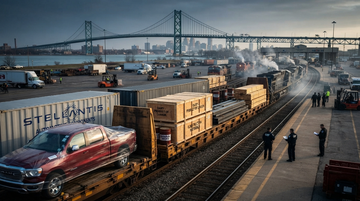
Policy that moves markets in hours
A midnight cliff turned into a three-day bridge—before investors could fully price the tariff shock
The key event is straightforward: the U.S. paused the implementation of 50% tariffs on a range of Canadian goods for three days, announced less than two hours before the scheduled start at 12:01 a.m. ET.
That matters because tariff-related positioning tends to “front-run” headline implementation. Even when final details aren’t yet locked, traders and investors typically discount the probability-weighted impact of higher landed costs, supply re-routing, and customer behavior change—so a fast pause creates the mechanical conditions for an unwind.
What was being paused (and why it mattered)
The pause targeted three classic pressure points: motor vehicles, dairy, and alcohol
Before the pause, the U.S. had used Section 338 to impose additional 50% tariffs through three separate actions covering motor vehicles, alcoholic beverages, and dairy, signed July 20, 2026.
The legal effect timing was built around the “30 days after signing” rule, which sets up the expected August 19, 2026 start window. When a cliff like that gets delayed at the last minute, the market’s first-order repricing typically happens along two dimensions: (1) whether near-term shipments face the tariff, and (2) whether downstream pricing and inventory strategies already moved.
Supply-chain unwind mechanics
Unwind risk is concentrated where contracts, inventory cycles, and pricing power lag headline implementation
In practice, investors should expect the unwind to concentrate in sectors where the tariff transmission is fast enough to cause positioning whiplash, but slow enough that actual physical flow changes can’t instantly “undo” after a pause.
That combination is most plausible for:
- Autos (cross-border vehicle flows and incentives, plus short planning cycles for volume allocation and dealer channels)
- Dairy and alcohol (inventory and import timing, with downstream buyers able to shift sourcing during a brief delay)
- Construction materials (if the tariff headline is broad enough to affect project bids and material sourcing calendars, even when pass-through is delayed)
The evidence on the pause itself confirms the timing trigger; the sector impact timing then becomes an investor question: which companies have enough inventory/contract flexibility to reverse the discount quickly versus those with slower repricing.
Investor focus: what gets repriced first
Short-term winners from the unwind are those with tariff exposure that is “time-sensitive,” not “structural”
- Autos: companies with meaningful North America volume can see near-term gross margin relief if buyers delay purchases and then resume without absorbing tariff-only landed-cost increases.
- Dairy: processors with diversified product lines can benefit if import timing resets, limiting immediate tariff-bearing inventory write-downs or cost pass-through penalties.
- Alcohol: brand owners and distributors can regain channel confidence if wholesalers can refill without repricing the shelf price for tariff-boosted costs.
- Construction materials: distributors and heavy-material suppliers can see order-book volatility fall if project bids stop pricing in tariff-induced input inflation during the pause window.
One caution: this is an unwind of a policy shock, not the end of trade friction. Even if the pause reverses the immediate “tariff hit” discount, the market may start charging a new premium for policy unpredictability—especially when the timeline can shift again in days.
Anchor companies and what their financial capacity implies
Balance-sheet strength sets how long companies can absorb tariff volatility
Stellantis revenue
€153.5B
FY2025, reported Feb 26, 2026
Stellantis cash & short-term investments
€31.3B
FY2025 balance sheet, reported Feb 26, 2026
Ford revenue
Not used
Current build: Ford financials were not successfully retrieved for FY in this run
Saputo revenue
C$19.1B
FY2025 (ending Mar 31, 2025), filed Mar 31, 2025
Constellation revenue
$9.1B
FY2025 (ending Feb 28, 2025), filed Apr 22, 2026
Martin Marietta revenue
$6.5B
FY2025 (ending Dec 31, 2025), filed Feb 19, 2026
The investor relevance is simple: capacity to weather a policy-driven volume or margin swing depends on cash generation and balance-sheet liquidity.
For example, Stellantis shows €31.3B in cash and short-term investments on its FY2025 balance sheet, which provides breathing room if the market’s near-term unwind is followed by renewed tariff uncertainty.
Causal chain for the “unwind” trade
Why a 3-day pause changes valuation faster than fundamentals
The unwind trade is primarily timing and positioning, not a change in underlying demand.
Causal chain investors can model: 1) Tariff implementation timing shifts from “imminent cost increase” to “delayed cost increase.” 2) That reduces the probability of tariff-bearing landed costs in the earliest import windows. 3) Inventory and channel planning recalibrates—buyers postpone risk-pessimistic orders and resume “normal” procurement when the tariff certainty drops. 4) Equity markets reprice the discount embedded in gross margin and volume risk faster than earnings fundamentals can update.
The pause’s short duration is the twist: even if financial results don’t change yet, the policy-risk premium can change immediately—and it can also re-expand quickly if the pause ends without a durable resolution.
What to watch next (two horizons)
The market will separate “temporary relief” from “repeat-policy-risk” within days
| Time horizon | What happens next | Market signal to track |
|---|---|---|
| Days–2 weeks | Guidance on whether tariffs re-start and when final documents take effect | Whether transport/import windows show tariff-bearing entries in practice |
| Days–4 weeks | Revisions to sector price-in and margin-in assumptions | Whether analysts roll back gross margin “tariff cost” scenarios |
| 1–3 years | Durability of the “deal” and any tariff carve-outs | Whether policy risk embeds permanently into multiples and capex choices |
Tradeable implications across the supply chain
Upstream and downstream beneficiaries shift as the tariff discount unwinds
For the sectors cited in the event framing, a practical way to invest the unwind is to track where discounting was likely to be most aggressive.
Downstream channels (dealers, wholesalers, and importers) benefit when immediate tariff certainty falls because they can reduce hedging intensity and re-plan procurement.
Upstream production faces a different question: can production cut back or re-route quickly enough to avoid margin volatility? Where the supply chain can’t re-route instantly, the unwind should still help—but the full relief may lag.
Listed stocks most connected to the pause-driven unwind
- Unwind can trim near-term tariff probability for North America volume assumptions when buyers delay tariff-bearing procurement.
- FY2025 cash liquidity supports margin volatility absorption if tariff uncertainty returns after the pause window ends.
- If renewed escalation follows, the market can re-penalize valuation on policy risk before production data updates.
- A tariff pause can stabilize dairy import timing, lowering the chance of immediate tariff-induced landed-cost shocks to processed products.
- FY2025 revenue scale gives room to manage pricing and mix while channel buyers recalibrate their inventories.
- If the tariff restarts quickly, Saputo can face renewed margin pressure until contracts and customer pricing adjust.
- Unwind can reduce channel fear in spirits/wine supply by removing short-term tariff certainty for Canadian-origin shipments.
- FY2025 revenue base supports operating cash buffering if temporary volatility fades but policy risk persists.
- A renewed escalation can trigger re-pricing of shelf-price pass-through within the next tariff cycle.
- If construction-materials bid assumptions were pulled forward by tariff headlines, a pause can cool order-book discounting quickly.
- FY2025 scale limits impairment risk, but policy uncertainty can delay customer project decisions.
- The key near-term signal is whether bid activity rises after the pause ends by the next project scheduling window.