%22%2F%3E%0A%20%20%3Ccircle%20cx%3D%22220%22%20cy%3D%22150%22%20r%3D%22180%22%20fill%3D%22%2322d3ee%22%20fill-opacity%3D%220.12%22%2F%3E%0A%20%20%3Ccircle%20cx%3D%221010%22%20cy%3D%22130%22%20r%3D%22220%22%20fill%3D%22%2338bdf8%22%20fill-opacity%3D%220.08%22%2F%3E%0A%20%20%3Ccircle%20cx%3D%22920%22%20cy%3D%22520%22%20r%3D%22170%22%20fill%3D%22%2322d3ee%22%20fill-opacity%3D%220.06%22%2F%3E%0A%20%20%3Cpath%20d%3D%22M140%20430h920%22%20stroke%3D%22url(%23line)%22%20stroke-width%3D%2212%22%20stroke-linecap%3D%22round%22%2F%3E%0A%20%20%3Cpath%20d%3D%22M220%20360c120-150%20260-220%20380-220s260%2070%20380%20220%22%20fill%3D%22none%22%20stroke%3D%22%2367e8f9%22%20stroke-opacity%3D%220.5%22%20stroke-width%3D%2216%22%20stroke-linecap%3D%22round%22%20stroke-linejoin%3D%22round%22%2F%3E%0A%20%20%3Cpath%20d%3D%22M300%20398h600%22%20stroke%3D%22%2394a3b8%22%20stroke-opacity%3D%220.24%22%20stroke-width%3D%228%22%20stroke-linecap%3D%22round%22%2F%3E%0A%20%20%3Ctext%20x%3D%22220%22%20y%3D%22510%22%20fill%3D%22%23e2e8f0%22%20fill-opacity%3D%220.7%22%20font-family%3D%22Arial%2C%20Helvetica%2C%20sans-serif%22%20font-size%3D%2238%22%20letter-spacing%3D%228%22%3EINSIGHTS%3C%2Ftext%3E%0A%3C%2Fsvg%3E)
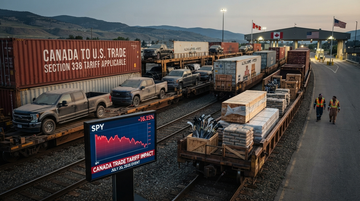
Event
July 20, 2026
Trump signs 3 Section 338 proclamations targeting Canada
Tariff rate
50%
Additional duty imposed on covered Canadian goods
Covered trade value (scope)
~$20B
Approximate value of Canadian goods subject to tariffs
Effective timing
30 days
Tariffs take effect 30 days after signing
USMCA treatment
Applies anyway
Tariffs are described as applying regardless of USMCA status
What happened
A 50% Section 338 tariff on ~$20B of Canadian goods is a “cross-agreement” trade shock designed to bypass USMCA comfort blankets
On July 20, 2026, President Trump signed three proclamations under Section 338 of the Tariff Act of 1930 imposing a 50% tariff on approximately $20B of Canadian goods. The White House says the tariffs take effect in 30 days and apply regardless of USMCA status, while carving out exemptions (notably energy, potash, fish, Section 232-covered products, and critical minerals).
| Category | Examples mentioned in the official White House fact sheet | Economic channel |
|---|---|---|
| Autos / motor vehicles | Motor vehicles / autos | Dealer pricing + parts supply chain |
| Alcohol | Wine, spirits, beer | Retail price and on-trade/off-trade demand |
| Food / dairy | Dairy | Grocery pricing + processing inputs |
| Construction materials | Cement, lumber | Homebuilding / remodel demand + contractor costs |
| Consumer specialties | Hockey sticks | Seasonal discretionary demand |
| Exemption listed by the White House | Why it matters to markets (in plain terms) |
|---|---|
| Energy | Reduces immediate risk of energy-price blowback |
| Potash | Limits impact on fertilizer inputs and crop-cost pass-through |
| Fish | Avoids a targeted hit to a politically salient sector |
| Products already subject to Section 232 tariffs | Prevents stacking duties where a separate national-security basis already exists |
| Critical minerals | Keeps pressure off strategic input chains (and reduces retaliation risk on upstream industrial bottlenecks) |
Load-bearing event facts (from primary source)
Tariff rate
50%
Additional duty in the Section 338 proclamations
Scope (value)
~$20B
Approximate value of covered Canadian goods
Effective date
30 days after July 20, 2026
Time to clear the first round of inventory/contract renegotiations
USMCA
Does not matter
Applies regardless of USMCA status, per the fact sheet
Why it matters to supply chains
The tariff hits “logistics-to-shelf” chains where re-routing is slow, not fast—and that’s why the impact will show up in wholesale margins first
The list of affected goods (autos, alcohol, dairy, cement, lumber, hockey sticks) spans products that move through multiple handoffs: ports/importers → distributors/wholesalers → processors → retailers/dealers. When you impose a large ad valorem tariff on imports, the first measurable effect is often not consumer demand collapsing instantly—it’s wholesalers and importers absorbing higher landed costs while they renegotiate pricing and contracts.
- Autos: a 50% duty on motor vehicles changes the landed cost for dealers and can delay new-vehicle turn if pricing cannot adjust immediately.
- Alcohol + dairy: high tariff rates on specific categories push distributors to mix-and-match sourcing (domestic/other-country), but reformulating menus and rotating stock is slower than swapping commodity inputs.
- Construction materials (cement, lumber): even where final consumers can switch suppliers, contractors face bid re-pricing cycles; those lagged cycles often show up as margin pressure before volume declines.
| Step | What changes when tariffs start | Where margin pressure lands first |
|---|---|---|
| 1) Landed cost | 50% tariff increases customs cost at entry | Importer/distributor margin compression |
| 2) Contract lag | Pricing and rebate terms often renew monthly/quarterly | Wholesale gross margin squeeze during renegotiation |
| 3) Inventory behavior | Businesses adjust reorder timing to avoid paying duties repeatedly on near-term inventory | Production schedules / replenishment reduce demand visibility |
| 4) Retail/dealer pass-through | Higher shelf/pricing takes time, especially for alcohol and grocery categories | Consumer price effects follow after B2B repricing |
The “quant math” the market will trade
Two cited import declines imply the market already expected trade friction—so the new tariff raises the bar from “slowing” to “reversal risk”
The White House cites prior trade declines to justify the action. Those declines matter because they suggest behavior had already shifted—so the 50% tariff is not entering a stable equilibrium. It may accelerate a move away from Canadian inputs/finished goods or toward non-Canada sourcing.
| Targeted category | Reported decline cited | Period (as stated) | Dollar magnitude cited |
|---|---|---|---|
| Motor vehicles | ~22% drop in Canadian imports of U.S. vehicles | April 2025 to March 2026 vs. prior-year comparable | ~$5.6B |
| Alcoholic beverages | ~81% drop in Canadian imports of U.S. alcoholic beverages | March 2025 to February 2026 vs. prior-year comparable | ~$582M |
Equity implications by supply-chain neighborhood
If you’re investing around this tariff, don’t anchor on “Canadian exporters”—anchor on US importers’ margin risk, then map beneficiaries from cost dispersion and substitution
- Potential victims: US retailers/wholesalers and branded sellers with meaningful Canadian import flows in autos, alcohol, dairy, and certain construction categories—because tariff pass-through is imperfect at first.
- Potential beneficiaries: companies that can substitute away from Canada with minimal re-engineering (domestic production or alternate import origins), and firms with pricing power in categories where consumers keep buying despite higher prices.
- Second-order market effects: logistics and working-capital changes (inventory decisions and customs frequency) can show up as cash conversion headwinds even when revenue is delayed.
| Category linked to tariff list | Example listed US company to monitor | What to watch in filings/earnings |
|---|---|---|
| Autos / motor vehicles | Ford Motor Company | Crossover effects in pricing, North America inventory/turn, and margin sensitivity to sourcing costs |
| Autos (parts + dealer demand sensitivity) | General Motors Company | Retail demand resilience vs. price moves; any commentary on substitution away from Canadian inputs |
| Alcohol (beer/wine/spirits distribution sensitivity) | Constellation Brands Inc. Class A | Gross margin and volume commentary in beers/wines/spirits channels; supplier-country mix changes |
| Alcohol (spirits) | Diageo plc (ADR) | Pricing/pass-through and distributor inventory behavior |
| Home improvement / construction demand & materials channel | The Home Depot, Inc. | Customer traffic and remodel/build pricing elasticity; supplier-cost pass-through |
Fundamental context (listed-company baseline)
Some of the most tariff-sensitive “touchpoint” companies have strong recent operating scale—so the stock move will likely be about incremental margin durability, not survival
| Company | FY revenue (latest available in tool data) | Source window |
|---|---|---|
| Ford Motor Company | $161,587,000,000 (cost of revenue shown in dataset; revenue not separately shown for this row—see income statement source list) | FY 2024 annual dataset |
| General Motors Company | $187,442,000,000 | FY 2024 annual dataset |
| Constellation Brands Inc. Class A | $9,961,900,000 | FY 2023 annual dataset |
| Diageo plc (ADR) | $15,710,000,000 | FY 2024 annual dataset |
| The Home Depot, Inc. | $152,669,000,000 | FY 2023 annual dataset |
Because tariff pass-through is rarely immediate and full, the more revealing metric than revenue is often gross margin sensitivity and operating leverage. The market will likely ask: can pricing and sourcing changes offset landed-cost increases within one or two quarters?
Gross profit baseline (latest annual in tool data) for selected touchpoints—tariff risk is leverage on this base
Gross profit from the financial data tool’s income statement outputs (currency as reported).
Unit: USD (as-reported in tool output)
General Motors Company gross profit
32,605,000,000
Diageo plc (ADR) gross profit
4,909,500,000
Constellation Brands Inc. Class A gross profit
Gross profit shown in dataset currency/scale
4,533,400,000
The Home Depot, Inc. gross profit
27,127,000,000
Ford Motor Company gross profit
23,405,000,000
What to verify next (because tariff exposure is customs-code specific)
The investable question is not “do these firms sell in the US”—it’s “which customs-code basket do they import from Canada, and how quickly can they substitute?”
- Confirm whether the firm’s import volumes involve the exact covered categories (autos, wine/spirits/beer, dairy, cement, lumber, hockey sticks) and the origins are indeed Canada.
- Check commentary on sourcing diversification and supplier-country switching timelines (often visible in margin bridge and working-capital discussion).
- Look for signs of demand elasticity: if consumers delay purchases (especially autos and construction materials), revenue can lag while fixed costs keep flowing.
If you want an early signal, the first earnings call after the 30-day effective window is where guidance language matters most: whether management frames impacts as one-time price/margin timing vs. lasting volume destruction.
Long-term view and risk matrix
Over 1–3 years, the bigger risk is not only higher costs—it’s a persistent fragmentation of North American trade rules and supply planning
- Base case (incremental, 1–2 quarters): pricing and contract renegotiations; margin volatility; inventory timing distortions.
- Medium case (1–3 years): more “country-of-origin” hedging in procurement, plus re-routing of sourcing away from Canada in covered baskets.
- Upside scenario: negotiations soften or exemptions expand; substitution costs fade.
- Downside scenario: tit-for-tat expansion increases the number of customs-code baskets and reduces substitution options; margin durability worsens.