%22%2F%3E%0A%20%20%3Ccircle%20cx%3D%22220%22%20cy%3D%22150%22%20r%3D%22180%22%20fill%3D%22%2322d3ee%22%20fill-opacity%3D%220.12%22%2F%3E%0A%20%20%3Ccircle%20cx%3D%221010%22%20cy%3D%22130%22%20r%3D%22220%22%20fill%3D%22%2338bdf8%22%20fill-opacity%3D%220.08%22%2F%3E%0A%20%20%3Ccircle%20cx%3D%22920%22%20cy%3D%22520%22%20r%3D%22170%22%20fill%3D%22%2322d3ee%22%20fill-opacity%3D%220.06%22%2F%3E%0A%20%20%3Cpath%20d%3D%22M140%20430h920%22%20stroke%3D%22url(%23line)%22%20stroke-width%3D%2212%22%20stroke-linecap%3D%22round%22%2F%3E%0A%20%20%3Cpath%20d%3D%22M220%20360c120-150%20260-220%20380-220s260%2070%20380%20220%22%20fill%3D%22none%22%20stroke%3D%22%2367e8f9%22%20stroke-opacity%3D%220.5%22%20stroke-width%3D%2216%22%20stroke-linecap%3D%22round%22%20stroke-linejoin%3D%22round%22%2F%3E%0A%20%20%3Cpath%20d%3D%22M300%20398h600%22%20stroke%3D%22%2394a3b8%22%20stroke-opacity%3D%220.24%22%20stroke-width%3D%228%22%20stroke-linecap%3D%22round%22%2F%3E%0A%20%20%3Ctext%20x%3D%22220%22%20y%3D%22510%22%20fill%3D%22%23e2e8f0%22%20fill-opacity%3D%220.7%22%20font-family%3D%22Arial%2C%20Helvetica%2C%20sans-serif%22%20font-size%3D%2238%22%20letter-spacing%3D%228%22%3EINSIGHTS%3C%2Ftext%3E%0A%3C%2Fsvg%3E)
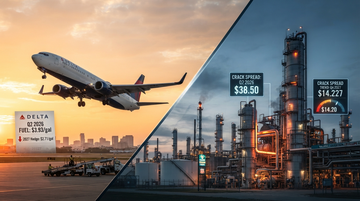
On a Steve Bannon interview that aired Friday, September 4, 2026, Treasury Secretary Scott Bessent made the most explicit oil-and-rates call of his tenure: once the U.S.–Iran war ends, \"we're going to be very much oversupplied in the oil market… we can see $50, $40 crude maybe, just because there's so much coming online.\" He paired that with a structural claim — that 10-year yields are showing \"the highest correlation they've ever had to the oil price\" — and a directional bet: when oil falls, yields fall with it. The forecast lands directly on top of the most asymmetric two-quarter setup energy markets have produced in years.
Bessent's post-Iran oil target
$40–$50/bbl
Stated on Bannon interview, aired Sep 4, 2026; framed as oversupply-driven
Brent crude, Sep 4, 2026
~$95.75/bbl
Up ~47% since the Iran war began Feb 28, 2026
WTI crude, Sep 4, 2026
~$91.69/bbl
Up ~21% over the prior month
10-year Treasury yield, Sep 4, 2026
4.79%
Highest since November 2023; touched 4.818% intraday Sep 2
U.S. retail diesel, Sep 2026
$5.85/gal
vs. $3.71 a year earlier (AAA)
DXY dollar index, Sep 4, 2026
99.16
Down from ~101.80 June 2026 high
EIA STEO Brent forecast, 2027
$69/bbl avg
STEO published Aug 11, 2026; assumes production recovery by early 2027
3-2-1 crack spread, Jul 8, 2026 record
$64.58/bbl
vs. ~$15–25/bbl in 2023–2024 normalization
The mechanism: $40 is a supply story, not a demand story
Scott Bessent's $40 number rests on a specific supply pipeline, not a recession call. The Iran war, which began February 28, 2026, removed roughly 2.6 billion barrels from the global market, drove Brent to nearly $120/bbl at its peak, and forced emergency strategic-reserve releases. Bessent is betting that as soon as Iranian output returns and Strait of Hormuz flows normalize, that missing supply lands on a market that was already structurally long — and does so into a demand environment where global growth has been clipped by the same war.
The EIA's Short-Term Energy Outlook, published August 11, 2026, is now in the same camp. It forecasts Brent averaging $69/bbl in 2027 as inventories rebuild and \"most crude oil production in the Middle East returns to near pre-conflict averages in early 2027,\" with only ~0.6 million bpd of persistent disruption through end-2027. Bessent's $40 figure sits below the EIA's official curve, but it converges with the directional view: oversupply, not undersupply, is the 2027 base case.
The yield linkage: why a Treasury Secretary is talking about oil
The unusual move in Bessent's framing is the explicit yield channel. The 10-year Treasury touched 4.818% on September 2, 2026 — the highest level since November 2023 — and the 30-year briefly cleared 5.28%. Bessent had previously said he wanted the 10-year to have a \"3 handle,\" meaning below 4%. With the 10-year roughly 80 basis points above that target and a $40 trillion federal debt load compounding, the fiscal cost of sustained elevated yields is what makes the oil call macro-relevant rather than purely a commodity forecast.
- Bessent's claimed oil-yield correlation is the central policy lever: if oil normalizes to $40–$50 and headline CPI energy follows, breakevens compress and the Fed gains cover to cut without validating inflation.
- Norway's sovereign wealth fund has separately proposed trimming U.S. Treasury holdings by an estimated $75 billion, a separate demand-side headwind Bessent cannot offset with oil commentary.
- CME FedWatch shows traders pricing a 58% chance of a Fed rate hike at the September meeting — a hawkish setup Bessent's oil thesis is explicitly designed to neutralize.
Airlines: the setup is brutal in the rear-view, cleanest in 2027
Q2 2026 was the worst fuel-cost quarter the U.S. airline industry has printed in modern history. Every major carrier absorbed a $4/gal jet bill while operating structurally on roughly 1–2% capacity growth, which means there was almost no volume offset to the price shock. If Scott Bessent's oil call is right, the pain peaks in Q2 and Q3 2026 — and 2027 starts with jet fuel at a multi-year low, against capacity that the same carriers are now restoring.
| Carrier | Avg fuel cost ($/gal) | YoY change | Q2 fuel expense | YoY change |
|---|---|---|---|---|
| Delta Air Lines (DAL) | $3.93 adj. | +75% | $4.4B | +77% |
| American Airlines (AAL) | ~$3.75 | n/d | +$2.2B | +83% |
| JetBlue (JBLU) | $4.23 | +81% | $911M | +80.7% |
| United Airlines (UAL) | n/d (record) | up sharply | n/d | n/d |
| 5-carrier industry total | — | — | +$8B | +~80% |
The hedge book is the cleanest tell. Delta Air Lines entered Q2 with ~45% of second-half 2026 fuel hedged at $2.71/gal versus a spot price around $2.92 — a roughly 7% structural edge on half its remaining fuel bill. If Bessent's $40–$50 crude call lands, the unhedged portion resets into 2027 at materially lower strip pricing, while the existing hedges continue to monetize. The asymmetry is hard to overstate: airlines took the Q2 hit, but they have not yet booked the corresponding 2027 relief.
Refiners: the trade that worked brilliantly in Q2 is the trade that breaks next
Refiners have been the single best-performing equity pocket of 2026, and the reason is mechanical, not speculative. With crude oil flowing at restricted levels but global demand for diesel, gasoline and jet fuel still running, the spread between input cost and finished-product price — the crack spread — blew out. The WTI 3-2-1 crack spread hit an all-time high of $64.58/bbl on July 8, 2026, breaking the previous June 2022 record near $60/bbl. Normal years: $15–$25/bbl.
U.S. refining margin snap-back from a $64 record
Refining & Marketing margin per barrel, Q2 2026 vs Q2 2025 — source: company Q2 2026 earnings releases
Unit: $ per barrel
Marathon Petroleum Q2 2025
Pre-Iran war baseline
17.6
Marathon Petroleum Q2 2026
More than 2x prior year
36.3
Valero Q2 2026 R&M adj. EBITDA
vs $6.79 a year earlier
24.8
Marathon Petroleum's Q2 2026 R&M margin doubled to $36.33/bbl from $17.58 a year earlier, Valero Energy's adjusted R&M EBITDA jumped to $24.84/bbl from $6.79, and Phillips 66 and PBF Energy reported similar step-changes. The three largest independent U.S. refiners collectively earned roughly $12.6 billion in Q2 2026, and Marathon Petroleum alone returned $2.8 billion to shareholders in the quarter. Year-to-date, Marathon Petroleum, Valero Energy and HF Sinclair have each gained 80% to 100%+ against an S&P 500 up roughly 11%.
Now read Scott Bessent's call through a refiner's P&L. Two things happen at $40–$50 crude. First, the denominator shrinks: cheaper crude is mechanically a tailwind for input costs, but only if product prices stay where they are. Second — and this is the part that breaks the trade — product prices will not stay where they are. If crude falls because the war ends and supply normalizes, refined-product supply also normalizes, and the crack spread compresses. Marathon Petroleum at a normalized $18–$22/bbl R&M margin on roughly 2.9 million bpd of capacity is a very different earnings stream than the $36.33/bbl it just printed.
Upstream and the dollar: the third leg of the trade
Upstream is the obvious victim and the easiest to misprice. Exxon Mobil earned $14.5 billion in Q2 2026 with the help of a $4.10 billion Energy Products segment result and timing-driven refining gains of roughly $2.6 billion — the integrated giant benefits when crude is high but is more leveraged to volume and capital returns than pure-play refiners are to crack spreads. At Bessent's $40–$50 oil, Exxon Mobil's upstream earnings power contracts materially; the offset is that its Permian and Guyana volumes become cheaper to produce relative to a normalized price deck, and its downstream chemicals business gets a cheaper feedstock.
The dollar channel cuts the opposite way. The DXY has weakened from roughly 101.80 in late June 2026 to 99.16 on September 4. A meaningful oil-price drop tends to weaken the dollar further by widening the U.S. current-account deficit at the margin and reducing inflation pass-through. That is part of why Scott Bessent is making the call from the Treasury podium rather than from a commodity desk — a weaker dollar partly pays for the fiscal relief of lower oil, even as it raises the political cost of a cheaper import bill for U.S. allies financing the dollar system.
Short- and long-term: what moves first, what to watch
- Days to quarters: the trade that activates first is refiner mean-reversion — any de-escalation headline around Iran compresses crack spreads before it moves crude, and Marathon Petroleum, Valero Energy, Phillips 66 and PBF Energy carry the bulk of the downside risk.
- Days to quarters: airlines are the asymmetric upside — Q3 earnings calls in October will reset 2027 fuel guidance, and Delta Air Lines's 45%-hedged H2 2026 fuel book plus JetBlue's fare-recovery levers mean even a partial normalization delivers material margin relief.
- One to three years: Bessent's call implies a 2027 Brent in the $40–$50 zone, which if realized would structurally lower headline CPI energy, ease 10-year yields, and create a Fed-cut window — a setup that benefits high-quality duration assets and broadens beyond energy.
- Main risk to the thesis: Iran's response to any settlement and the pace of restored supply; OPEC+ spare capacity is currently thin, which means a sudden peace deal could overshoot, but a contested end-state could leave oil elevated for years.
Stocks most directly exposed to Bessent's $40 oil call
- Q2 2026 fuel expense jumped 77% YoY to $4.4B at $3.93/gal — Bessent's $40–$50 call would mechanically reset 2027 fuel toward $2.50–$2.80/gal and restore ~$2.5B+ of annual margin.
- Already hedged 45% of H2 2026 fuel at $2.71/gal, locking in protection even before crude falls; unhedged portion benefits directly from strip repricing.
- Record $17.7B Q2 revenue on ~1% capacity growth means volume leverage into a fuel reset — operating margin expands without adding capacity or pricing risk.
- Q2 2026 fuel cost was a record absolute level and a key driver of the -17% YoY quarterly earnings decline Bessent's call would unwind.
- Forward P/E of ~6.95x already prices fuel stress; a $40–$50 Brent path into 2027 supports double-digit EPS upside versus current sell-side consensus.
- Capacity-led growth into a fuel-cost reset gives United Airlines the steepest operating leverage among the U.S. network carriers in the post-Iran window.
- Q2 2026 fuel expense up $2.2B YoY (+83%); American Airlines cut full-year EPS guidance to a -$0.65 loss to +$0.65 profit range on the fuel spike.
- At ~$13 share price against a $18.37 average analyst target, the equity already embeds a fuel-stress scenario; Bessent's call clears the headwind that has capped the multiple.
- Highest fuel-sensitivity among the big four because of older fleet and point-to-point exposure; cleanest beta to a $40 crude print.
- Q2 2026 R&M margin of $36.33/bbl (vs $17.58 a year earlier) more than doubled on a record 3-2-1 crack spread — Bessent's $40 path collapses that margin back toward the $18–$22 normalization range.
- Already up ~80–100% YTD versus an 11% S&P 500; mean reversion of the crack spread is the dominant 2027 risk to Marathon Petroleum's earnings stream.
- $2.8B returned to shareholders in Q2 2026 sets a high bar; share-buyback pace depends on crack-spread durability that Bessent's call explicitly erodes.
- Q2 2026 adjusted R&M EBITDA of $24.84/bbl (vs $6.79 a year earlier) is the most crack-spread-leveraged print of the major refiners; Bessent's $40 path would compress this toward mid-teens.
- At ~$370 share price the equity trades at a premium to historical refining multiples, implying the market still prices a non-normalized crack environment.
- Renewable diesel and ethanol segments cushion but do not offset a full crack-spread reversion — Valero Energy's stock has the most downside skew on a Bessent-validated $40 print.
- Q2 2026 earnings of $14.5B (EPS $3.48) include a $4.10B Energy Products result and ~$2.6B in timing-driven refining gains — Bessent's call hits the upstream more than the integrated earnings stream.
- Permian and Guyana volume growth cushions the upstream revenue impact; lower crude prices also cheapen chemicals feedstocks.
- Exxon Mobil is the cleanest 'cycle-insulated' name in the group — it gives up upstream margin but gains on cost-of-goods and on a more constructive Fed-cutting path.
- Q2 2026 earnings +345% YoY on crack-spread expansion; Bessent's $40 call would compress the Refining segment contribution that drove the print.
- Diversified midstream and chemicals businesses partially offset, but Phillips 66 remains the second-most-leveraged refiner in the group on a per-barrel basis.
- Higher dividend payout ratio (~28%) ties capital-return capacity to crack-spread durability that Bessent's forecast directly undermines.
- EV/EBITDA of ~3.96x makes PBF Energy look cheap, but the metric is anchored to a record crack-spread quarter Bessent's call would unwind.
- Pure-play refiner with no integrated upstream cushion — the cleanest short on a $40 crude print.
- Insider ownership ~14% signals management conviction in current margins; if the thesis breaks, the unwind in PBF Energy would be among the steepest in the U.S. refining group.