%22%2F%3E%0A%20%20%3Ccircle%20cx%3D%22220%22%20cy%3D%22150%22%20r%3D%22180%22%20fill%3D%22%2322d3ee%22%20fill-opacity%3D%220.12%22%2F%3E%0A%20%20%3Ccircle%20cx%3D%221010%22%20cy%3D%22130%22%20r%3D%22220%22%20fill%3D%22%2338bdf8%22%20fill-opacity%3D%220.08%22%2F%3E%0A%20%20%3Ccircle%20cx%3D%22920%22%20cy%3D%22520%22%20r%3D%22170%22%20fill%3D%22%2322d3ee%22%20fill-opacity%3D%220.06%22%2F%3E%0A%20%20%3Cpath%20d%3D%22M140%20430h920%22%20stroke%3D%22url(%23line)%22%20stroke-width%3D%2212%22%20stroke-linecap%3D%22round%22%2F%3E%0A%20%20%3Cpath%20d%3D%22M220%20360c120-150%20260-220%20380-220s260%2070%20380%20220%22%20fill%3D%22none%22%20stroke%3D%22%2367e8f9%22%20stroke-opacity%3D%220.5%22%20stroke-width%3D%2216%22%20stroke-linecap%3D%22round%22%20stroke-linejoin%3D%22round%22%2F%3E%0A%20%20%3Cpath%20d%3D%22M300%20398h600%22%20stroke%3D%22%2394a3b8%22%20stroke-opacity%3D%220.24%22%20stroke-width%3D%228%22%20stroke-linecap%3D%22round%22%2F%3E%0A%20%20%3Ctext%20x%3D%22220%22%20y%3D%22510%22%20fill%3D%22%23e2e8f0%22%20fill-opacity%3D%220.7%22%20font-family%3D%22Arial%2C%20Helvetica%2C%20sans-serif%22%20font-size%3D%2238%22%20letter-spacing%3D%228%22%3EINSIGHTS%3C%2Ftext%3E%0A%3C%2Fsvg%3E)
Macro policy × energy risk
The oil shock is real—but Wall Street may be trading the time horizon more than the headline
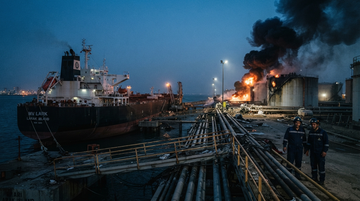
On Aug. 30, 2026, U.S. forces struck two launchers on Iran’s Larak Island in the Strait of Hormuz. The same escalation coincided with a meaningful push higher in oil: Brent moved back above $90 and traded up about 2%+ in the immediate aftermath.
But equities didn’t fully follow the energy move. The more investor-relevant question is not whether war risk is increasing—it is—but whether the market expects the disruption to be short-lived (more like a volatility bump) or persistent (more like an earnings recession event). When the market believes the “duration” is limited, it can look like equity-oil decoupling even if the causal shock is genuine.
Larak Island strike date
Aug 30, 2026
Reported alongside the oil move after U.S. forces struck two launchers on Iran’s Larak Island
Brent reaction
Up ~2% intraday
Brent climbed about 2%+ in the hours following the strike; the article also frames it as a move back toward/above $90
September hike probability
≈56%
Per CME FedWatch implied odds of a 25 bp hike by the September meeting
Verified event → confirmed mechanism
Mechanism: energy risk can lift inflation expectations, but equities care whether policy and earnings are forced to reprice together
A fresh strike in/near the Strait of Hormuz tightens the perceived tail risk around shipping, insurance, and short-horizon supply. Oil can respond quickly because those risks are priced immediately.
Equities, however, are usually less sensitive to the first oil uptick and more sensitive to whether that uptick forces:
- a sustained higher path for interest rates (policy duration), and/or
- a durable hit to consumption/industrial demand (earnings duration).
In the near term, the clearest policy read-through comes from Fed futures. Even as energy risk rises, FedWatch-style implied probabilities can shift more modestly than investors fear if inflation is expected to cool later or if the policy reaction function is already embedded.
| Channel | What the strike tends to do | What the pricing implies | Why it matters for equities |
|---|---|---|---|
| Energy risk premium | Pushes oil prices higher quickly | Market acknowledges the move | Supports energy-sector sentiment and inflation anxiety |
| Fed policy path | Could raise rate expectations if disruption looks persistent | Implied odds still sit at about a mid-50s probability for a September hike | If the odds don’t jump dramatically, equities discount less recession risk |
| Risk appetite / volatility | Can lift near-term uncertainty | Volatility stays relatively contained vs an “earnings shock” scenario | Equities can keep trading on growth/positioning instead of tail-risk repricing |
Supply chain lens
Full supply-chain awareness: the shipping and insurance legs can hurt first, while upstream price pass-through may be slower
A Hormuz-region event transmits through more than crude barrels. Even when physical barrels eventually flow, the logistics stack changes first:
1) shipping schedules and routing (time-to-deliver), 2) maritime insurance premiums (cost of risk), 3) near-term inventories and contract pricing (basis moves), and 4) downstream pass-through (how quickly gasoline/jet/freight costs reprice into consumer and business budgets).
That is why “oil up” does not automatically mean “equities down.” If the market believes inventories, contracting behavior, and hedging can smooth the impact, then earnings sensitivity is delayed. Delay matters: it preserves risk appetite until the market has evidence of sustained demand destruction.
- An escalation can raise the cost of disruption immediately, even if end-demand effects take longer to show up in earnings.
- If shipping and insurance impacts stay mostly contained to the spot horizon, the shock can look like a volatility event rather than a recession trigger.
- When Fed probabilities move less than oil, the market is signaling limited policy-duration pressure from the event.
Investor translation
So why are S&P futures and VIX behavior consistent with a “winning-month” narrative—if oil is back above $90?
Two interpretations can coexist:
- Correct de-correlation: equities may legitimately be focused on domestic growth, earnings revisions, and risk premia, while oil headlines are expected to mean-revert or be hedged.
- Complacency risk: markets can underreact early, then reprice if oil volatility persists long enough to reach policy and earnings simultaneously.
The evidence we can ground here is that policy pricing (FedWatch-style implied odds) is not screaming “major regime shift” after the escalation, even as oil moves sharply. That combination supports a world where equities can remain relatively calm while oil remains bid—until proven otherwise by inflation prints, shipping disruptions that persist, or a clear deterioration in credit/liquidity.
What to watch next (days → quarters, then 1–3 years)
Three horizons for confirmation: inflation prints, policy repricing, and sustained physical-market strain
- In the next days, watch for continued strength in Brent above the psychological $90 level alongside whether volatility stays contained.
- In the next 1–2 quarters, watch whether the Fed pricing moves materially higher after the next inflation and labor updates.
- Over 1–3 years, the key risk is whether repeated Hormuz disruptions raise the structural risk premium across energy, insurance, and shipping—turning headline shocks into persistent cost inflation.
Where this matters in public markets: energy exposure vs. macro sensitivity
- Higher crude can lift near-term cash generation for integrated majors like Exxon Mobil if margins hold through hedging and refining dynamics.
- If the oil bid persists, Exxon Mobil can benefit at the earnings line over subsequent quarters versus pure-play producers tied to narrower segments.