Policy & Trade
Tariffs, export controls, and who absorbs them
Rulings, sanctions and trade negotiations traced to the companies that pay for them — margin by margin, route by route.
2026-08-12
%22%2F%3E%0A%20%20%3Ccircle%20cx%3D%22220%22%20cy%3D%22150%22%20r%3D%22180%22%20fill%3D%22%2322d3ee%22%20fill-opacity%3D%220.12%22%2F%3E%0A%20%20%3Ccircle%20cx%3D%221010%22%20cy%3D%22130%22%20r%3D%22220%22%20fill%3D%22%2338bdf8%22%20fill-opacity%3D%220.08%22%2F%3E%0A%20%20%3Ccircle%20cx%3D%22920%22%20cy%3D%22520%22%20r%3D%22170%22%20fill%3D%22%2322d3ee%22%20fill-opacity%3D%220.06%22%2F%3E%0A%20%20%3Cpath%20d%3D%22M140%20430h920%22%20stroke%3D%22url(%23line)%22%20stroke-width%3D%2212%22%20stroke-linecap%3D%22round%22%2F%3E%0A%20%20%3Cpath%20d%3D%22M220%20360c120-150%20260-220%20380-220s260%2070%20380%20220%22%20fill%3D%22none%22%20stroke%3D%22%2367e8f9%22%20stroke-opacity%3D%220.5%22%20stroke-width%3D%2216%22%20stroke-linecap%3D%22round%22%20stroke-linejoin%3D%22round%22%2F%3E%0A%20%20%3Cpath%20d%3D%22M300%20398h600%22%20stroke%3D%22%2394a3b8%22%20stroke-opacity%3D%220.24%22%20stroke-width%3D%228%22%20stroke-linecap%3D%22round%22%2F%3E%0A%20%20%3Ctext%20x%3D%22220%22%20y%3D%22510%22%20fill%3D%22%23e2e8f0%22%20fill-opacity%3D%220.7%22%20font-family%3D%22Arial%2C%20Helvetica%2C%20sans-serif%22%20font-size%3D%2238%22%20letter-spacing%3D%228%22%3EINSIGHTS%3C%2Ftext%3E%0A%3C%2Fsvg%3E)
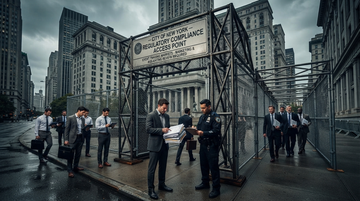
NYC’s Predatory-Marketing Probe Turns Prediction-Market Growth into a “Regulatory Gate” Business — and Favors Platforms with the Scale to Comply
New York City Council Speaker Julie Menin has launched an inquiry into Polymarket’s alleged predatory marketing practices and is asking the operator (and several peers named in the letter) to respond within 14 business days. The practical risk for listed crypto and event-trading intermediaries is that city-by-city marketing and age-gating rules can fragment “event-trading” demand, raising compliance costs faster than revenue—until a handful of incumbents can absorb the hit.

Trump’s capital-gains loss-offset idea could help “patient capital” win—and it’s a trap for high-turnover trading
If a Trump capital-gains plan were implemented in a way that effectively lets investors offset gains with prior losses without a practical end point, the biggest beneficiaries would be concentrated, buy-and-hold holders with large loss carryforwards. That transmission mechanism would likely favor Berkshire-like long-duration investors and reduce the tax-cost pressure that usually rewards active trading, leaving fast-turnover hedge strategies relatively more exposed.

United States Antimony just reset antimony pricing—and the stock is telling you who still gets paid at policy-linked levels
In its Q2 2026 reporting, United States Antimony disclosed a ~52% drop in average antimony selling prices to $13.70/lb and linked the reset directly to weaker spot pricing, cutting its full-year 2026 gross revenue guidance range. The key investor takeaway is not the commodity headline—it’s that the US mineral “policy premium” for the retail trade can vanish overnight when the embedded pricing formula reverts, creating a buyer/dislocation risk across the downstream defense/flame-retardant demand chain.
2026-08-11

Anthropic just made “AI text provenance” a product feature—and turned watermarking into a distribution moat
Anthropic says new Claude models released in the EU on/after Aug. 2, 2026 will embed imperceptible watermarks in generated text and add signed provenance metadata to supported files. That self-imposed compliance step shifts the “audit trail” burden from regulators to model providers, and it pressures competitors like OpenAI and Google to either match the feature or face a tightening compliance gap in enterprise procurement.
Prop 40’s billionaire-tax fight turns into an Alphabet-style capital-allocation test: can California still collect after capital “mobility” already cut the base?
California’s Proposition 40 would impose a one-time 5% tax on the worldwide net worth of qualifying billionaires, anchored to residency as of Jan. 1, 2026. The campaign against it—reportedly including Sergey Brin’s $100M+ ad push—and claims that “fled” billionaires could remove ~$27B of potential tax base raise the core market question: does the policy still work if the target population can move before collection year. For investors, the bigger signal is how quickly a state wealth-tax proposal forces ultra-liquid, globally diversified owners to re-optimize residency and liquidity—an outcome that changes both political odds and the expected timing of any capital return by major CA tech wealth holders such as Alphabet.

Hanwha’s $1.05B–$1.2B bid for Austal’s U.S. shipbuilding arm turns allied capital into a capacity lever
Hanwha Defense USA has made a preliminary, non-binding offer for Austal’s U.S. entities and operations valued at $1.05B–$1.2B (cash- and debt-free), and the next test is whether Korean execution can lift U.S. naval shipbuilding throughput without slowing qualification. For investors, the deal is less about “who builds ships” and more about whether allied ownership can compress the schedule-and-supply bottlenecks that have historically capped output.

Trump extended the Jones Act waiver—but the narrow “case-by-case” change shifts who benefits from US coastal fuel trade
The 90-day extension keeps foreign-flag ships eligible to move certain energy commodities between US ports, but it replaces blanket access with voyage-by-voyage review. That design reduces broad “market-wide” arbitrage benefits while still easing the specific shipping bottlenecks driving US fuel-cost pressure.

Section 230 Just Stopped Being a Shield: 9th Circuit Lets “Thousands” of Social‑Media Addiction Suits Proceed Against Meta, Alphabet and Snap
A 9th Circuit ruling removes a key procedural barrier—holding that Section 230 is a defense to liability, not a basis to shut the case down at the outset—so multistate addiction litigation can move toward bellwethers and force-shaping settlements. The earlier, court-backed numbers (Meta $6M federal/US jury verdict context and New Mexico’s $567M order) now sit behind a litigation pipeline measured in thousands, meaning legal reserves and “first-to-settle” leverage may reprice quickly.

Nebius’s Vineland delay risk just re-priced the “build-fast, rent-fast” AI-server trade
D.A. Davidson’s 30% cut to its Nebius price target—citing Vineland, New Jersey buildout delays that may not complete this year—spotlights a new failure mode for neocloud economics: infrastructure timing, not GPU demand, is what can break revenue ramps. With Nebius already framing long-duration GPU delivery tranches that can affect performance/credits, investors should expect second-order repricing risk across other AI-compute landlords when project timelines slip.

Netcapital's $14M revenue sham turns funding-portal compliance into a measurable earnings-risk haircut
On Aug 10, 2026, the SEC charged Netcapital and five executives with allegedly inflating nearly $14M of revenue via fake consulting agreements tied to John Fanning. For investors, the bigger change is policy-to-financial transmission: micro-cap funding-portal governance now directly determines whether “reported revenue” survives audit-grade scrutiny.
![RBC [ry], BMO [bmo] cash out of Moneris for $1.44B—and the Canadian acquirer gap shifts bargaining power toward US-scale acquirers and processors insight cover](https://images-1379091077.cos.na-ashburn.myqcloud.com/insights/covers/20260811_rbc_bmo_moneris_francisco_partners_1_44b_sale_360px.png)
RBC [ry], BMO [bmo] cash out of Moneris for $1.44B—and the Canadian acquirer gap shifts bargaining power toward US-scale acquirers and processors
RBC [ry] and BMO [bmo] are selling Moneris to Francisco Partners in a $1.44B deal, taking a major Canadian merchant-acquiring platform out of a captive bank model. The practical risk isn’t just ownership—it’s how acquiring capacity, routing strategy, and merchant pricing negotiate with Visa [v] / Mastercard [ma] and global processors once the local acquirer playbook is run by US PE-backed operators.

SEC exempted certain data-center securitizations—so the “ABS-like” buyer universe can expand overnight
A July 29, 2026 SEC staff determination says certain data-center securitizations are not “asset-backed securities” under Exchange Act §3(a)(79), removing a stack of ABS-specific disclosure and risk-retention requirements. For AI infrastructure financing, that effectively widens the capital pool for data-center project paper—shifting more build funding toward the balance sheets and financing channels most comfortable with operating-asset-backed structures like Equinix.

The SEC is finally policing the private secondary market — and its first big “compliance date” is attached to SpaceX and Klarna
A new SEC litigation release shows the agency is treating certain pre-IPO secondary trading intermediations as securities-fraud and investment-adviser compliance failures, citing misconduct tied to both Space Exploration Technologies Corp. (SpaceX) and Klarna Group plc. For investors and platforms that rely on “private-market access,” the key shift is that enforcement risk is moving upstream—from after-IPO disclosures to the mechanics of how pre-IPO shares are sourced, priced, and moved.

Trump’s Aug 10 MMR “Three Shots” EO Could Break Merck’s Only Bundle Advantage—If Pediatrics Adopts It at Scale
On Aug 10, 2026, the White House signed an executive order directing HHS to shift MMR from a combined product toward three separate single-disease shots when domestically available, and to favor separate clinical visits. The policy design attacks the operational “bundle” convenience that already exists in the current MMR system—creating a structural compliance tax for pediatric offices and a new runway for monovalent developers like Sanofi and other vaccine suppliers.

SelectUSA's “matchmaking” turns tariffs into a deal funnel for US supply-chain gaps
US industrial “soft policy” is getting operationalized through SelectUSA matchmaking: investors and US economic developers are structurally pushed into meetings tied to job-creating projects that authorities frame as strengthening supply chains. For mid-cap and small-cap industrial suppliers, the tradable implication is not “FDI is higher,” but that the deal-lead process is faster and more targeted—while profitability still depends on converting those meetings into booked production.

A U.S. Shot Across the Bow Re-Priced Oil’s “Peace Premium”—and the Refining Trade Just Lost Its Clean Story
A U.S. strike on a vessel attempting to breach Iran’s blockade directly re-anchors the market’s risk path from “de-escalation” back to “escalation.” For energy equities, the near-term winner isn’t uniform: integrated producers gain from higher crude and tighter supply expectations, while refiners face a more fragile crack-spread setup as volatility and shipping risk raise input uncertainty.
2026-08-10

Anthropic turns $30B run-rate into a cyber “industry operating system” with Project Glasswing
Anthropic disclosed a revenue run-rate above $30B and simultaneously launched Project Glasswing, a large, partner-wide defensive cybersecurity effort centered on access to Claude Mythos Preview. The strategic signal isn’t just that Anthropic has “AI security capability”—it’s that Anthropic is trying to convert enterprise trust and regulated buyer demand into a repeatable, credit-funded product line that rides on cloud + security vendor distribution.
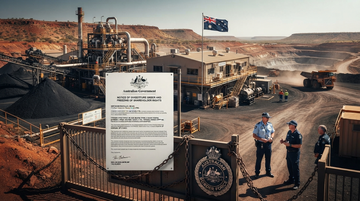
Australia turns rare-earth mining into a security-controlled asset class by ordering Chinese-linked owners to sell
Australia’s foreign investment enforcement is moving beyond export controls and into equity control for Western rare-earth projects. By freezing shareholder rights and ordering Chinese-linked investors to divest Northern Minerals stakes, the policy effectively re-prices the governance premium investors will demand for future funding and licensing in critical minerals.

Bristol Myers’ $2.3B Houston campus turns pharma reshoring into build-out of finished-goods capacity
Bristol Myers is committing about $2.3B to a new multi-modal manufacturing campus in Houston, with ~600,000 sq ft sized for small molecules, biologics and antibody-drug conjugates. Framed alongside Reuters’ “tariff threat” push, the investor takeaway is that the reshoring wave is shifting from announcements to hard, finished-product capacity—raising near-term demand for engineering, CDMO services, and lab/bioprocess tooling while compressing execution risk into 2027–2030 timelines.

China’s “domestic capital” AI doctrine makes US AI capex less dollar-dominant—look for memory suppliers to win while GPU capex gets quietly rerouted
Beijing’s $28T-style push to fund AI via onshore markets (with CXMT as the prototype) changes how capital is allocated: fewer “must-spend” dollar capex cycles for the US hyperscaler stack, more onshore production funding for bottleneck components. In parallel, DeepSeek’s reported fundraising pause highlights the other side of the doctrine—AI funding is now market-conditional, not subsidy-automatic.
What to expect
Evidence-first notes with a visible point of view.
This section collects sharp takes on earnings, shareholder meetings, and market structure. Each new piece should make the thesis, the facts, and the implications obvious within the first few screens.
Expect direct analysis, not generic commentary.
Expect the data to be explicit and the argument to be easy to follow.
Plutux is not an investment adviser. Market data and AI-generated analysis are for information and education only, not investment advice. Disclaimer