Policy & Trade
Tariffs, export controls, and who absorbs them
Rulings, sanctions and trade negotiations traced to the companies that pay for them — margin by margin, route by route.
2026-08-14
%22%2F%3E%0A%20%20%3Ccircle%20cx%3D%22220%22%20cy%3D%22150%22%20r%3D%22180%22%20fill%3D%22%2322d3ee%22%20fill-opacity%3D%220.12%22%2F%3E%0A%20%20%3Ccircle%20cx%3D%221010%22%20cy%3D%22130%22%20r%3D%22220%22%20fill%3D%22%2338bdf8%22%20fill-opacity%3D%220.08%22%2F%3E%0A%20%20%3Ccircle%20cx%3D%22920%22%20cy%3D%22520%22%20r%3D%22170%22%20fill%3D%22%2322d3ee%22%20fill-opacity%3D%220.06%22%2F%3E%0A%20%20%3Cpath%20d%3D%22M140%20430h920%22%20stroke%3D%22url(%23line)%22%20stroke-width%3D%2212%22%20stroke-linecap%3D%22round%22%2F%3E%0A%20%20%3Cpath%20d%3D%22M220%20360c120-150%20260-220%20380-220s260%2070%20380%20220%22%20fill%3D%22none%22%20stroke%3D%22%2367e8f9%22%20stroke-opacity%3D%220.5%22%20stroke-width%3D%2216%22%20stroke-linecap%3D%22round%22%20stroke-linejoin%3D%22round%22%2F%3E%0A%20%20%3Cpath%20d%3D%22M300%20398h600%22%20stroke%3D%22%2394a3b8%22%20stroke-opacity%3D%220.24%22%20stroke-width%3D%228%22%20stroke-linecap%3D%22round%22%2F%3E%0A%20%20%3Ctext%20x%3D%22220%22%20y%3D%22510%22%20fill%3D%22%23e2e8f0%22%20fill-opacity%3D%220.7%22%20font-family%3D%22Arial%2C%20Helvetica%2C%20sans-serif%22%20font-size%3D%2238%22%20letter-spacing%3D%228%22%3EINSIGHTS%3C%2Ftext%3E%0A%3C%2Fsvg%3E)
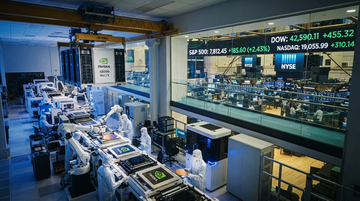
Flat July PPI + the first 7,800 S&P close reset September: the “hawkish-hold” trade dies, but only because AI/tech keeps leading
July CPI held at a 3.4% pace and July PPI was flat, removing the inflation “re-acceleration” trigger markets had been pricing for September. With the S&P 500 closing above 7,800 for the first time, the market’s disinflation rotation reasserted itself—yet the leadership is still concentrated in AI/semiconductor beta, not cyclicals.

Morgan Stanley's gold-to-silver shift reframes the safe-haven trade into an industrial bet
Morgan Stanley says gold is increasingly behaving like a risk asset rather than a portfolio diversifier, while pointing to silver as the metal with “real reasons to rally.” For miners and investors, the implication is a supply-chain rotation: gold hedges face a more saturated macro setup, while silver’s tight multi-year balances and industrial demand (notably solar) can re-price both upstream (silver miners’ cash flows) and downstream hedging demand.

Steam- and hydraulic-driven catapult changes could flip aircraft-carrier electronics content—rewarding legacy electromechanical supply chains while pressuring modern shipboard-electronics primes
A new White House directive orders the Navy to replace EMALS and advanced weapons elevators with steam and hydraulic systems for future CVN-81. That reverses the shipboard electronics content mix: it shifts value from modern electromechanical-and-software-heavy launch/recovery subsystems toward legacy electromechanical/hydraulic supply chains, while also introducing schedule and cost risk for carrier programs near industrial capacity limits.

Tapestry's FY27 outlook makes the “affordable-luxury re-rating” a numbers test: Coach is accelerating, but tariffs and terminated Capri costs can still cap the multiple
In its fiscal-Q4 results released Aug. 13, 2026, Tapestry showed Coach delivering double-digit growth (Q4 net sales +15% reported) while explicitly acknowledging a negative tariff and duty impact that partially offset margin gains. The same print also tallies material Capri-related termination/divestiture impacts (notably $268.4M of pre-tax expenses in FY25 tied to the terminated Capri deal), setting up a clean investor question: does Coach momentum outweigh cost/tariff noise in the next few quarters?
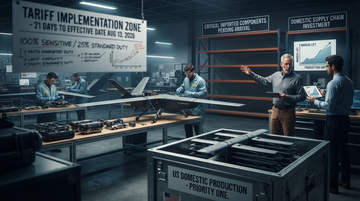
Drone tariffs can lift U.S. drone margins fast—but they cannot replace the Pentagon’s missing production capacity
Trump’s Aug. 13, 2026 drone-tariff package raises duties on imported drones (including 100% on “particularly sensitive” platforms, 25% on smaller drones, and 15% on covered allied countries) starting 21 days after signing. The immediate market read-through for UMAC, RCAT, ONDS, AVAV, and KTOS is a short-cycle pricing and sourcing repricing, not a volume solution. The Pentagon’s own assessment of a years-long U.S. industrial-output gap means tariffs are a margin catalyst, while capacity still depends on procurement programs and industrial base investment.

YETI’s Q2 shows premium demand still holds—while tariff and China-sourcing costs are the swing factor investors can’t ignore
In YETI’s Q2 reporting, premium hard goods performance and gross margin behavior point to a cleaner split between demand resilience and sourcing-cost pressure. That matters because the mass-affluent consumer signal only shows up when the margin headwind is isolated—otherwise retail tape noise can mask what’s actually moving.
2026-08-13

Amazon turns Twitch into default AI training data—and the legal risk shifts from “opt-in consent” to a copyright compliance cliff
Twitch has added a “Training for Generative AI” setting that’s on by default, letting Amazon use stream content to train generative AI unless creators actively opt out. The move doesn’t just expand training data—it raises a sharper copyright/consent question because livestream platforms are high-frequency, expressive, and often reused downstream, while opt-out rates are structurally low.
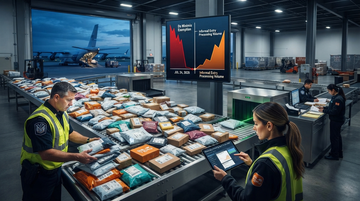
The de minimis loophole is formally dead—so Temu/Shein’s “$0 duties” math breaks, and parcel carriers face a new cost reality
On June 24, 2026, CBP published interim final rules that indefinitely suspend the $800 de minimis administrative exemption and replace the mail pathway with a new informal-entry workflow effective July 24, 2026. The policy change forces more low-value imports into duty/tax collection and data-and-bond handling—an immediate margin squeeze for cross-border discounters like PDD’s PDD, and a near-term process-and-volume repricing moment for UPS and FedEx.

Ford's Lincoln shift turns 52.5% tariffs into a relocation deadline—starting in 2030
Ford said it will move production of some Lincoln models from China to the U.S. starting in 2030, with the decision driven mainly by the U.S. tariff cost on China-built vehicles. The move also lines up with the U.S. Connected Vehicle restrictions that already force Ford to seek approvals for its China-built Lincoln Nautilus imports—pushing Ford’s China supply chain toward earlier disruption than most investors expect.

July’s deficit widened while tariff receipts went negative—proof that tariffs aren’t financing the tax-cut story
The U.S. Treasury’s July Monthly Treasury Statement shows a $432.3B deficit as outlays rose, while “customs duties” (tariff receipts net of refunds) printed at -$8.5B for the month. With customs duties net receipts turning negative and refunds exceeding collections, the fiscal arithmetic that “tariffs pay for the tax cut” fails—pushing Treasury supply and term-premium pressure into the rate-cut window traders are watching.
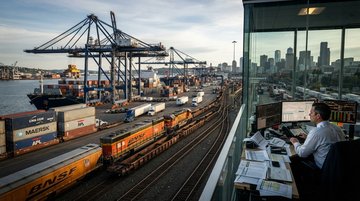
July PPI at “flat” forces a rethink: September shifts from a hike call back to a hold-vs-cut trade
U.S. July producer-price inflation came in unchanged month-over-month, with goods falling and services still creeping up. That combination matters because it undercuts the “higher again” rate-hike narrative just as investors price September—making the near-term question less “hike or not” and more “hold, or start cutting if services cool.”
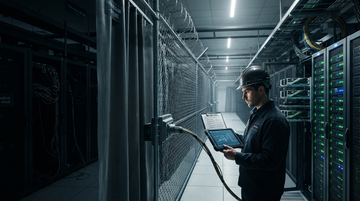
Microsoft's China retreat trades tiny revenue for compliance certainty—and signals the AI export-control regime is becoming structural
Microsoft weighing (and likely continuing) a China wind-down is less about demand than about making cross-border AI work legally predictable. With Microsoft explicitly flagging shifting U.S. AI export controls as an uncertainty factor in its FY2026 reporting, the investor takeaway is that hyperscalers will increasingly “partition” engineering and delivery—creating a durable Azure China vacuum for local demand while locking U.S. AI franchises into compliant lanes.

StubHub’s scalping-defense push turns ticketing into a legal-cost race—Live Nation and event-driven ETFs should price the downstream compliance risk
StubHub is using significant legal and political resources to defend how it operates in the secondary-ticket market, even as regulators and state attorneys general pressure pricing disclosure and allegedly deceptive fee practices. The investment takeaway is less about “scalping” as a moral category and more about how legality disputes determine whether platforms, venues, and ticketing incumbents can scale volume without margin leakage from enforcement, redesign costs, and activity constraints.

Russia’s Black Sea grain terminals are now a food-inflation risk—after July PPI went flat, investors must watch for a “food re-pricing” loop
Ukraine’s reported strikes on Russia’s Black Sea port and grain-export infrastructure re-open the disinflation debate through a channel that policy can’t smooth away: food costs tied to wheat logistics. In July, the US PPI release showed flat final-demand inflation and a decline in final-demand food prices—yet disruption risk is rising because Reuters links Black Sea corridor damage to a 30–35 million metric ton wheat shortfall that alternative exporters can’t fully replace.
2026-08-12

Bank of America’s $250B pledge reframes AI buildout finance as a bankable “industrial policy” product — and changes who gets paid
Bank of America says it will mobilize and deploy $250B by July 4, 2027 across digital, energy, and core US infrastructure. The investable takeaway isn’t just scale: the bank is positioning project finance + capital markets fees as a repeatable, measured pipeline—at a time when its own net interest income and investment-banking fees are already moving up. Investors should watch whether this “banking the buildout” focus increases earning-asset yield and fee share without loading up credit risk into a cycle that private credit has been dominating.

FinCEN’s BOI carve-out locks out ~32M U.S. entities from beneficial-ownership filings—shifting compliance spend offshore
FinCEN’s final BOI rule makes the exemption for U.S. companies and U.S. persons permanent, meaning most U.S.-formed legal entities no longer have to file beneficial-ownership information to FinCEN. The compliance burden does not disappear; it relocates—because foreign entities that register to do business in the U.S. still face BOI reporting, but only for non‑U.S. beneficial owners, intensifying an offshore disclosure gap and changing who profits from compliance workflows.

FlightAware’s instant dismissal signals Kalshi can’t be squeezed by “data leverage” alone
FlightAware filed a suit against Kalshi over flight-cancellation prediction markets using its data and branding, then voluntarily dismissed the entire case hours later without prejudice. The filing shows FlightAware’s strongest theory was contract + trademark control, yet the quick withdrawal suggests Kalshi likely forced a faster path to remove/contain the specific claims—shifting the real pressure point from “sourcing data” to “litigation mechanics and remedies timing.”

Two-person crew rule wins the appeal fight: Class I railroads lose their easiest margin lever—and investors have to price in hiring/retention pressure
The FRA’s two-person crew rule remains in force after court scrutiny, removing a key cost-control path that precision-scheduled railroads hoped to use with more one-person or remotely assisted operations. For Union Pacific, Canadian Pacific Kansas City, CSX, and Norfolk Southern, the economic consequence is straightforward: a labor-cost floor that can’t be avoided by automation alone, pressuring near-term margins while rail’s freight-cycle recovery and truck-to-rail shifts still argue for demand support.

Latigo Biotherapeutics prices a $345.6M IPO for Nav1.8—turning the post-opioid pain trade into a “Phase 3 or bust” bet
Latigo Biotherapeutics priced an upsized IPO at $18 (top of range) to raise $345.6M, valuing it at a fully diluted ~$1.3B at launch. The story investors are paying for is simple: Latigo Biotherapeutics’s Nav1.8 inhibitor (LTG-001) is positioned as opioid-sparing fast relief, but the cash is being used to cross into pivotal Phase 3 while the company still lacks commercialization revenue.

Oracle’s Quantinuum quantum-cloud deal is a tell: hybrid AI compute beats a “quantum hedge,” and cost-out is funding the path
Oracle and Quantinuum plan to deploy Quantinuum Helios inside Oracle Cloud Infrastructure (OCI) to sell “hybrid quantum-AI” access rather than a standalone quantum bet. At the same time, Oracle’s latest 10-K shows large, AI-aimed restructuring charges—supporting a view that Oracle is cost-out funding the expensive, classical compute required while quantum matures.
What to expect
Evidence-first notes with a visible point of view.
This section collects sharp takes on earnings, shareholder meetings, and market structure. Each new piece should make the thesis, the facts, and the implications obvious within the first few screens.
Expect direct analysis, not generic commentary.
Expect the data to be explicit and the argument to be easy to follow.
Plutux is not an investment adviser. Market data and AI-generated analysis are for information and education only, not investment advice. Disclaimer