%22%2F%3E%0A%20%20%3Ccircle%20cx%3D%22220%22%20cy%3D%22150%22%20r%3D%22180%22%20fill%3D%22%2322d3ee%22%20fill-opacity%3D%220.12%22%2F%3E%0A%20%20%3Ccircle%20cx%3D%221010%22%20cy%3D%22130%22%20r%3D%22220%22%20fill%3D%22%2338bdf8%22%20fill-opacity%3D%220.08%22%2F%3E%0A%20%20%3Ccircle%20cx%3D%22920%22%20cy%3D%22520%22%20r%3D%22170%22%20fill%3D%22%2322d3ee%22%20fill-opacity%3D%220.06%22%2F%3E%0A%20%20%3Cpath%20d%3D%22M140%20430h920%22%20stroke%3D%22url(%23line)%22%20stroke-width%3D%2212%22%20stroke-linecap%3D%22round%22%2F%3E%0A%20%20%3Cpath%20d%3D%22M220%20360c120-150%20260-220%20380-220s260%2070%20380%20220%22%20fill%3D%22none%22%20stroke%3D%22%2367e8f9%22%20stroke-opacity%3D%220.5%22%20stroke-width%3D%2216%22%20stroke-linecap%3D%22round%22%20stroke-linejoin%3D%22round%22%2F%3E%0A%20%20%3Cpath%20d%3D%22M300%20398h600%22%20stroke%3D%22%2394a3b8%22%20stroke-opacity%3D%220.24%22%20stroke-width%3D%228%22%20stroke-linecap%3D%22round%22%2F%3E%0A%20%20%3Ctext%20x%3D%22220%22%20y%3D%22510%22%20fill%3D%22%23e2e8f0%22%20fill-opacity%3D%220.7%22%20font-family%3D%22Arial%2C%20Helvetica%2C%20sans-serif%22%20font-size%3D%2238%22%20letter-spacing%3D%228%22%3EINSIGHTS%3C%2Ftext%3E%0A%3C%2Fsvg%3E)
Macro policy • Rates • Equity factor rotation
The July inflation mix that should cool hikes instead bought a regime flip for September—inside an AI-led index
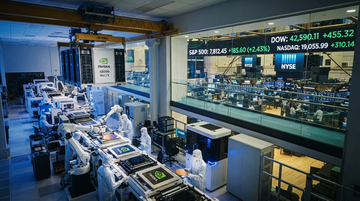
Two releases landed on the same “Fed decision pathway” that investors were using in early August: July PPI was unchanged in the month, and headline CPI still rose 3.4% year over year. That combination mechanically reduces the probability that policymakers need to respond with another tightening step in September, even as the S&P 500’s tape keeps proving that risk appetite is being paid for in rate-sensitive tech.
July CPI (headline, y/y)
3.4%
CPI-U (All items), 12 months ending July 2026
July CPI (m/m, SA)
0.1%
CPI-U (All items), month over month in July 2026 (seasonally adjusted)
July PPI (final demand, m/m, SA)
0.0%
Final demand prices unchanged in July 2026 (seasonally adjusted)
July PPI (final demand, y/y, unadjusted)
4.7%
Final demand prices, 12 months ended in July 2026
What this changed in the rates debate
Inflation “impulse” signal
m/m PPI = flat
A flat producer-price print reduces near-term pressure translating into future consumer inflation.
Headline CPI regime
3.4% y/y
Headline remains lower than the mid-cycle peak, keeping the disinflation narrative alive.
Why the market still rallies
tech-led composition
Even with the hawkish-hold trade fading, index leadership stays concentrated in AI/semiconductors.
Data → mechanism → markets
Why a flat PPI matters more than the “headline y/y” talking point
Investors don’t trade CPI in isolation—they trade what CPI implies about the next 1–2 quarters of inflation dynamics and therefore about the need for additional policy tightening. A flat monthly PPI headline is a direct hit to the “pricing power is re-accelerating” story, because it suggests fewer cost pressures are propagating downstream. At the same time, CPI remaining at 3.4% y/y keeps the equilibrium narrative intact: disinflation can continue without demanding a new cycle of hawkish repricing.
- Producer prices stopped adding monthly momentum, weakening the case for immediate further tightening in September.
- Headline CPI stayed anchored at 3.4% y/y, supporting a “hold” rather than a “hike” baseline for the next decision window.
- The market’s first 7,800 close signals risk appetite is returning, but leadership still points to duration/AI-sensitive earnings visibility rather than a broad cyclicals catch-up.
Supply chain • Capex • Demand transmission
AI/tech leadership persists because disinflation helps the whole capital-cost stack, even when inflation isn’t gone
A “rates up, equities down” shock usually hits the long-duration portion of the complex first—where investors discount future cash flows most aggressively. In this print cycle, the disinflation rotation returned (because PPI didn’t add incremental pressure), but it didn’t broaden into cyclicals as the dominant force. Instead, the index’s composition still tilts toward AI/semiconductors, where falling or stable inflation helps financing conditions and capex planning even without requiring a rapid inflation collapse.
Selected listed AI/semiconductor-linked fundamentals (scale check, not macro inference)
Revenue size and TTM operating income show why tech has enough earnings base to absorb policy noise while markets reprice rates expectations.
Unit: Reported revenue (company currency as disclosed in underlying filings)
NVIDIA — Revenue (TTM)
TTM revenue from the latest available income statement figure used in this analysis.
253,491,000,000
Micron Technology — Revenue (TTM)
TTM revenue from the latest available income statement figure used in this analysis.
90,274,000,000
ASML — Revenue (TTM)
TTM revenue from the latest available income statement figure used in this analysis.
35,327,500,000
TSMC — Revenue (TTM)
TTM revenue shown in the company’s reported currency in the income statement figure used here.
4,450,378,591,000
SK Hynix — Revenue (TTM)
TTM revenue shown in the company’s reported currency in the income statement figure used here.
189,170,615,000,000
Apple — Revenue (TTM)
TTM revenue from the latest available income statement figure used in this analysis.
466,823,000,000
Which tickers actually fit the “AI-led record + hawkish-hold trade fade” transmission
The players most exposed to a “September hold” repricing are the ones with the longest duration of earnings expectations
When the September-hike trade breaks, it doesn’t just mean “rates are lower.” It means the discount rate applied to future cash flows becomes less punitive. That tends to benefit AI/semiconductor and platform tech disproportionately—especially when index leadership is already concentrated there. Below are the closest listed proxies whose fundamentals are consistent with tech staying in the driver’s seat after the macro impulse weakened.
| Company | TTM revenue | TTM operating income | Why it matters for this tape |
|---|---|---|---|
| NVIDIA | $253.49B | $162.29B | High beta to rate sensitivity and AI capex sentiment; repricing support typically arrives quickly. |
| Micron Technology | $90.27B | $59.37B | Memory cycle plus AI demand makes it a durable beneficiary when financing conditions stabilize. |
| Apple | $466.82B | $154.86B | Large-duration cash flows mean macro repricing can move multiples even when near-term demand is fine. |
| Taiwan Semiconductor Manufacturing Company Limited (TSMC) | TWD 4,450.38B | TWD 2,493.70B | Foundry capex expectations connect directly to AI infrastructure build cycles. |
| ASML Holding N.V. | €35.33B | €12.51B | Capex tool vendor whose orders correlate with continued wafer-fab investment under improving macro conditions. |
| SK hynix | KRW 189.17T | KRW 128.71T | Memory supply-side leverage to AI demand; rates stability helps sustain capex and inventory digestion. |
Horizons • What moves first vs what persists
What to watch next: the “hold” trade can last, but AI leadership needs earnings confirmation
- In the next few sessions, the key catalyst is whether rate expectations stay capped by new inflation prints after July’s flat PPI.
- Over the next 1–2 quarters, the sustainability test is AI/semiconductor earnings follow-through, not just macro easing.
- If subsequent producer-price details show renewed monthly pressure, the disinflation rotation can reverse even if y/y looks stable.
- If tech leadership broadens into industrial and consumer cyclicals, it will be evidence that the regime flip is maturing beyond a narrow duration rally.
Listed stocks most likely to react to a durable “September hold” repricing (AI/tech transmission)
- A hold-for-September repricing tends to expand valuation support for long-duration earnings after flat PPI weakens the hike case.
- TTM scale shows it can absorb macro noise while AI sentiment remains intact; latest income statement shows $253.49B TTM revenue.
- Near-term: the stock’s multiple is likely to move first; longer-term: results must confirm AI demand persistence.
- Stable rates help maintain capex and reduce discount-rate drag; July PPI being flat supports the hold narrative.
- With $59.37B TTM operating income reported, MU has earnings base that can sustain upside if the memory/AI cycle stays constructive.
- Near-term reaction is likely driven by macro-to-discount-rate transmission; longer-term depends on DRAM/NAND demand normalization.
- If the September hike risk fades, AAPL multiple support should strengthen because Apple’s cash-flow profile is sensitive to discount-rate repricing.
- At $154.86B TTM operating income, fundamentals give resilience, but tech leadership breadth determines whether macro relief becomes market-wide.
- Near-term: macro prints can move AAPL quickly; longer-term: iPhone/services cycle will decide the durability.
- Flat PPI reduces inflation drag on the capital-cost stack, supporting AI-related foundry capex expectations.
- TTM revenue of TWD 4,450.38B and operating income of TWD 2,493.70B provide scale to ride through macro shifts.
- Near-term: rates sensitivity hits the multiple; longer-term: order visibility from advanced-node demand is the hinge.
- Disinflation helps preserve favorable financing conditions that matter for fab capex; flat July PPI supports that backdrop.
- With €12.51B TTM operating income, ASML has earnings power that can translate into upside if capex guidance holds.
- Near-term: sentiment swings with macro; longer-term: semiconductor equipment cycles determine order durability.
- If the hawkish-hold trade stays wrong because September becomes more likely to be a hold, memory cash-flow expectations improve at the margin.
- TTM operating income of KRW 128.71T shows profitability support, but memory pricing cyclicality can overpower macro.
- Near-term: multiple sensitivity to rates; longer-term: AI memory demand and supply discipline drive returns.