Consumer
What households are actually spending on
Traffic, pricing power, trade-down and inventory across retailers, restaurants and brands — who is holding margin, and who is buying volume.
2026-08-11
%22%2F%3E%0A%20%20%3Ccircle%20cx%3D%22220%22%20cy%3D%22150%22%20r%3D%22180%22%20fill%3D%22%2322d3ee%22%20fill-opacity%3D%220.12%22%2F%3E%0A%20%20%3Ccircle%20cx%3D%221010%22%20cy%3D%22130%22%20r%3D%22220%22%20fill%3D%22%2338bdf8%22%20fill-opacity%3D%220.08%22%2F%3E%0A%20%20%3Ccircle%20cx%3D%22920%22%20cy%3D%22520%22%20r%3D%22170%22%20fill%3D%22%2322d3ee%22%20fill-opacity%3D%220.06%22%2F%3E%0A%20%20%3Cpath%20d%3D%22M140%20430h920%22%20stroke%3D%22url(%23line)%22%20stroke-width%3D%2212%22%20stroke-linecap%3D%22round%22%2F%3E%0A%20%20%3Cpath%20d%3D%22M220%20360c120-150%20260-220%20380-220s260%2070%20380%20220%22%20fill%3D%22none%22%20stroke%3D%22%2367e8f9%22%20stroke-opacity%3D%220.5%22%20stroke-width%3D%2216%22%20stroke-linecap%3D%22round%22%20stroke-linejoin%3D%22round%22%2F%3E%0A%20%20%3Cpath%20d%3D%22M300%20398h600%22%20stroke%3D%22%2394a3b8%22%20stroke-opacity%3D%220.24%22%20stroke-width%3D%228%22%20stroke-linecap%3D%22round%22%2F%3E%0A%20%20%3Ctext%20x%3D%22220%22%20y%3D%22510%22%20fill%3D%22%23e2e8f0%22%20fill-opacity%3D%220.7%22%20font-family%3D%22Arial%2C%20Helvetica%2C%20sans-serif%22%20font-size%3D%2238%22%20letter-spacing%3D%228%22%3EINSIGHTS%3C%2Ftext%3E%0A%3C%2Fsvg%3E)

2026-08-10

Hims & Hers turns subscriber growth into guidance proof—telehealth becomes a volume platform
In its latest earnings update, Hims & Hers reported subscribers rising to nearly 2.6M (+9% YoY) and raised full-year 2026 revenue guidance to $2.8B–$3.0B. The key investor takeaway is that the company’s top-line beat is now subscriber-driven—supporting a shift from “one-product GLP-1 cycle” risk to a broader telehealth platform with measurable, repeatable volume.
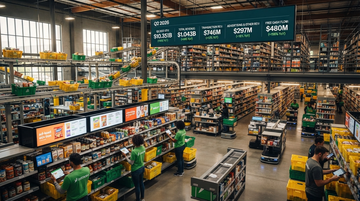
Instacart's ads are outgrowing transactions because grocery data still converts—so the retail e-commerce ad channel is “real demand,” not a funding-cycle artifact
Instacart grew Q2 2026 Advertising & other revenue +16% YoY while transaction revenue rose +13% YoY, with GTV +14% YoY—an uncommon retail pattern where ad-load expands without visibly harming order growth. The proof point is cash too: Q2 free cash flow surged to $480M (+156% YoY), making it harder to dismiss the ad acceleration as purely “spend-driven.”

The Trade Desk's real Q2 2026 ad-tech stress test wasn’t the 3% growth—it was executing a C-suite reset while guiding lower
In Q2 2026, The Trade Desk reported $715M revenue and non-GAAP EPS of $0.34—both short of what markets were looking for—and simultaneously disclosed an executive-leadership rebuild across CFO, CMO, and Chief Commercial roles. The key investor question isn’t whether growth missed; it’s whether the company can re-stabilize go-to-market and measurement execution as CTV/programmatic competition tightens.
2026-08-09

Airbnb's 60% AI-Coded Engine Turns the Travel Stack Into an Agent-First Listings War
Airbnb is testing a natural-language AI search toggle while CEO Brian Chesky discloses that nearly 60% of new code is now AI-written — a productivity gap that lets the platform ship AI features faster than Booking Holdings or Expedia Group can copy them. The same shift forces every host to optimize listings for AI agents, not just guests, rewriting host SEO economics. With $27.2B in Q2 gross booking value at a 13.2% take rate and 35% adjusted EBITDA margins, Airbnb's AI velocity is the moat the incumbents have to chase, not the other way around.

Ningbo’s shutdown turns Typhoon Dolphin into a timing-and-margin test for Apple, Nike, and PDD Holdings
Typhoon Dolphin triggered a suspension of Ningbo port operations on Aug 7 local time, with follow-on disruption across East China ocean and time-sensitive air freight. The investor-relevant risk is not just delays—it’s that missed replenishment windows force brands to choose between discounting, expedited freight, or inventory build, pressuring gross margin during the back-to-school freight cycle.
2026-08-08

Apple turns Alibaba Qwen into a China Mac distribution channel—iPhone was the pilot
Reuters says Apple’s China rollout lets eligible Mac users connect to Alibaba’s Qwen service via a macOS extension (macOS 26.6+), routing Qwen through Siri and Writing Tools for more detailed responses. That shifts the “Qwen for Apple Intelligence in China” story from a mobile-only monetization channel to desktop/enterprise workflows—raising the odds that Alibaba captures more downstream AI usage time (and thus higher Cloud/enterprise pull) alongside Apple’s China Services stickiness.

AppLovin's Q2 miss broke the “open access = upside” story—because its own model-driven auction timing still controls monetization
AppLovin didn’t miss on demand; it missed on timing, with management attributing the softer quarter to lighter-than-normal model improvement. That matters to the “open access / distribution” thesis because ad-tech economics clear through pricing/take-rate via auctions, not just incremental reach—so one weak quarter can vaporize the narrative even when the machine keeps growing.

Berkshire Hathaway's Q2 cash use isn’t “patient”—it’s self-buyback at a size that forces the whole “cash mountain” narrative to update
In Berkshire Hathaway's Q2 2026 reporting, the firm shows operating-business earnings before tax of $14.376B and consolidated earnings before tax of $32.063B, alongside a clear cash deployment into buying back its own equity. The key reset is that cash, cash equivalents, and short-term U.S. Treasury bills were $359.2B at quarter-end—lower than where they stood at the start of the year—while treasury-stock purchases were material (most in Q2), implying the company is now returning capital through the same asset whose trade it’s marking.

Canada’s Carney Concession Play Turns Section 338 Into a Sector Swap—Auto, Dairy, and Alcohol Winners Depend on Who Flips First
Under Section 338, the U.S. is imposing 50% tariffs on specific Canadian auto, dairy, and alcohol-linked categories with an Aug. 19, 2026 start date. Canada’s reported offer to trade relief—lifting retaliatory tariffs and ending U.S.-alcohol bans—in exchange for narrower U.S. tariff cuts changes the probability of resolution and re-routes near-term margin risk across North American supply chains.

DraftKings’ CEO didn’t hedge prediction markets—he argued they don’t work economically, and that reframes who owns the US iGaming TAM
DraftKings is building a predictions unit with explicit unit-economics assumptions (including low customer overlap and a plan to route more volume onto its own exchange), and that makes any operator pushback inside the sector unusually market-repricing. The key investor question now isn’t “will event contracts grow?”—it’s which iGaming revenue pools stay sportsbook-like versus which get structurally competed away by prediction-market infrastructure.

Framework turns an “all customers” breach into a board-ready enterprise cyber-insurance playbook
Framework’s disclosure that it notified all customers after attackers accessed customer contact data (via the Metabase cloud stack) raises the bar for consumer-hardware incident handling. The commercial signal is that cyber risk is moving from “best-effort security” to measurable, insurer-grade documentation—creating knock-on pressure for OEMs’ vendors (like Dell, Lenovo) and for insurers/reinsurers such as Chubb to price modular supply-chain exposure.

OpenAI’s $300–$400 Smart Speaker Trade: a voice-first margin switch that forces retailers and phone ecosystems to pay for access
A leaked report places OpenAI’s first consumer device—a screenless, donut-shaped AI speaker—at ~$300–$400 and suggests a 2027 entry. For investors, the key question isn’t “will people buy it?” but “who funds the margin bridge from OpenAI API to an always-listening voice edge in the home,” with likely knock-on pressure for Apple (ecosystem control) and Sonos (connected-audio relevance) while Amazon monetizes shipping distribution.

Peloton’s First Annual Profit Proves the Cost Story Works—but the Subscriber Story Still Breaks the Multiple
Peloton’s FY2026 marked the first full-year positive GAAP net income, but the company guided to another year of shrinking revenue and continued subscriber declines. The market reaction is effectively re-rating Peloton from a turnaround narrative to a structural decline, where cost cuts can delay losses but can’t replace subscriber-base erosion.
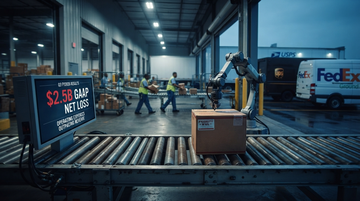
USPS’s $2.5B quarterly loss is a parcel-economics stress test—and UPS/FedEx should expect margin squeeze from slower price/volume alignment
USPS reported a GAAP net loss of $2.5B in its latest reported quarter while operating revenue rose and operating expenses also rose. The mix matters: USPS grew “Shipping and Packages” revenue even as Shipping and Packages volume fell 3.4%, a pattern that points to persistent cost/volume friction—exactly the same variable pricing-power strategies depend on for UPS and FedEx.

Volkswagen’s US-built pickup play is a direct tariff-resistant hit at Ford’s truck profit engine
Volkswagen is moving a US-built pickup to the “end of the decade” timeframe as part of a broader US strategy overhaul under new leadership. The move matters to investors because it targets the same US profitability gravity well—Ford’s truck-and-commercial “Ford Pro”—where Ford posted $6.8B of EBIT on $66.3B of revenue in 2025 (10.3% margin), and it forces a rethink of EV-vs-ICE mix inside VW’s Chattanooga footprint.

WBD’s streaming engine didn’t stall—its 10% jump forces the Paramount deal to be judged on growth, not fear
Warner Bros. Discovery’s latest print shows streaming revenue rising 10% year over year as the Paramount combination faces antitrust and court friction. That single datapoint changes the merger debate from “optionality in delay” to “value creation while the clock is running,” and it tightens the antitrust math around likely post-close competitive effects in streaming.
2026-08-07

Lyft's record bookings came with incentive drag—so “demand” is starting to look purchased, not retained
In Lyft’s latest quarter, record gross bookings arrived alongside a promotion-heavy cost profile, widening the gap between bookings growth and profitability. The key investor question is whether incentives are buying durable rider/driver economics—or just creating a temporary volume spike that limits margin expansion vs. Uber.

Meta’s $567M New Mexico teen verdict turns “Section 230 settlement risk” into a state-jury reserve model for Snap, TikTok, and YouTube
The New Mexico court ordered Meta to fund $567M of youth-mental-health abatement after a jury found liability under state consumer-protection law—$420M earmarked for treatment services over five years. For public platform investors, this shifts the liability curve from “possible future settlements” to state-jury-priced compliance reserves that can arrive on a predictable schedule—right as Snap and TikTok face closely related teen-harm claims.

Weak payrolls can still lift cyclicals—if the market treats it as a lower-yield, lower-$ rate-cut regime
This jobs-release setup matters less for the Fed “test” and more for how payroll surprises move Treasury yields, the dollar, and therefore S&P 500 factor leadership. Using the latest BLS July jobs-release timing plus defensible company fundamentals, the playbook is: weak payrolls tend to help defensives only when they also pull yields down; otherwise, parts of cyclicals (especially funding/payment beneficiaries) can hold up or even lead.
What to expect
Evidence-first notes with a visible point of view.
This section collects sharp takes on earnings, shareholder meetings, and market structure. Each new piece should make the thesis, the facts, and the implications obvious within the first few screens.
Expect direct analysis, not generic commentary.
Expect the data to be explicit and the argument to be easy to follow.
Plutux is not an investment adviser. Market data and AI-generated analysis are for information and education only, not investment advice. Disclaimer