%22%2F%3E%0A%20%20%3Ccircle%20cx%3D%22220%22%20cy%3D%22150%22%20r%3D%22180%22%20fill%3D%22%2322d3ee%22%20fill-opacity%3D%220.12%22%2F%3E%0A%20%20%3Ccircle%20cx%3D%221010%22%20cy%3D%22130%22%20r%3D%22220%22%20fill%3D%22%2338bdf8%22%20fill-opacity%3D%220.08%22%2F%3E%0A%20%20%3Ccircle%20cx%3D%22920%22%20cy%3D%22520%22%20r%3D%22170%22%20fill%3D%22%2322d3ee%22%20fill-opacity%3D%220.06%22%2F%3E%0A%20%20%3Cpath%20d%3D%22M140%20430h920%22%20stroke%3D%22url(%23line)%22%20stroke-width%3D%2212%22%20stroke-linecap%3D%22round%22%2F%3E%0A%20%20%3Cpath%20d%3D%22M220%20360c120-150%20260-220%20380-220s260%2070%20380%20220%22%20fill%3D%22none%22%20stroke%3D%22%2367e8f9%22%20stroke-opacity%3D%220.5%22%20stroke-width%3D%2216%22%20stroke-linecap%3D%22round%22%20stroke-linejoin%3D%22round%22%2F%3E%0A%20%20%3Cpath%20d%3D%22M300%20398h600%22%20stroke%3D%22%2394a3b8%22%20stroke-opacity%3D%220.24%22%20stroke-width%3D%228%22%20stroke-linecap%3D%22round%22%2F%3E%0A%20%20%3Ctext%20x%3D%22220%22%20y%3D%22510%22%20fill%3D%22%23e2e8f0%22%20fill-opacity%3D%220.7%22%20font-family%3D%22Arial%2C%20Helvetica%2C%20sans-serif%22%20font-size%3D%2238%22%20letter-spacing%3D%228%22%3EINSIGHTS%3C%2Ftext%3E%0A%3C%2Fsvg%3E)
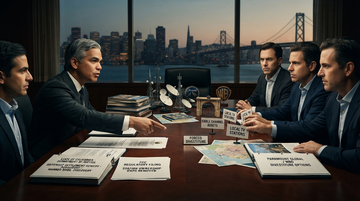
California’s next negotiation lever in the Paramount–Warner Bros. Discovery saga is no longer just “block or approve.” A Reuters report says California is expected to seek a settlement remedy that includes divesting some TV/cable channels as a condition before the state signs off on the merger.
Verified event; what changed and why it matters
What California is expected to ask for—divestitures tied to the merger’s structure
Reuters reported Aug. 23, 2026 that California Attorney General Rob Bonta is expected to ask Paramount to pursue a remedy that (1) divests “some cable channels” and (2) keeps the movie studio separate from Warner Bros. Discovery, in connection with the state antitrust lawsuit settlement discussions.
Where the remedy fits in the legal case
Core legal theory
Clayton Act Section 7 “may substantially lessen competition”
Named competitive harms (examples)
Film distribution + licensing basic cable TV channels
Type of relief California asked for in its filing
Deal not to close until after process; temporary restraining order if needed
Regulatory re-pricing backdrop
The FCC’s Aug. 6 repeal makes relief easier to structure—and therefore more valuable to buyers
On Aug. 6, 2026, Reuters reported the FCC voted 2–1 to lift the 39% national cap on local TV station ownership, moving to a case-by-case approach. The cap had been a structural constraint on how far a broadcaster’s station group could consolidate at the national level.
In deal negotiations, that changes the math. If relief requires selling assets into fewer binding ownership limits, the assets that clear the market faster can carry higher expected value. Conversely, if a regulator substitutes divestiture requirements for station caps, the buyer pool can broaden—raising bidding competition for the divested network and cable distribution footprints.
Supply-chain mapping: where the divestiture term actually propagates
Deal relief flows through content, distribution, and household reach—splitting the chain changes leverage
- California’s expected “cable channel” divestiture would target the distribution link between networks and pay-TV/subscribers, not just theatrical film marketing.
- Separating the movie studio from Warner Bros. Discovery would constrain cross-ownership incentives that can steer licensing decisions for affiliated distribution channels.
- The FCC’s ownership-rule rollback would affect station-group buyers’ ability to re-aggregate over-the-air household reach, which can be part of the same concession package in settlements.
The key investor takeaway is that “channel divestiture” and “station consolidation” are not separate stories. Settlement packages can braid together multiple distribution assets. If the FCC has fewer bright-line caps, a buyer can more plausibly assemble the reach needed to monetize an acquired channel or station set—raising the feasible bids that matter to deal NPV.
Numbers that frame the bargaining range
Fundamentals check: where Paramount and Warner sit financially when settlement risk rises
Warner Bros. Discovery revenue (FY2024)
$39.3B
FY2024, reported Feb. 27, 2025
Warner Bros. Discovery net income (FY2024)
-$11.3B
FY2024, reported Feb. 27, 2025
Paramount revenue (FY2024)
$29.2B
FY2024, reported Feb. 26, 2025
Paramount net income (FY2024)
-$6.2B
FY2024, reported Feb. 26, 2025
Both parties’ trailing profitability showed stress in FY2024. When a transaction’s probability-weighted outcome depends on regulatory concessions, investors effectively reprice the time value of closing and the likelihood that valuable distribution assets must be sold or ring-fenced.
Deal mechanics → what to watch next
What “early settlement talks” will likely trade: timing, asset scope, and buyer-capacity
Reuters described California and Paramount meeting logistics around settlement discussions. In these negotiations, the market cares less about “whether divestitures happen” and more about what exactly gets divested, how quickly, and whether buyers can acquire the assets under current broadcast-ownership constraints.
| Variable | Why it changes the price | What moves first |
|---|---|---|
| Asset scope (which cable channels) | Determines subscriber base, advertising inventory, and renewal leverage | Channel list + whether bundles are included |
| Timing/closing window | Affects deal NPV via delay + uncertainty discounting | Settlement structure and “before sign-off” milestones |
| Buyer capacity under ownership rules | Changes how many buyers can pay and how much reach they can assemble | post-FCC-rule acquisition feasibility |
Horizons: near-term vs. 1–3 year implications
Two horizons for investors: settlement headlines vs. monetization reallocation
- Near term (weeks–quarters): markets will react to whether California settles by specifying channel divestitures with definable lists, because deal risk premium shifts faster than long-run fundamentals.
- Near term (weeks–quarters): the FCC’s ownership-cap repeal can accelerate buyer interest in station groups, but investors should watch whether settlements still require concessions that constrain over-the-air reach.
- Longer term (1–3 years): the winning framework may become “distribution separation + structural flexibility,” where California’s TV/cable relief complements any revised station consolidation regime.
Who is most exposed on the listed side of the distribution chain
- Divestiture demands can reduce the economic completeness of Paramount’s distribution bundle ahead of close, raising settlement-cost expectations in the next quarters.
- If buyers can bid more aggressively post-FCC, Paramount can potentially narrow divestiture discounts in a faster auction window.
- FY2024 showed stress, with net income at -$6.2B, which increases sensitivity to timing and asset-sale execution.
- Studio separation remedies can weaken internal licensing leverage that otherwise supports distribution-channel economics over 1–3 years.
- If divested cable channels fetch stronger prices due to fewer station-group caps, WBD can partially offset concession value loss at closing.
- FY2024 showed severe earnings pressure, with net income at -$11.3B, making any delay-to-close especially material.
- Lifting the 39% national ownership cap can improve Nexstar’s feasibility of expanding reach via acquisition, benefiting strategic options around divestiture packages.
- If settlements create assets for station buyers, Nexstar can bid more aggressively on household reach because fewer hard caps apply.
- Post-repeal, consolidation opportunity grows faster than any purely “channel-only” outcome, supporting a bullish tilt over 1–3 years.
- FCC rule changes can expand Sinclair’s potential deal-making latitude around station-group reach.
- If California’s remedy forces cable-channel divestitures instead, Sinclair’s upside may shift away from direct incremental TV-channel acquisition.
- Net, Sinclair faces mixed upside depending on whether divested assets tilt toward stations or cable-network ownership.
- Repeal of the 39% cap can lower structural barriers for Gray to expand market reach through combinations.
- If California’s settlement focuses on cable channels rather than stations, Gray may see less direct asset availability than station-group peers.
- Over the next quarters, valuation impact will hinge on whether regulatory remedies broaden into station-group relief.