%22%2F%3E%0A%20%20%3Ccircle%20cx%3D%22220%22%20cy%3D%22150%22%20r%3D%22180%22%20fill%3D%22%2322d3ee%22%20fill-opacity%3D%220.12%22%2F%3E%0A%20%20%3Ccircle%20cx%3D%221010%22%20cy%3D%22130%22%20r%3D%22220%22%20fill%3D%22%2338bdf8%22%20fill-opacity%3D%220.08%22%2F%3E%0A%20%20%3Ccircle%20cx%3D%22920%22%20cy%3D%22520%22%20r%3D%22170%22%20fill%3D%22%2322d3ee%22%20fill-opacity%3D%220.06%22%2F%3E%0A%20%20%3Cpath%20d%3D%22M140%20430h920%22%20stroke%3D%22url(%23line)%22%20stroke-width%3D%2212%22%20stroke-linecap%3D%22round%22%2F%3E%0A%20%20%3Cpath%20d%3D%22M220%20360c120-150%20260-220%20380-220s260%2070%20380%20220%22%20fill%3D%22none%22%20stroke%3D%22%2367e8f9%22%20stroke-opacity%3D%220.5%22%20stroke-width%3D%2216%22%20stroke-linecap%3D%22round%22%20stroke-linejoin%3D%22round%22%2F%3E%0A%20%20%3Cpath%20d%3D%22M300%20398h600%22%20stroke%3D%22%2394a3b8%22%20stroke-opacity%3D%220.24%22%20stroke-width%3D%228%22%20stroke-linecap%3D%22round%22%2F%3E%0A%20%20%3Ctext%20x%3D%22220%22%20y%3D%22510%22%20fill%3D%22%23e2e8f0%22%20fill-opacity%3D%220.7%22%20font-family%3D%22Arial%2C%20Helvetica%2C%20sans-serif%22%20font-size%3D%2238%22%20letter-spacing%3D%228%22%3EINSIGHTS%3C%2Ftext%3E%0A%3C%2Fsvg%3E)
What happened
A TRO isn’t just timing—it’s an early verdict on the deal’s antitrust theory
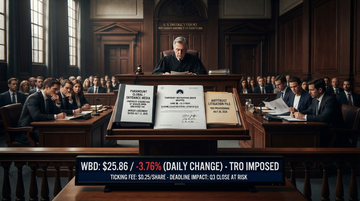
On July 20, 2026, U.S. District Judge Araceli Martínez-Olguín (Northern District of California) issued a 14-day temporary restraining order (TRO) pausing Paramount Skydance / Warner Bros. Discovery while the case proceeds, with an Aug. 3 hearing to decide whether the pause is extended. The legal challenge is part of a 12-state attorney general antitrust suit.
Deal timeline snapshot (as reported)
TRO issued
Jul 20, 2026
14-day pause
Next major court step
Aug 3, 2026
Hearing on extending delay / injunction
Deal value referenced
$110B
TRO coverage and market reporting
- The TRO blocks closing immediately, so the parties cannot simply “wait it out” without risking either an extended court process or deal economics.
- Judge focus (per reporting): the proposed combination is alleged to create/strengthen market power in wide-release film distribution; the judge indicated “compelling evidence” for likelihood of antitrust concern.
- The TRO is therefore a market-moving signal: courts can stop mega-media M&A even after regulatory approvals elsewhere.
Deal economics under delay
The $0.25-per-share ticking fee makes a 14-day TRO economically loud
The TRO’s short duration could still matter economically because the merger agreement includes a ticking fee mechanism once the deal misses certain timing windows. Even partial delays shift bargaining power and can change how investors price deal certainty.
WBD move on TRO day
-3.76%
Closed at $25.86 (approx. 4% down)
Gap vs stated $31 offer
~20% below
Market trading discount after the pause
Ticking fee size
$0.25
Per share, quarterly if not closed by Sept. 30
How the TRO reprices deal certainty in one day
Market discount vs the $31-per-share cash offer mentioned in coverage
Unit: USD/share
Warner Bros. Discovery close (Jul 20, 2026)
Down 3.76% on the day
25.9
Stated cash offer reference
Offer price referenced in market coverage
31
Legal theory of harm
The judge’s focus on wide-release film distribution is why streaming arguments didn’t save the deal (yet)
Coverage of the underlying complaint indicates the states anchored the theory of harm in traditional film and distribution power, not just in “cord-cutting” competition from streamers. Paramount argued streaming competitors make the market contests effectively competitive; the judge characterized the streaming market as “ancillary” to the litigation’s core markets.
| Alleged market(s) | What’s at stake | Why it matters for closing |
|---|---|---|
| Theatrical movie releases (wide-release distribution) | Control over distribution of major studio films | Judge cited substantial market share risk, supporting TRO |
| Blockbuster films | A concentration point for consumer attention and negotiating leverage | Supports ‘structural’ rather than ‘behavioral’ antitrust concerns |
| Cable television channels | Channel ownership and carriage leverage | Extends the ‘must-carry’ style concerns beyond streaming |
- If the court treats streaming as ‘ancillary,’ the burden shifts: the deal cannot rely on generic claims that digital rivals exist somewhere in the ecosystem.
- That increases the odds the Aug. 3 proceeding turns into a real fight over market definition and likely competitive effects—not just a procedural delay.
Fundamental context (who is exposed?)
WBD has strong operating cash generation capacity—but deal delay changes valuation, not fundamentals
To understand who the TRO hurts more, separate (1) business fundamentals from (2) deal certainty and capital markets pricing. Financials don’t change overnight—but the market discount on ‘can it close’ can move quickly when courts intervene.
| Company | FY revenue | FY net income (loss) | FY operating cash flow | FY free cash flow |
|---|---|---|---|---|
| Warner Bros. Discovery | $37.30B | $0.727B | $4.319B | $3.088B |
| Paramount Skydance | $29.21B | -$6.19B | Not pulled in this dataset | Not pulled in this dataset |
| Paramount Global | Not pulled in this dataset | Not pulled in this dataset | Not pulled in this dataset | Not pulled in this dataset |
What the TRO implies about the ‘mega-media M&A era’
This is the first time the courts directly force deal repricing in the mega-media M&A cycle
Most mega-deal stories trade on regulatory uncertainty. The TRO changes the regime: the deal is now an active litigation object with measurable effects on timing and premium certainty. That’s why this feels like the first clean near-term read on whether the 2025–26 mega-media-deal wave can clear the courts.
- Direct impact: closing is paused and the parties face an Aug. 3 decision point that can extend delay or push toward a preliminary injunction.
- Capital markets impact: WBD’s share price discounted meaningfully vs the referenced $31 offer immediately after the TRO.
- Strategic impact: the parties must defend market-definition logic around theatrical distribution/cable power, and can’t just argue “streaming is the real competitive constraint.”
Supply-chain lens (who wins / who loses if the deal stalls?)
A deal pause doesn’t stop media content—but it can pause leverage with distributors, creators, and ad-tech spend
Media M&A is a ‘power reallocation’ event across the value chain: studios → distributors/platforms → advertisers and rights holders. When courts delay a consolidation, bargaining and investment plans can cool—even if content release schedules continue.
| Upstream node | Channel | Likely effect of delay | Named listed beneficiary/victim (listed where possible) |
|---|---|---|---|
| Studios / rights libraries | Content creation + licensing | Licensing and bundling strategy may be delayed; counterparties resist long-term dependency on an uncertain ‘single roof’ | Netflix and Amazon as streamers competing for content economics (competition effect, not direct deal dependency) |
| Aggregators & distribution platforms | Wholesale carriage and distribution contracts | Short-term uncertainty can reduce willingness for deep bundle redesign until merger risk clears | Comcast and Charter Communications (carriage distributors) exposed to renegotiation dynamics |
| Advertising demand | Ad inventory packaging across linear + streaming | Prolonged uncertainty can slow cross-platform packaging commitments for budgets | Alphabet and Meta as digital ad demand baselines (competition/shift risk) |
| Tech-enabled operations | Streaming infrastructure, identity, measurement | If deal transforms bundling and measurement plans, delay pushes investment decisions out | Microsoft and Amazon Web Services as infrastructure vendors (investment timing risk) |
Management and alignment check
The next 2–3 weeks decide whether the parties can ‘reprice’ the deal narrative fast enough
When a deal is paused by court order, management’s job becomes twofold: (1) win the injunction fight, and (2) keep counterparties and employees from freezing around an uncertain end-state. A key test is whether the Aug. 3 hearing shifts the case from ‘likely concerns’ into a longer timeline.
- If the court extends the TRO or moves toward a preliminary injunction, the market likely treats the deal as at-risk, pushing more premium erosion and increasing the probability of renegotiation or termination.
- If the pause is lifted quickly, the discount likely compresses, and the ticking-fee economics become a smaller drag.
Investor playbook: what to watch next
Three specific datapoints at Aug. 3 will determine whether this becomes a short delay or a long restructure
- Court action on the TRO: extension length and whether the judge signals likely likelihood-of-success for the states.
- Market-definition language: whether the judge continues to treat streaming as “ancillary” and how the court frames wide-release theatrical distribution.
- Economic signaling: any disclosed deal-term adaptations tied to delay (including how/when the ticking fee is expected to be incurred).
The TRO pauses the deal through August 3 as the court decides whether to extend the pause during the litigation.