Consumer
What households are actually spending on
Traffic, pricing power, trade-down and inventory across retailers, restaurants and brands — who is holding margin, and who is buying volume.
2026-08-21
%22%2F%3E%0A%20%20%3Ccircle%20cx%3D%22220%22%20cy%3D%22150%22%20r%3D%22180%22%20fill%3D%22%2322d3ee%22%20fill-opacity%3D%220.12%22%2F%3E%0A%20%20%3Ccircle%20cx%3D%221010%22%20cy%3D%22130%22%20r%3D%22220%22%20fill%3D%22%2338bdf8%22%20fill-opacity%3D%220.08%22%2F%3E%0A%20%20%3Ccircle%20cx%3D%22920%22%20cy%3D%22520%22%20r%3D%22170%22%20fill%3D%22%2322d3ee%22%20fill-opacity%3D%220.06%22%2F%3E%0A%20%20%3Cpath%20d%3D%22M140%20430h920%22%20stroke%3D%22url(%23line)%22%20stroke-width%3D%2212%22%20stroke-linecap%3D%22round%22%2F%3E%0A%20%20%3Cpath%20d%3D%22M220%20360c120-150%20260-220%20380-220s260%2070%20380%20220%22%20fill%3D%22none%22%20stroke%3D%22%2367e8f9%22%20stroke-opacity%3D%220.5%22%20stroke-width%3D%2216%22%20stroke-linecap%3D%22round%22%20stroke-linejoin%3D%22round%22%2F%3E%0A%20%20%3Cpath%20d%3D%22M300%20398h600%22%20stroke%3D%22%2394a3b8%22%20stroke-opacity%3D%220.24%22%20stroke-width%3D%228%22%20stroke-linecap%3D%22round%22%2F%3E%0A%20%20%3Ctext%20x%3D%22220%22%20y%3D%22510%22%20fill%3D%22%23e2e8f0%22%20fill-opacity%3D%220.7%22%20font-family%3D%22Arial%2C%20Helvetica%2C%20sans-serif%22%20font-size%3D%2238%22%20letter-spacing%3D%228%22%3EINSIGHTS%3C%2Ftext%3E%0A%3C%2Fsvg%3E)

Ross Stores' full-year raise arrives as U.S. retail sales dip—off-price trade-down is holding better than headline demand
Ross Stores lifted FY2026 earnings and same-store sales guidance after reporting strong Q1 results, pointing to demand that’s more “traffic-led” than recession-led. With U.S. retail sales falling in July for the first time in nine months, the raise is a real-time read-through that consumers aren’t stopping shopping—they’re trading into off-price assortments and Ross’s inventory turn discipline.

Uber’s €825M Dutch fine turns “algorithmic suspensions” into a balance-sheet liability
The Netherlands’ data regulator (AP) fined Uber €825 million for suspending drivers through automated decisions without adequate driver information and safeguards. With Uber’s 2025 revenue at $52.0B, the fine sizes up to ~1.6% of annual revenue—an order of magnitude large enough to change how platform labor-risk is budgeted across Europe and beyond.
2026-08-20

Amazon gives Alexa+ away on Fire TV—an AI pricing pivot from subscriptions to device-and-ads monetization
Amazon is rolling out its AI-powered Alexa+ for free on compatible Fire TV devices in the U.S., without Prime and without any app or subscription activation. The move reframes the AI assistant debate: winning the user funnel can matter more than charging for the model access up front—especially when monetization shifts to shopping and advertising in Amazon’s retail media ecosystem.

FTC’s personalized-pricing disclosure push would turn “price-discrimination math” into customer-facing notices—raising compliance costs across the consumer stack
The FTC is seeking public comment on an enforcement-policy approach that would require clearer disclosure when businesses use personalized, data-driven methods to set prices. For investors, the key risk is not just reputational: disclosure can weaken willingness-to-pay extraction, expose discounting logic, and force product, data, and checkout redesign across retail, travel, subscriptions, and consumer fintech.

Goodyear is trying to defend US tire profitability by moving upmarket—yet its own Q2 shows premium mix can’t fully offset volume and price/product mix pressure
Goodyear is positioning premium EV and luxury-SUV tires as a higher-ASP line of defense against Chinese import share. In its latest filings, however, Americas replacement volume fell 13% in Q2 2026 and price/product mix subtracted $26M of operating income—meaning tariff and mix dynamics still have the power to overwhelm the strategy.

Walmart’s Q2 FY2027 print: the consumer is slowing, but margin “quality” may be wearing a costume
Walmart’s Q2 FY2027 results show steady demand rather than a break, but reported profitability vs. underlying cash generation can be distorted by program timing and discrete items. The key investor question is whether today’s margin variance is primarily mix/cost driven (investable) or lumpy/refund-linked (potentially reversible).
2026-08-19

Amazon’s nearly-500-locale drone scale test forces a real question: does air delivery finally beat ground on unit cost—or just on speed?
Amazon Prime Air is expanding drone delivery to nearly 500 U.S. cities and towns by end-2026, using FAA Part 135 regulatory authority and charging $2.99–$4.99 per drone drop. The investment thesis is not “will it fly?” but whether scaled air drops can bend the cost curve enough to undercut ground last-mile and—separately—whether FAA-certified drone operations can compete with DoorDash’s Part 135 advantage in regulated local delivery.

Estée Lauder's fragrance forecast vs. Lowe's and Target: premium beauty is showing up as the cleanest “American consumer split” signal
On the same earnings day that Lowe's guided conservatively, Estée Lauder framed fiscal 2027 as a resilience test where fragrance is still delivering and adjusted operating margin can approach 13%. The result is an unusually sharp divergence: premium self-care is buying time with pricing power while mass retail is leaning on policy tailwinds and project pullbacks—exactly the bifurcation investors keep seeing in US spend data.

Home Depot’s Q2 beat held up—but the ‘Pro mix at the housing turn’ story faces a tougher tell: transactions fell as ticket pressure did
In The Home Depot’s Aug. 18 release for Q2 FY2026, comparable sales rose 1.7% while transactions declined 1.0% and average ticket was down 2.8%—a profile that can look like cautious demand rather than a clear Pro-led housing bottom. Until Home Depot discloses Pro/customer-mix granularity in its next materials, the strongest signal for investors is less about a “housing rebound now” and more about whether management can stabilize transaction counts while protecting gross margin near 33.1%.

JBS tried to buy out Pilgrim’s Pride at a $26.50 cash price—then withdrew after the special committee rejected the valuation
JBS’s unsolicited squeeze-out attempt for the remaining minority holders of Pilgrim’s Pride centered on a $26.50-per-share cash offer (later raised to $28.50). The deal didn’t close because Pilgrim’s Pride’s special committee judged the price as not appropriately valuing non-JBS shareholders’ stake, and JBS ultimately withdrew the proposal in February 2022—turning the episode into a live test of poultry-margin confidence versus minority-premium math.

La-Z-Boy’s tariff math vs. housing deferral: furniture kept moving, but margins told you tariffs weren’t fully “refunded”
In La-Z-Boy’s fiscal Q1 FY2027 results filed Aug. 18, 2026, the company reported consolidated revenue down 3.4% year over year, while retail delivered sales growth. The most investor-relevant signal wasn’t just “demand held up”—it was that favorable tariff effects raised gross margin by ~140 bps, yet operating profit collapsed due to wholesale volume and fixed-cost deleverage.

Target's “turnaround” look is improving, but the $-quality of the beat hinges on how much tariff money is truly flowing
Target’s latest reported quarter shows a clear EPS upswing, but the company also flags tariff-refund uncertainty (and explicitly says any received amounts have been immaterial). The investor question isn’t whether turnaround narrative is working—it’s whether gross margin and operating expense discipline are doing enough of the lifting versus one-time items that can’t be counted on.
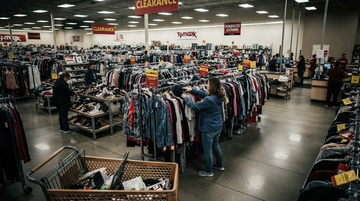
TJX beat again—but Marmaxx weakness reads like a clearance-led warning, not a pure execution hiccup
In Q2 FY2027, TJX delivered above-plan results and raised full-year guidance, but its largest Marmaxx division reported below-expectations sales tied to “self-inflicted” merchandising execution issues. The key investor question isn’t whether Marmaxx can fix execution quickly—it’s whether softer performance at the off-price clearance channel is starting to signal less excess inventory in the supply chain and a more selective consumer.

Toll Brothers just showed how new-home orders can run even when the “housing market is frozen” for resale buyers at ~6.7% mortgages
In its Q2 FY2026 reporting, Toll Brothers showed net signed contracts rising in units while backlog cancellations stayed in a controlled band—evidence that rate sensitivity is being managed through pricing/mix, pacing, and land planning rather than collapsing demand. That helps sharpen the investor question: does a “frozen” resale backdrop automatically freeze new-home demand, or do builders decouple via incentives, buyer quality, and build-cycle timing?
2026-08-18

Cargill’s Fort Morgan restart just added ~20,000 head/week of US beef packing capacity—right when the “cattle squeeze” thesis needed it to stay tight
Cargill workers ratified a contract ending the Fort Morgan, Colorado lockout, with slaughter expected to restart the week of Sept. 7 and production ramping over the following weeks. Using the plant’s stated throughput (up to 4,700 head/day), the return of roughly 4 months of idled capacity is a direct supply release into a beef chain already sensitive to cattle availability—compressing the near-term probability that packers can keep tightening margins and that cattle/beef prices remain one-way.

Xfinity Security Is Comcast’s Quiet Broadband Defense: The Attach Rate Will Matter More Than the Spin
Comcast is preparing to separate its media assets as part of the NBCUniversal spin plan, but its higher-frequency, cash-generating playbook remains in the access business. Xfinity Home Security pricing and monitoring terms show a retention-led bundling strategy whose success depends less on “launch hype” and more on whether security attach prevents broadband value erosion when fixed-wireless and fiber pressure forces price moves.

Google's $10M Spirit data buy exposes the “crown-jewel” playbook for airline bankruptcies
Google agreed to pay $10 million to acquire deidentified Spirit Airlines business data in a bankruptcy auction—an unusually small price for an unusually large, decision-relevant dataset. The financial tell isn’t the amount; it’s the asset class: operational and enterprise workflow history is now monetized the way equipment was, with AI buyers effectively competing for “institutional memory.”

Meta's 29-state trial is forcing a reprice of “liability” more than “break-up”
The 29-state youth-safety trial places Instagram and Facebook under direct scrutiny for how product design decisions affect children—an exposure that tends to price as recurring costs and mandated product changes. With Meta also running heavy AI capex, investors now have to reconcile legal-driven friction with cash-flow funding needs, not just a binary divestiture outcome.
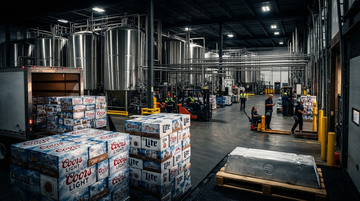
Molson Coors’ Q2 test shows beer’s pricing power is still positive—but cost pressure is now dominating the earnings story
In Molson Coors, Q2 2026 net sales fell 3.3% as volumes slid 5.4%, partially offset by favorable pricing and mix of +1.8%. The key investor takeaway is that cost headwinds are the swing factor: underlying income before taxes dropped 27.8% (constant currency) as COGS pressures included an estimated ~$40M Midwest Premium drag in the quarter and a forecast of >$130M for full-year 2026.

OpenAI’s “ChatGPT for Teens” shifts the legal center of gravity from feed algorithms to product controls
OpenAI’s new teens experience pairs age-prediction with default “reduced sensitive content,” crisis escalation rules, and parent/guardian “linking” that does not expose chat transcripts. For investors, the strategic punch is that it treats COPPA-style compliance as a product feature—reducing the kind of teen-exposure risk courts have been punishing in social-media ad and recommendation feeds.
What to expect
Evidence-first notes with a visible point of view.
This section collects sharp takes on earnings, shareholder meetings, and market structure. Each new piece should make the thesis, the facts, and the implications obvious within the first few screens.
Expect direct analysis, not generic commentary.
Expect the data to be explicit and the argument to be easy to follow.
Plutux is not an investment adviser. Market data and AI-generated analysis are for information and education only, not investment advice. Disclaimer