%22%2F%3E%0A%20%20%3Ccircle%20cx%3D%22220%22%20cy%3D%22150%22%20r%3D%22180%22%20fill%3D%22%2322d3ee%22%20fill-opacity%3D%220.12%22%2F%3E%0A%20%20%3Ccircle%20cx%3D%221010%22%20cy%3D%22130%22%20r%3D%22220%22%20fill%3D%22%2338bdf8%22%20fill-opacity%3D%220.08%22%2F%3E%0A%20%20%3Ccircle%20cx%3D%22920%22%20cy%3D%22520%22%20r%3D%22170%22%20fill%3D%22%2322d3ee%22%20fill-opacity%3D%220.06%22%2F%3E%0A%20%20%3Cpath%20d%3D%22M140%20430h920%22%20stroke%3D%22url(%23line)%22%20stroke-width%3D%2212%22%20stroke-linecap%3D%22round%22%2F%3E%0A%20%20%3Cpath%20d%3D%22M220%20360c120-150%20260-220%20380-220s260%2070%20380%20220%22%20fill%3D%22none%22%20stroke%3D%22%2367e8f9%22%20stroke-opacity%3D%220.5%22%20stroke-width%3D%2216%22%20stroke-linecap%3D%22round%22%20stroke-linejoin%3D%22round%22%2F%3E%0A%20%20%3Cpath%20d%3D%22M300%20398h600%22%20stroke%3D%22%2394a3b8%22%20stroke-opacity%3D%220.24%22%20stroke-width%3D%228%22%20stroke-linecap%3D%22round%22%2F%3E%0A%20%20%3Ctext%20x%3D%22220%22%20y%3D%22510%22%20fill%3D%22%23e2e8f0%22%20fill-opacity%3D%220.7%22%20font-family%3D%22Arial%2C%20Helvetica%2C%20sans-serif%22%20font-size%3D%2238%22%20letter-spacing%3D%228%22%3EINSIGHTS%3C%2Ftext%3E%0A%3C%2Fsvg%3E)
What’s verified
Murdoch’s re-merger idea didn’t just live in commentary—it surfaced in court proceedings
Reuters reported on Aug. 27, citing unsealed court proceedings, that Rupert Murdoch weighed reuniting Fox Corporation and News Corp after the 2013 separation. The coverage ties the disclosure to testimony and filings in a Nevada family-trust dispute—where Lachlan Murdoch’s lawyer argued merger discussions should remain sealed/redacted because the transaction could still occur in the future.
Deal logic
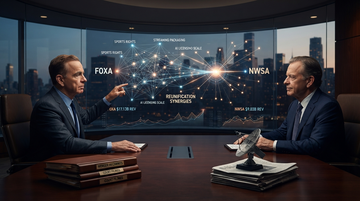
Why a Fox + News Corp reunion would change leverage: rights, distribution, and licensing become one stack
A reunification is economically plausible because the two companies sit on different layers of legacy-media monetization. Fox Corporation is structurally built around distribution and programming (including FOX News/FOX broadcast and sports-adjacent networks), while News Corp is a premium-news and data owner (notably The Wall Street Journal ecosystem and financial information businesses). Combining the stacks can reduce friction when bidding for sports rights and packaging content for streaming partners, while also strengthening licensing credibility for AI-era demand.
- Sports-rights bids tilt toward bundles where ownership of multiple viewing surfaces reduces marginal acquisition cost.
- Streaming negotiations can favor a single commercial entity that controls both distribution and premium editorial/data assets.
- AI and automation licensing becomes more enforceable when a buyer can point to a unified portfolio (news + data + broadcast reach) rather than separately contracted assets.
Financial cross-check (listed companies)
The “scale bet” still has to clear a balance-sheet and cash-flow reality check
Fox Corporation operating cash flow and free cash flow
$3.84B / $3.60B
TTM through Jun 30, 2026, reported Aug 6, 2026
News Corp operating cash flow and free cash flow
$1.19B / $0.83B
TTM through Jun 30, 2026, reported Aug 7, 2026
On raw financial capacity, both businesses generate positive operating cash flow, but News Corp is less free-cash-flow-heavy than Fox Corporation in the latest trailing window. That gap matters for deal financing and for how investors expect management to handle integration costs and regulatory/contractual transition risk.
Market mechanism
How “re-merger talk” could hit the stock tape first (days to quarters)
If investors treat the court-cited re-merger as a credible negotiation path—not just legacy rhetoric—then the first repricing usually occurs in (1) expected synergy optionality, and (2) probability-weighted deal timelines. Short term, FOXA and NWSA would likely trade on relative confidence around whether Lachlan Murdoch maintains control and whether the family-trust structure constrains or enables a transaction.
Strategic depth (full supply-chain)
What changes across the media value chain if the companies recombine
| Value-chain layer | What combines | Why it matters if re-merger happens | What to watch in disclosures |
|---|---|---|---|
| Upstream content creation | Editorial + event production ownership | Single corporate owner can negotiate content rights and creative development with fewer split incentives | Any disclosure of bundle pricing or shared editorial/data licensing terms |
| Midstream monetization (sports + streaming) | Sports-adjacent distribution + premium news/data packaging | Bundled offer can raise bid confidence and improve take-rate with streaming platforms and advertisers | Sports-rights bidding posture in guidance and any contract renewals |
| Downstream distribution | Partner negotiations (MVPDs, streaming ecosystems, syndication) | A unified entity can reduce renegotiation friction and accelerate deal-closing cycles | Announcements of consolidated partnerships or revised distribution economics |
| Downstream licensing (AI-era content access) | Premium-news/data licensing portfolio | Stronger bargaining leverage for licensing terms when both “content brand” and “data product” sit under one umbrella | Statements about AI licensing frameworks, “data products,” or long-term content access |
Succession overlay
Control mechanics likely matter as much as economics for whether reunion becomes real
Reuters explicitly frames the re-merger discussions inside the broader Murdoch family succession saga. Separately, Fox Corporation later disclosed a trust-resolution outcome in September 2025: a new structure where Lachlan Murdoch maintains voting control through a managing director and departing beneficiaries exit interests tied to FOX and News Corp shares. That doesn’t confirm a merger, but it clarifies why the court record could still be “active” for negotiation, because control and voting leverage directly affect whether boards can be pressured to pursue combination.
What makes this a novel investing angle
This isn’t generic media M&A—it’s a “rights + licensing + succession” cross-term
- A traditional media merger story usually focuses on audience overlap; here the differentiator is sports-rights bidding power paired with premium-news/data licensing credibility.
- The AI angle is not “content volume”—it’s licensing enforceability and product packaging across news, financial information, and broadcast platforms.
- Because the disclosure is embedded in a control dispute, investors should expect deal probability to be driven by governance resolution as much as by market multiples.
The key investor takeaway: the first quantifiable step after any renewed merger speculation would be to evaluate whether combined cash flow can sustain higher sports-rights commitments without margin erosion—then to assess whether the premium-news and data units can sustain higher pricing for licensing products as AI licensing becomes more standardized.
Investable linked equities (listed): who benefits or gets risk repriced
- A reunion would increase sports-rights bundling optionality by pairing distribution/control with premium news adjacencies (timing uncertain, court-cited).
- If merger probability rises, FOXA could rerate on “probability-weighted synergy,” but deal leakage risk stays high while terms and financing are undisclosed.
- Near-term trading likely reacts to succession/control headlines before any cost-synergy disclosure.
- A merger could strengthen AI-era licensing leverage by unifying premium editorial brand and data products with distribution (still unpriced without deal terms).
- Because News Corp is less free-cash-flow heavy than Fox Corporation in the latest trailing window, integration funding could pressure near-term economics.
- If AI/data monetization is central to investor thesis, NWSA rerating would require credible licensing-product signals.
- If a unified Murdoch media buyer raises sports-rights bid confidence, ESPN-adjacent and content pricing power could shift; Disney performance would likely be indirectly sensitive (watch for rights-bid outcomes).
- Repricing would occur only after rights awards or confirmed bid behavior—not from merger talk alone.
- A larger, rights-capable competitor could tighten negotiating leverage across sports/events packaging, making WBD a watch for contract and programming-cost pressure rather than a direct beneficiary.
- The signal would likely show up in quarterly programming-cost guidance and renewals.
- If a reunion improves bundling with streaming/MVPD distribution, Comcast could see partner contract renegotiation risk through higher content costs or improved bundle economics.
- Market impact would depend on whether combined packages expand subscriber value or squeeze carriage economics.