%22%2F%3E%0A%20%20%3Ccircle%20cx%3D%22220%22%20cy%3D%22150%22%20r%3D%22180%22%20fill%3D%22%2322d3ee%22%20fill-opacity%3D%220.12%22%2F%3E%0A%20%20%3Ccircle%20cx%3D%221010%22%20cy%3D%22130%22%20r%3D%22220%22%20fill%3D%22%2338bdf8%22%20fill-opacity%3D%220.08%22%2F%3E%0A%20%20%3Ccircle%20cx%3D%22920%22%20cy%3D%22520%22%20r%3D%22170%22%20fill%3D%22%2322d3ee%22%20fill-opacity%3D%220.06%22%2F%3E%0A%20%20%3Cpath%20d%3D%22M140%20430h920%22%20stroke%3D%22url(%23line)%22%20stroke-width%3D%2212%22%20stroke-linecap%3D%22round%22%2F%3E%0A%20%20%3Cpath%20d%3D%22M220%20360c120-150%20260-220%20380-220s260%2070%20380%20220%22%20fill%3D%22none%22%20stroke%3D%22%2367e8f9%22%20stroke-opacity%3D%220.5%22%20stroke-width%3D%2216%22%20stroke-linecap%3D%22round%22%20stroke-linejoin%3D%22round%22%2F%3E%0A%20%20%3Cpath%20d%3D%22M300%20398h600%22%20stroke%3D%22%2394a3b8%22%20stroke-opacity%3D%220.24%22%20stroke-width%3D%228%22%20stroke-linecap%3D%22round%22%2F%3E%0A%20%20%3Ctext%20x%3D%22220%22%20y%3D%22510%22%20fill%3D%22%23e2e8f0%22%20fill-opacity%3D%220.7%22%20font-family%3D%22Arial%2C%20Helvetica%2C%20sans-serif%22%20font-size%3D%2238%22%20letter-spacing%3D%228%22%3EINSIGHTS%3C%2Ftext%3E%0A%3C%2Fsvg%3E)
Vehicles under review
1,198,300
Estimated population in NHTSA preliminary evaluation PE26006.
Complaints
156
One complaint per roughly 7,681 vehicles in the estimated population; complaints are allegations, not a measured defect rate.
Reported harm
0
No crashes, injuries or fatalities identified in NHTSA's opening resume.
What NHTSA actually opened
The Investigation Is Broad, but the Evidence Is Still Preliminary
NHTSA opened preliminary evaluation PE26006 on July 29, 2026, covering 2018–2020 Model 3 and 2021–2023 Model Y vehicles. The alleged failure can remove directional control without warning when a front lower lateral link detaches.
| Question | Verified answer | Investor meaning |
|---|---|---|
| Population | 1,198,300 estimated vehicles | Large potential service population, but not a recall population. |
| Signal | 156 owner complaints | About 0.013% of the estimated population; this is not a statistically established defect rate. |
| Severity | Possible loss of directional control; vehicle may require towing | Low observed frequency does not eliminate high consequence. |
| Observed harm | 0 crashes, 0 injuries, 0 fatalities | The opening record does not support claims of demonstrated widespread harm. |
| Warning | Usually none; some owners reported noise | A failure without a dashboard warning is harder to mitigate through owner behavior. |
| Next step | Determine cause, scope, severity and safety consequences | A recall is possible, not ordered. |
The complaint count implies one report per roughly 7,681 vehicles in scope. That ratio sets a low observed floor, not a failure rate, because complaint systems can underreport incidents and the vehicles have different ages, mileage and exposure.
Why the old fixes matter
Two Tiny Recalls Failed to Close the Hardware Question
The new evaluation matters because NHTSA says the reported failures extend beyond two earlier recall scopes and do not appear tied to the production issue behind those campaigns. That finding reopens the cause from a batch defect to a design-or-durability question.
Current Investigation Dwarfs Earlier Recall Populations
Vehicle populations; the current figure is an investigation scope, while the earlier figures were recalls.
Unit: vehicles
2021 recall 21V-835
Model 3 vehicles tied to a production issue.
2,791
2023 recall 23V-235
Model 3 vehicles with similar failures.
422
2026 PE26006
Estimated Model 3 and Model Y population under investigation.
1,198,300
- A narrow manufacturing-lot problem would support another targeted campaign; a shared design or aging mechanism could widen repairs across several model years.
- NHTSA reports no crashes or injuries, which reduces evidence of realized harm but does not resolve the underlying cause.
- The affected years are mature enough for mileage, corrosion, loading and service history to expose durability problems that factory inspection may miss.
- The probe concerns physical steering geometry, so cannot be fixed by an over-the-air update if NHTSA confirms a mechanical defect.
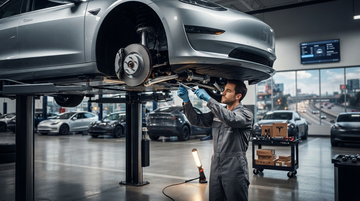
Tesla's service manual confirms that the front lower links are replaceable hardware. The pair procedure carries 0.66 flat-rate hours, requires new fasteners, and may require an alignment check; that turns a broad campaign into a parts-and-service bottleneck, not merely a software deployment.
The economics of a possible campaign
Cash Can Absorb a Recall; Thin Margins Make the Cost Visible
The opening documents disclose neither a remedy nor a cost, so a defensible recall provision cannot yet be calculated. What is measurable is Tesla's ability to pay: $43.52 billion of cash and short-term investments at June 30, against a $8.96 billion warranty reserve.
Q2 revenue
$28.24B
Up 25.5% from $22.50 billion in Q2 2025.
Q2 operating income
$398M
A 1.41% operating margin.
Warranty reserve
$8.96B
Ending accrued warranty balance at June 30, 2026.
Q2 free cash flow
−$1.09B
$4.70 billion operating cash flow less $5.79 billion capital expenditure.
| Metric | Q2 2025 | Q2 2026 | Change |
|---|---|---|---|
| Revenue | $22.50B | $28.24B | +25.5% |
| Gross margin | 17.2% | 16.8% | −0.4 percentage points |
| Operating income | $923M | $398M | −56.9% |
| Operating margin | 4.10% | 1.41% | −2.69 percentage points |
| R&D expense | $1.59B | $2.37B | +49.2% |
| Capital expenditure | $2.39B | $5.79B | +141.8% |
Warranty accounting already consumes real cash: Tesla incurred $972 million of warranty costs in the first half of 2026 and added $1.12 billion of provisions. A suspension campaign would therefore compete with AI spending for incremental cash flow, even if the balance sheet easily covers it.
Why the stock reaction can exceed the repair bill
At 212 Times Free Cash Flow, Process Credibility Matters More Than Parts Cost
Tesla's roughly $1.23 trillion market value equals 11.8 times trailing sales, 262 times trailing earnings and 212 times trailing free cash flow. Those multiples price future autonomy far more heavily than current manufacturing profit.
| Measure | Tesla | What it says |
|---|---|---|
| Price / trailing sales | 11.8× | Investors pay a software-like multiple for an auto-heavy revenue base. |
| Price / trailing earnings | 261.7× | Current earnings explain only a small part of the equity value. |
| Price / trailing free cash flow | 211.7× | The stock assumes major future cash-flow expansion. |
| Trailing operating margin | 4.2% | Present operating profitability remains thin. |
| Trailing capex / revenue | 12.5% | The AI and manufacturing buildout is already capital intensive. |
The causal chain is indirect but important. A confirmed durability defect would raise warranty and service work; that can slow fleet availability and expose weaknesses in hardware validation; those weaknesses would then raise the proof threshold for driverless scaling, where reliability must be higher than for owner-operated cars.
- Fact: the probe covers older Model 3 and Model Y hardware, not Cybercab.
- Inference: a confirmed systemic cause would weaken confidence in Tesla's validation process, even without proving a Cybercab defect.
- Speculation: robotaxi permits or deployments could slow only if regulators connect the failure to broader safety-management weaknesses; no source currently establishes that connection.
- Counterpoint: no crashes, injuries or deaths are in the opening record, so the investigation may close or lead to a limited campaign.
The capital-allocation collision
A Recall Would Arrive During Tesla's Most Expensive AI Pivot
Tesla expects 2026 capital expenditure above $25 billion, driven by compute infrastructure, data centers, manufacturing and R&D lines, and an AI-enabled fleet. First-half capex already reached $8.28 billion, more than double the prior-year period, while Q2 free cash flow fell below zero as investment accelerated.
Tesla's Quarterly Capital Spending Has Accelerated
Capital expenditure from cash-flow statements.
Unit: $ billions
Q2 2025
Free cash flow was $146 million.
2.4
Q1 2026
Free cash flow was $1.44 billion.
2.5
Q2 2026
Free cash flow was negative $1.09 billion.
5.8
The spending pivot is visible in the income statement too. Q2 R&D rose 49% year over year to $2.37 billion while operating income fell 57% to $398 million, so additional recall expense would land after AI costs have already thinned the margin.
| Outcome | Near-term effect | One-to-three-year implication |
|---|---|---|
| Probe closes without recall | Narrative pressure fades; no broad remedy cost. | Autonomy valuation remains tied mainly to deployment and unit economics. |
| Narrow recall | Parts, labor, towing and alignment expense; manageable liquidity impact. | A contained root cause limits damage to process credibility. |
| Broad design or durability finding | Large service load and possible reserve increase. | Validation scrutiny rises and investors may demand more evidence before capitalizing robotaxi profits. |
Supply-chain transmission
The Probe Hits Service Capacity First, Then Batteries, Compute and Fleet Economics
The immediate upstream need would be replacement links, fasteners, transport and alignment capacity, but Tesla has not disclosed the original lower-link supplier. Naming a listed suspension manufacturer as the liable supplier would therefore be speculation.
Evidence-backed supply-chain map
Immediate upstream
[Tesla](tsla)'s parts network
Genuine parts can be sourced through the electronic catalog, parts portal, service centers and approved repair channels.
Independent upstream
Meyle and other aftermarket producers
Independent Model 3 and Model Y suspension replacements exist, but NHTSA has not approved a remedy or supplier.
Strategic upstream
[Panasonic Holdings](6752.t) and [LG Energy Solution](373220.ks)
Battery suppliers are exposed to Tesla's vehicle-production trajectory, not directly to the suspect link.
AI upstream
[Samsung Electronics](005930.ks) and [NVIDIA](nvda)
Semiconductor exposure tracks the AI buildout; no evidence ties either company to the suspension component.
Downstream owner
Consumers and fleet operators
Vehicle downtime, towing and repair scheduling are the first operational transmission channels.
Downstream fleet
[Hertz Global Holdings](htz)
The company still markets Model Y rentals, establishing fleet exposure to an investigated model.
Downstream competitor
[Uber Technologies](uber)
A slower autonomous-fleet rollout would extend the value of human-driven marketplace liquidity.
- Panasonic Holdings and LG Energy Solution are second-order exposures: a repair campaign alone does not change cell orders, but weaker vehicle demand or slower production would reduce battery-volume leverage.
- Samsung Electronics and NVIDIA are tied to the AI capital cycle, not to the investigated suspension part; the relevant risk is Tesla reallocating or delaying compute spending.
- Hertz Global Holdings faces potential downtime on affected Model Y units, but the number of in-scope vehicles currently in its fleet is not disclosed.
- Uber Technologies benefits only indirectly if safety scrutiny delays a competing autonomous network's scale; the suspension probe alone does not establish such a delay.
Investment horizon
Complaint Growth Moves First; Root Cause Determines the Long-Term Discount
Over days to quarters, investors should track whether NHTSA requests engineering analysis, expands the population, upgrades the evaluation or announces a recall. The decisive signal is the root cause, not the headline population.
| Horizon | Milestone | Bullish read | Bearish read |
|---|---|---|---|
| Days to quarters | Complaint and incident updates | Counts remain limited and no injuries emerge. | Reports accelerate or crashes appear. |
| Quarters | NHTSA root-cause finding | Narrow manufacturing or service population. | Shared design, fastener or durability mechanism. |
| Quarters | Tesla warranty disclosures | No material reserve step-up. | Provision and incurred costs rise faster than deliveries. |
| One to three years | Robotaxi fleet reliability | High availability and low mechanical intervention. | Hardware downtime undermines fleet unit economics. |
| One to three years | Cash conversion | AI investment lifts operating margin and free cash flow. | Capex remains high while service costs suppress cash generation. |
The long-term thesis is falsifiable. If PE26006 closes without a broad remedy and Tesla scales autonomous service with strong fleet availability, the safety discount should disappear; if NHTSA identifies a cross-model durability flaw while cash conversion remains weak, the stock's current multiple becomes harder to defend on execution quality.
Stocks Exposed to the Investigation and Its Second-Order Effects
- A 1,198,300-vehicle scope creates a service-capacity risk, but NHTSA has ordered no recall and reports zero crashes or injuries.
- Q2's 1.41% operating margin makes incremental warranty costs immediately visible, despite $43.52 billion of liquidity.
- Over one to three years, a systemic root cause could raise the validation burden for robotaxi scaling.
- The 212× trailing free-cash-flow multiple creates downside if process credibility weakens before AI investments pay off.
- Battery exposure is indirect; no evidence ties the company to the investigated suspension link.
- Over coming quarters, weaker Tesla production would reduce battery-volume leverage, while a repair-only outcome should leave cell demand intact.
- The suspension investigation does not directly affect battery content per vehicle.
- A production spillover would pressure an already negative 7.3% trailing net margin; a contained service campaign would not.
- No evidence connects the company to the lower lateral link or any prospective remedy.
- One-to-three-year exposure runs through Tesla's AI capex; project delays could defer semiconductor demand rather than cancel it.
- The company has no established link to the investigated suspension component.
- Its diversified $253.49 billion trailing revenue base limits the impact of one customer's timing, even if Tesla reshuffles AI spending.
- Model Y rental exposure creates potential inspection and downtime risk if NHTSA orders a broad remedy.
- A 0.75 current ratio and negative $7.92 billion trailing free cash flow leave little room for additional fleet friction.
- The number of investigated vehicles still in the fleet is undisclosed, so the direct cost cannot yet be sized.
- A slower competing robotaxi rollout would extend the value of its existing human-driven marketplace.
- Trailing free cash flow of about $9.80 billion funds autonomy partnerships without owning the investigated fleet.
- The benefit remains indirect unless the probe changes Tesla's deployment schedule over the next several quarters.