%22%2F%3E%0A%20%20%3Ccircle%20cx%3D%22220%22%20cy%3D%22150%22%20r%3D%22180%22%20fill%3D%22%2322d3ee%22%20fill-opacity%3D%220.12%22%2F%3E%0A%20%20%3Ccircle%20cx%3D%221010%22%20cy%3D%22130%22%20r%3D%22220%22%20fill%3D%22%2338bdf8%22%20fill-opacity%3D%220.08%22%2F%3E%0A%20%20%3Ccircle%20cx%3D%22920%22%20cy%3D%22520%22%20r%3D%22170%22%20fill%3D%22%2322d3ee%22%20fill-opacity%3D%220.06%22%2F%3E%0A%20%20%3Cpath%20d%3D%22M140%20430h920%22%20stroke%3D%22url(%23line)%22%20stroke-width%3D%2212%22%20stroke-linecap%3D%22round%22%2F%3E%0A%20%20%3Cpath%20d%3D%22M220%20360c120-150%20260-220%20380-220s260%2070%20380%20220%22%20fill%3D%22none%22%20stroke%3D%22%2367e8f9%22%20stroke-opacity%3D%220.5%22%20stroke-width%3D%2216%22%20stroke-linecap%3D%22round%22%20stroke-linejoin%3D%22round%22%2F%3E%0A%20%20%3Cpath%20d%3D%22M300%20398h600%22%20stroke%3D%22%2394a3b8%22%20stroke-opacity%3D%220.24%22%20stroke-width%3D%228%22%20stroke-linecap%3D%22round%22%2F%3E%0A%20%20%3Ctext%20x%3D%22220%22%20y%3D%22510%22%20fill%3D%22%23e2e8f0%22%20fill-opacity%3D%220.7%22%20font-family%3D%22Arial%2C%20Helvetica%2C%20sans-serif%22%20font-size%3D%2238%22%20letter-spacing%3D%228%22%3EINSIGHTS%3C%2Ftext%3E%0A%3C%2Fsvg%3E)
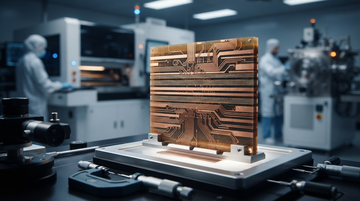
Materials bottleneck thesis
Why CCL becomes the choke point when AI racks scale from 800G to 1.6T
High-speed AI networking doesn’t just “use more PCB.” It forces more layers of lower-loss laminate and tighter electrical tolerances, because 800G and the ramp to 1.6T demand longer reach and lower distortion across denser routing.
Copper-clad laminate (CCL)—low-loss fiberglass or specialty substrates coated with copper foil—is the materials step that sits between basic PCB capacity and “board-level” integration. When CCL availability tightens, PCB fabs can’t substitute indefinitely: the laminate’s dielectric constant (Dk), loss tangent, thermal stability, and copper surface characteristics are core to keeping insertion loss within spec at these line rates.
In other words, board makers can queue machines and staff. But they cannot easily change the CCL material family, thickness stackup, or electrical target after the signal-integrity design is locked.
What’s verified in public materials
The laminate families explicitly marketed for networking-grade performance
Even without proprietary AI-rack bill-of-materials, the direction of the bottleneck is verifiable: major CCL brands publicly describe “high-speed, ultra-low loss” circuit materials for networking applications.
For example, Panasonic positions its MEGTRON 6 family for “mobile, networking, and wireless applications requiring high-speed, ultra-low loss circuit materials,” and lists compatible laminate and prepreg structures in the MEGTRON series lineup.
Similarly, Isola publishes a Tachyon processing guide product page for advanced high-speed laminates used for higher-speed datacom/processing categories (with resources hosted on its site). The existence of dedicated high-speed processing documentation is a practical indicator that these materials are not interchangeable commodity FR-4; they require controlled handling and match to specific electrical targets.
These disclosures don’t quantify AI rack content directly—but they anchor the core mechanism: at 800G/1.6T, buyers increasingly converge on a limited set of specialized low-loss laminate families.
The scaling math inside a rack
Per-board laminate content compounds as layer counts and electrical margin tighten
As AI line cards and switch fabrics increase routing density, the board stackup often shifts toward more layers and more specialized materials to preserve signal quality under tighter loss budgets.
That matters for CCL because it is purchased as sheets and then transformed into multilayer prepreg/laminate structures (during PCB fabrication). The materials constraint is therefore upstream of “board fab output”: if low-loss laminate sheet supply is constrained, PCB throughput is gated by the limiting material step rather than by assembly line headcount.
- AI networking moves to higher signaling rates, so signal-loss budgets compress and low-loss CCL demand rises faster than generic FR-4 replacement.
- Designers often compensate for routing density with different stackups, so more boards per switch generation increases the share of qualified laminate consumed per unit.
- Specialty laminates can’t always be respun quickly into the same electrical behavior, so qualification and sourcing lead times can cap near-term PCB shipment velocity.
Who moves first in the supply chain
Why CCL makers tend to feel AI networking demand earlier than PCB assemblers
In a typical datacom hardware build, board fabs respond to demand signals, but only after materials are secured. When AI fabrics accelerate, the buyer’s first practical constraint is often procurement of the specific laminate family that meets electrical requirements.
That’s why the CCL layer can show “materials margin” earlier: it is where pricing power and allocation risk appear first, because the material must exist before a board can be manufactured to spec.
Fundamentals check on a CCL pure-play
Elite Material shows why laminate businesses can look more margin-sensitive than board shops
Elite Material is a listed CCL and high-speed materials supplier, and its business description explicitly includes copper-clad laminates and prepreg.
While this article doesn’t claim Elite’s financials are driven solely by 800G/1.6T, it does highlight the structure of the business: a CCL supplier can experience tighter availability and re-priced contracts before downstream PCBs fully translate into shipments.
Business profile
CCL + prepreg focus
Company description: copper clad laminates and printed circuit boards (plus prepreg), consistent with a materials-first linkage
Operating scale (latest snapshot available)
EBIT margin: 22.7%
TTM gross profit and operating profitability metrics shown in company overview; read as an indicator of material-product economics (not an attribution to AI only)
Balance sheet/returns (latest snapshot available)
ROE: 45.6%
TTM return on equity shown in company overview; interpret alongside working-capital intensity for laminate production cycles
Supply-chain mapping (upstream → downstream)
Full transmission chain: from low-loss laminate sheets to AI rack throughput
| Step | What changes at 800G/1.6T | Why it can become the bottleneck | Listed linkage (examples) |
|---|---|---|---|
| Low-loss laminate (CCL + prepreg pairing) | Tighter dielectric loss and thermal stability targets | Materials must be qualified to electrical stackup; allocation/lead time can gate board output | Panasonic MEGTRON line; Isola high-speed laminate resources |
| Copper foil + laminate surface finish | Copper micro-roughness and signal integrity sensitivity | If foil/stack behavior doesn’t match spec, boards can’t meet insertion-loss budgets | CCL ecosystem suppliers typically coordinate foil + laminate system performance |
| PCB fabrication | More layers, tighter registration, higher routing density | Fabric throughput is limited by materials availability once electrical design is fixed | Downstream board makers (not individually analyzed here) |
| Board-level integration into switch/rack | Thermal and electrical co-design with SerDes and optics | If boards don’t ship on time, rack scale-in is delayed even if compute is ready | Downstream AI system OEMs (not individually analyzed here) |
Where the market misprices
The market often watches PCB capacity, but CCL constrains “spec-ready” boards
Board-fab capacity headlines can look healthy while the actual build still stalls—because the limiting factor is not “can you laminate copper?” but “can you laminate the right low-loss material stack at the right schedule?”
This is a materials-first constraint: the cost and margin opportunity can sit with CCL suppliers even when board assemblers remain busy. That creates a divergence between what the market expects (board output growth) and what actually happens (materials allocation and re-priced supply contracts).
- If buyers increase 800G board volume faster than qualified low-loss laminate sheet supply, allocation and pricing pressure can surface before PCB utilization peaks.
- If a new generation (e.g., 1.6T ramp) requires different stackup choices, existing materials inventory may not fully substitute, extending lead times.
- As AI racks scale, per-board laminate consumption can rise nonlinearly with layer-count and routing density changes.
Horizons
What to watch in the next quarters vs. the next 1–3 years
Actionable investor lens
How to position: look upstream for margin resilience tied to spec constraints
This isn’t a bet that PCB production disappears. It’s a bet that, during 800G/1.6T migration, materials that protect signal integrity capture the tighter portion of the value chain first.
So the practical screen is: companies whose product identity is tied to high-speed ultra-low loss laminate families, and whose business model is closer to those families than to downstream assembly. The listed CCL ecosystem—such as Panasonic, Isola, and Elite Material—is where investors should expect the earliest spec-driven supply constraint to show up.
Listed stocks with the clearest linkage to the CCL bottleneck logic
- Elite’s materials-focused business model means supply constraints can translate into earlier contract repricing before board shipments catch up
- Elite’s profitability metrics show the business can sustain attractive operating margins (TTM EBIT margin shown) when specialty demand stays sticky
- In the next quarters, AI networking order timing should pressure low-loss laminate allocation first, benefiting companies closest to CCL output
- Dedicated high-speed laminate resources indicate a specialty materials platform that’s harder to substitute once stackups are fixed
- As 800G/1.6T designs lock, tighter material qualification can pull forward demand into Isola’s product cycles
- Over 1–3 years, capacity normalization determines whether pricing power fades or holds
- Panasonic’s MEGTRON positioning for “high-speed, ultra-low loss” networking implies spec demand is tied to a narrow performance window
- If AI rack growth increases board-layer counts, the low-loss laminate category expands faster than generic PCB inputs
- Near term, lead-time pressure should surface in qualified MEGTRON families before downstream PCB utilization fully reacts
- Rogers’ specialty high-frequency materials exposure makes it sensitive to whether AI networking stackups keep demanding advanced dielectric performance
- If platform-to-platform substitution improves, margins could normalize (watch for reduced pricing pressure)
- Over the next 1–3 years, new generation stackups (800G→1.6T) should determine persistence of high-end material demand