%22%2F%3E%0A%20%20%3Ccircle%20cx%3D%22220%22%20cy%3D%22150%22%20r%3D%22180%22%20fill%3D%22%2322d3ee%22%20fill-opacity%3D%220.12%22%2F%3E%0A%20%20%3Ccircle%20cx%3D%221010%22%20cy%3D%22130%22%20r%3D%22220%22%20fill%3D%22%2338bdf8%22%20fill-opacity%3D%220.08%22%2F%3E%0A%20%20%3Ccircle%20cx%3D%22920%22%20cy%3D%22520%22%20r%3D%22170%22%20fill%3D%22%2322d3ee%22%20fill-opacity%3D%220.06%22%2F%3E%0A%20%20%3Cpath%20d%3D%22M140%20430h920%22%20stroke%3D%22url(%23line)%22%20stroke-width%3D%2212%22%20stroke-linecap%3D%22round%22%2F%3E%0A%20%20%3Cpath%20d%3D%22M220%20360c120-150%20260-220%20380-220s260%2070%20380%20220%22%20fill%3D%22none%22%20stroke%3D%22%2367e8f9%22%20stroke-opacity%3D%220.5%22%20stroke-width%3D%2216%22%20stroke-linecap%3D%22round%22%20stroke-linejoin%3D%22round%22%2F%3E%0A%20%20%3Cpath%20d%3D%22M300%20398h600%22%20stroke%3D%22%2394a3b8%22%20stroke-opacity%3D%220.24%22%20stroke-width%3D%228%22%20stroke-linecap%3D%22round%22%2F%3E%0A%20%20%3Ctext%20x%3D%22220%22%20y%3D%22510%22%20fill%3D%22%23e2e8f0%22%20fill-opacity%3D%220.7%22%20font-family%3D%22Arial%2C%20Helvetica%2C%20sans-serif%22%20font-size%3D%2238%22%20letter-spacing%3D%228%22%3EINSIGHTS%3C%2Ftext%3E%0A%3C%2Fsvg%3E)
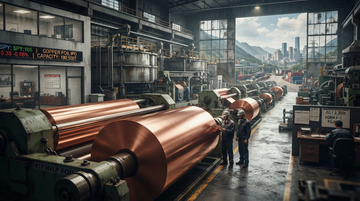
A US IPO can be more than a fundraising event. For Londian Wason New Energy Tech Inc., the filing reads like a materials “trust test” for Western buyers and US institutions: if a Chinese electrolytic copper-foil specialist can explain how it earns certification on high-end PCB-grade products tied to AI compute, then the next vertical-up bet may shift away from board assemblers and toward substrate inputs.
Verified event + what it changes
A China copper-foil IPO on the NYSE turns “materials bottleneck” into an investor question
In its US listing process, Londian Wason New Energy Tech Inc. filed for an ADS offering on the NYSE (Form F-1) on July 2, 2026—positioning the company as a “global…manufacturer of electrolytic copper foil.” The key investor question isn’t whether copper is widely available; it’s whether Western-facing customers will treat Chinese-made foil as certifiable, stable, and scalable for the higher-performance PCB requirements that AI compute systems impose.
Primary filing anchors (what Londian Wason explicitly discloses)
IPO filing vehicle
Form F-1 (ADS) on NYSE
Filed July 2, 2026 in SEC archives.
Core product scope
Electrolytic copper foil (LiB + PCB-grade)
F-1 describes electrolytic copper foil as intermediate used for LiB and PCBs.
AI compute linkage
High-speed/HPC PCB-grade needs low-roughness foil
F-1 discusses AI/big data increasing compute power and requiring higher signal integrity via high-end PCB-grade copper foil.
Supply-chain map (vertical-up) + linkage evidence
Copper foil sits closer to the “AI compute PCB” bottleneck than most PCB coverage implies
- The F-1 describes electrolytic copper foil as a key intermediate used to manufacture both lithium-ion batteries and electronic circuit boards/PCBs.
- It characterizes PCB-grade copper foil as the conductive body for trace pathways and signal transmission, where surface roughness can degrade high-performance signal/power behavior in high-end electronics.
- It links AI/HPC needs to increased compute power and improved signal integrity, positioning higher-end copper foil products (explicitly including RTF/HVLP-type high-performance variants) as the enabling input for those PCBs.
- It provides a scale snapshot showing LiB copper foil volume dwarfs PCB-grade volume—so “AI compute” is a growth narrative that must overcome a starting base-rate disadvantage.
Installed/designed capacity (as of Dec 31, 2025)
180,500
Metric tons per annum; designed electrolytic copper foil capacity.
LiB copper foil sales volume (2025)
111,985
Metric tons; largest supplier claim by sales volume.
PCB copper foil sales volume (2025)
10,168
Metric tons; much smaller than LiB in the same year.
LiB copper foil market share (2025)
7.6%
Market share by sales volume claim in the filing.
What to verify in the story (and what investors should treat as risk)
High-end certification and customer concentration are the real gating items—not tariffs alone
The F-1 emphasizes certification as a barrier: major customers (notably in South Korea/Japan) run strict certification processes. That matters because copper foil is a material input where substitution can be slow: even if procurement wants lower risk, qualification typically takes time and is expensive—making quarterly momentum in US-tied demand hard to model.
2025 volume concentration: PCB-grade is smaller, but certification may dominate the pace of scaling
Londian Wason discloses 2025 sales volume by application categories (LiB vs PCB-grade).
Unit: metric tons
LiB copper foil (2025)
Metric tons
111,985
PCB copper foil (2025)
Metric tons
10,168
- Customer count fell from 448 (2024) to 358 (2025), which can reflect a more selective certification funnel or customer mix changes.
- Top-5 customers contributed 67.3% of global EV battery sales volume in 2025, underlining how qualification concentration can transmit procurement swings into supplier results.
- The filing highlights that it serves major LiB/ESS ecosystem players and has broad customer coverage, but the core gating risk for “AI compute” remains whether PCB-grade qualifications can expand faster than capacity/cost structures require.
Fundamentals that frame the IPO’s credibility
The financials say “operating leverage arrived,” but cash outflows and capex show the build is still ongoing
Revenue growth (2024→2025)
RMB 8,762M → 10,942M
Revenue: RMB (thousands) 8,762,280 (2024) to 10,942,102 (2025).
Gross profit (2024→2025)
RMB 379M → 727M
Gross profit: RMB (thousands) 379,427 (2024) to 726,957 (2025).
Operating income (2024→2025)
RMB 27M → 350M
Operating income: RMB (thousands) 27,109 (2024) to 350,494 (2025).
Net income (2024→2025)
Loss → Profit
Net: RMB (292,859) (2024) to RMB 20,315 (2025).
| Line item | 2024 | 2025 |
|---|---|---|
| Net cash used in operating activities | RMB (125,981) thousand | RMB (81,262) thousand |
| Net cash used in investing activities | RMB (930,923) thousand | RMB (727,146) thousand |
| Capital expenditures (purchase of PPE) | RMB 931.3 million | RMB 727.1 million |
The operational turnaround signals the business can generate profitability, but the cash-flow pattern and high capex show it is still in a build phase. For an IPO framed around scaling higher-end PCB-grade product, investors should expect that capacity expansion and equipment purchasing remain a recurring pressure on operating cash generation until product mix (and yields) shift.
Causal chain: what “AI compute PCBs” implies for foil economics
AI compute doesn’t just increase PCB demand—it raises the performance spec that foil must meet
The F-1’s reasoning is internally consistent: AI/high-speed computing drives higher signal-integrity requirements; that pushes copper foil toward high-end variants with smoother surfaces, and those variants (such as HVLP/RTF-type products described as lower roughness) can carry higher value per unit than standard foil. The investor implication is that “AI compute exposure” is not necessarily volume-only; it can be a margin-and-certification step function.
- If AI/HPC adoption increases the share of high-end PCB-grade copper foil, the mix shift can improve gross profit even before PCB volumes catch up to LiB.
- Because certification is strict, mix shift may lag volume growth; that creates a timing mismatch between macro AI server cycles and realized foil economics.
- The filing’s emphasis on R&D intensity (R&D expense as a percent of revenue) and technical performance indicators suggests the company is positioning to meet spec-driven requirements rather than compete only on cost.
R&D as % of revenue
3.2% (2024) / 3.1% (2025)
Disclosed in the filing.
HVLP surface roughness precision
~1.0µm
Technical indicators disclosed in the F-1.
Horizons (short vs long) for an IPO thesis
What moves in days–quarters vs 1–3 years for a copper-foil “AI compute substrate” bet
- Short-term catalyst to watch (days–quarters): how US investors model ADS valuation when the company’s disclosed 2025 PCB-grade volume is still ~9% of LiB copper foil volume, even though the narrative highlights AI/HPC requirements.
- Short-term operational signal: whether management emphasizes certification timelines and any progress in scaling PCB-grade beyond 10,168 metric tons (2025). The filing gives the base, but not a near-term roadmap.
- Long-term milestone (1–3 years): higher-end PCB-grade share rising materially versus LiB share, implying yield improvements and customer qualification expansion into higher-performance computing boards.
- Long-term risk: if high-end PCB-grade growth depends on a narrow set of certified customers, then customer concentration plus certification duration can slow the mix shift and keep margins from reaching “AI narrative” expectations.
Listed supply-chain proxies this thesis can transmit to (and why)
- The filing shows it sells 111,985 metric tons of LiB copper foil while targeting PCB-grade high-end performance, so investors can model mix-driven margin upside as PCB-grade scales.
- Because gross profit rose to RMB 726,957 thousand in 2025, the near-term trade can reward continued operating leverage while PCB-grade certification ramps.