%22%2F%3E%0A%20%20%3Ccircle%20cx%3D%22220%22%20cy%3D%22150%22%20r%3D%22180%22%20fill%3D%22%2322d3ee%22%20fill-opacity%3D%220.12%22%2F%3E%0A%20%20%3Ccircle%20cx%3D%221010%22%20cy%3D%22130%22%20r%3D%22220%22%20fill%3D%22%2338bdf8%22%20fill-opacity%3D%220.08%22%2F%3E%0A%20%20%3Ccircle%20cx%3D%22920%22%20cy%3D%22520%22%20r%3D%22170%22%20fill%3D%22%2322d3ee%22%20fill-opacity%3D%220.06%22%2F%3E%0A%20%20%3Cpath%20d%3D%22M140%20430h920%22%20stroke%3D%22url(%23line)%22%20stroke-width%3D%2212%22%20stroke-linecap%3D%22round%22%2F%3E%0A%20%20%3Cpath%20d%3D%22M220%20360c120-150%20260-220%20380-220s260%2070%20380%20220%22%20fill%3D%22none%22%20stroke%3D%22%2367e8f9%22%20stroke-opacity%3D%220.5%22%20stroke-width%3D%2216%22%20stroke-linecap%3D%22round%22%20stroke-linejoin%3D%22round%22%2F%3E%0A%20%20%3Cpath%20d%3D%22M300%20398h600%22%20stroke%3D%22%2394a3b8%22%20stroke-opacity%3D%220.24%22%20stroke-width%3D%228%22%20stroke-linecap%3D%22round%22%2F%3E%0A%20%20%3Ctext%20x%3D%22220%22%20y%3D%22510%22%20fill%3D%22%23e2e8f0%22%20fill-opacity%3D%220.7%22%20font-family%3D%22Arial%2C%20Helvetica%2C%20sans-serif%22%20font-size%3D%2238%22%20letter-spacing%3D%228%22%3EINSIGHTS%3C%2Ftext%3E%0A%3C%2Fsvg%3E)
Power_grid | energy
The missing link in AI power: “firm” power that doesn’t wait on peaker dispatch
AI load growth has forced every power plan to answer the same question: not “can the grid run the average day,” but “can it run the worst 3 hours—every day.” Batteries and demand response help, but they don’t replace the procurement discipline utilities and large customers increasingly need: round-the-clock, clean output contracted in megawatts—not just energy.
Geothermal—specifically enhanced geothermal systems (EGS)—is being pulled into that procurement slot because it can be engineered and financed as dispatchable “baseload-like” capacity rather than a weather-dependent profile. The investment case gets real only when you can map the end-to-end chain that turns heat in rock into power at the meter.
What happened | verified deals and schedules
Fervo’s Cape Station is the clearest drill-to-ORC-to-offtake proof point for AI-era firm power
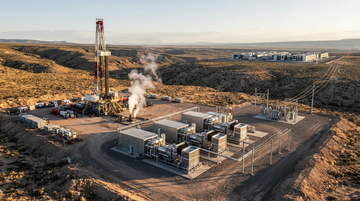
Fervo Energy’s Cape Station program is designed to turn geothermal heat into contracted output with specific delivery milestones. In its SEC filings, Fervo describes expected first power from a 500 MW Cape Station project starting in Q4 2026, aiming to reach about 100 MW of operating capacity in Q1 2027 (subject to performance and contractual terms). Fervo’s PPA-backed build plan converts “geothermal potential” into scheduled, contractual megawatts.
On the offtake economics, Fervo’s Cape Station data-center-oriented PPA/offtake documentation cites a $7.2B potential revenue backlog and names Southern California Edison (SCE) and Shell Energy as offtakers for the fully contracted 400 MW output context.
Supply-chain map | the drill-to-ORC leg you can actually price
Geothermal for 24/7 doesn’t start with turbines—it starts with drill-and-permit execution
In geothermal, “firm” is not a technology slogan; it’s execution risk priced into contracts. Fervo’s SEC filing shows how that execution is operationalized:
- expected delivery timing tied to PPA COD (commercial operation deadline)
- liquidated damages and termination rights if key milestones aren’t met
- a high level of permit/approval progress for Cape Station phases
This is why the supply chain is more than an ORC story. If drilling, completion, and permitting slip, the grid doesn’t get capacity—and the turbine OEM scope becomes stranded capital rather than recurring revenue. In other words: the critical path starts upstream at wells and approvals, then flows downstream into ORC equipment and ultimately into offtake revenue.
ORC equipment | who captures value inside the “heat-to-power” conversion
Baker Hughes’ ORC scope is the clearest OEM-style value capture inside this geothermal leg
A load-following gas plant can substitute in fuel and dispatch; geothermal must substitute in equipment procurement and commissioning. For Fervo’s Cape Station Phase II, Baker Hughes was selected to deliver key surface power generation equipment for five ORC units.
Baker Hughes’ project description specifies the ORC configuration as five 60-MWe ORC units (total ~300 MW once operational under that Phase II scope) and identifies its surface equipment scope including turboexpanders and BRUSH generators.
That matters for investors because ORC turbine/generator OEM demand tends to scale with: (1) executed PPA MW, (2) COD schedules, (3) the number of standardized unit blocks.
Put simply: ORC OEM scope scales in unit blocks—so PPA MW you can underwrite becomes turbine/generator revenue you can model.
Contract terms | why “timing beats alternatives”
Why geothermal can beat gas and nuclear on timing: it’s engineered for the PPA clock
Gas often “wins” on speed until you hit fuel and transmission constraints and run into procurement caps or decarbonization policies. Nuclear often “wins” on baseload ambition but loses on schedule risk and long lead-time construction.
Geothermal’s bet is different: it is trying to compress the path from contracted MW to energization by focusing on repeatable drill-permit-commission cycles. When the upstream chain is executed, geothermal becomes a firm-power procurement tool that can be “arranged” around AI load growth without relying on dispatch improvisation.
The investor takeaway is not that geothermal is always faster than everything; it’s that the chain is built to meet a contract deadline the same way large-scale industrial projects do—meaning you can compare timing via disclosed COD targets and equipment scope, not just by headline technology timelines.
Quant blocks | what the numbers say about where the chain is now
The chain is in the build-to-offtake phase: backlog, permit progress, and revenue readiness are the signals
Fervo IPO status (context for market focus)
May 2026
Fervo Energy began trading publicly after May 2026; market attention is rising as its PPA-backed build schedule advances.
Cape Station first delivery window
Q4 2026
Fervo expects to begin delivering first power from Cape Station in Q4 2026; no guarantee is provided for achieving all CODs.
Operating capacity target by next quarter
~100 MW
Fervo targets about 100 MW of operating capacity in Q1 2027, subject to meeting milestones and contractual terms.
Cape Station potential revenue backlog
$7.2B
Cape Station contracted context cites $7.2B potential revenue backlog (calculated across PPA terms using expected output and contracted pricing).
Where value is likely captured first along the geothermal firm-power chain (illustrative sequencing)
The point is sequencing: wells/permits → ORC unit scope → energization → offtake revenue. The exact dollar split depends on contract structure.
Unit: relative weight
Upstream (wells & approvals)
Execution determines COD eligibility and downstream equipment utilization.
40
Midstream (ORC surface equipment)
OEM scope scales with standardized ORC unit blocks tied to contracted MW.
30
Downstream (offtake economics)
Backlog and liquidated-damage exposure flow once delivery milestones are met.
30
Second-order effects | investors should look beyond “geothermal”
What to watch next: procurement standardization, COD risk, and utility buying patterns
- Next disclosure should show unit-by-unit commissioning progress because Fervo ties contractual reliability and delivery megawatts to PPA milestones in its SEC filings.
- ORC equipment order pacing should align with executed PPA MW because Baker Hughes’ identified scope is explicitly mapped to ORC unit blocks for Cape Station development.
- Offtake concentration should reveal utility vs. corporate demand priority because Cape Station context names both a utility entity and an energy company as offtakers for the contracted output context.
- Permit/approval completion rates can become a leading indicator because Fervo disclosed high permit progress for Phase I and partial progress for Phase II in its SEC filing.
Fundamentals | how listed supply-chain exposure looks today
Listed supply-chain choices are likely to trade like “execution multipliers,” not like pure tech bets
To ground the listed-side exposure, consider how ORC and surface generation suppliers look financially today and what their cash-generation profile implies. Baker Hughes reports FY2025 revenue of $27.7B with net income of $2.6B and EBITDA of $4.3B (from its FY2025 financial statements), giving it a base to absorb project-cycle volatility while it scales incremental geothermal work.
This doesn’t mean geothermal is immaterial—rather, geothermal order momentum can act like an execution multiplier inside a diversified industrial portfolio. For Ormat Technologies, the market is already pricing geothermal exposure at higher multiples; the key is whether additional 24/7 AI-driven offtake contracts convert into durable, repeatable unit deployments.
The investor job is to watch whether the upstream geothermal chain can deliver the CODs that unlock backlog and reduce termination risk—because that’s what transforms a supplier’s engineering line item into sustained revenue.
Horizons | who wins when the clock is the constraint
Short-term: milestone credibility. Long-term: a new base-load procurement template for AI
Short term (days to quarters): The earliest signal is whether Cape Station’s milestones move from “expectations” toward evidenced progress (operating capacity ramp and approvals). Fervo’s filing emphasizes expected delivery windows and the consequences of missing them, so investors should treat updates as risk repricing rather than marketing.
Long term (1–3 years): If standardized ORC unit blocks keep getting procured as PPA MW are executed, geothermal can become a bankable “firm clean” procurement template that AI customers and utilities repeat. That template could reduce reliance on gas’s dispatch improvisation and delay nuclear’s construction timelines.
The central thesis is not that geothermal is the only 24/7 solution; it’s that geothermal is the clean firm-power option most exposed to a contract-milestone execution feedback loop, which directly links upstream drilling success to downstream offtake revenue and supplier utilization.
Listed stocks most directly linked to this drill-to-ORC-to-offtake chain
- Fervo targets first power in Q4 2026, so each execution update should change perceived probability of meeting PPA CODs and unlocking contracted backlog.
- Fervo’s pipeline is contract-structured around milestone penalties, so delays can directly impair cash conversion versus peers without those same damages exposure.
- Fervo is building toward a 500 MW Cape Station delivery ramp, which can convert high upfront drilling and commissioning into repeatable unit deployments.
- Baker Hughes is tied to ORC surface equipment blocks for Cape Station, so scaling geothermal MW can translate into recurring turbine/generator supply demand.
- Baker Hughes’ scale (FY2025 revenue $27.7B) gives it capacity to flex manufacturing without relying on geothermal alone for profitability.
- ORC scope is unit-count driven, so standardization and project pacing can matter more than long-dated technology risk over the next 12–24 months.
- Ormat remains exposed to geothermal baseload contracting, so incremental 24/7 offtake templates can improve demand visibility for its geothermal generation and product manufacturing.
- Ormat’s profitability profile depends on project ramp conversion, so investors should watch whether new PPA-backed deployments raise operating cash flow in subsequent periods.
- Ormat’s listed valuation implies “execution already matters”, so any evidence of slower commissioning can pressure the multiple even if long-term geothermal demand persists.
- 24/7 clean procurement can pull some demand away from nuclear timelines if geothermal proves COD credibility faster than long-lead builds, creating a competitive squeeze on near-term PPA bids.
- Constellation’s FY2025 revenue $25.5B anchors it against single-project delays, but geothermal’s timing edge can still affect contract acquisition velocity.
- Over 1–3 years, contract competition is the battleground, so investors should track how utilities balance “dispatchable clean” sources by delivery schedules.
- Firm clean procurement plans at utilities can change the shape of new generation additions if geothermal PPAs keep proving COD execution in AI power regions.
- Duke’s cash generation can absorb incremental procurement diversification, but near-term ratebase decisions will hinge on credible delivery schedules.
- Transmission and interconnect constraints should determine where geothermal is economically “deployable”, making regional pipeline timing critical to any utility’s mix.